Oct. 12, 2026
A retailer in central Mexico started selling birthday candles three years ago. Before that, the business had never carried candles. It was a community supermarket with a small premium section and a discount corner.
The owner found us through our website and began asking practical questions: What types of birthday candles were available? What sizes and materials were commonly used? How were different styles packaged? Which products should a retailer consider when building a new category?
We discussed product categories, sizing, materials, packaging formats, and market information. We also reviewed purchasing patterns and sales data from similar retailers in the region.
The conversation led to a small first order. Over the following two years, the retailer expanded to five store locations.
As the business grew, however, its candle assortment became increasingly difficult to manage.
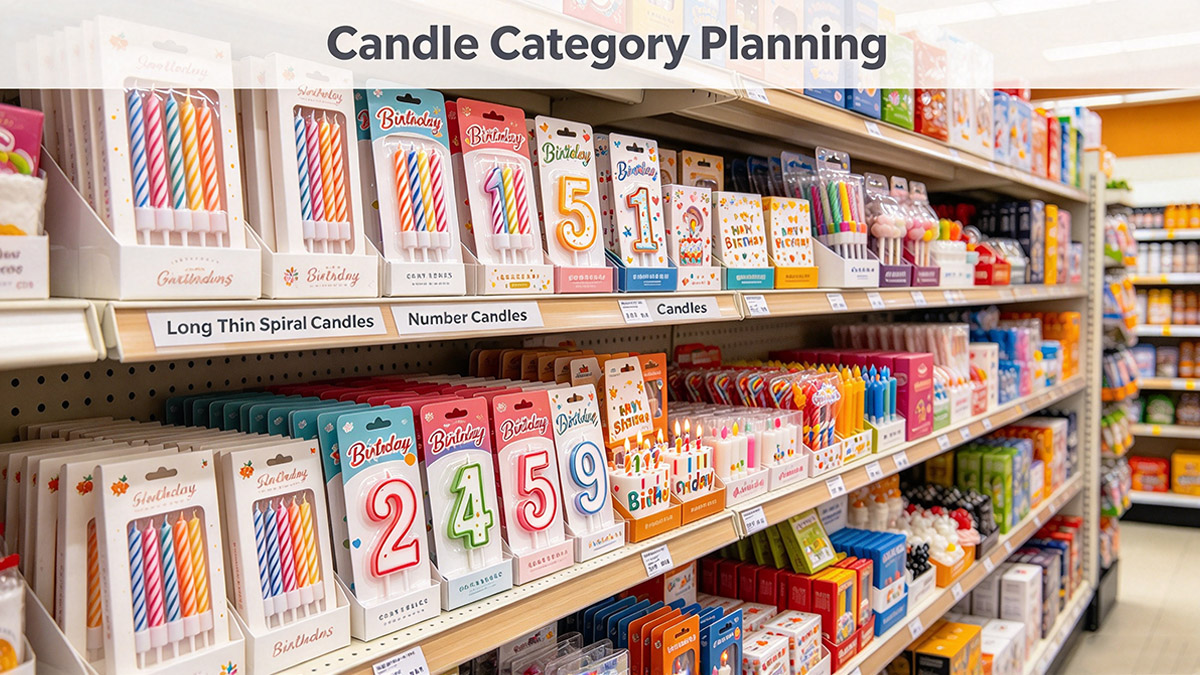
By 2025, the retailer's candle catalog had grown to 356 SKUs. The assortment had accumulated gradually: some products were added following supplier recommendations, others were selected because they looked promising, and some remained in the catalog long after their initial sales had faded.
The review identified three structural problems.
Redundant SKUs. Several products overlapped in function, color, or size. The retailer was carrying multiple versions of similar items without a clear reason to keep each variation.
Gaps in the assortment. Some core styles and formats were missing. The existing catalog offered plenty of variety, but that variety did not necessarily cover the retailer's most important product needs.
Outdated designs and packaging. The number candles and spiral candles relied heavily on glossy finishes and bright colors. The range lacked matte, low-saturation options, larger milestone numbers, and individual color-box packaging suited to retail display.
The problem was not simply that the catalog had become too large. It was that the assortment lacked a clear structure.
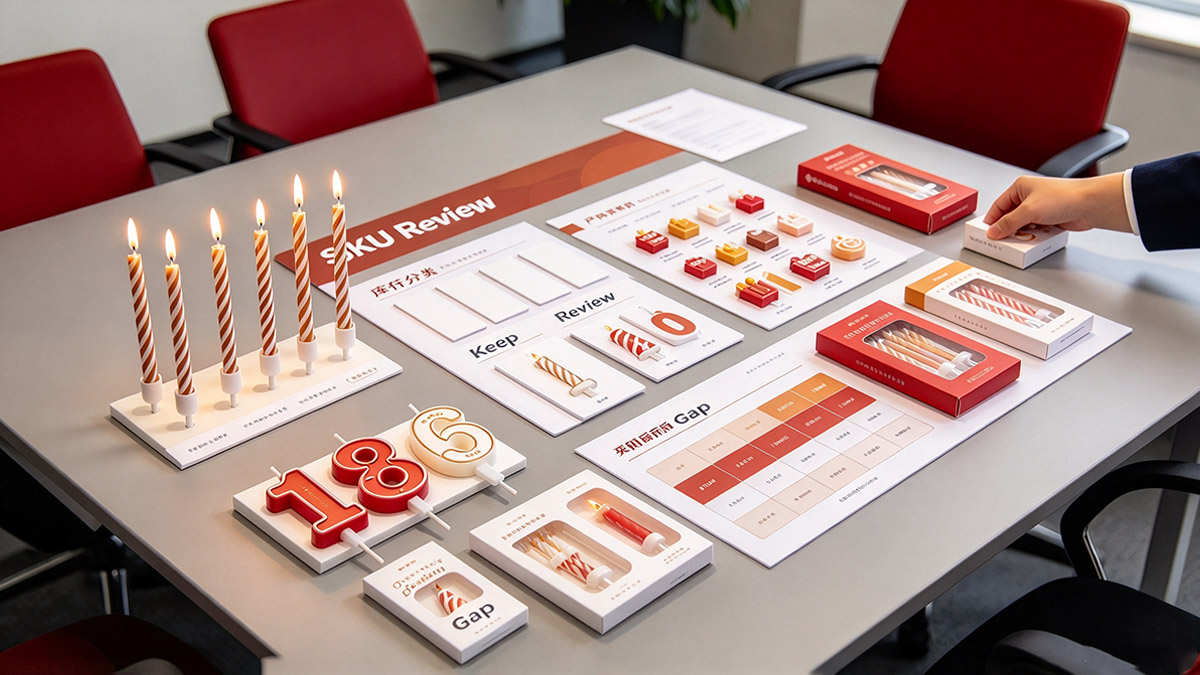
We began with a complete inventory of the retailer's existing candle SKUs and reviewed the range across three areas.
1. SKU performance review
We classified existing products according to sales performance, inventory movement, and their role in the assortment. This helped distinguish products worth retaining from redundant or underperforming items that needed further review.
2. Product gap analysis
We examined the assortment across three dimensions: color palette, product size, and packaging format.
The review highlighted four areas for improvement:
Matte and low-saturation color options
Thin spiral candles for smaller celebrations
Large-format milestone number candles
Individual color-box packaging for retail presentation
3. Category restructuring
Rather than replacing products at random, we focused on two core categories: number candles and spiral candles. Each category needed a clearer balance between established styles, additional design options, and packaging suited to the retailer's sales channels.
For number candles, we organized the assortment into three roles.
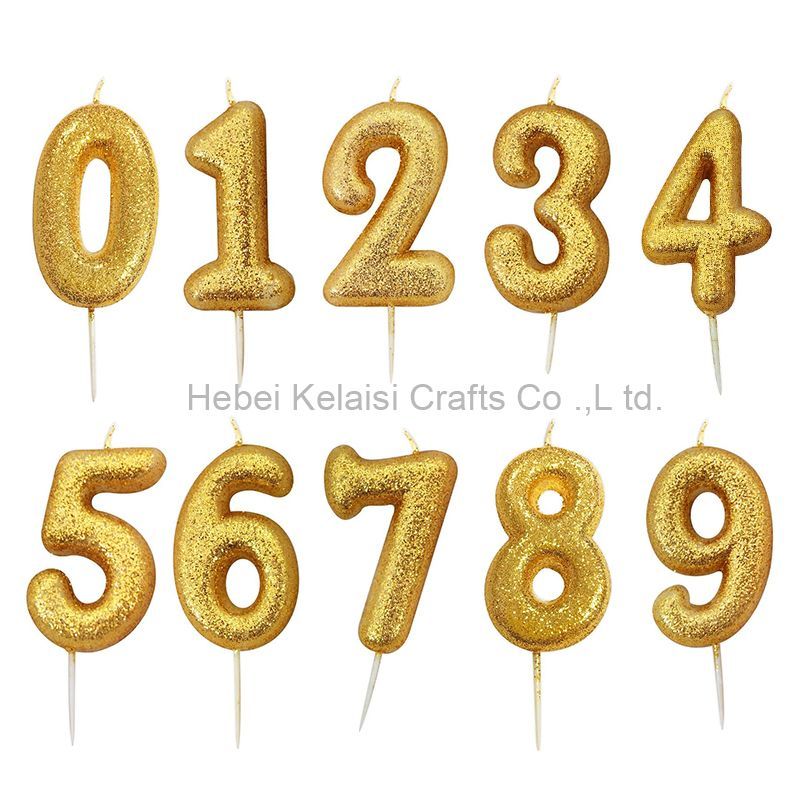
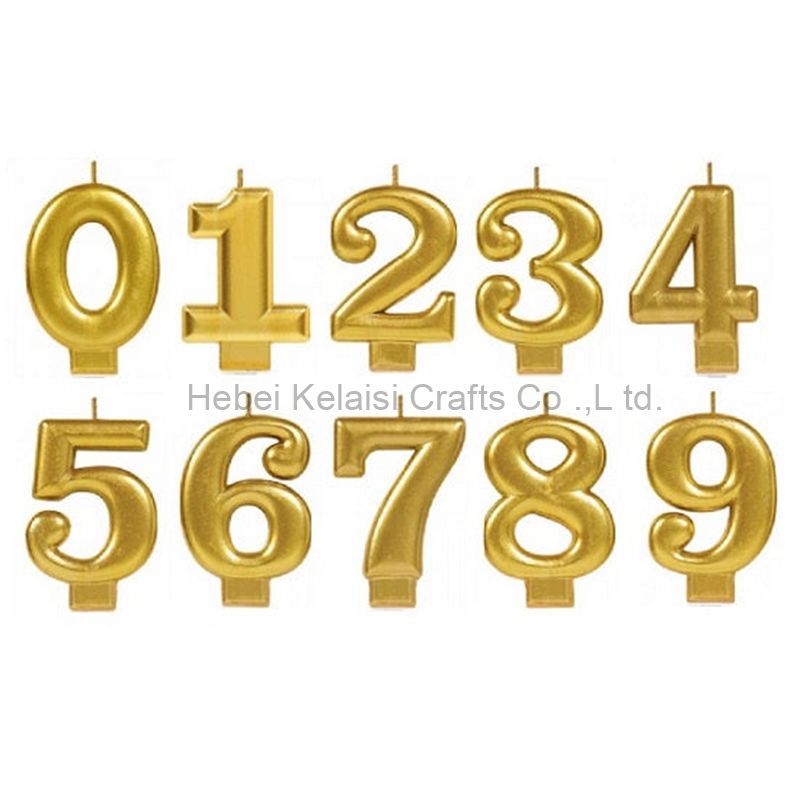
Classic glossy number candles from 0 to 9 remained the foundation of the range. Matte Morandi-inspired colors and larger milestone number candles added more design options. Individual color-box packaging was developed for the retailer's channel-specific requirements.
For spiral candles, we retained the classic thick styles used for children's celebrations. We added thinner spiral candles in matte finishes for smaller, more understated celebrations. We also introduced a mini spiral candle set containing six colors: red, yellow, blue, green, pink, and purple.
The changes combined existing products with targeted development work. The matte color options came from our existing range, while the larger milestone numbers were newly developed. The individual color-box packaging was customized for this retailer.
The objective was not to offer the largest possible number of products. It was to give the retailer a more coherent assortment, with clearer roles for its core styles and more relevant options for different customers.
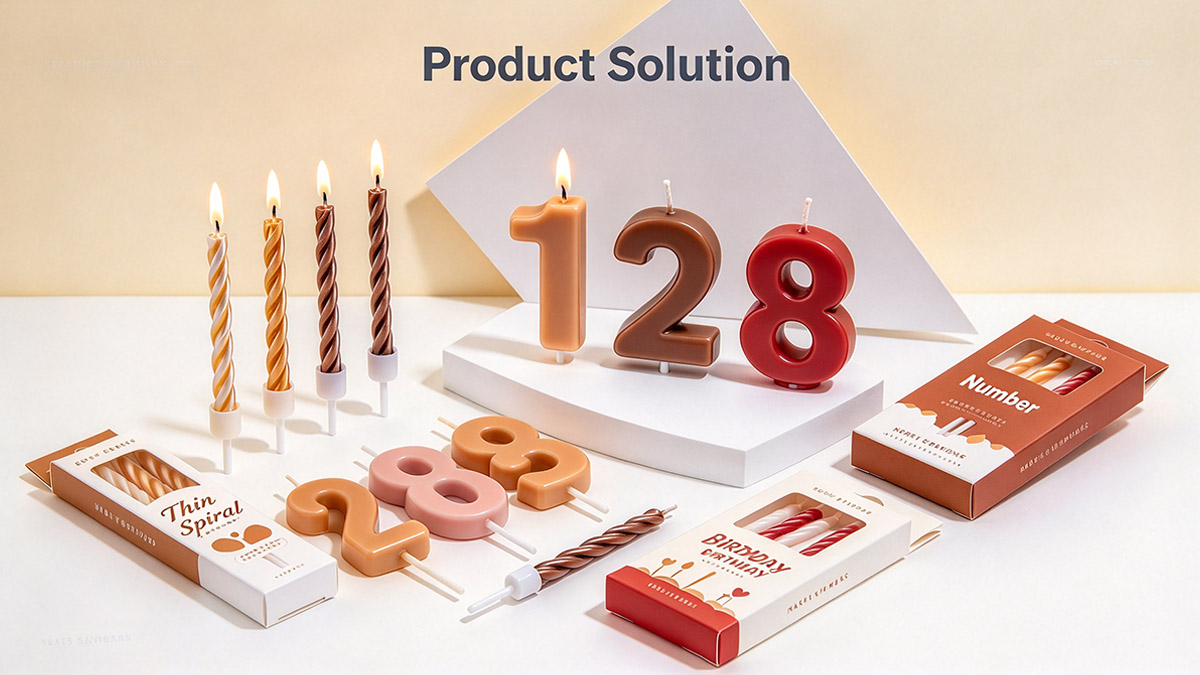
The review reduced the catalog from 356 SKUs to 284, a net reduction of 72 items. We discontinued 222 redundant or underperforming SKUs and introduced 150 new SKUs to fill identified gaps.
The revised assortment created three practical changes.
Less overlap in the catalog. Removing 222 SKUs simplified the product range and freed up shelf space for a more deliberate selection of items.
A broader range of relevant options. The 150 new SKUs introduced additional colors, sizes, designs, and packaging formats that had been missing from the previous assortment.
A clearer category structure. Classic products remained the foundation, while premium-style designs and channel-specific packaging served more targeted needs.
The commercial result was also measurable. According to our sales records, the volume of birthday candle products we sold to this retailer increased by 26% compared with the previous year.
The retailer's purchasing volume also expanded. Quarterly orders increased from 5,000 cartons to 10,000 cartons, equivalent to one 20-foot container based on the retailer's current packing configuration.
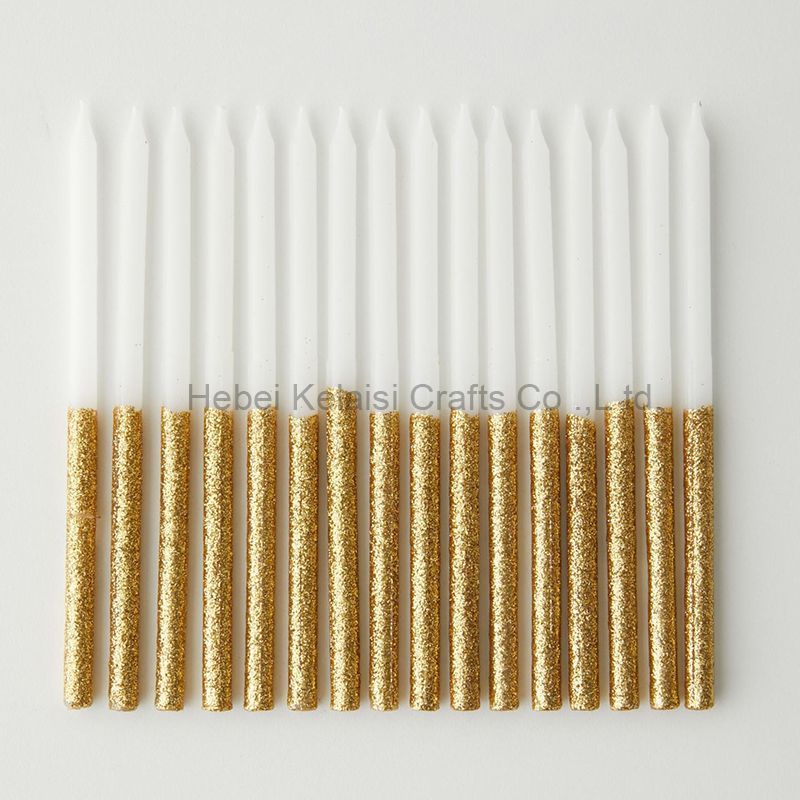
Among the products that sold best after the restructuring were gold spiral twisted birthday candles and large milestone number candles.
These results followed a more structured assortment and increased purchasing volume. They should not be interpreted as proof that SKU changes alone caused every improvement; other factors, including demand and the retailer's own business development, may also have contributed.
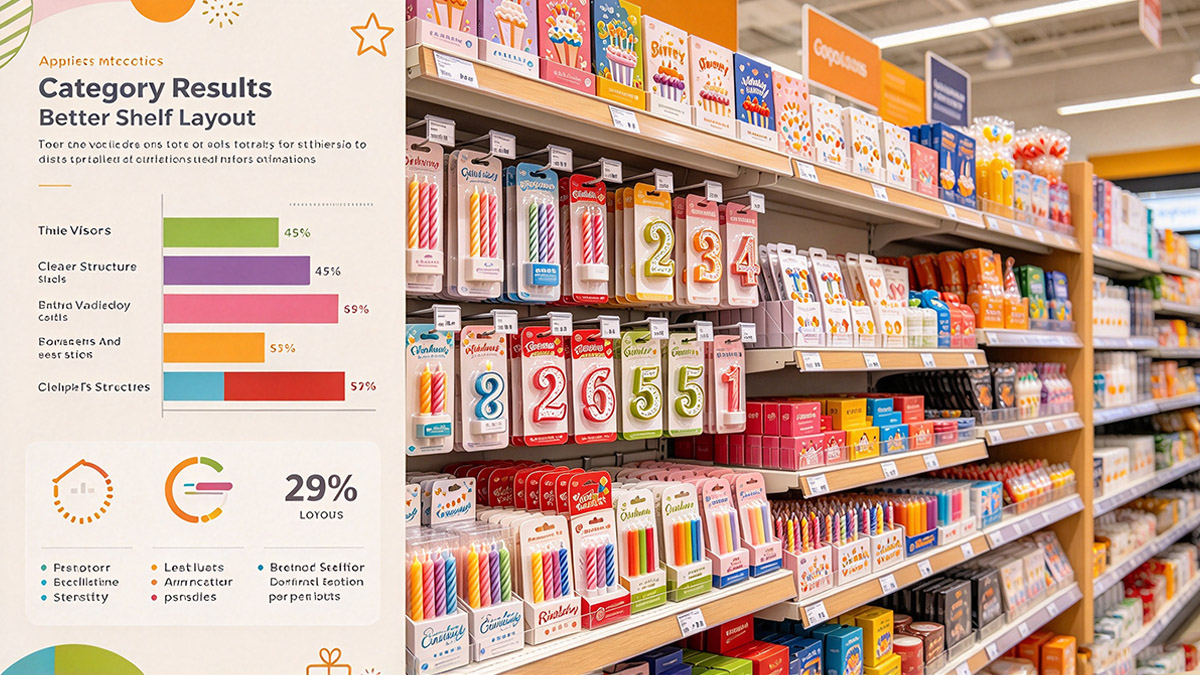
A larger catalog does not automatically create a stronger product category.
For retailers and distributors, effective assortment planning starts with understanding what each product contributes. Core styles provide continuity. Additional designs address specific customer preferences. Packaging helps products fit the way they are displayed and sold.
Removing products is only one part of the process. The other part is identifying what the assortment is missing and deciding which additions have a clear purpose.
For a retailer expanding into birthday candles, that can mean keeping the familiar number candles customers already recognize while introducing more suitable color options, different sizes, and packaging designed for the intended channel.
The goal is not to have fewer products for the sake of it. The goal is to make every SKU earn its place in the assortment.
The foundation matters more than the variety.
About Kelaisi Candle
Kelaisi Candle is part of the Huaming group, whose manufacturing history dates back to 1991. With facilities in Xingtai and Shijiazhuang, Hebei, we support international buyers sourcing birthday candles and party supplies. Our support for social-compliance audits, product testing, and quality documentation depends on the applicable product, market, and buyer requirements.
 Big size decorative scented candle
 Christmas Scented Candles Gifts Sets for Women
 happy birthday long thin glitter cake candles
 Luxury Golden Birthday Number Candle Sets
 Fancy cake decoration number annual birthday candle
 Gradient color Soy Wax Glass Jar Scented Candle
 Origami Style Vertical Pattern Wine Glasses Jar Candles
 Custom Mini Glass Jar Scented Candle
 3D Letter Happy Birthday Candles
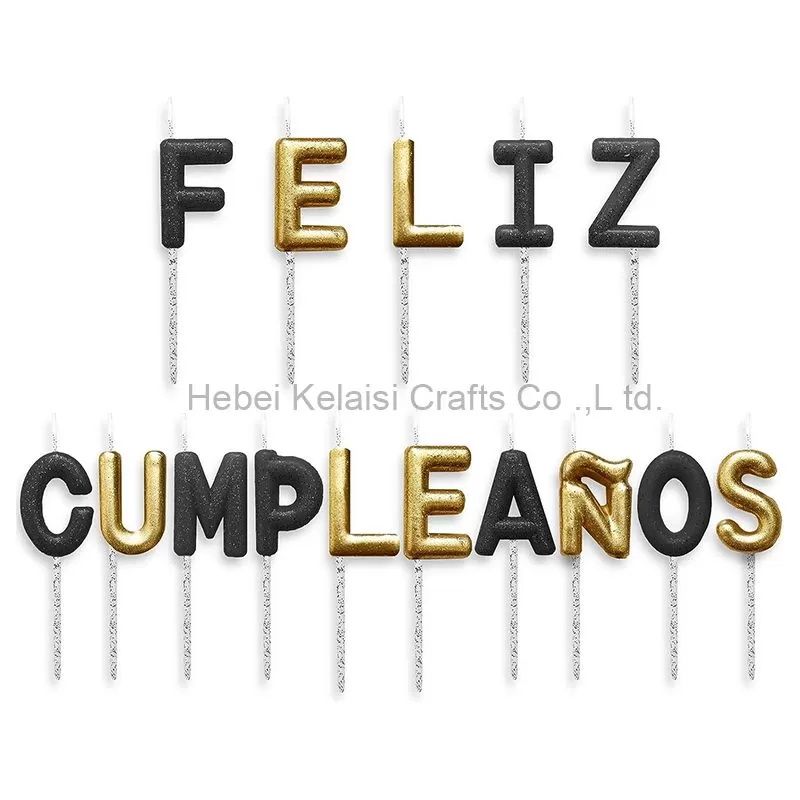 Decorative Birthday Candles
 St. Patrick's Day Decorations Set
 Christmas Party Balloons Supplies