Nov. 17, 2026
Birthday candles are among the smallest products used in celebrations, but designing one that burns properly involves more than simply combining wax and a wick. A candle must maintain a suitable flame, burn in a reasonably consistent manner and perform as expected throughout its intended burning period.
For manufacturers, these characteristics are influenced by several connected factors, including candle dimensions, wax formulation, wick construction, decorative materials and production consistency. A change in one component can affect the performance of the finished candle.
Understanding these relationships helps explain why birthday candle development requires both visual design and technical evaluation.
The physical dimensions of a birthday candle are an important starting point in product design.
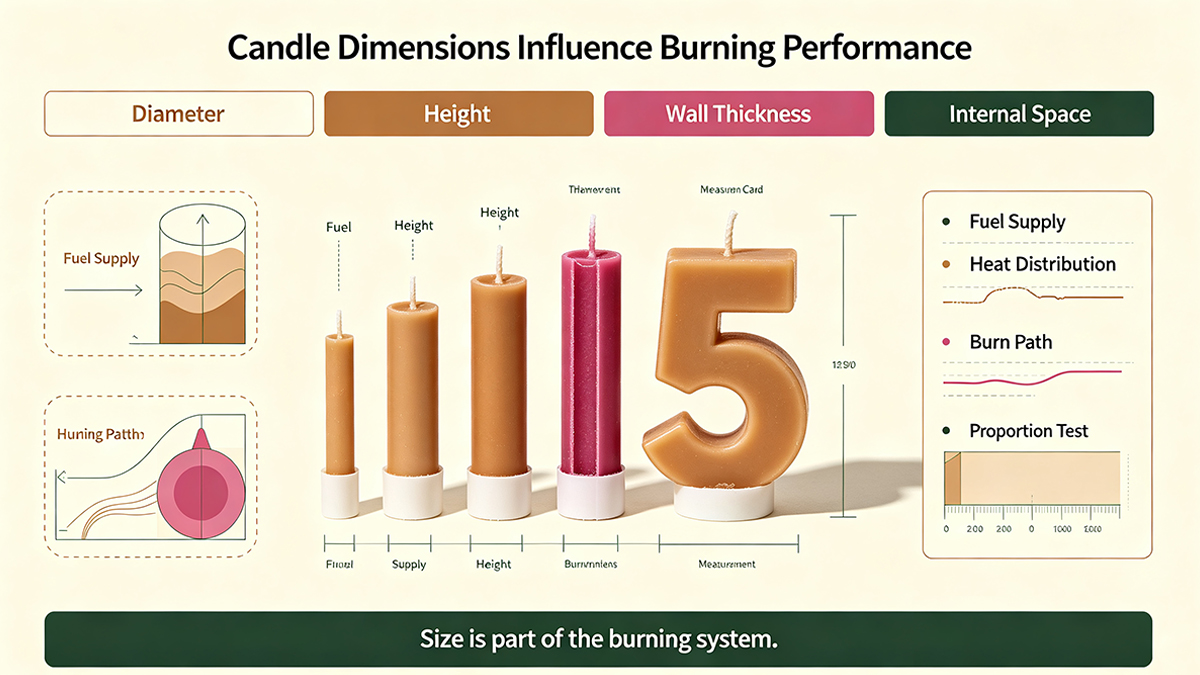
Diameter, height and overall shape influence how much wax is available as fuel and how the candle responds to heat during burning. A thin spiral candle and a thicker decorative candle, for example, do not necessarily behave in the same way, even if they use similar wax formulations.
A narrower candle has less wax surrounding its wick. This means that the relationship between the wick, the surrounding wax and the available fuel needs to be considered carefully.
Height also matters. It determines the amount of material available for combustion and contributes to the candle's intended burning duration. However, a taller candle does not automatically burn longer in direct proportion to its height. Wick performance, wax composition and the candle's geometry all influence the actual result.
For manufacturers, dimensions should therefore be considered together rather than treated as independent specifications.
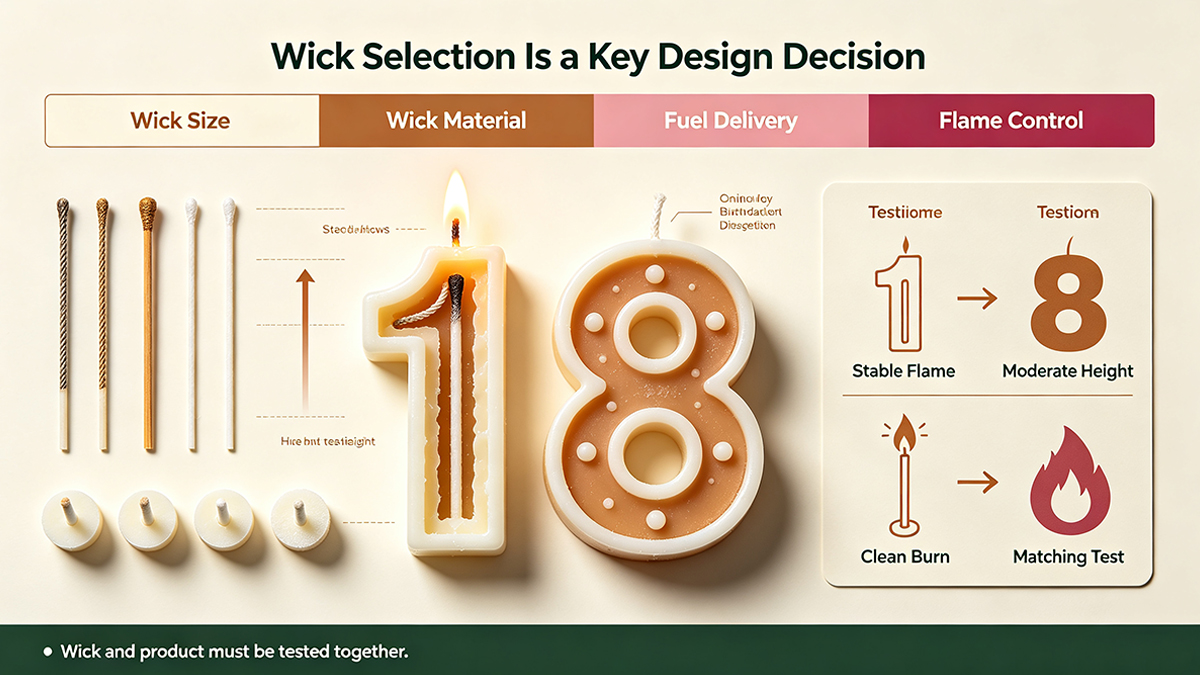
The wick is responsible for delivering fuel to the flame. When a candle is lit, heat melts some of the surrounding wax. Liquid wax travels through the wick by capillary action and vaporizes near the flame, where combustion takes place.
This process makes wick selection one of the most important technical decisions in candle development.
A wick that is too small for a particular candle design may struggle to maintain a stable flame. A wick that is too large may produce excessive flame height, faster fuel consumption or unwanted smoke.
Wick construction also matters. Material, braiding structure, thickness and stiffness can influence how the wick behaves during combustion.
Research published in the journal Combustion and Flame examined how different wick and fuel combinations affect candle burning rate, flame shape and melt pool diameter. The findings demonstrate that wick selection can significantly influence burning behaviour.
For birthday candles, the challenge is to match the wick to the candle's specific dimensions and wax formulation rather than selecting one wick specification for every design.
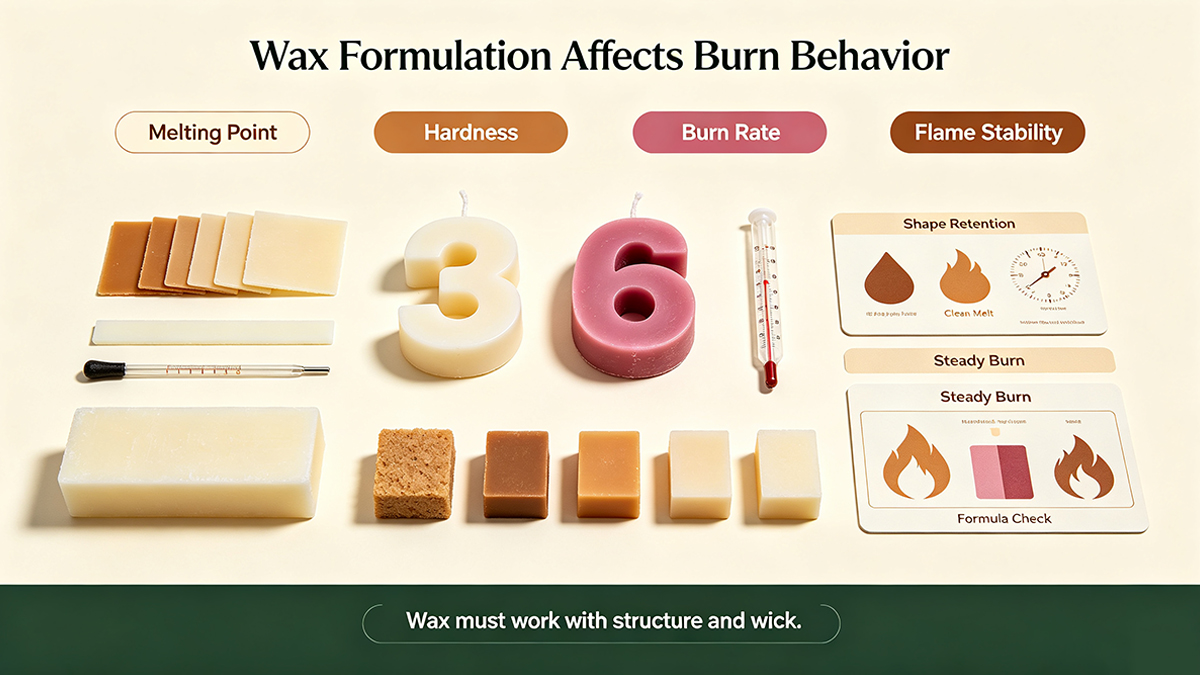
Wax is the main fuel of a candle, but its role extends beyond providing material for combustion.
Different wax formulations have different physical properties, including melting behaviour, hardness and thermal characteristics. These properties affect how a candle responds to the heat generated by its own flame.
For example, a formulation that is too soft for a particular candle structure may create difficulties during handling, storage or burning. A formulation that is too hard may require a different approach to wick selection and processing.
The choice of wax must also consider the candle's intended shape and manufacturing process.
Birthday candles often include thin bodies, twisted structures, decorative surfaces or multiple colors. The wax must be suitable for producing these designs while maintaining sufficient structural integrity.
This is why manufacturers need to evaluate wax properties in relation to the complete candle rather than choosing a formulation based on appearance alone.
Modern birthday candles are available in many forms, including spiral candles, number candles, letter candles, themed designs and other decorative shapes.
These designs create additional technical considerations.
A simple straight candle has a relatively consistent cross-section. A shaped candle may have narrow sections, wider sections, curves or uneven surfaces. Such differences can influence how heat is distributed and how the surrounding wax responds during burning.
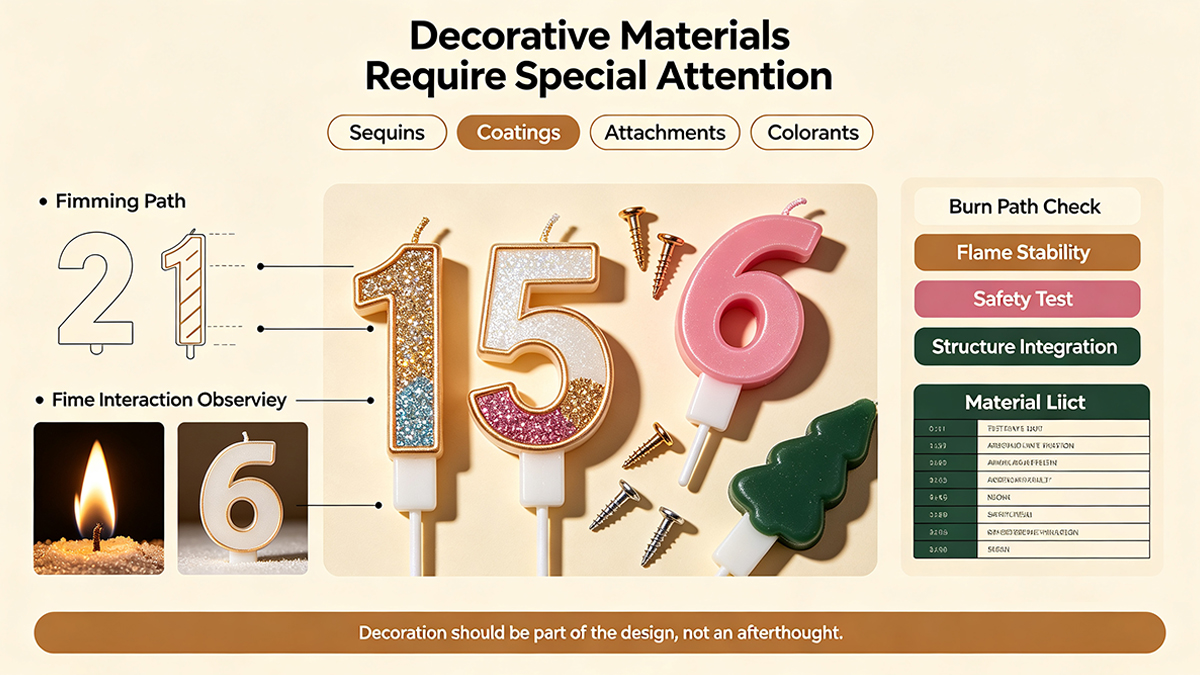
Color and decorative materials also require consideration. Pigments, coatings, glitter and other additives can affect the physical properties of the finished product. Their suitability should be evaluated rather than assumed.
For manufacturers, the important principle is that decorative changes should not be treated as purely visual modifications.
A new shape, coating or material combination may require additional performance testing before it can be considered suitable for production.
A properly designed birthday candle should produce a reasonably steady flame under its intended conditions of use.
Flame stability is influenced by the relationship between the wick, fuel supply, candle geometry and surrounding environment.
If the wick is poorly positioned or the fuel supply is inconsistent, the flame may flicker excessively or behave unpredictably. Air movement can also affect the flame, which is why testing conditions need to be controlled.
Other characteristics deserve attention as well:
Flame height: The flame should remain within applicable safety requirements.
Smoke and soot: Excessive visible smoke or soot can indicate an unsuitable combination of materials or wick characteristics.
Wax dripping: The candle's structure and formulation influence whether melted wax runs down its surface.
Secondary ignition: Decorative components or unintended combustible materials should not create additional ignition points.
These factors are especially important when developing candles with unusual shapes or decorative features.
A candle's appearance cannot reliably predict its burning performance. Even two candles that look almost identical may behave differently if their internal structures or material specifications are not the same.
This makes performance testing an essential part of product development.
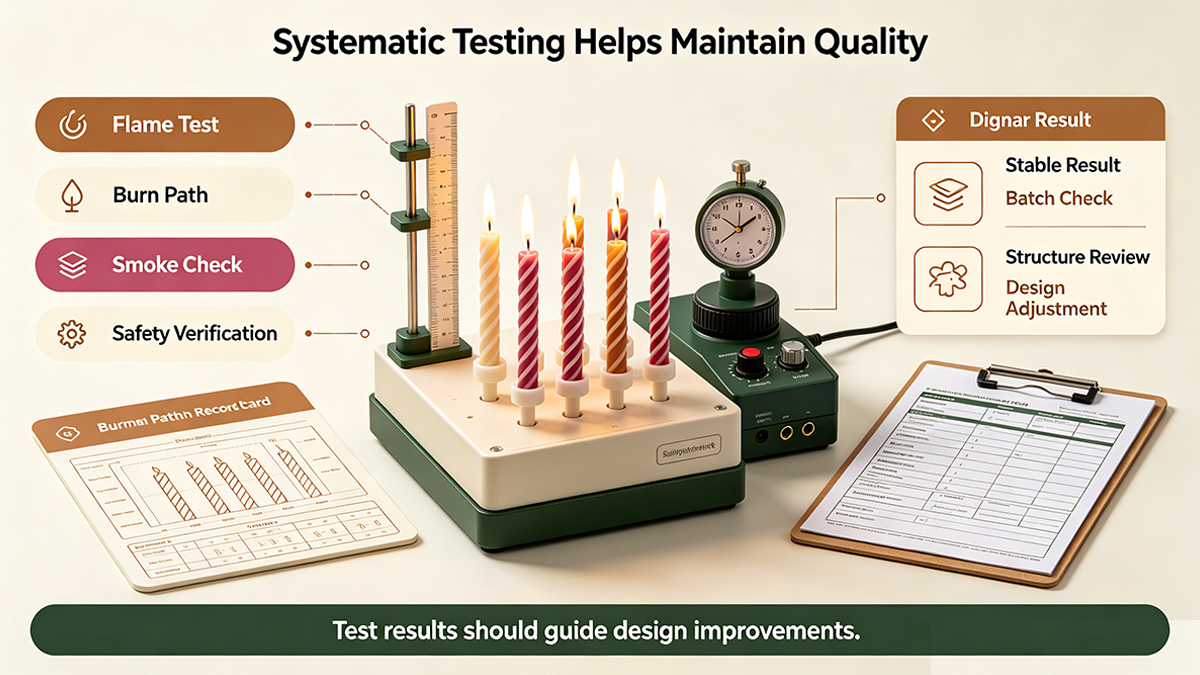
Manufacturers should evaluate representative samples using consistent test conditions and record the results. Relevant observations include flame behaviour, burning duration, dripping, smoke production and any abnormal changes during combustion.
Testing should reflect the finished product, including its actual dimensions, wick, wax formulation and decorative materials.
A modification to one component may require further evaluation. For example, changing the candle diameter without reviewing the wick specification could affect the balance between fuel supply and flame size.
Applicable candle safety standards, including ASTM F2417 and relevant EN requirements, should also be considered according to the destination market and product category.
Birthday candles are decorative products, but their technical performance remains fundamental.
A successful design needs to balance several requirements: attractive appearance, suitable structural strength, consistent dimensions, appropriate burning characteristics and manufacturing feasibility.
This balance becomes more challenging as designs become more elaborate. A spiral candle, a number candle and a themed sculptured candle may require different approaches to material selection, wick positioning and testing.
For manufacturers, the development process should therefore begin with a clear understanding of the intended design and its functional requirements.
The goal is not simply to produce a candle that looks attractive before lighting. It is to create a finished product whose appearance and burning characteristics work together.
Ultimately, birthday candle design is a combination of material science, combustion behaviour and practical manufacturing knowledge. Although the product may be small, the decisions behind its design have a direct influence on its quality and performance.
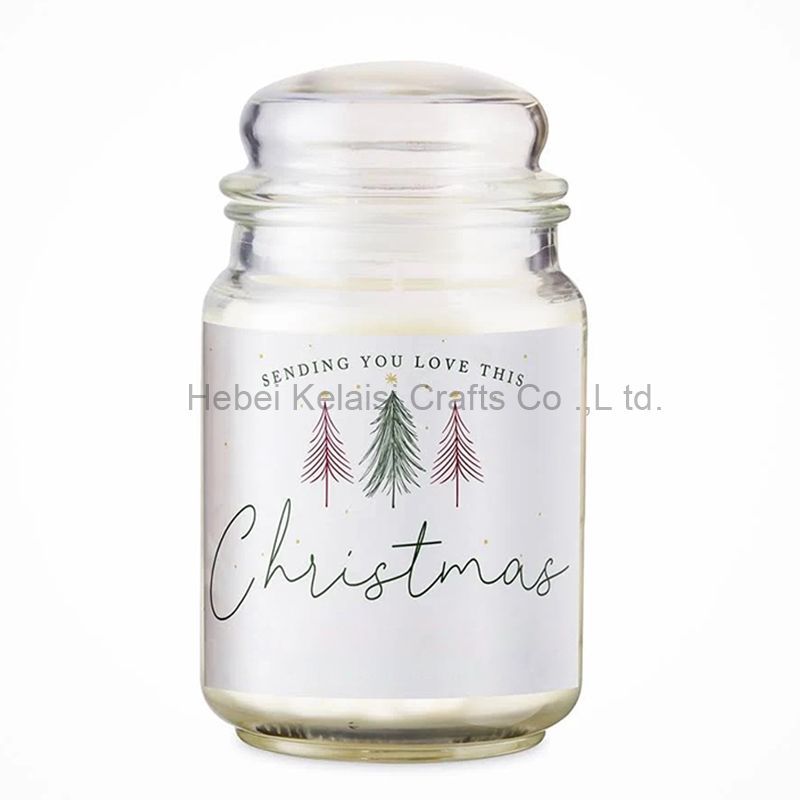 Big size decorative scented candle
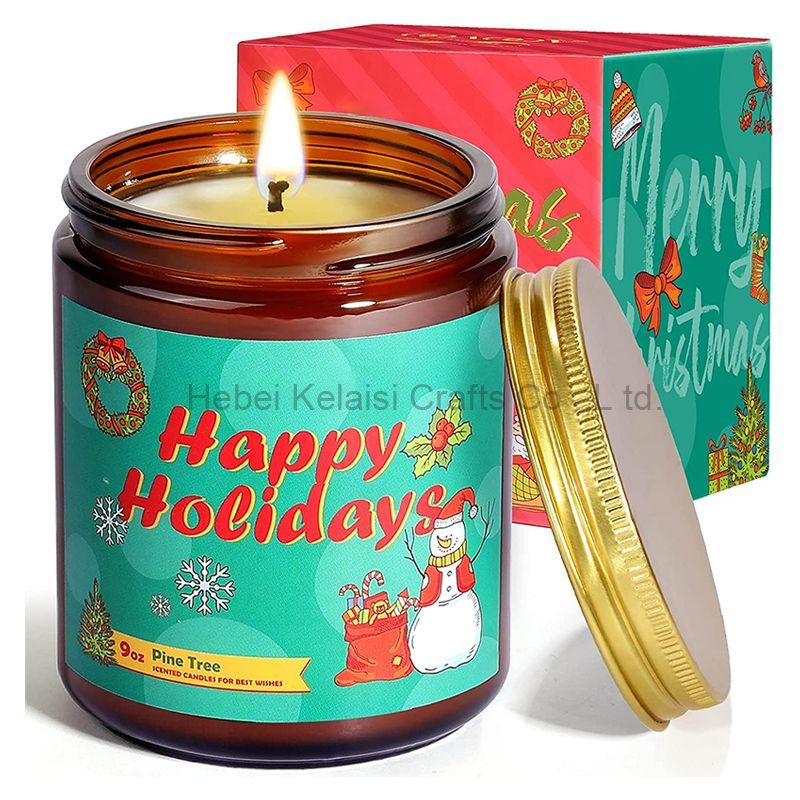 Christmas Scented Candles Gifts Sets for Women
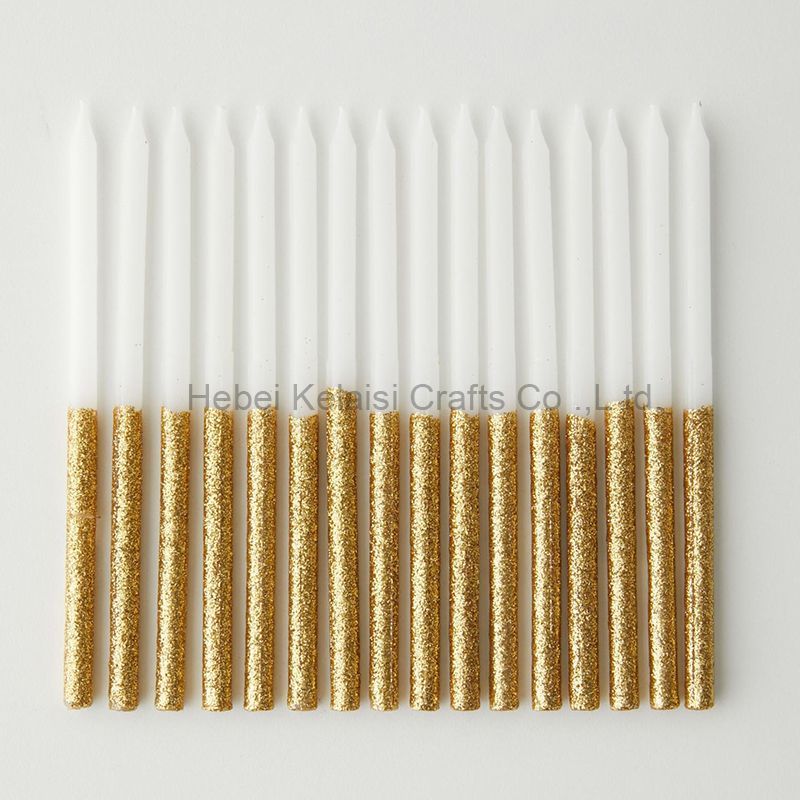 happy birthday long thin glitter cake candles
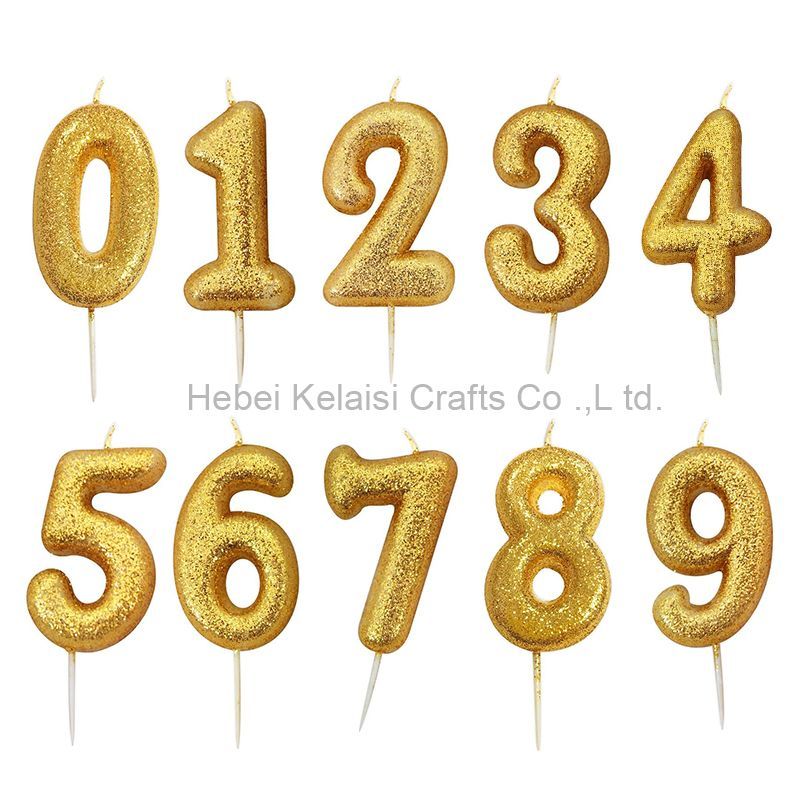 Luxury Golden Birthday Number Candle Sets
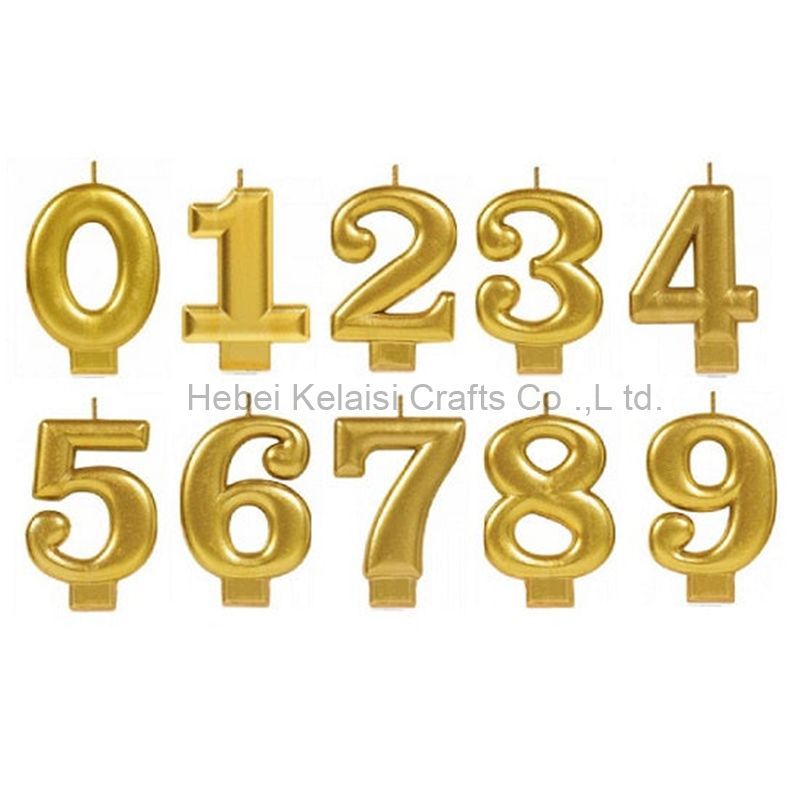 Fancy cake decoration number annual birthday candle
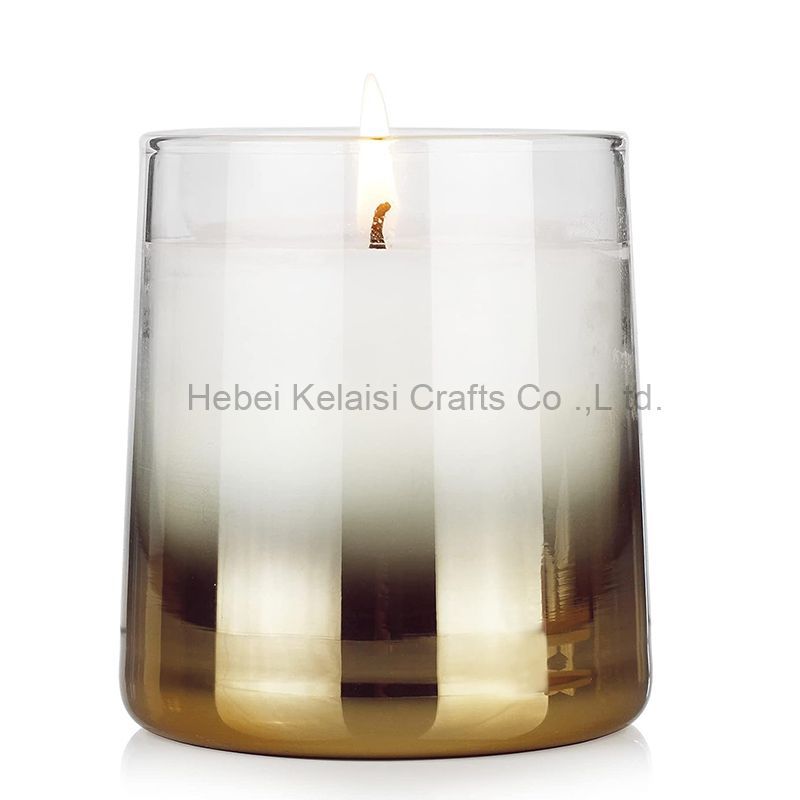 Gradient color Soy Wax Glass Jar Scented Candle
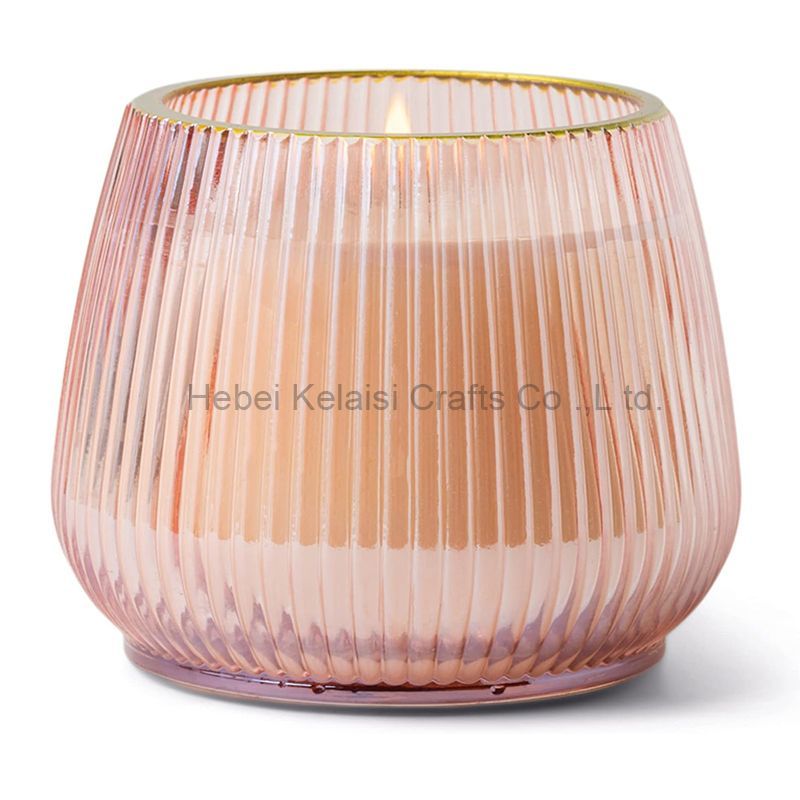 Origami Style Vertical Pattern Wine Glasses Jar Candles
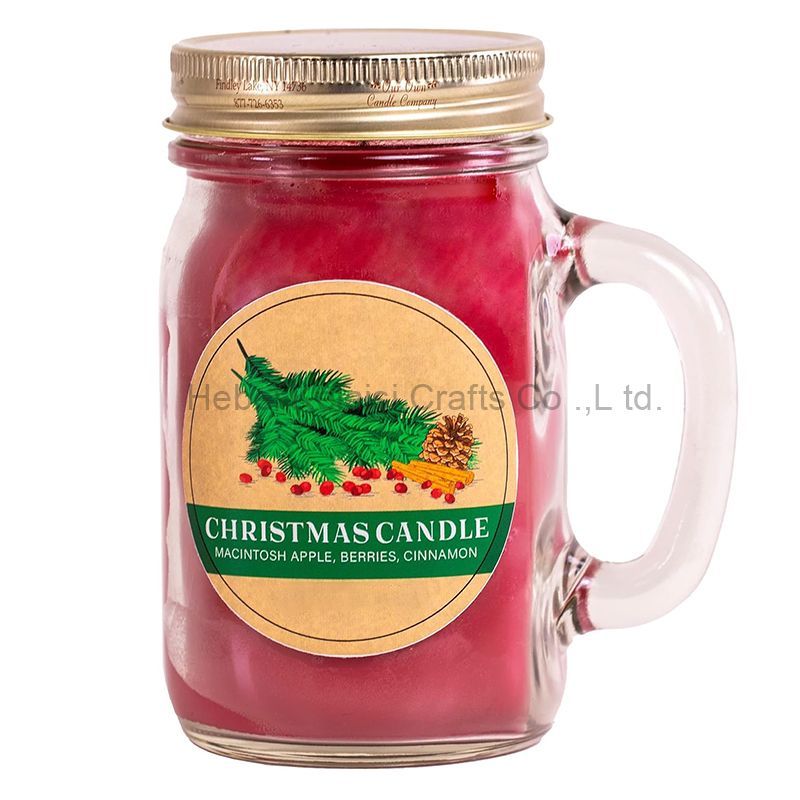 Custom Mini Glass Jar Scented Candle
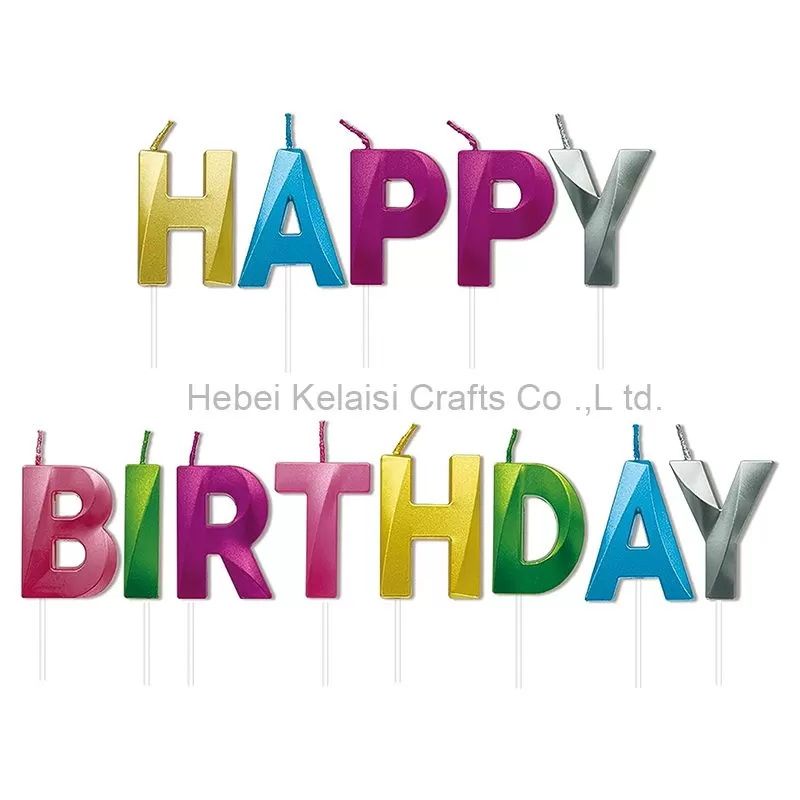 3D Letter Happy Birthday Candles
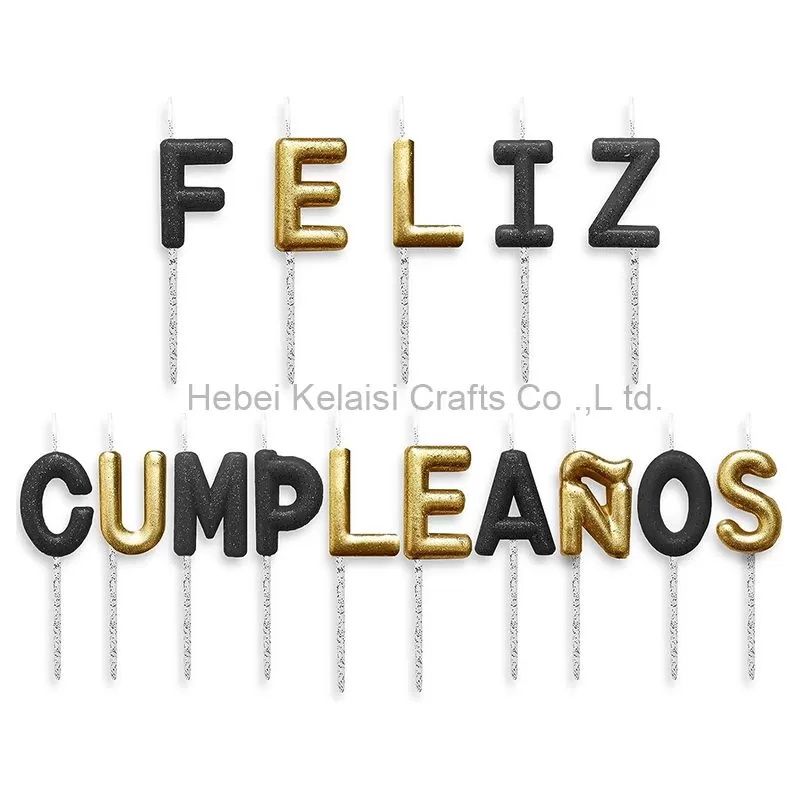 Decorative Birthday Candles
 St. Patrick's Day Decorations Set
 Christmas Party Balloons Supplies