Jul. 13, 2026
We manufacture number candles and traditional birthday candles for US and European markets.
Most birthday cakes today feature either traditional candles or number-shaped candles. The choice between them is not random. It reflects a shift in how people celebrate — from counting years to displaying them.
Number candles are not just a convenience. They are a cultural signal.
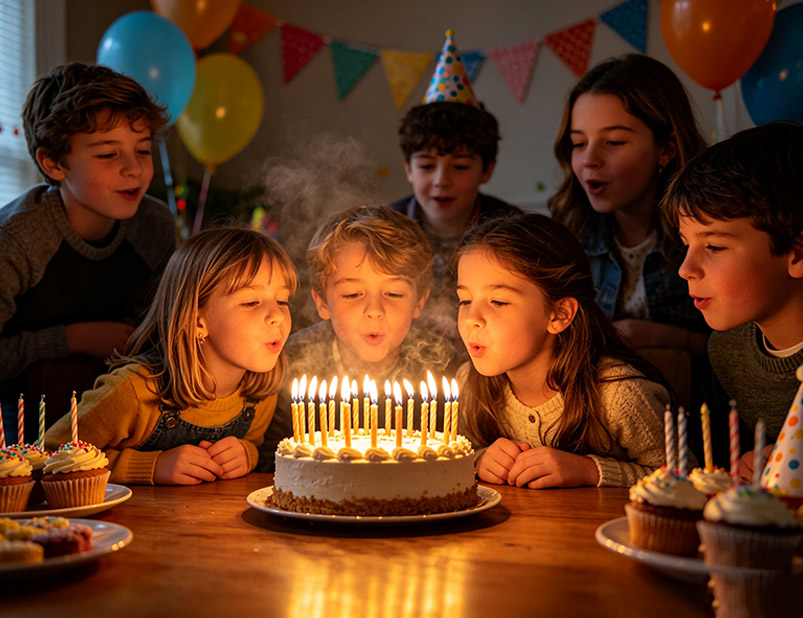
The tradition of placing candles on birthday cakes dates back centuries. In 18th-century Germany, the Kinderfest celebration placed one candle on the cake for each year of the child's life, sometimes with an extra candle to represent the year ahead. The number of candles literally counted the years.
By the late 19th century, the practice was well documented in Switzerland, with birthday candles corresponding to each year of life and the celebrant required to blow them out individually. The ritual was simple: candles counted age. Blowing them out made a wish.
That logic held for generations. If you were turning eight, you put eight candles on the cake. If you were turning fifty, you put fifty candles on the cake — or, increasingly, you found a better way.
The problem with the one-candle-per-year tradition became obvious as people aged. Fifty candles overcrowd a cake. They melt into the frosting. They create a fire hazard. The tradition worked well for children. For adults, it became impractical.
That is where number candles entered the picture.
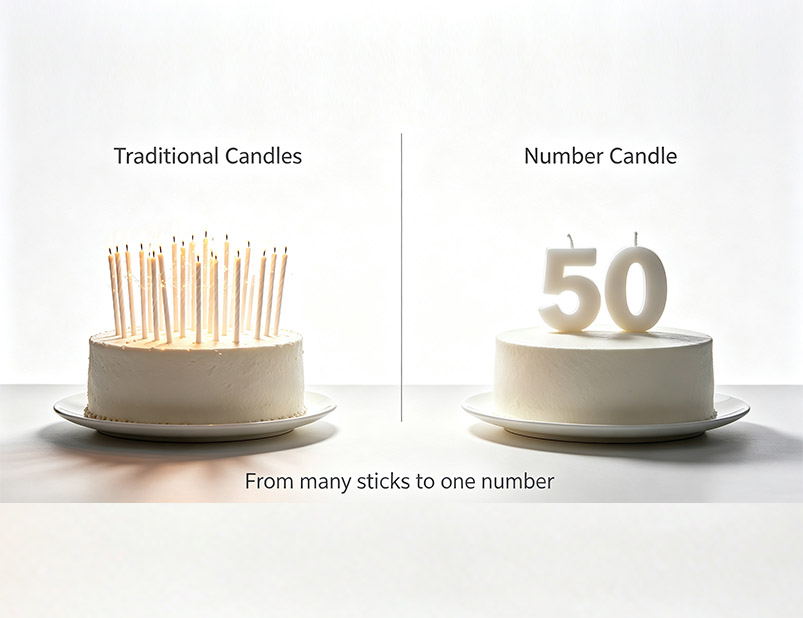
Number candles emerged as a practical solution to a growing problem: too many candles on adult birthday cakes. A single number "5" and a single "0" replaced fifty individual candles. The visual was cleaner. The fire risk was lower. And the age was still clearly displayed.
But the shift was not just practical. It changed the meaning of the candles themselves.
Traditional candles are individual. They add up to an age. Number candles are declarative. They state the age outright. The difference is subtle but real: one counts, the other announces.
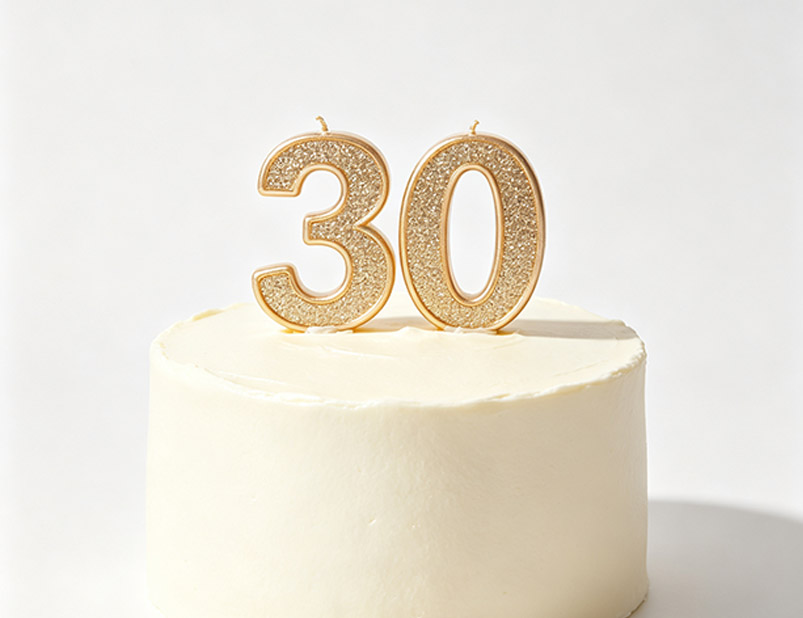
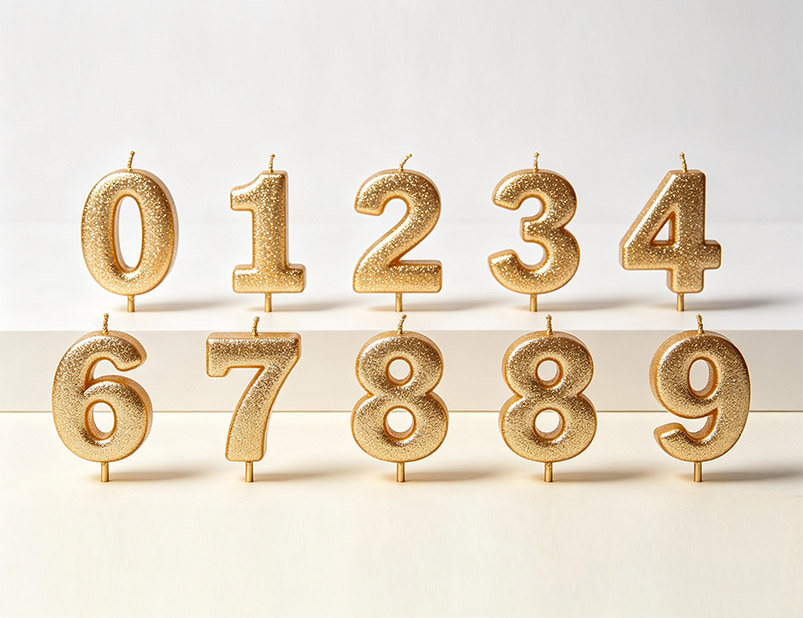
Number candles also changed the visual experience of the birthday cake. A single number candle — particularly a three-dimensional, glitter-coated, or themed design — functions as a centerpiece, not a collection of individual flames. It draws the eye to the number itself. The age becomes the visual anchor of the cake, not just a calculation.
This shift is now standard. For milestone birthdays — 30th, 40th, 50th — number candles are the default choice. The tradition of placing individual candles is reserved almost exclusively for children's birthdays, where the number is small enough to manage, and the ritual of "blowing out all the candles in one breath" still carries magical weight.
Number candles carry a different cultural meaning than traditional candles.
They are about identity, not just age. A number candle displays who you are in numerical form. A "30" on a cake does not just say "thirty years." It says "thirty years, and here is the evidence." The number is a marker of life stage, not just a count of years.
They are about celebration, not just ritual. Traditional candles emphasize the act of blowing them out — the wish, the smoke, the belief that the wish travels upward. Number candles emphasize the number itself. The celebration is about arriving at that age, not just passing through another year.
They are about visual impact, not just tradition. Number candles are often more decorative than traditional candles. Three-dimensional designs, glitter coatings, metallic finishes, and crown details turn the number into an ornament. The candle is not just a functional object. It is part of the cake's design.
Today, number candles are available in a wide range of designs — from simple digits to decorated, themed, and premium finishes — allowing suppliers to meet different retail positioning needs.
In this sense, number candles reflect a broader cultural shift: birthdays are becoming more curated. The aesthetic of the celebration matters as much as the tradition.
For buyers sourcing candles for the US and European markets, the distinction between traditional and number candles is not trivial. It affects product assortment, packaging, and marketing.
Number candles are not a niche product. They are the standard choice for adult birthdays and milestone celebrations. Retail buyers should expect suppliers to offer number candles across a range of styles — three-dimensional, glitter, metallic, and themed designs — alongside traditional candles.
Number candles signal a more curated celebration. Consumers buying number candles are often planning a more visually intentional party. They care about how the cake looks in photos. Suppliers who understand this can position number candles as part of a broader party aesthetic, not just a functional item.
The cultural meaning varies by age group. For children, traditional candles still carry the magic of the wish. For adults, number candles carry the weight of identity and milestone. Buyers who understand this distinction can tailor their product lines to different customer segments.
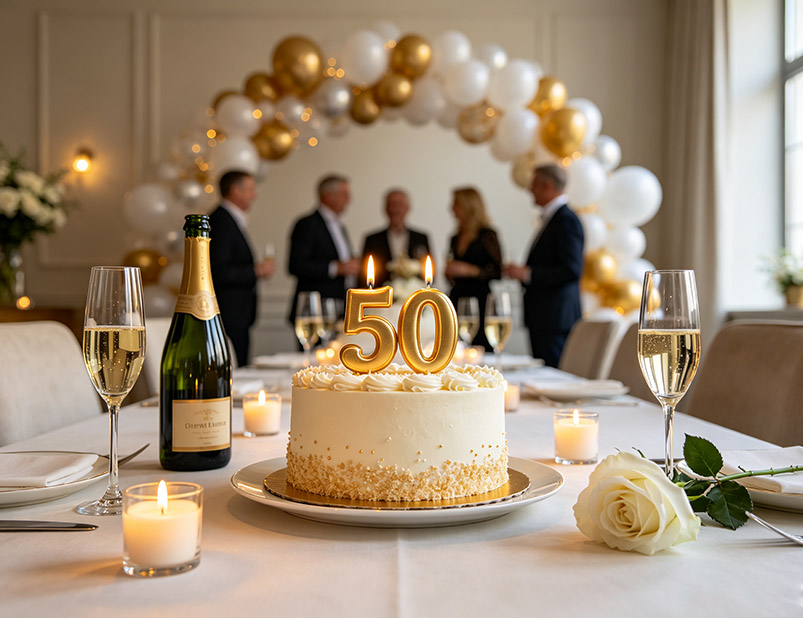
Number candles are not just a practical alternative to traditional candles. They represent a shift in how people celebrate birthdays — from counting years to displaying them, from ritual to identity, from tradition to aesthetic.
For buyers, offering the right mix of number and traditional candles is no longer optional. It is part of meeting evolving consumer expectations.
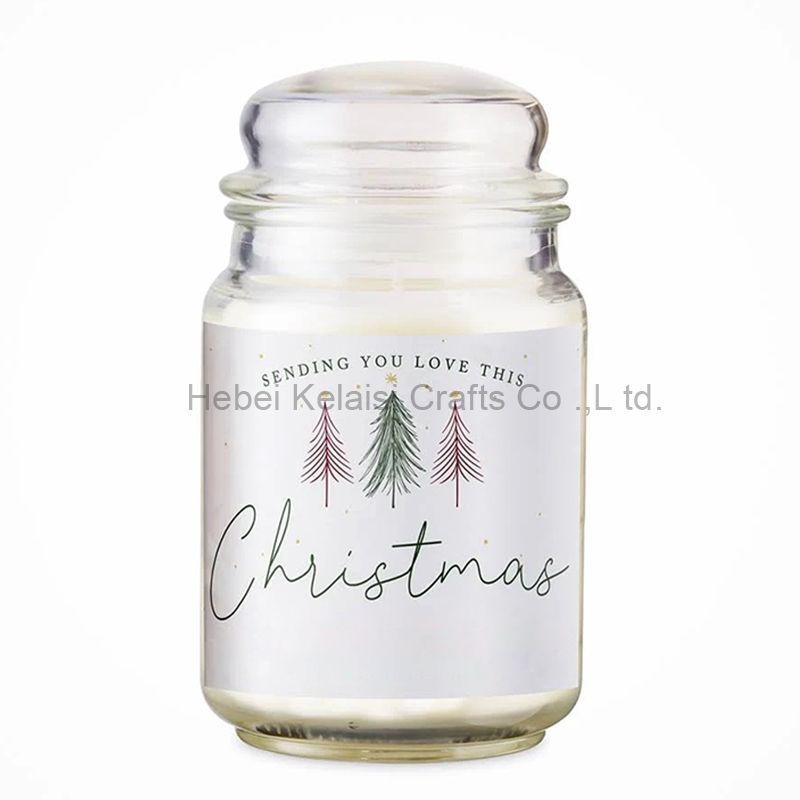 Big size decorative scented candle
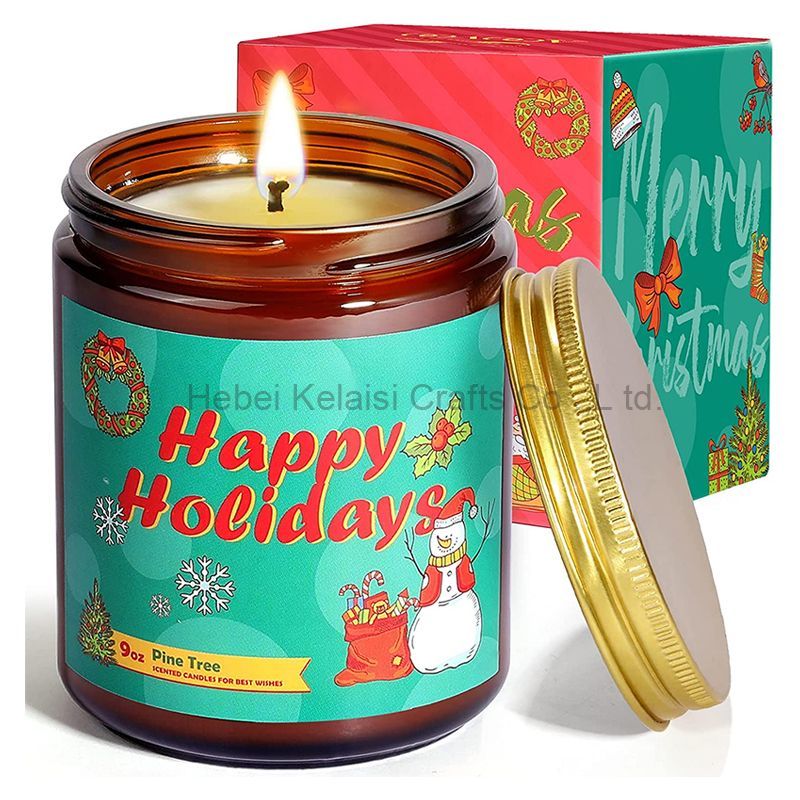 Christmas Scented Candles Gifts Sets for Women
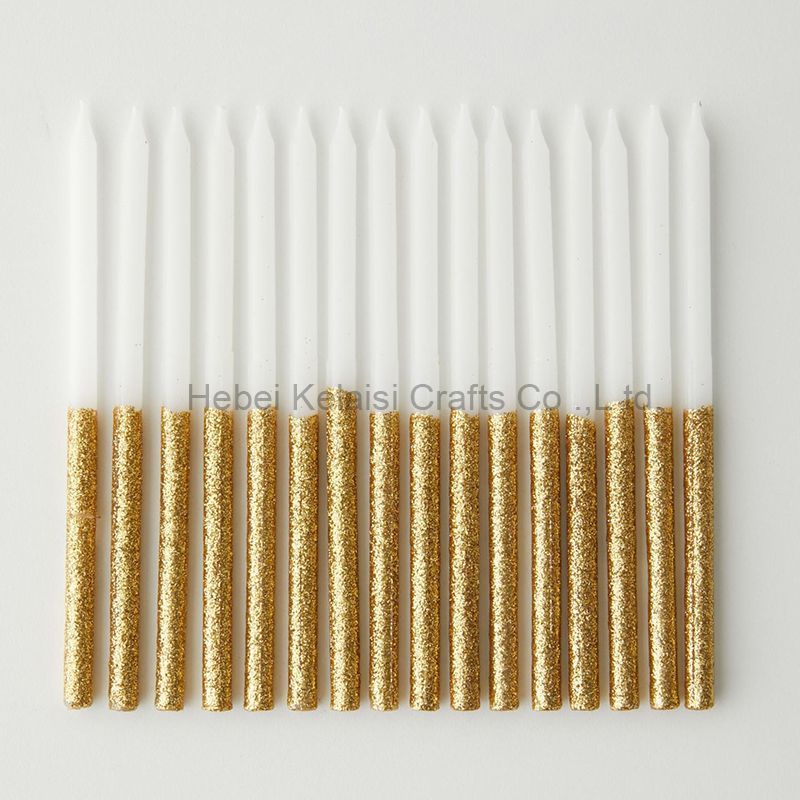 happy birthday long thin glitter cake candles
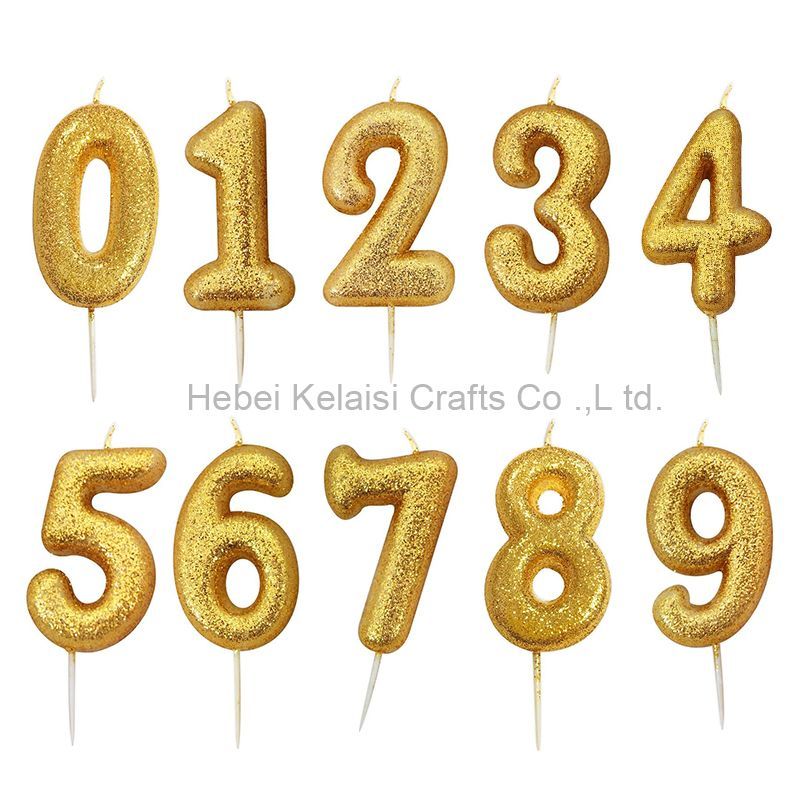 Luxury Golden Birthday Number Candle Sets
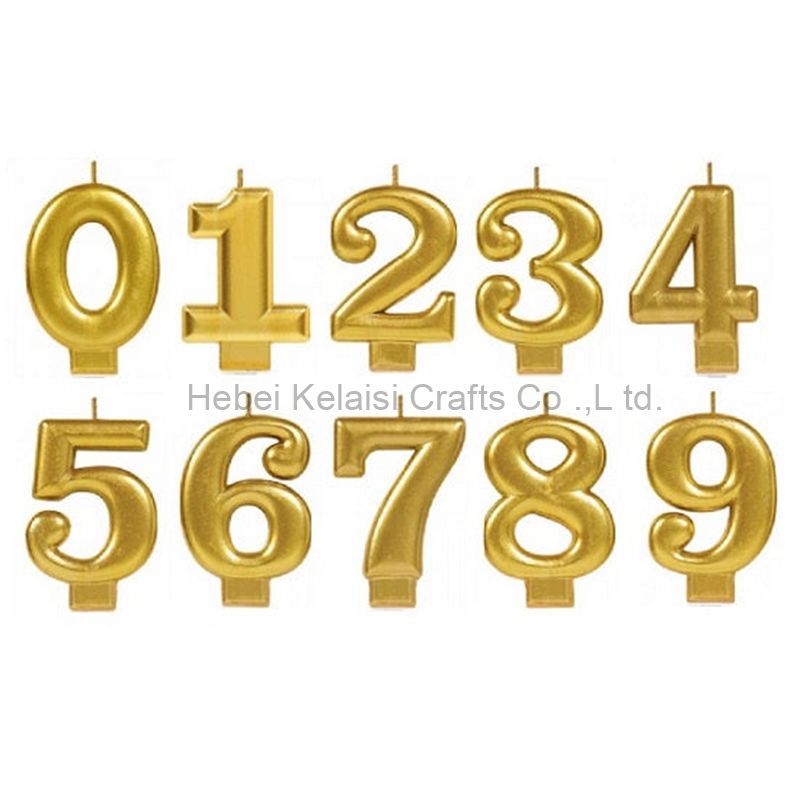 Fancy cake decoration number annual birthday candle
 Gradient color Soy Wax Glass Jar Scented Candle
 Origami Style Vertical Pattern Wine Glasses Jar Candles
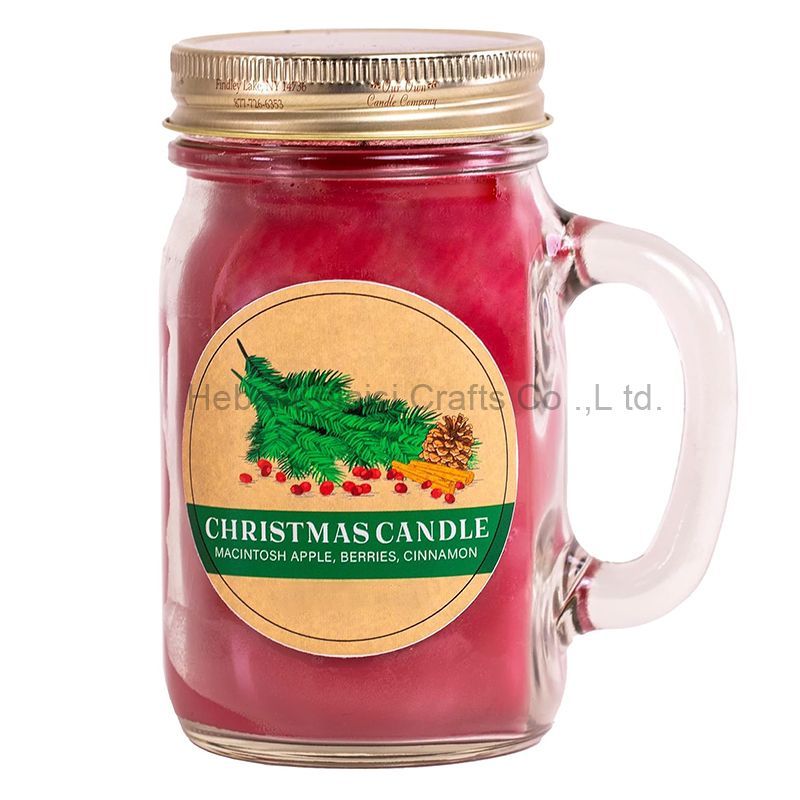 Custom Mini Glass Jar Scented Candle
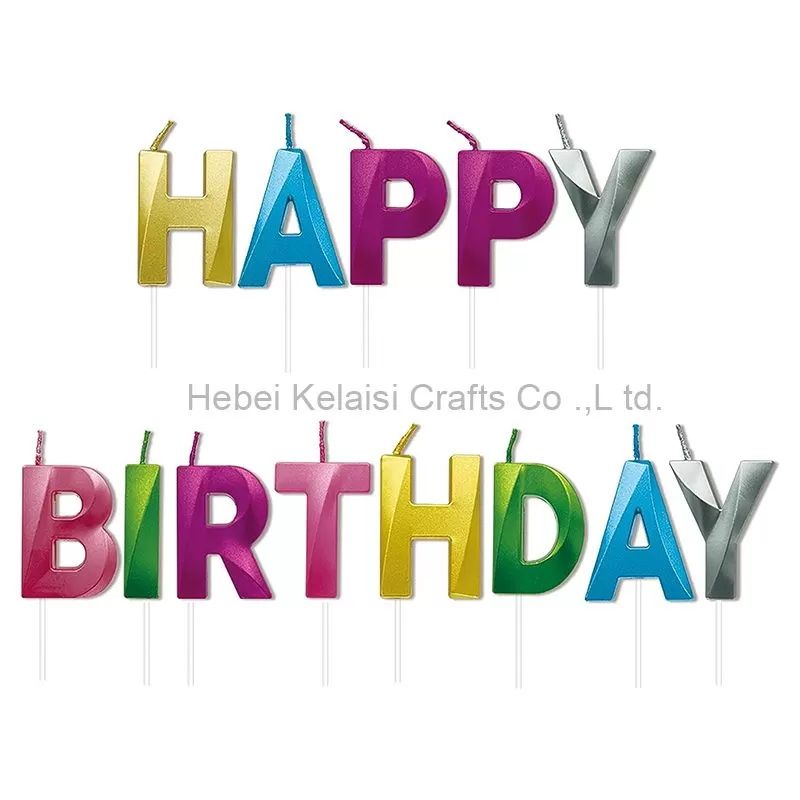 3D Letter Happy Birthday Candles
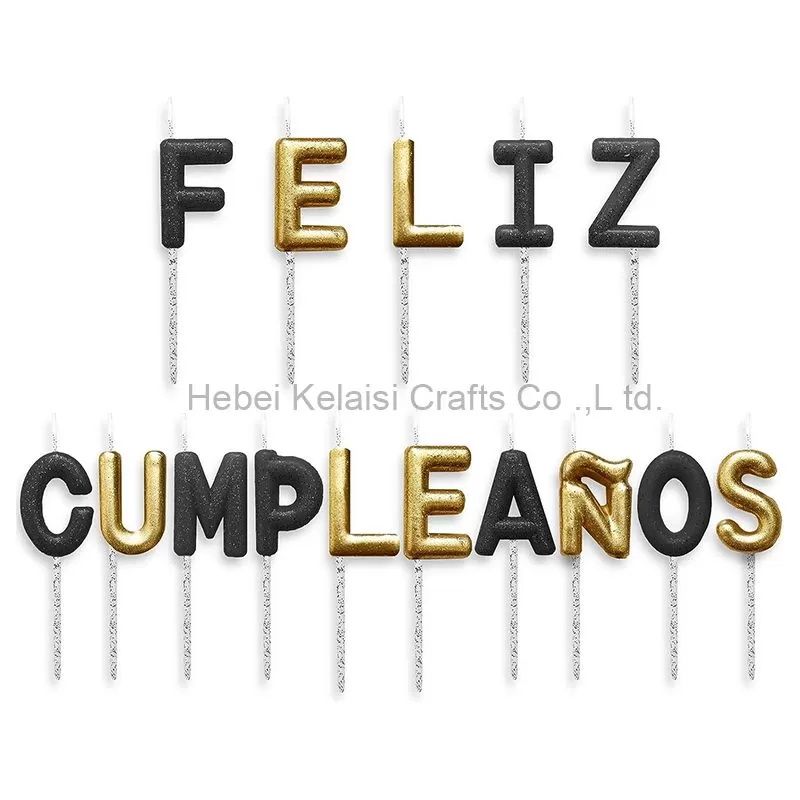 Decorative Birthday Candles
 St. Patrick's Day Decorations Set
 Christmas Party Balloons Supplies