Oct. 13, 2026
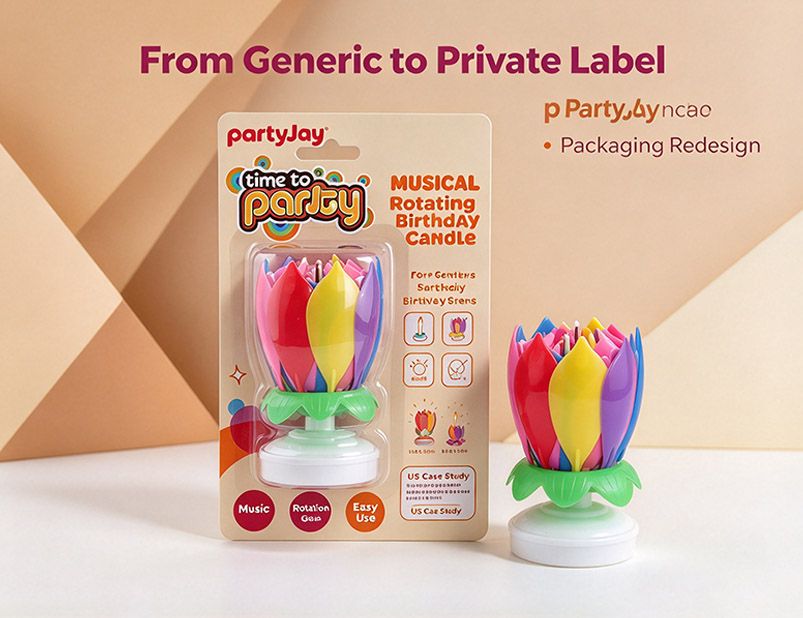
A private-label packaging project for a music birthday candle, from the first design draft to 50,000-unit production.
The client is a California-based Amazon seller specializing in party supplies and holiday decorations. The business had been selling a patented music rotating birthday candle in unbranded packaging and was preparing to expand into offline party-supply wholesale.
The product had a distinctive rotating flower design and built-in music, but the packaging did little to differentiate it from competing listings. More importantly, customer complaints pointed to two practical issues: damaged packaging on arrival and confusion about how to light the candle correctly.
Before the packaging redesign, the same ASIN recorded an average buyer-requested return rate of 5% over the previous six months.
The client wanted to introduce private-label packaging that would strengthen brand recognition, protect the product during distribution, explain the lighting process clearly, and meet the packaging requirements established for its intended sales channels.
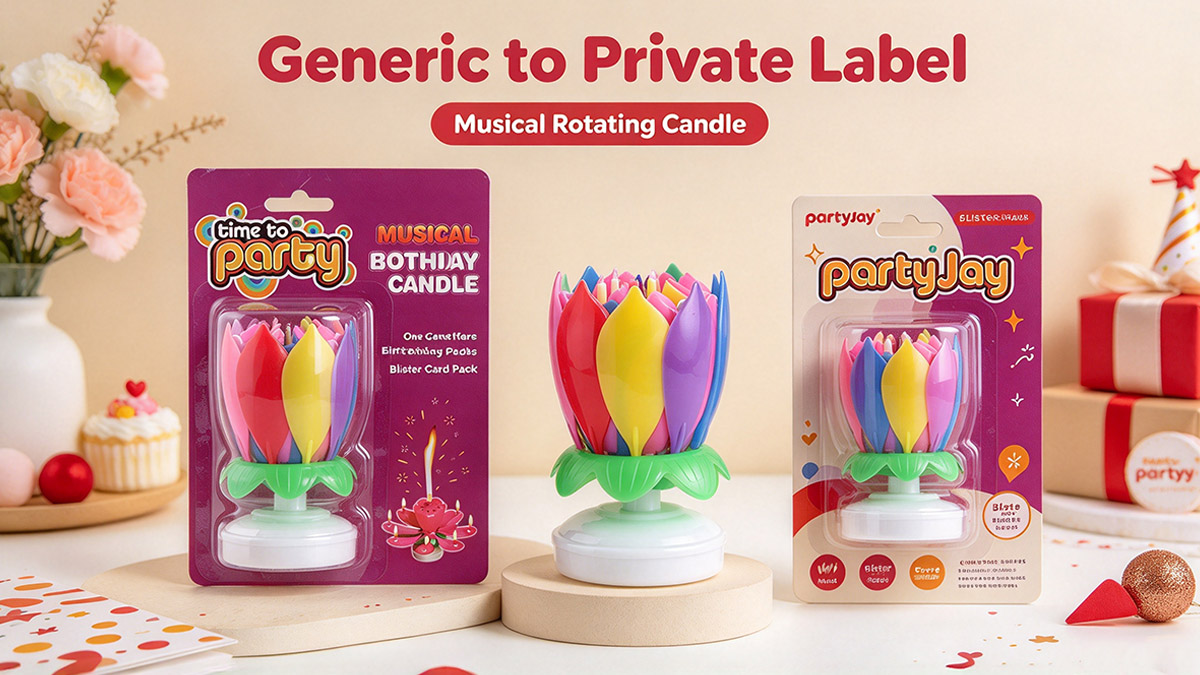
The project involved a patented music rotating birthday candle featuring eight small, flower-shaped candles, a rotating open-and-close mechanism, and a built-in music chip.
The packaging format was a blister card with a euro hook, designed for product presentation in online listings and retail environments.
The packaging needed to do more than display the product. It also had to protect the rotating mechanism, keep the candles securely in place, communicate the correct lighting procedure, and present the client’s brand consistently across its sales channels.
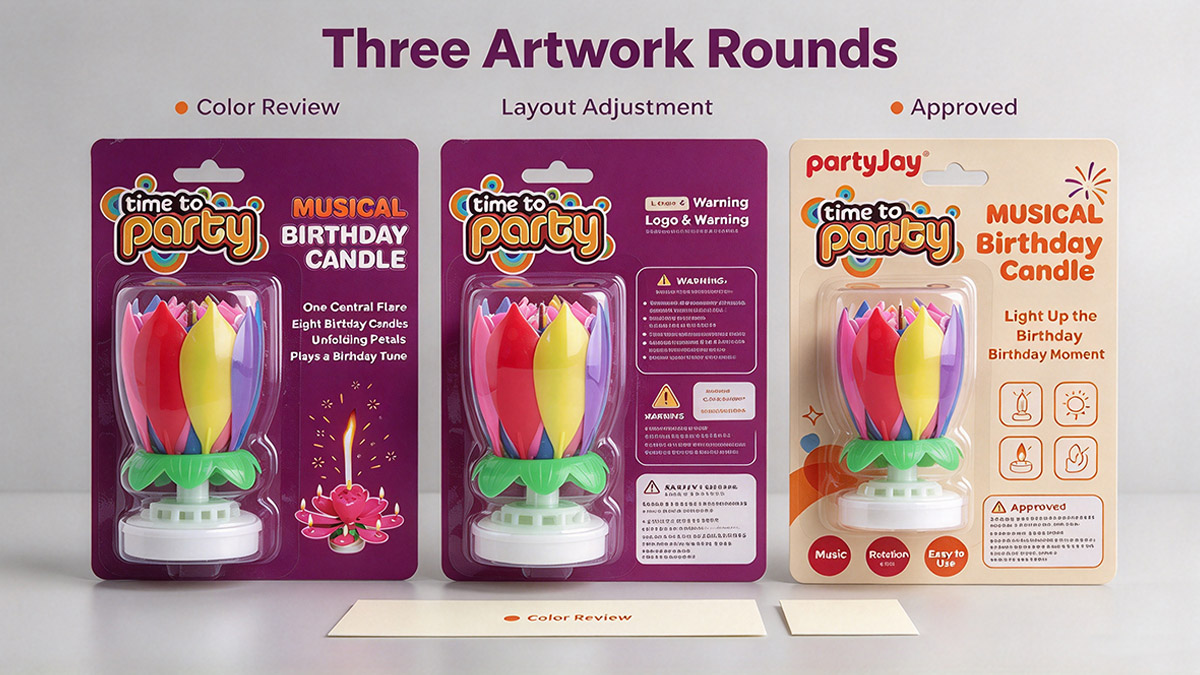
The factory prepared 3D renderings, while the client’s US-based designer handled the graphic layout. The artwork went through three review rounds.
Round 1: The overall color palette was too dark.
Round 2: The proposed gold-foil logo placement overlapped with the safety warning, requiring a layout adjustment.
Round 3: The revised artwork was approved.
The front of the card featured the brand logo, a high-resolution product image showing the petals open, the words “Happy Birthday,” and a background color matched to the client’s selected Pantone reference.
The back carried step-by-step usage instructions, safety information, factory details, and a barcode. The lighting instructions specifically highlighted the red center wick, while a separate graphic explained how to cut the wire to stop the music.
Artwork approval established the visual direction, but the packaging still needed to prove that it could protect the product in physical handling.
One of the client’s concerns was how to present the product’s compliance and safety information without overcrowding the package. As a first-time private-label seller, the client initially wanted to include several certification marks commonly seen on similar products.
Rather than adding every mark by default, the team reviewed the requirements for the intended markets and checked which documents, warnings, and labels were relevant to this particular product.
The review covered the applicability of EN 71, the relevance of FCC requirements for the electronic components, and the client’s reference to BS 7114. Each item needed to be assessed against the product’s actual classification, technical characteristics, and applicable market requirements before it could be included.
For the US packaging, the team also reviewed the candle fire-safety warning layout with reference to ASTM F2058, where applicable. The warning needed to remain visible and legible while fitting the overall design.
The final artwork balanced the brand identity with the required product information, origin statement, barcode area, usage instructions, and applicable safety warnings. The aim was not to display the greatest number of compliance marks, but to ensure that every claim on the package could be supported by the relevant documentation.
The project went through three sampling rounds before mass production.
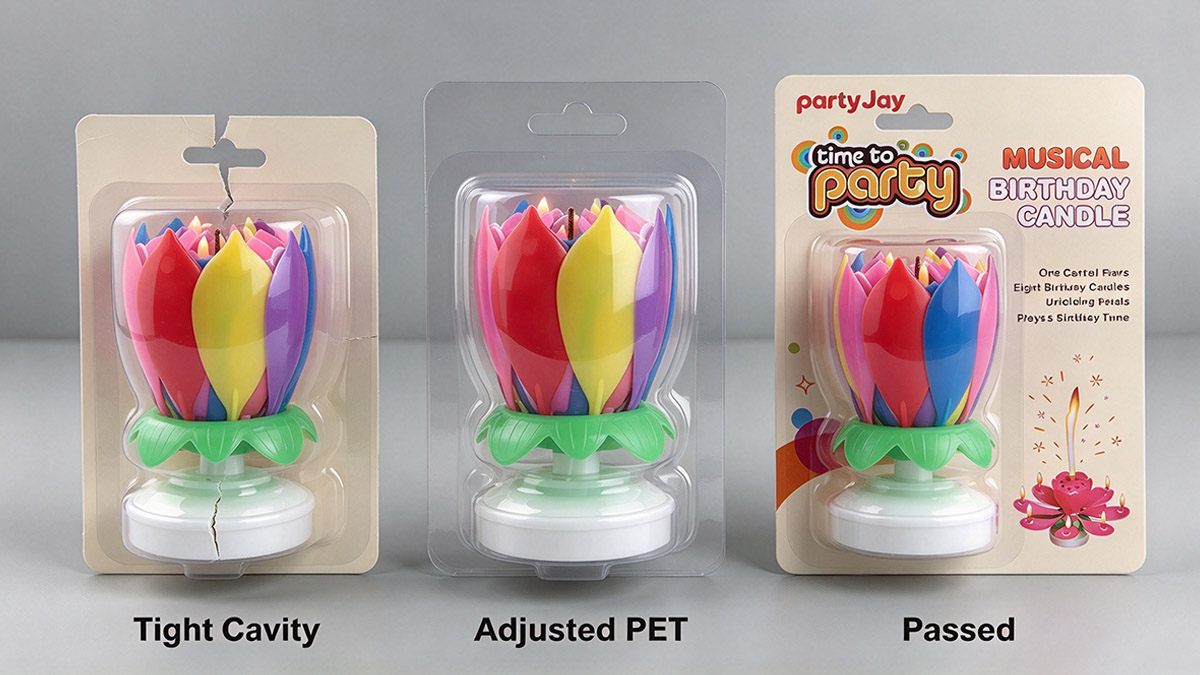
In the first round, the printed colors matched the approved artwork, but the physical packaging failed during handling tests. The blister cavity was too tight for the rotating petals, which became stuck, and the card cracked along its fold line during a drop test.
The initial feedback was clear: “The visual is perfect, but the physical structure is a disaster.”
For the second round, the team adjusted the blister mold depth and changed to a more flexible PET material. However, when the client tested the revised sample at its California headquarters, the paperboard still cracked at the fold under impact. This showed that changing the blister alone was not enough. The paperboard specification also needed to be reconsidered.
For the third round, the factory upgraded the card from 300 gsm to 350 gsm high-stiffness white paperboard and prepared another sample. The blister cavity, card material, and folding structure were reviewed together rather than as separate design elements.
The revised sample passed the client’s six-face, 1-meter drop test. The client then confirmed: “Drop test passed. Approved for mass production.”
Before mass production, the client required a signed pre-production sample approval. The approved sample served as the reference for production, including the artwork, paperboard, blister structure, product fit, and usage instructions.
The client also appointed SGS to inspect the bulk shipment.
During the final preparation stage, the team reviewed the available fire-safety documentation against the client’s requirements. Where an updated report was required, the factory coordinated with the testing laboratory to arrange the necessary follow-up work before shipment.
This process kept the approved sample, production specifications, and supporting documentation aligned before the order moved into full production.
The order covered 50,000 sets, with a production lead time of 25 days after deposit and final sample approval.
Before shipment, the factory carried out outgoing quality checks. The recorded defect rate was 0.6%, equivalent to approximately 300 sets identified for rework or rejection out of 50,000 sets. The recorded issues included light scratches on the blister shell, damage around the card fold area, and non-functioning music components.
The client had set an internal defect threshold of 2%. The recorded outgoing defect rate was below that threshold, and the shipment passed the client’s appointed SGS inspection.
The finishing specification also required a practical trade-off. The client initially preferred full matte lamination for a premium appearance, but rubbing between the blister and card could leave visible scuff marks. The final solution combined matte lamination with local UV treatment on the logo, preserving the intended look while addressing the surface-wear concern.
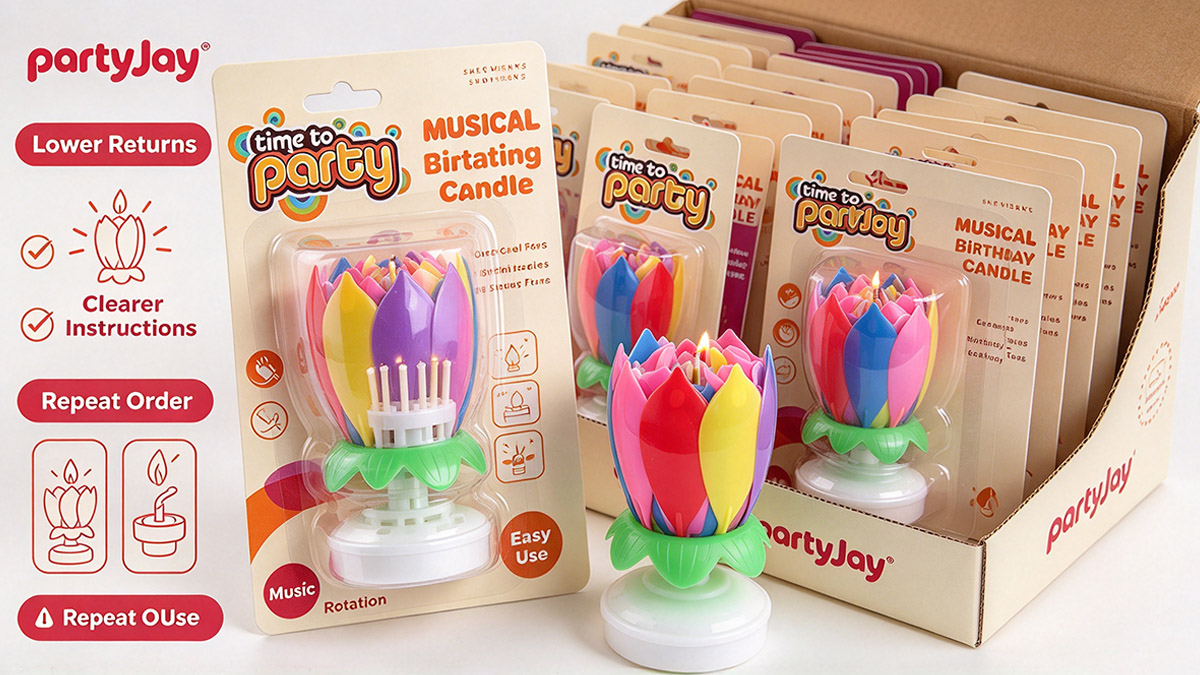
The new private-label package went live under the same ASIN.
During the first full month after launch, the buyer-requested return rate was 0.8%, compared with the 5% average recorded over the preceding six months for the same ASIN. Both figures were taken from the same Amazon Seller Central return-rate metric for the same ASIN, using the platform’s applicable reporting windows.
The first full month’s sales volume also doubled compared with the average monthly sales over the three months before the packaging change.
The project addressed two recurring sources of customer complaints: packaging damage and confusion about how to light the music candle. The revised blister structure and stronger card improved physical protection, while the illustrated instructions made the lighting process easier to follow.
Three months after the initial order, the client placed a repeat order for 100,000 sets.
The results were encouraging, although the comparison covered different time windows and should not be interpreted as a controlled test of packaging alone. The return-rate improvement was consistent with the problems identified during the project, while sales performance could also have been influenced by demand, seasonality, listing changes, and inventory availability.
Private-label packaging involves more than applying a logo to an existing product. In this project, the team had to coordinate artwork, paperboard strength, blister fit, product instructions, and the client’s documentation requirements.
The first sample showed that a design can look right on screen and still fail in physical handling. The later revisions demonstrated why packaging materials and structure need to be assessed together.
For brands moving from unbranded packaging to private label, packaging should be treated as part of the product experience. It affects how the item is presented, protected, understood, and received by the customer.
About Kelaisi Candle: Our group has been involved in candle manufacturing since 1991. Hebei Kelaisi Crafts Co., Ltd., established in 2009, specializes in birthday candles and party supplies. We support international buyers with social-compliance, product-testing, and quality documentation covering requirements such as BSCI, SEDEX, CE, RoHS, EN71, and ASTM F963, where applicable.
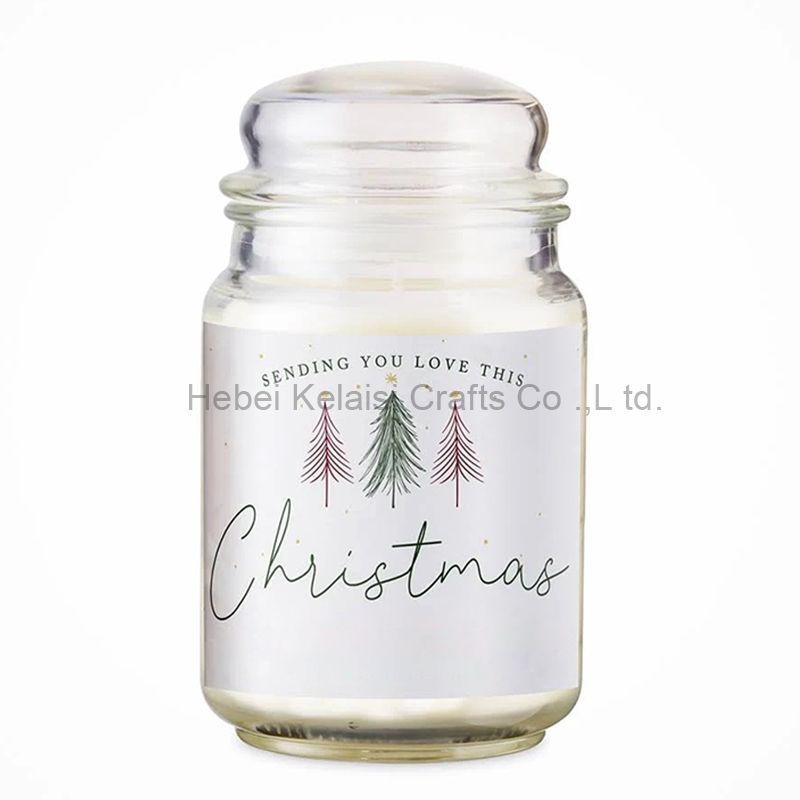 Big size decorative scented candle
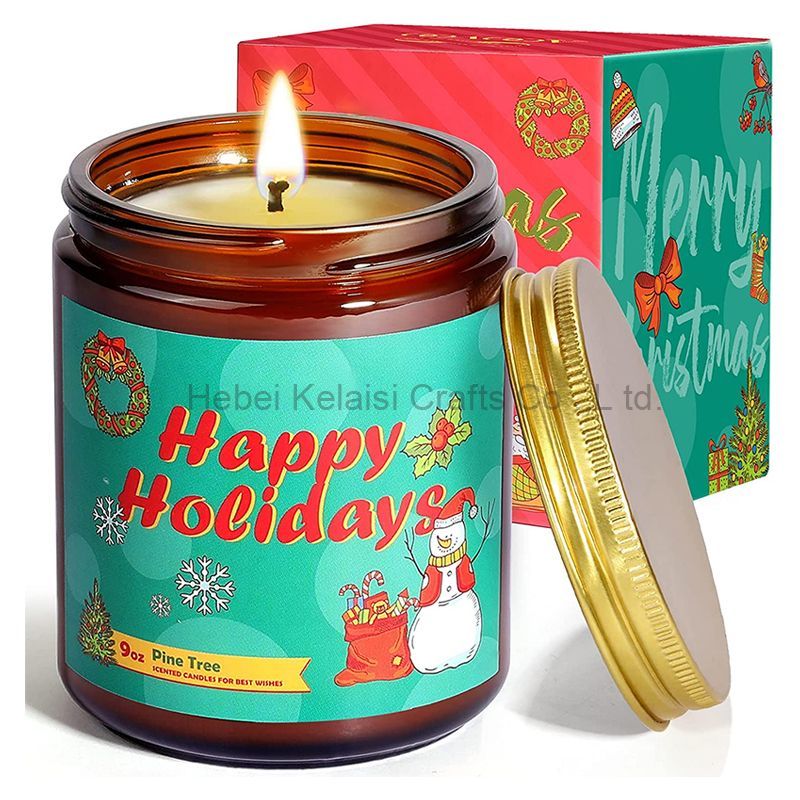 Christmas Scented Candles Gifts Sets for Women
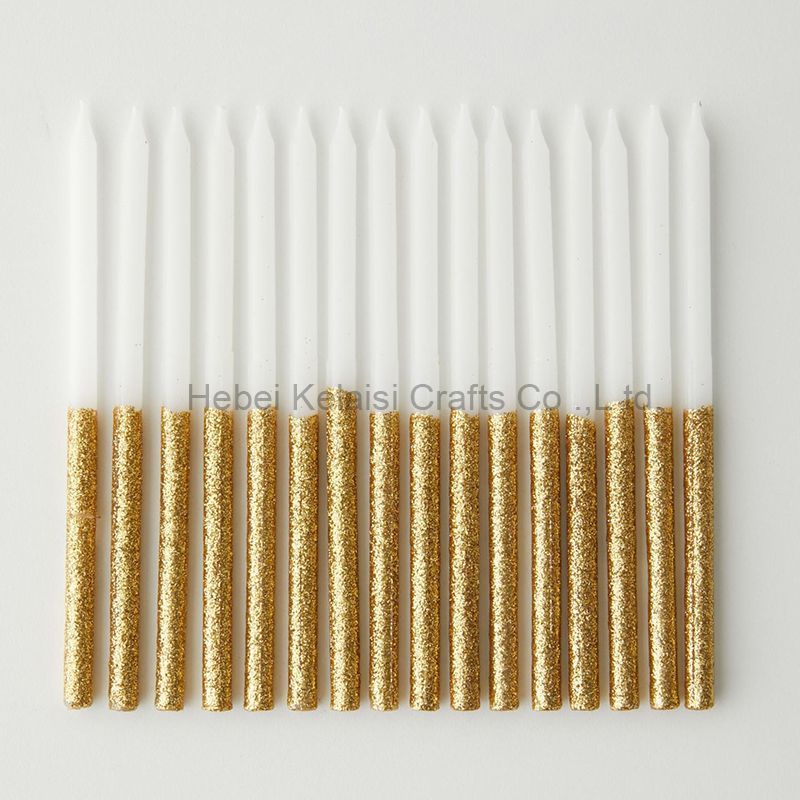 happy birthday long thin glitter cake candles
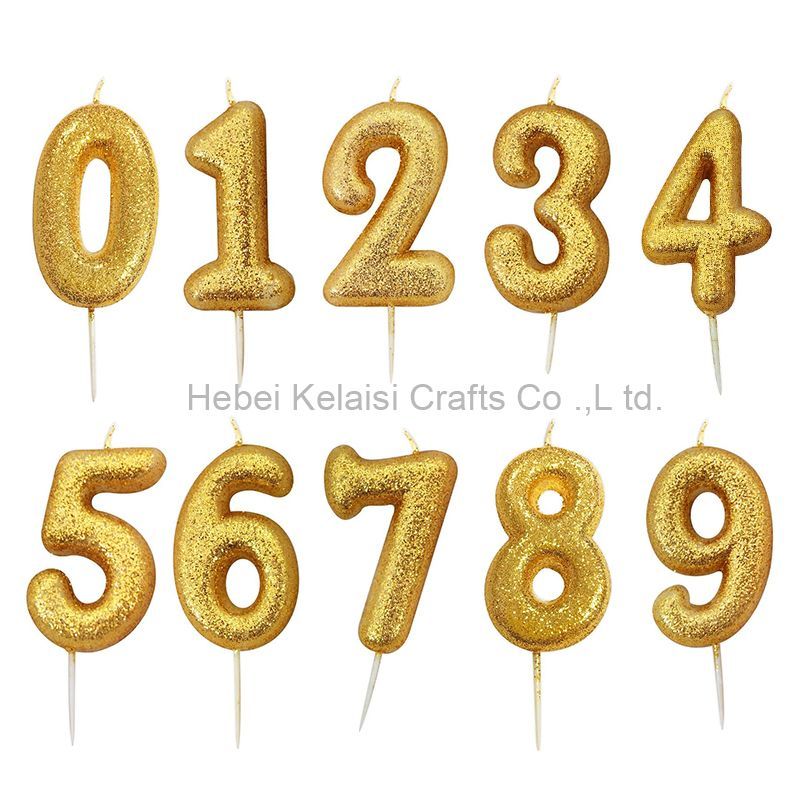 Luxury Golden Birthday Number Candle Sets
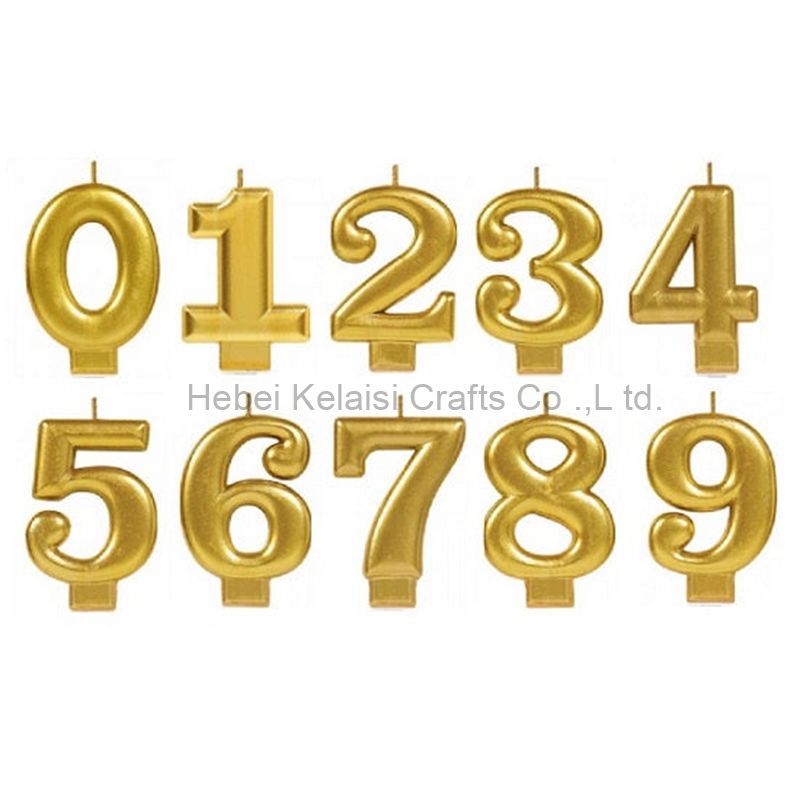 Fancy cake decoration number annual birthday candle
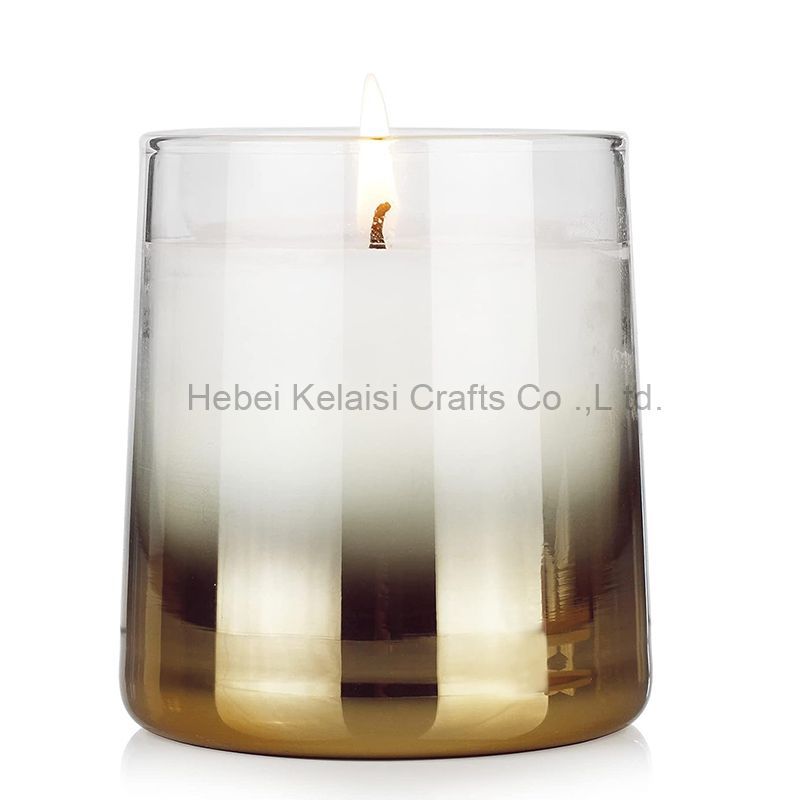 Gradient color Soy Wax Glass Jar Scented Candle
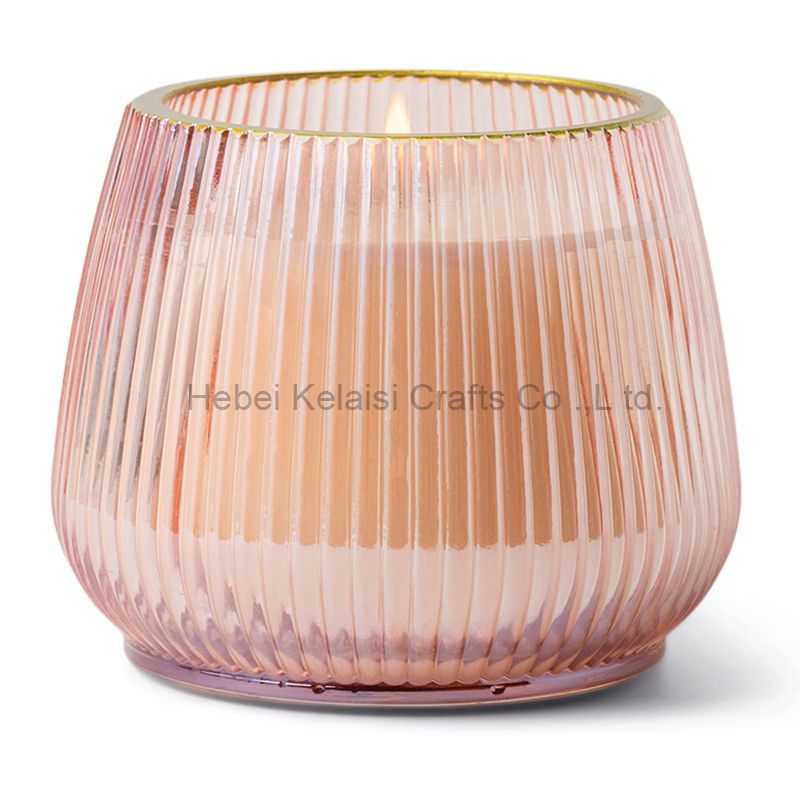 Origami Style Vertical Pattern Wine Glasses Jar Candles
 Custom Mini Glass Jar Scented Candle
 3D Letter Happy Birthday Candles
 Decorative Birthday Candles
 St. Patrick's Day Decorations Set
 Christmas Party Balloons Supplies