Sep. 16, 2026
This case study is based on an anonymized customer project and reflects a sourcing scenario observed in the party supplies market.
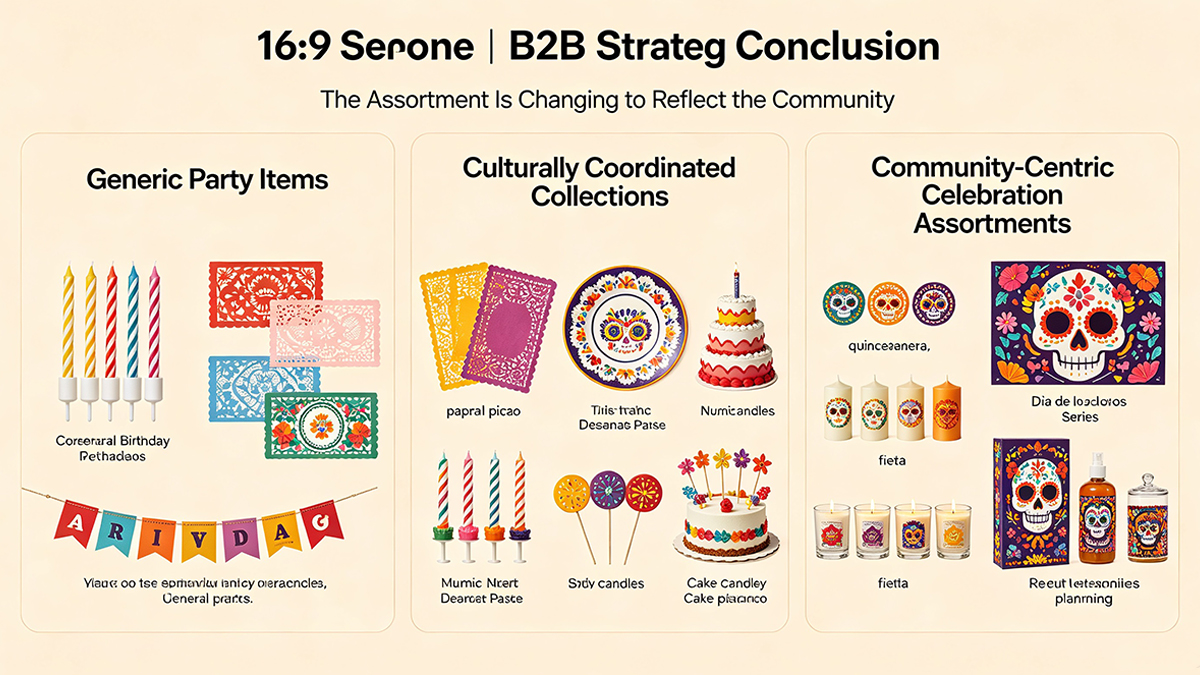
A US-based party supplies distributor expanded its business with Hispanic retailers by shifting from generic party products to culturally relevant, coordinated collections—building a product strategy that reflected the communities its retail customers served.
The distributor did not simply add a few "Mexican-style" items to its catalog. It built a dedicated product strategy around cultural celebration occasions, sourcing coordinated collections that matched how Hispanic communities actually celebrate.
The distributor served independent party supply retailers across the Southwest and parts of the Midwest, with a growing number of stores serving predominantly Hispanic and Latino communities.
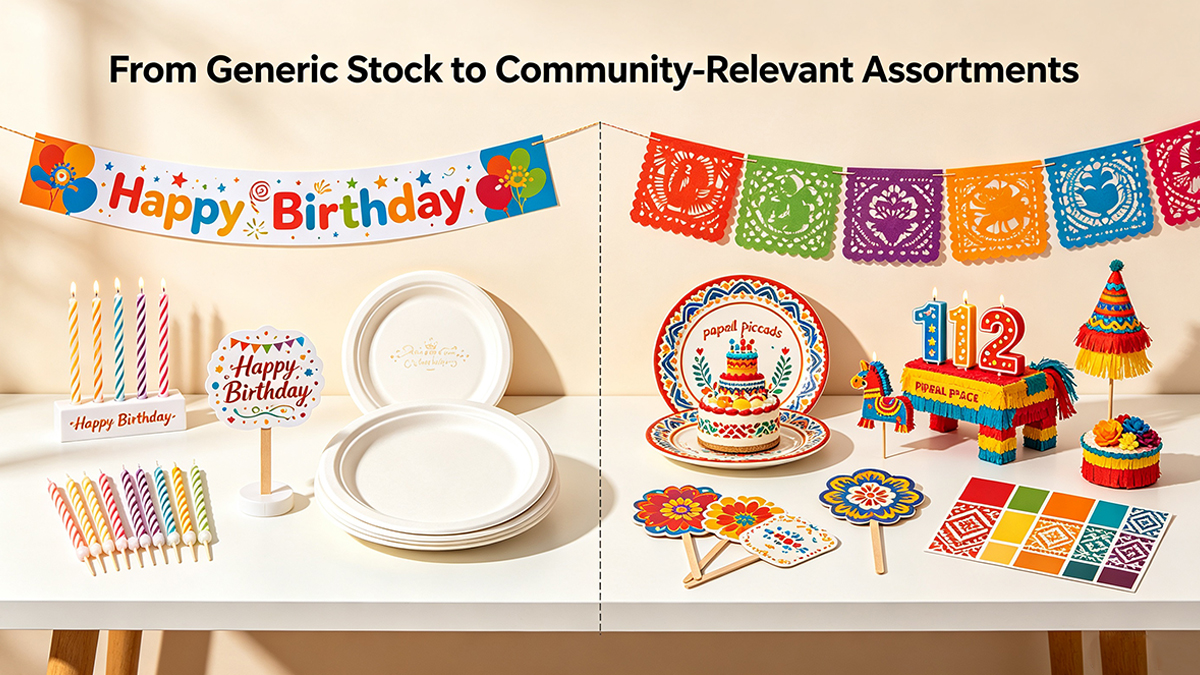
For years, the distributor had operated on a straightforward model: stock a broad range of party supplies, sell to any retailer that needed them, and compete on price and availability. The catalog included standard birthday candles, generic banners, basic tableware, and mass-market decorations. It was a functional assortment—nothing more.
But as the retailer's customer base shifted, a pattern emerged. Stores in Hispanic neighborhoods were not moving the same products as stores in other areas. Birthday candles sold steadily, but themed decorations and party collections sat on shelves. Retailers reported that customers were asking for products the distributor did not carry—specific occasion items like quinceañera decorations, papel picado, and culturally themed collections.
The distributor concluded that relevance was becoming a more important factor in the assortment. The issue was not simply price. It was whether the products matched the celebrations their customers were planning.
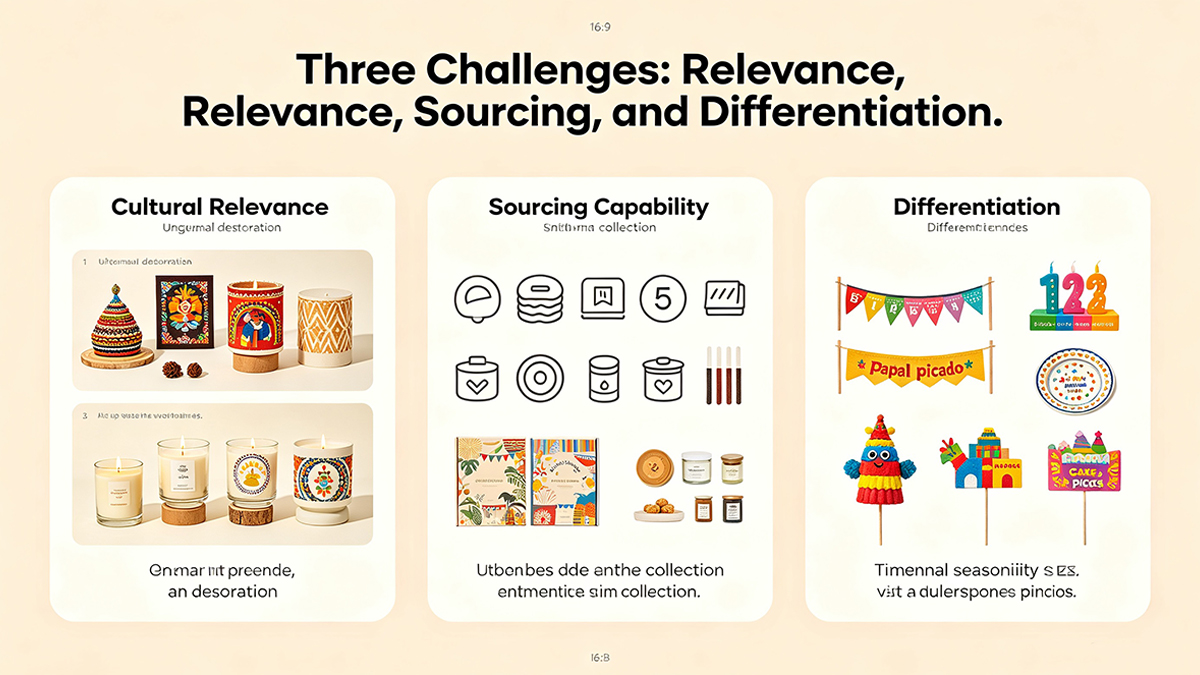
The distributor faced three distinct challenges.
First, the existing assortment was not culturally relevant. Generic "Happy Birthday" banners and mass-market decorations did not connect with Hispanic consumers planning quinceañeras, baptisms, or Día de los Muertos celebrations. Retailers serving these communities were losing sales to competitors who carried the specific products customers wanted.
Second, the distributor did not have the sourcing capability to build a culturally relevant assortment. Their existing suppliers offered single-category products—candles from one source, decorations from another, tableware from a third. Assembling a coordinated collection across multiple suppliers was inefficient and inconsistent. They needed a partner who could integrate multiple product categories around a single cultural theme.
Third, the distributor needed to differentiate from competitors noticing the same opportunity. Larger wholesalers were starting to add "Hispanic Heritage Month" sections, but these were often superficial—a few themed items with no connection to year-round celebrations. The distributor wanted to move beyond seasonal tokenism and build a genuine, year-round assortment strategy.
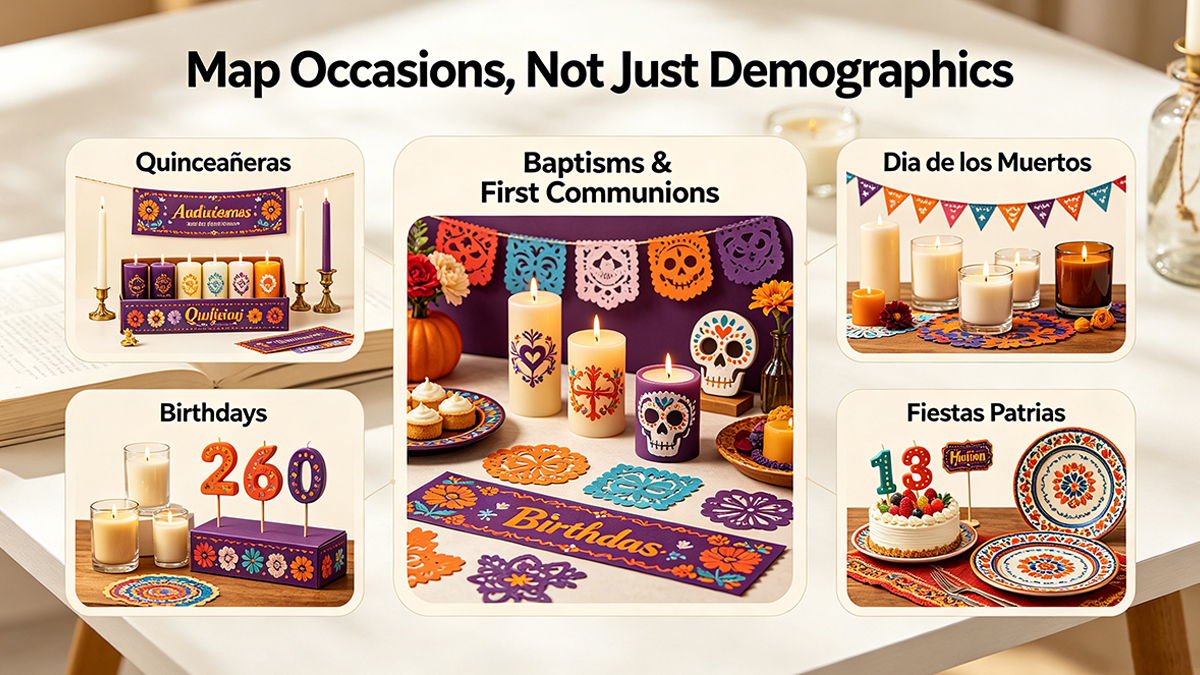
The approach began by working with the distributor to understand the specific communities its retail customers served. This was not a demographic exercise. It was a product-mapping exercise.
The distributor's retail customers were not a single Hispanic market. They served communities with roots in Mexico, Central America, and the Caribbean. The celebrations varied. But several occasions consistently drove product demand:
Quinceañeras — coming-of-age celebrations that often include candle-lighting ceremonies, coordinated tableware, floral arrangements, and photo backdrops.
Baptisms and first communions — religious milestones with family gatherings, themed decorations, and coordinated party products.
Día de los Muertos — a family-centered observance involving altars, marigolds, sugar skulls, and candles.
Birthdays — recurring family celebrations with themed decorations and coordinated party products.
Fiestas Patrias — national day celebrations driving demand for flags, banners, and traditional patterns.
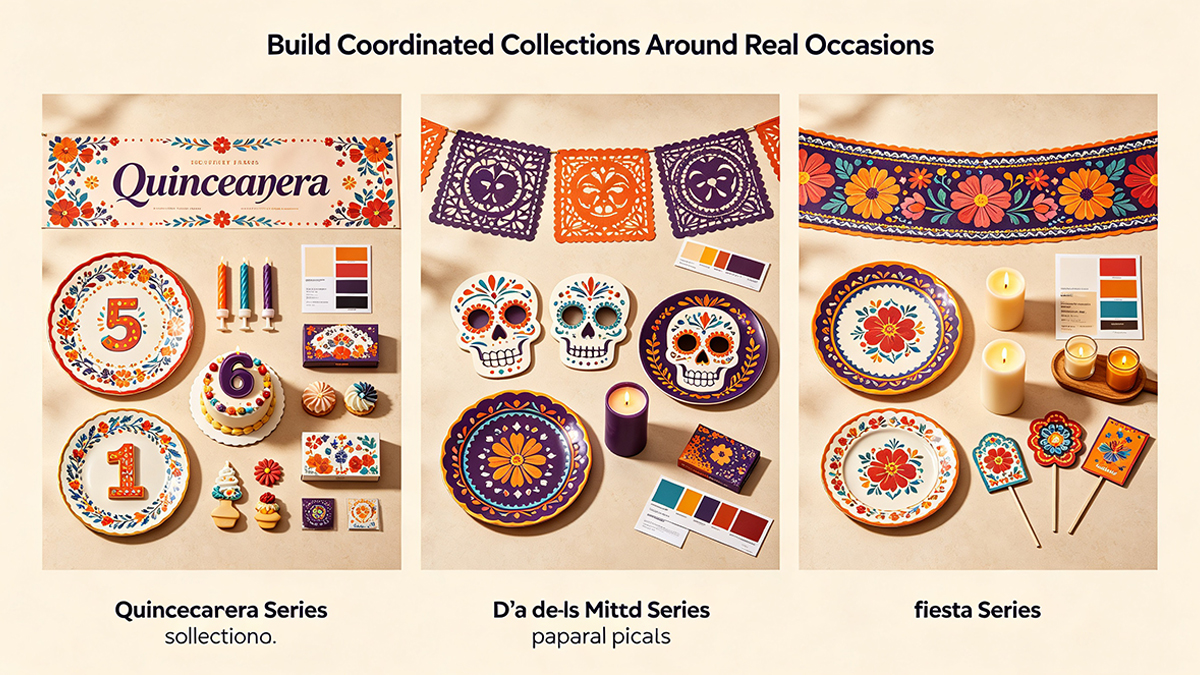
Instead of sourcing individual products, the program focused on coordinated collections built around specific cultural occasions.
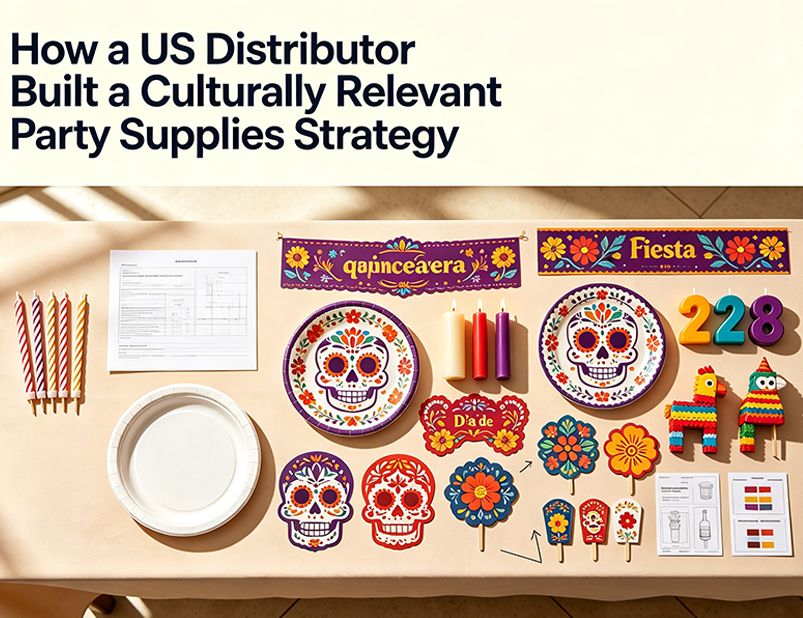
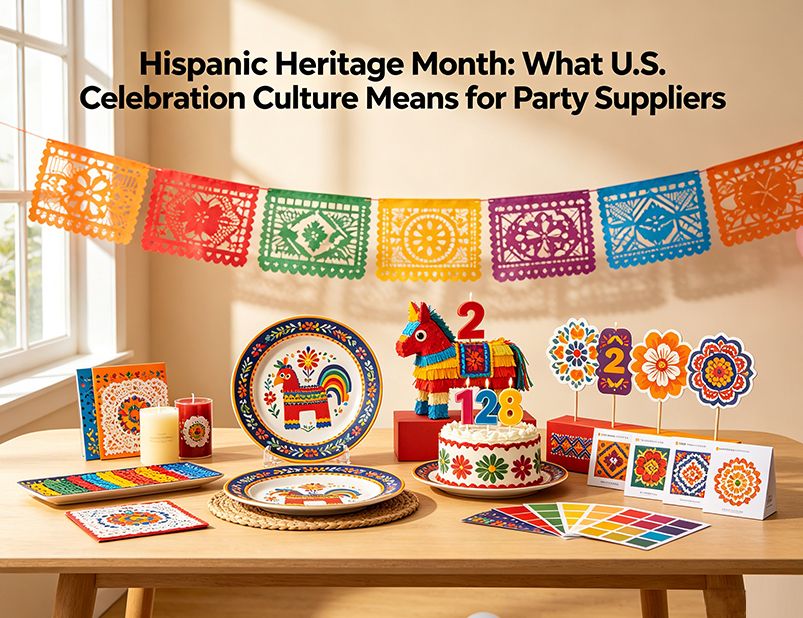
Quinceañera collections included coordinated tableware, banners, photo backdrops, cake decorations, and party favors—all designed with a consistent visual language that retailers could display together.
Día de los Muertos collections included papel picado, laser-cut skull decorations, themed tableware, and LED candles—reflecting the specific product needs of this observance.
Fiesta and general celebration collections included bright colors, floral patterns, and traditional motifs that reflected cultural aesthetics without being occasion-specific.
Each collection was designed so that a retailer could build a complete display around a single theme, rather than assembling items from different parts of the store.
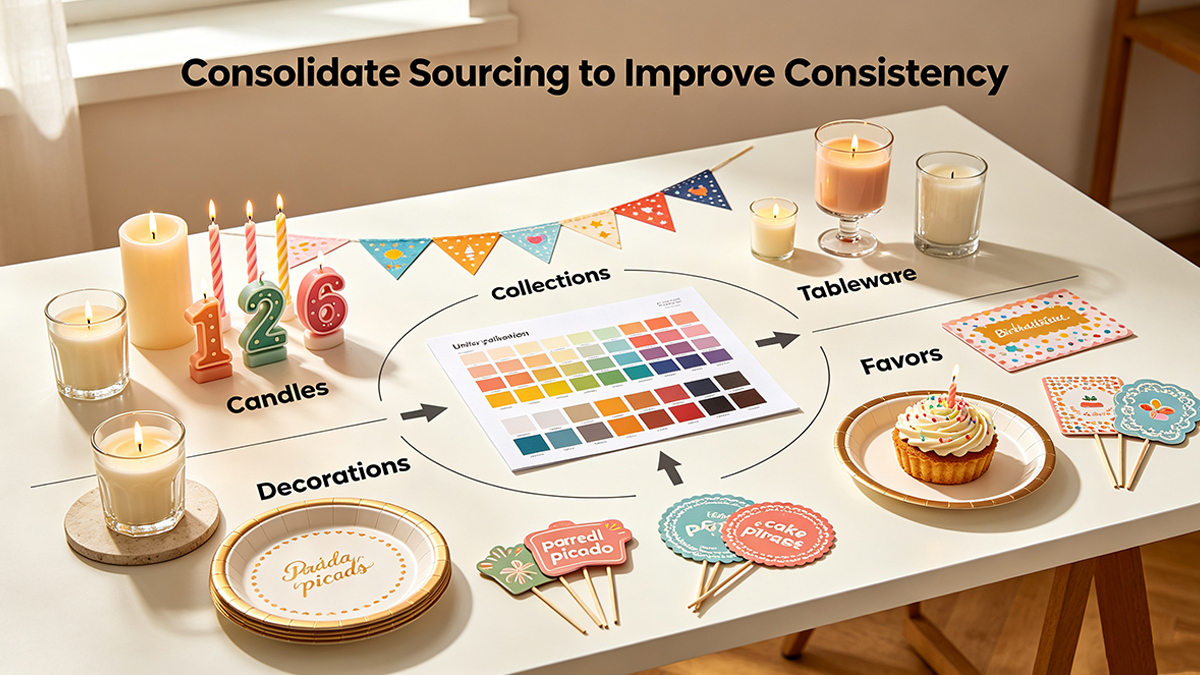
The distributor had previously worked with multiple suppliers for different product categories. This fragmentation created inefficiencies: inconsistent quality, varying lead times, and higher coordination costs.
By consolidating sourcing with a single manufacturing partner, the distributor helped simplify supplier coordination. Coordinated collections could be developed across categories—candles, tableware, decorations, and favors—with consistent quality, packaging, and design language.
Lead times were aligned, simplifying warehouse receiving and inventory planning. And because the collections were sourced from a single partner, the retailer could reorder specific components without disrupting the entire collection.
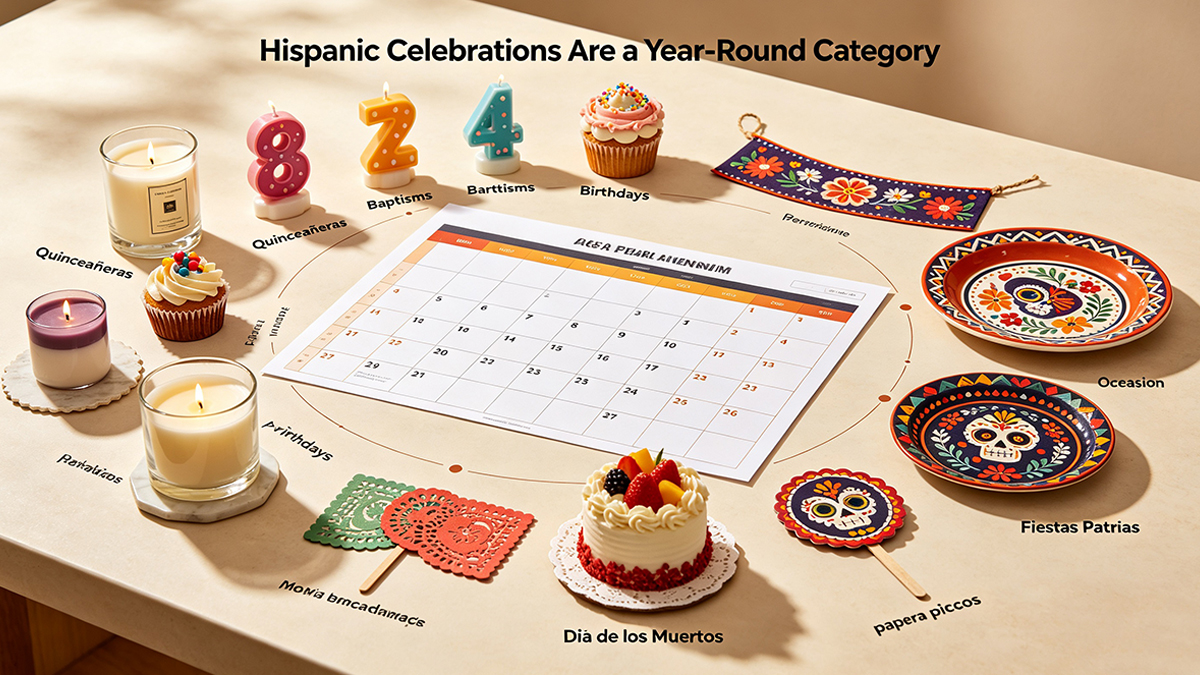
The distributor made a deliberate decision to treat Hispanic celebrations as a year-round assortment category, not a September-October seasonal program.
Instead of "Hispanic Heritage Month sections," the distributor built permanent category space for quinceañera, Día de los Muertos, and fiesta collections. Retailers could plan their assortments around specific occasions throughout the calendar, not just during one month.
This approach also helped retailers avoid the "Hispanic Heritage Month" trap—the perception that these products were a temporary acknowledgment rather than a genuine part of the year-round assortment.
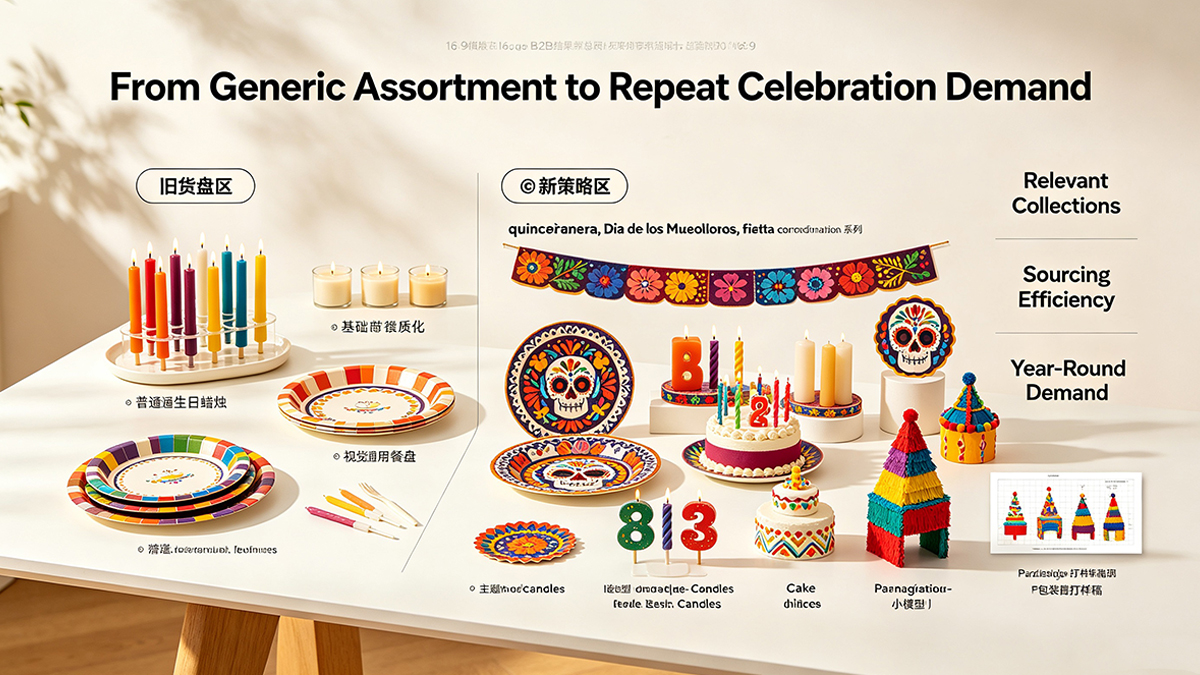
The project helped the distributor move from a broad generic assortment toward a more culturally relevant product strategy.
Culturally relevant collections replaced generic products. Retailers serving Hispanic communities now had access to coordinated collections that reflected the celebrations their customers actually planned.
Sourcing consolidation helped simplify supplier coordination. The distributor worked with a single manufacturing partner for multiple product categories, reducing supplier management overhead and improving quality consistency.
Year-round assortment planning created recurring demand. Instead of a single seasonal spike, the distributor built a category that generated demand throughout the calendar. Quinceañeras happen every month. Birthdays happen every month. Día de los Muertos happens every year, but the surrounding celebrations—baptisms, graduations, family gatherings—fill the calendar.
The distributor expanded the culturally relevant collections to additional store locations. New occasion-specific collections were introduced for baptisms and first communions. And the distributor began exploring private-label options to offer even more targeted products for its retail customers.
The value of this case is not just about one distributor's success. It illustrates a broader shift in how party supplies assortments should be built.
Cultural relevance is not a seasonal add-on. Hispanic Heritage Month runs from September 15 to October 15, but the celebrations that drive product demand happen year-round. Building a permanent assortment around these occasions is more effective than a seasonal display.
Authenticity matters more than proximity. A generic "Mexican-style" decoration does not meet the needs of consumers celebrating their own culture. The products must be genuinely connected to cultural traditions—not generic items in bright colors.
Coordinated collections give buyers more ways to build complete assortments. Retailers serving Hispanic communities need complete cultural collections that allow them to build immersive displays. A single piñata or a pack of papel picado is not enough. The opportunity is in complete collections that cover decorations, tableware, favors, and photo setups.
The larger question is not whether Hispanic celebration culture represents an opportunity. It is whether party assortments are evolving quickly enough to reflect the consumers they serve.
For suppliers, the question is whether they can build the product capabilities—coordinated collections, cultural authenticity, visual appeal—that this consumer segment expects. For buyers, the question is whether their assortment reflects the communities they serve.
Kelaisi Candle has manufactured candles and party supplies since 1991, with facilities in Xingtai and Shijiazhuang, Hebei. We support international buyers with social-compliance, product-testing, and quality documentation covering requirements such as BSCI, SEDEX, CE, RoHS, EN71, and ASTM F963, where applicable.
 Big size decorative scented candle
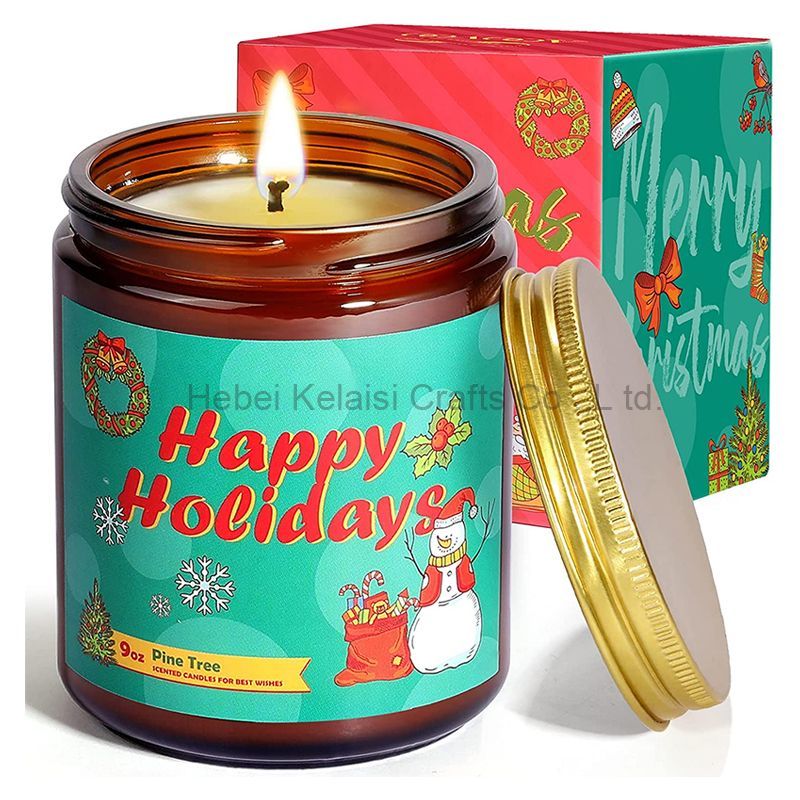 Christmas Scented Candles Gifts Sets for Women
 happy birthday long thin glitter cake candles
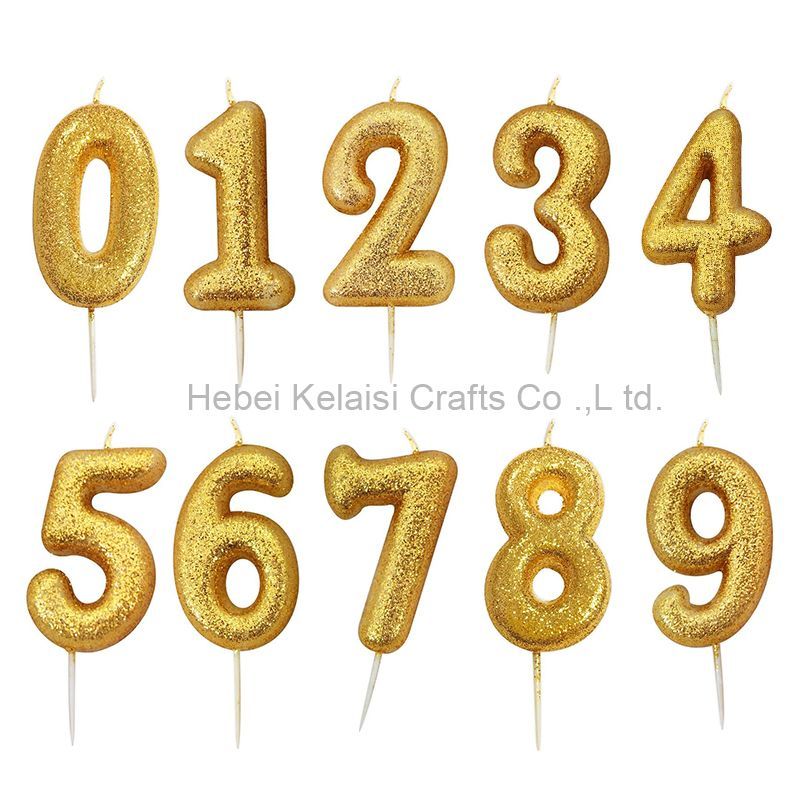 Luxury Golden Birthday Number Candle Sets
 Fancy cake decoration number annual birthday candle
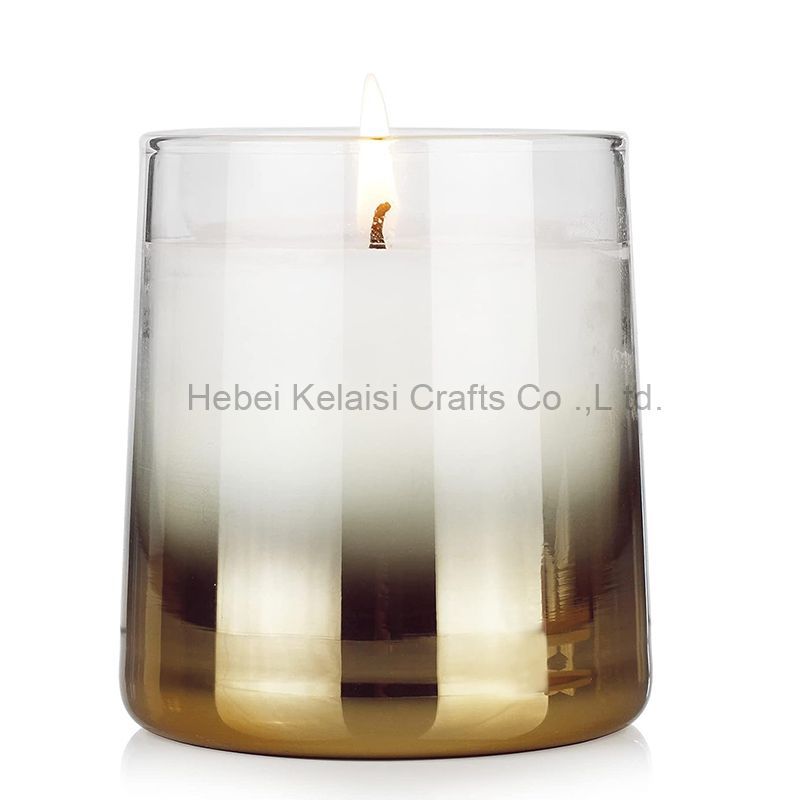 Gradient color Soy Wax Glass Jar Scented Candle
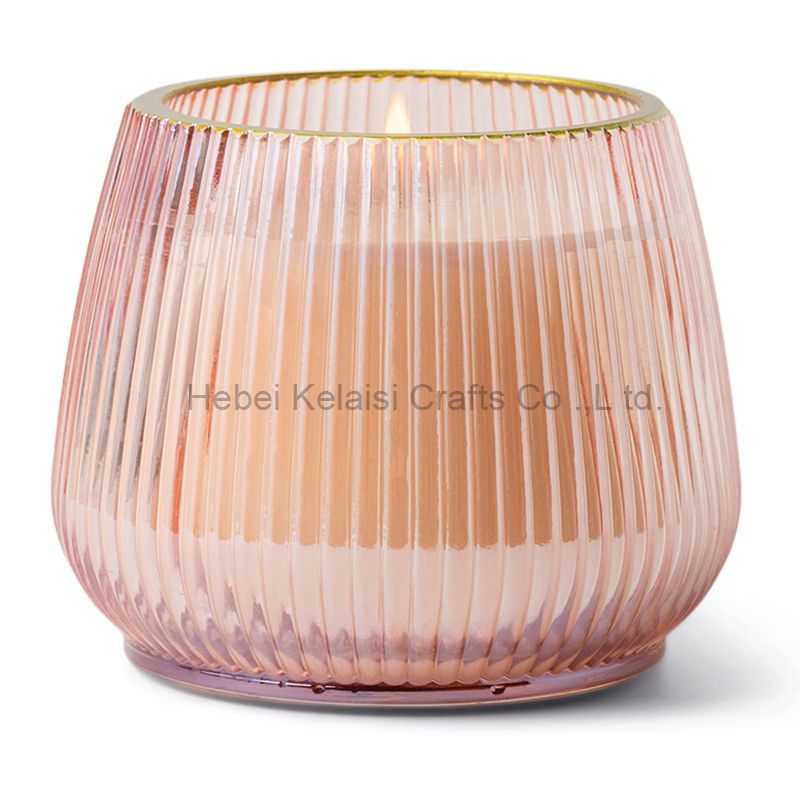 Origami Style Vertical Pattern Wine Glasses Jar Candles
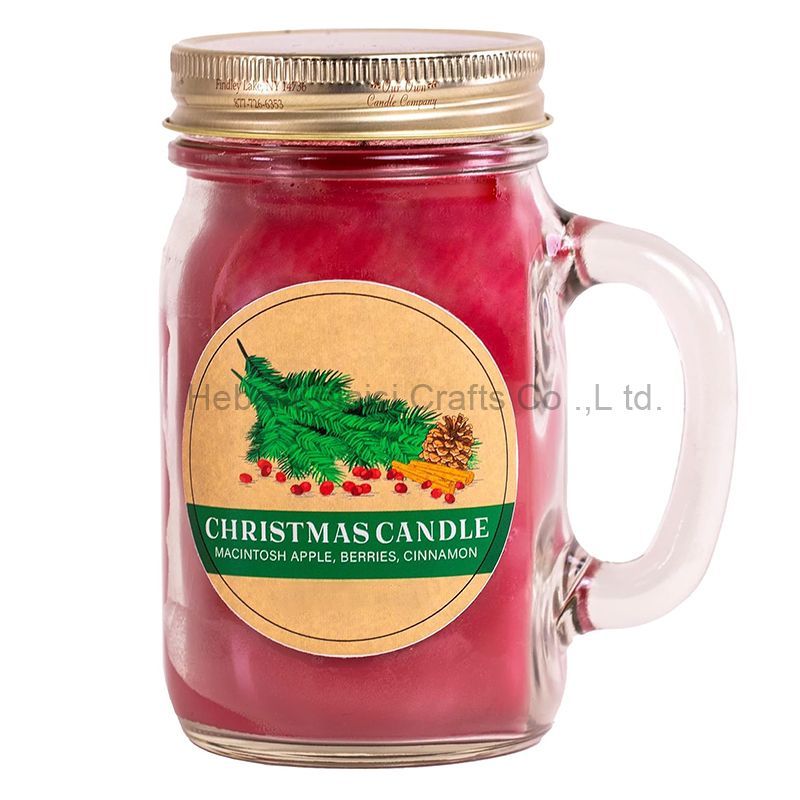 Custom Mini Glass Jar Scented Candle
 3D Letter Happy Birthday Candles
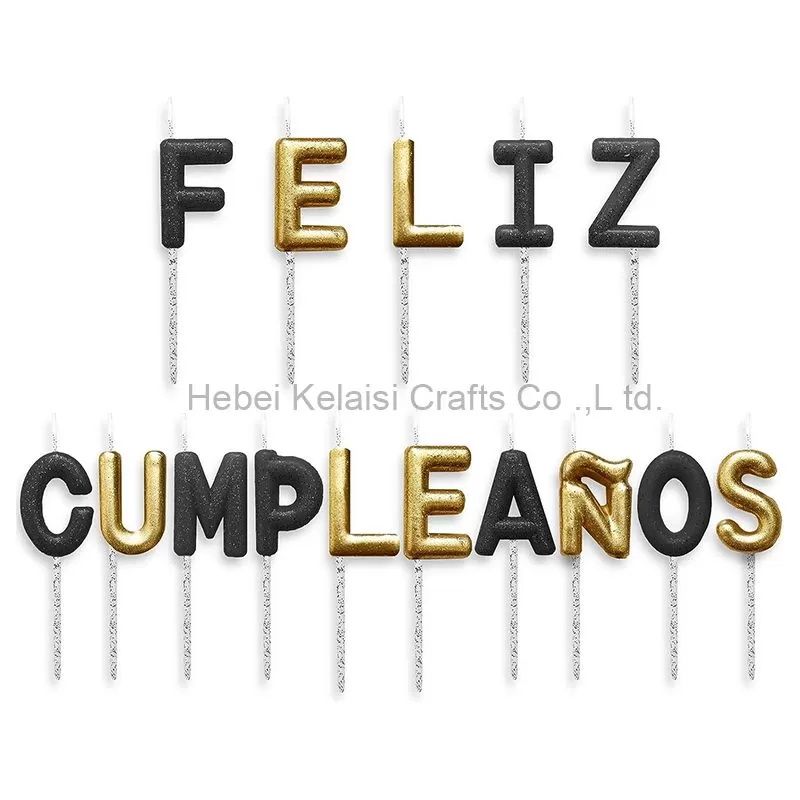 Decorative Birthday Candles
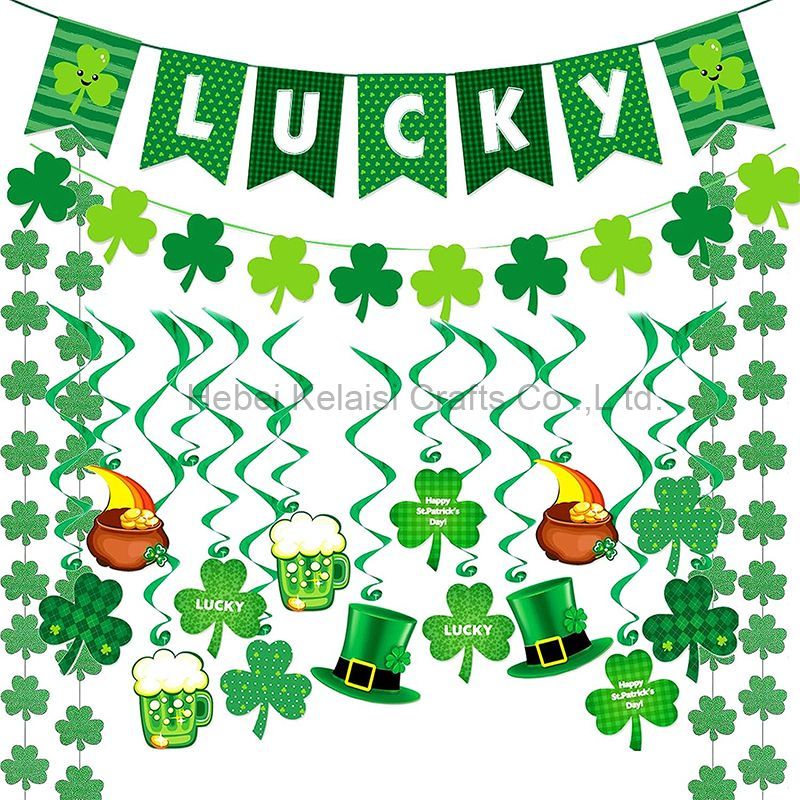 St. Patrick's Day Decorations Set
 Christmas Party Balloons Supplies