Jun. 23, 2026
A procurement manager once told me: the lowest quote ends up costing the most.
That conversation happened in October 2025. The person on the phone was sourcing for a UK high-street retailer. They had a target price. And that number was below our cost.
Not a little below. Low enough that every unit would lose money.This conversation is not unusual in our industry. But this one stuck. Because it forced us to answer a question we rarely ask out loud: what does "cheap" actually mean when you are sourcing birthday candles for mass retail?
The Setup
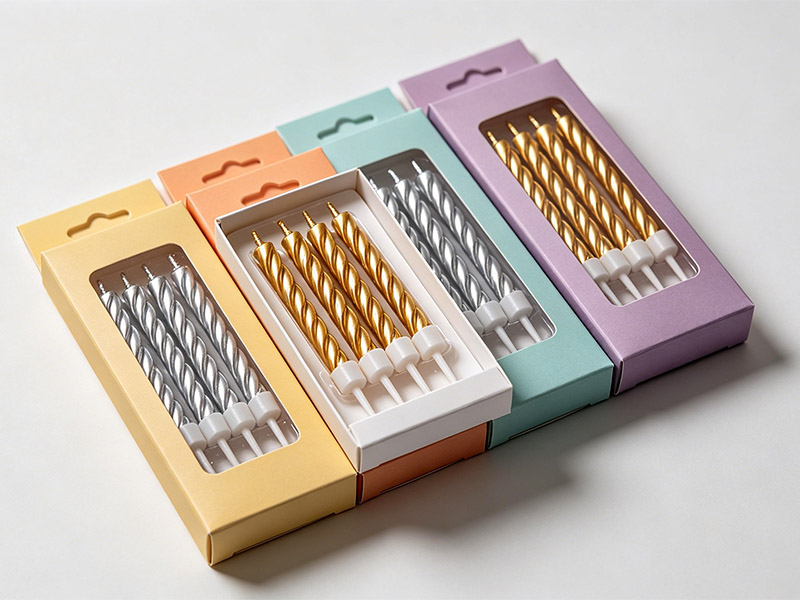
Gold and silver spiral birthday candle sets. 12 candles per blister pack. Retail packaging. The kind of bulk birthday candles that move fast on UK high-street shelves.
The buyer was a major UK retail chain. We had worked with them before on other lines. But this time was different.Their target price: USD 0.18 per set, FOB Tianjin.
Our standard cost then: USD 0.20 per set. That covered wax, wicks, packaging, labor, testing, and logistics. No fat. Just the real cost of making a candle that meets EU safety standards.
The buyer had a competing offer from a Southeast Asian factory at USD 0.175. They showed us.
Here is where it gets complicated.
The Southeast Asian quote was cheaper. But it came with conditions. The buyer was not asking for a cheaper candle. They wanted the same candle — same wax, same packaging, same finish — at a production cost that made no sense.
No wax downgrade. No packaging cuts. No skipping tests. Plus:
Third-party combustion safety reports with every batch
Unannounced BSCI factory audits
Defect rate below 0.3 percent
Full rework and refund if any condition failed
The Southeast Asian factory at 0.175 was not required to meet all this. Or they said yes without actually doing it. Different business model. It works until someone checks. In UK retail, someone always checks.
The Math
At 0.18 per set, we lost USD 0.02 per unit. Over 120,000 sets, that is a USD 7,200 loss.
But we wanted the order. Not for the volume. Because we saw something in the buyer's position.
They were not squeezing our margin. They were trying to hit a retail price. The difference between 0.18 and 0.19 was about whether they could launch the product at all.
So we said: let us try. But we made a promise. No quality cuts. No compliance shortcuts. We would find savings in our operations, not the product.
What We Did
We have two factories in Hebei, China. We produce candles and party goods for international retail brands. We are not the cheapest. We never have been.
To go from 0.20 to 0.19 without changing the product, we looked at everything except the candle.
First, raw materials.
We consolidated wax buying across both factories. One bulk contract for 300 metric tons of food-grade paraffin wax. That cut our wax cost by 8.2 percent. We did the same with wicks — annual framework agreement, no distributor markup. For a candle supplier for retail chains, this kind of discipline wins contracts.
Second, production.
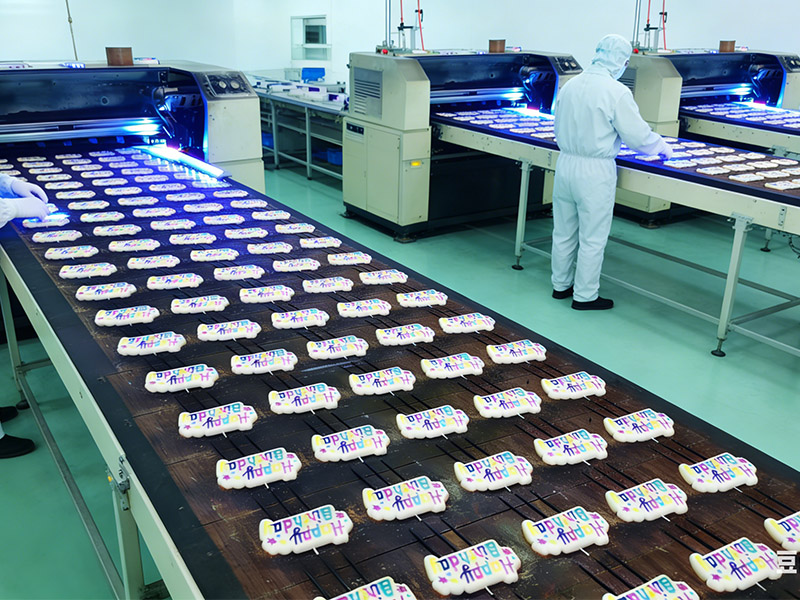
We replaced semi-automatic equipment with fully automated spiral candle machines. Output went from 800 sets per hour to 1,400. Labor cost per unit dropped 40 percent. Not lower wages. More units per worker in the same time.
We also consolidated packaging into one print run. Reduced setup and plate costs.
Third, logistics.
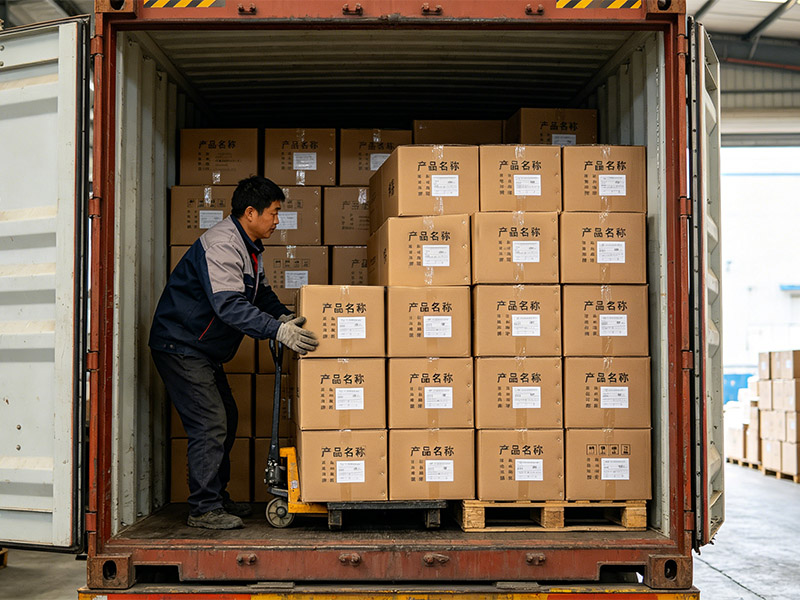
One 40HQ container instead of multiple small shipments. Lower trucking and port fees. Better carton stacking. Less foam padding. Small savings that added up.
Fourth, waste.
Defect screening at three stages: pouring, molding, packaging. Waste dropped from 2.1 percent to 0.7 percent. More wax into products. Less into scrap.
The Final Price
We came back at USD 0.19 per set. One cent above target. With three conditions:
Minimum 120,000 sets. No split orders.
30 percent deposit, 70 percent against Bill of Lading. Better than their 100 percent L/C request.
Buyer covers third-party testing, twice yearly.
They accepted.
Our final cost: USD 0.188 per set. Margin: USD 0.002 per set. On 120,000 sets, that is USD 240.
Yes. Two hundred and forty dollars.
The Real Value
That USD 240 bought us more than profit.
First, a working model. We proved we could hit a price most competitors would walk from — without compromising materials, safety, or labor.
Second, capacity. Our factories run on fixed costs. Idle lines are overhead we cannot recover. A large order at thin margin lowers our average cost across all orders. That makes us more competitive everywhere.
Third, a relationship. The buyer saw we delivered. On time. To spec. All documents in place. Their testing showed a 0.18 percent defect rate, well below the 0.3 percent cap.
They ordered another 180,000 sets before the first container arrived.
By the second order, costs dropped again. Bulk wax was already bought. Lines were configured. Team knew the workflow. Margin rose to USD 0.011 per set. Still thin. Moving in the right direction.
This is now our model for wholesale birthday candles across multiple retail accounts. Bulk raw materials, production automation, and EU safety compliance — standard practice in both factories.
The Bigger Picture
This project was never about one order. It was about building a cost structure that competes with Southeast Asia while maintaining European compliance.
We have seen this pattern across other retail clients in the US and Europe. The market is splitting. One segment buys on price alone and accepts the risks. The other buys on total cost — price plus compliance plus reliability.
The second segment is harder to serve. But more stable. And it fits what we do best.
We are not China's cheapest candle factory. We never tried to be. But we built a system that competes on price when needed, without abandoning the standards that matter to buyers who care about safety and consistency.
That is not a pivot. It is an evolution.
What This Taught Us
One lesson stuck.
Cheap pricing is not a threat to quality. It is a test of operations. Factories that pass have invested in systems, not just capacity. Those that fail try to meet the price by cutting corners.
We took the harder path. It worked.
That does not mean we accept every low-price order. We evaluate each project on its own terms. But we now have a playbook for the ones that look impossible.
The UK buyer still sources from Southeast Asia for some products. They told us. But for this line, at this spec, they now have one supplier. And they are talking about expanding the range.
That is the long game. One relationship that scales over time.
What This Means for Buyers
If you are on the buying side, here is what we want you to know.
When you push for lower pricing, we understand. We see the same retail pressure. But know what you are asking when you ask us to match a competitor.
That competitor may not work to the same standards. They may not test for combustion safety. They may not hold BSCI certification. They may not pay workers fairly. They may not maintain the same material quality.
We are not saying every cheap product is unsafe. We are saying price alone tells you nothing about what is inside the box.
What we offer is transparency. We show where the cost goes. We show what we changed to reduce it. We show test results that prove the product is safe.
That is our value. Not the lowest number. The most trustworthy one.
Final Note
This project delivered in January 2026. The container arrived on schedule. The buyer's random shelf pulls all passed.
We write this not to impress. We write it because the market is changing. More buyers ask the same questions. More competitors make the same promises. More products fail the same tests.
Someone has to tell the real story.
This is ours.
 Big size decorative scented candle
 Christmas Scented Candles Gifts Sets for Women
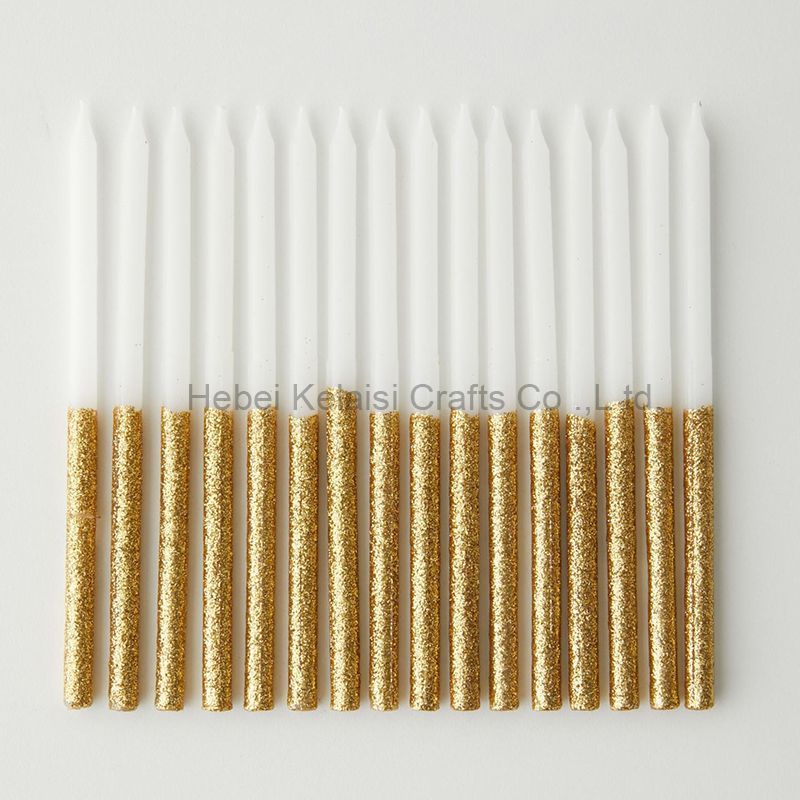 happy birthday long thin glitter cake candles
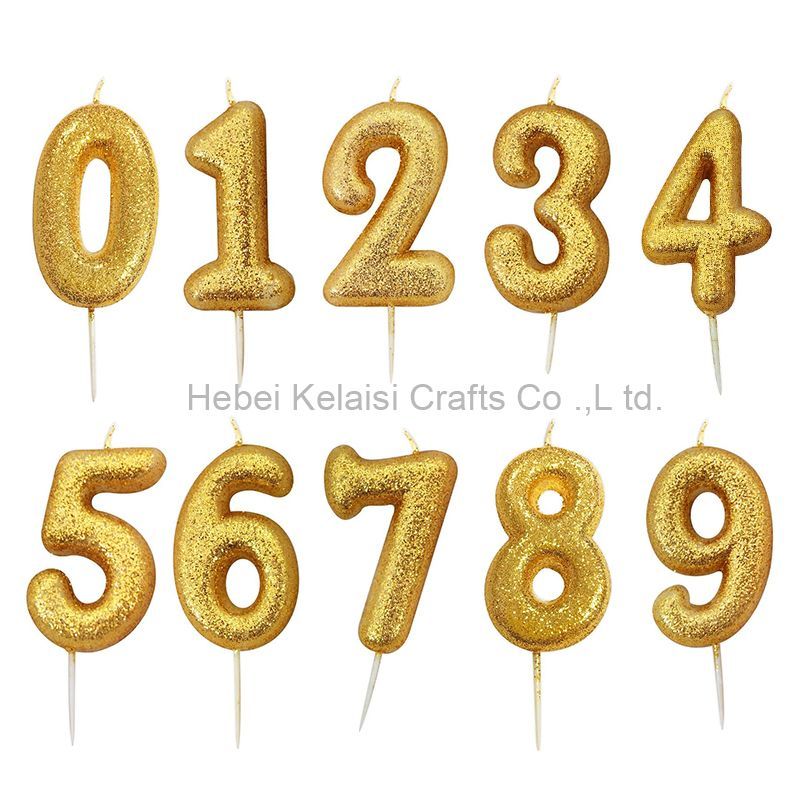 Luxury Golden Birthday Number Candle Sets
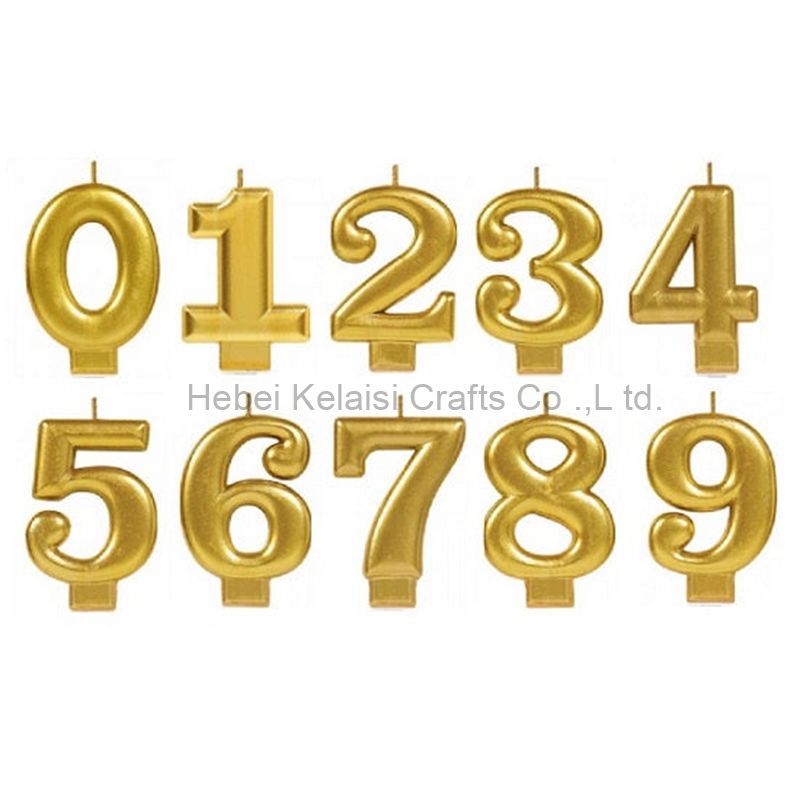 Fancy cake decoration number annual birthday candle
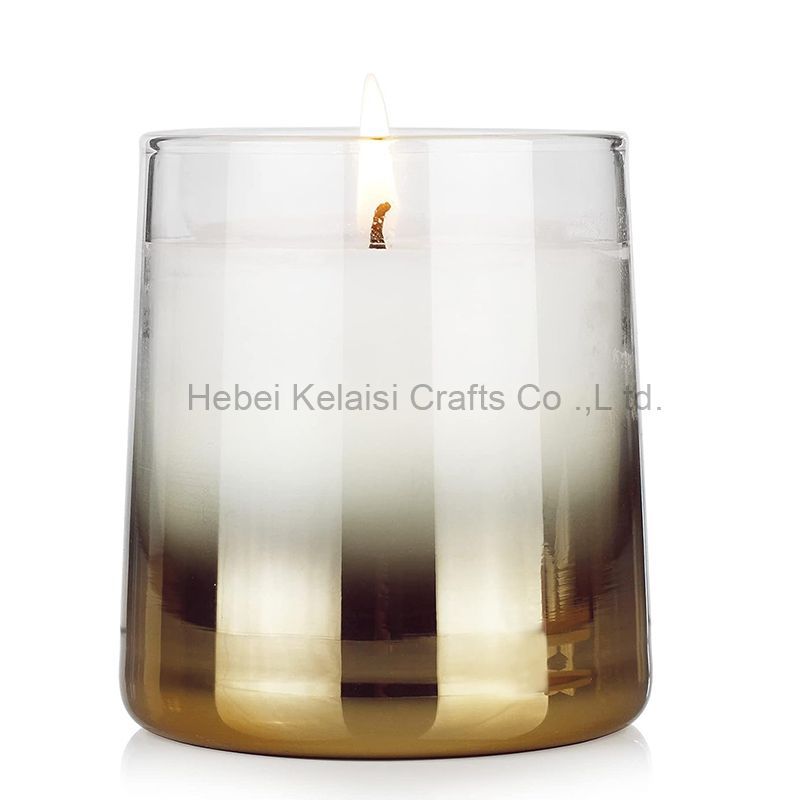 Gradient color Soy Wax Glass Jar Scented Candle
 Origami Style Vertical Pattern Wine Glasses Jar Candles
 Custom Mini Glass Jar Scented Candle
 3D Letter Happy Birthday Candles
 Decorative Birthday Candles
 St. Patrick's Day Decorations Set
 Christmas Party Balloons Supplies