Sep. 18, 2026
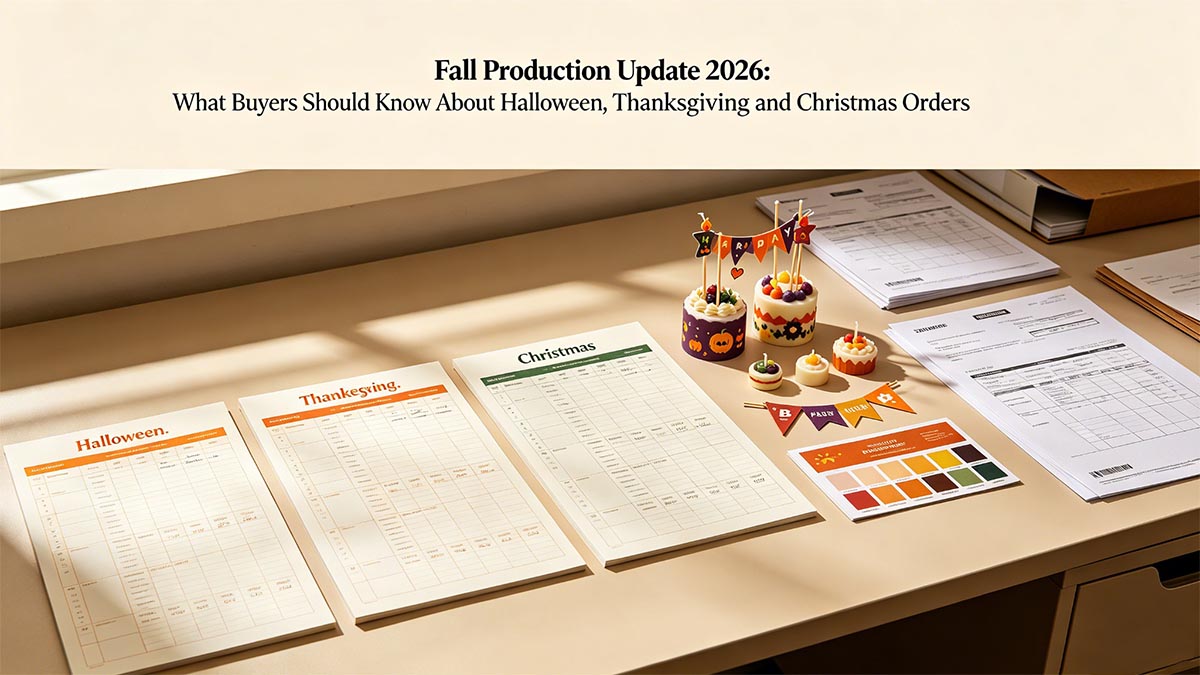
For international buyers, Q4 holiday sourcing is not only about choosing the right products. Production schedules, customization requirements, packaging preparation, shipping arrangements, and warehouse delivery all need to fit within the same timeline.
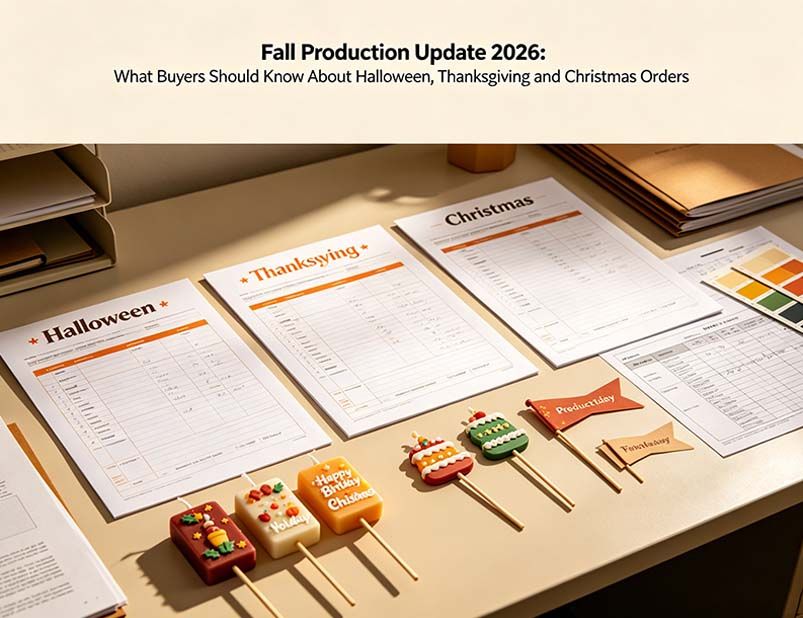
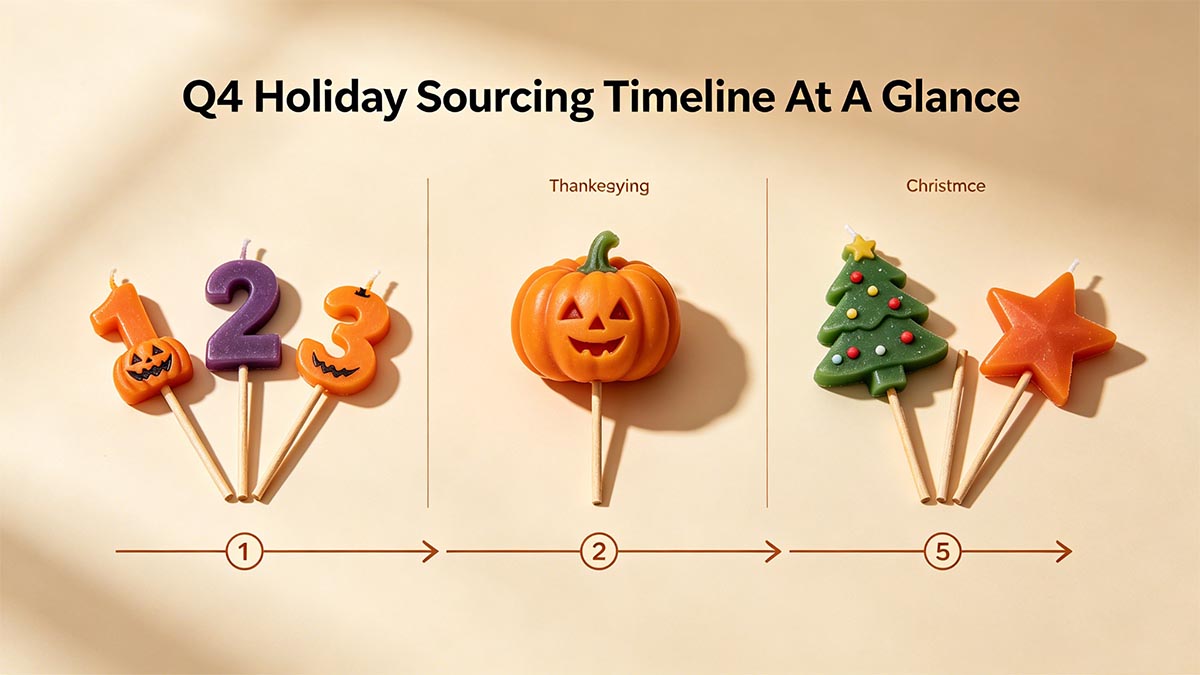
By mid-September, the sourcing situation for Halloween, Thanksgiving, and Christmas is already different for each holiday. Halloween is moving into its final replenishment stage. Thanksgiving is entering an active production-planning period. Christmas programs are increasingly becoming a production and capacity-planning issue rather than simply a product-selection decision.
The three major fall and winter holidays do not follow the same sourcing timeline.
| Holiday | Date in 2026 | Current Sourcing Stage | Key Buyer Focus |
|---|---|---|---|
| Halloween | October 31 | Final replenishment stage | Existing products, available capacity, shipping options |
| Thanksgiving | November 26 | Production planning | Product selection, quantities, packaging and scheduling |
| Christmas | December 25 | Active production planning | Assortment, customization, packaging and capacity |
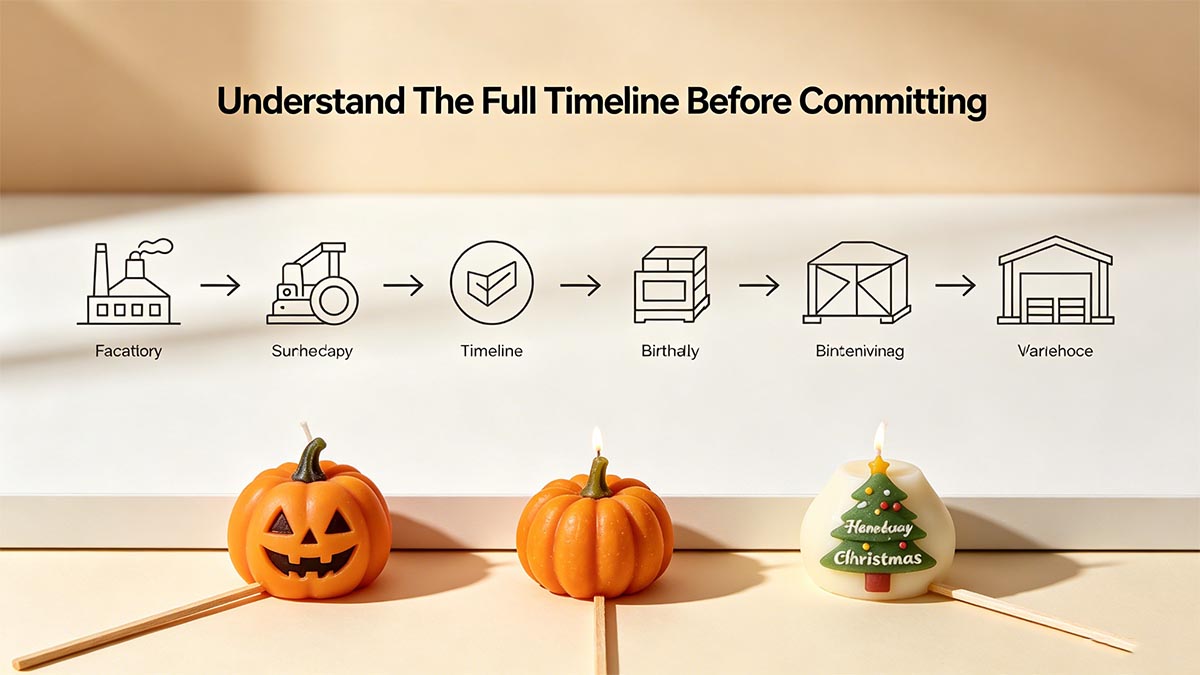
The important point is that the calendar date is only one part of the equation. A product still needs to move through production, packaging, shipment, customs clearance, and inland transportation before it reaches a warehouse or retail location.
| Holida | Date in 2026 | Current Sourcing Stage | Key Buyer Focus |
|---|---|---|---|
| Halloween | October 31 | Final replenishment stage | Existing products, available capacity, shipping options |
| Thanksgiving | November 26 | Production planning | Product selection, quantities, packaging and scheduling |
| Christmas | December 25 | Active production planning | Assortment, customization, packaging and capacity |
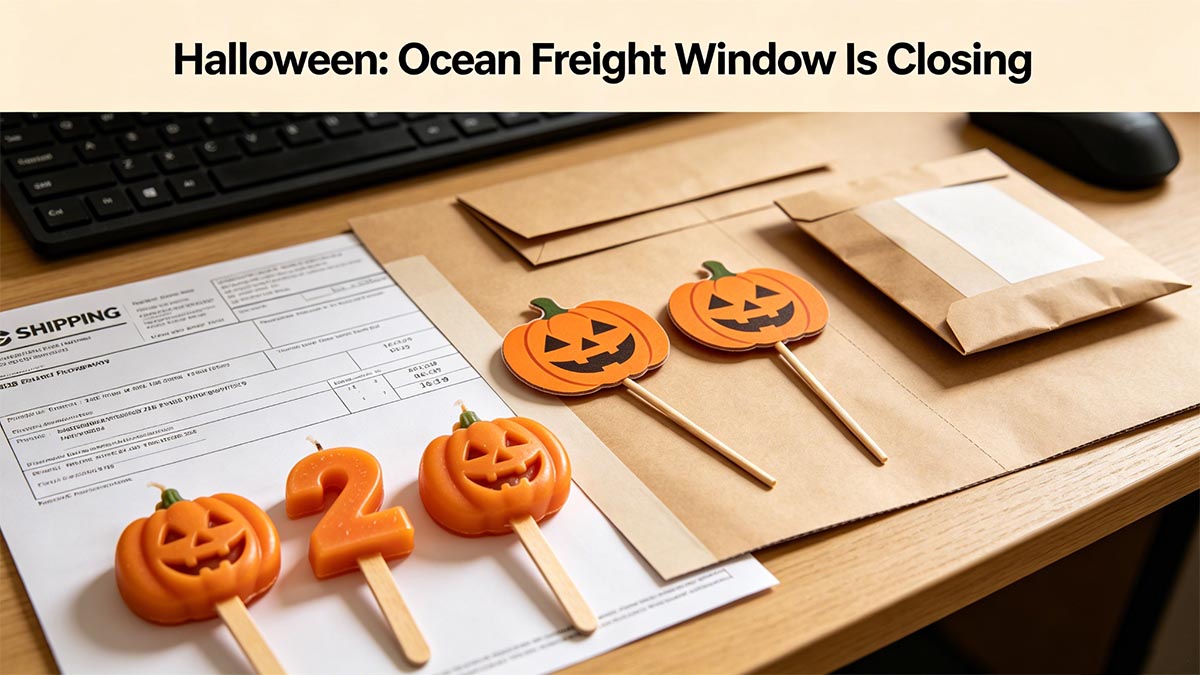
Halloween falls on October 31, 2026. For a new order placed in mid-September, a normal overseas production and ocean-freight process leaves very little room before the holiday.
This does not mean every Halloween requirement is impossible. It means the range of practical options becomes narrower. For buyers who still need Halloween products, the most realistic questions are now:
Is the product already available?
Can the existing design be produced without additional development?
Is the packaging already prepared?
Does the factory have available production capacity?
Can the order be shipped quickly enough for the required delivery date?
For standard products with existing specifications, the timeline can be easier to manage. Custom colors, new shapes, new packaging, or other product changes require additional preparation and need to be evaluated individually.
At this stage, the key issue is no longer simply whether a supplier can make the product. It is whether the complete production and delivery timeline can still fit the buyer's deadline.
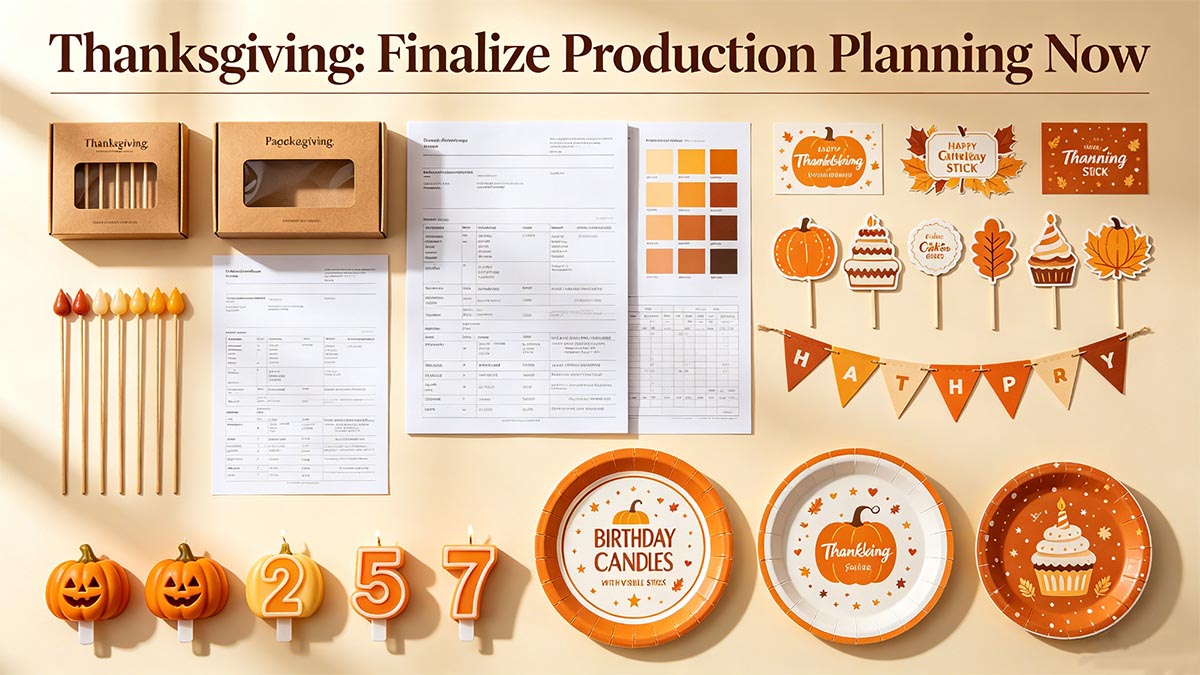
Thanksgiving falls on November 26, 2026. Although it comes almost a month after Halloween, overseas buyers cannot treat Thanksgiving as a late-season order.
The production process still needs to account for:
Product preparation. Existing products are generally easier to schedule than products requiring new development, molds, colors, or specifications.
Packaging. Custom packaging may require artwork approval, material preparation, printing, and assembly before finished products can enter production.
Multi-SKU coordination. A holiday program may include multiple designs, colors, sizes, or related party products. Coordinating these items can require more production planning than a single-SKU order.
Shipping. Production completion is not the same as warehouse arrival. Buyers also need to allow time for freight, customs clearance, and inland transportation.
For Thanksgiving programs, the priority is to confirm the complete order plan rather than waiting until the holiday is approaching.
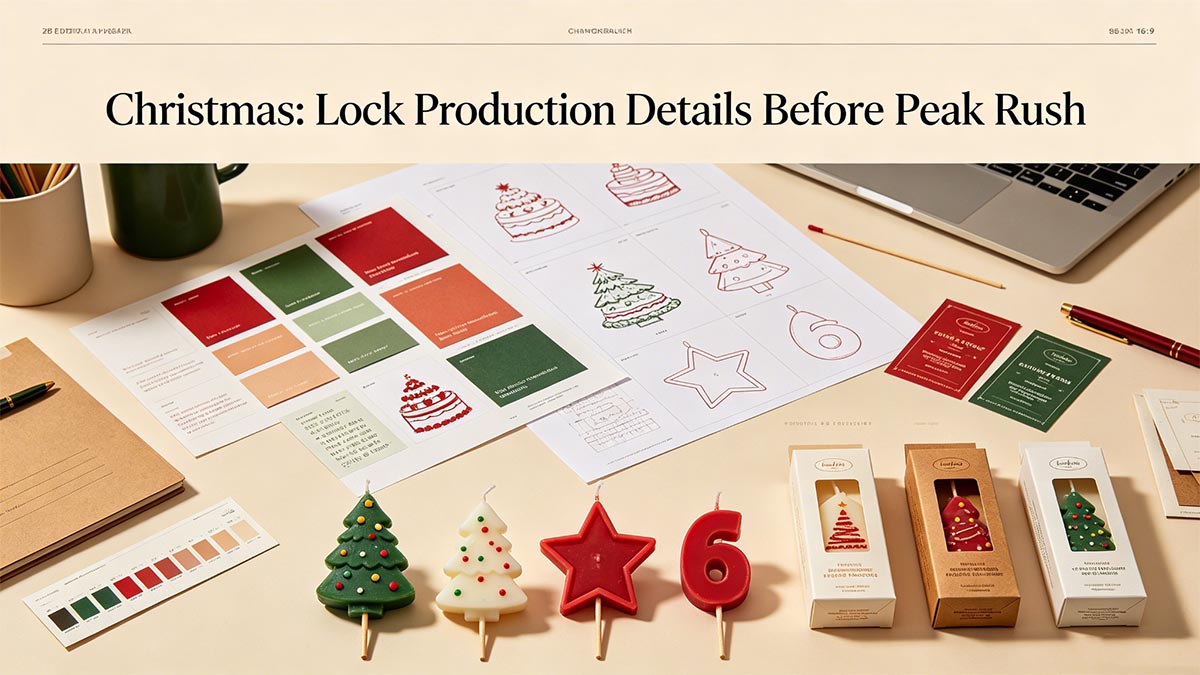
Christmas falls on December 25, 2026. Christmas programs can involve a wider assortment and more complicated preparation than a single seasonal product. Depending on the buyer's program, an order may include multiple SKUs, customized colors, packaging, coordinated collections, or private-label requirements.
This is why Christmas planning should begin with production requirements rather than only the final delivery date. A buyer may already have selected the products but still need to confirm final quantities, product specifications, colors, packaging, artwork, labeling, production schedule, shipping method, and warehouse delivery deadline.
Each additional requirement can affect the overall timeline. For manufacturers, having this information earlier makes it easier to coordinate materials, packaging, production schedules, and shipment preparation.
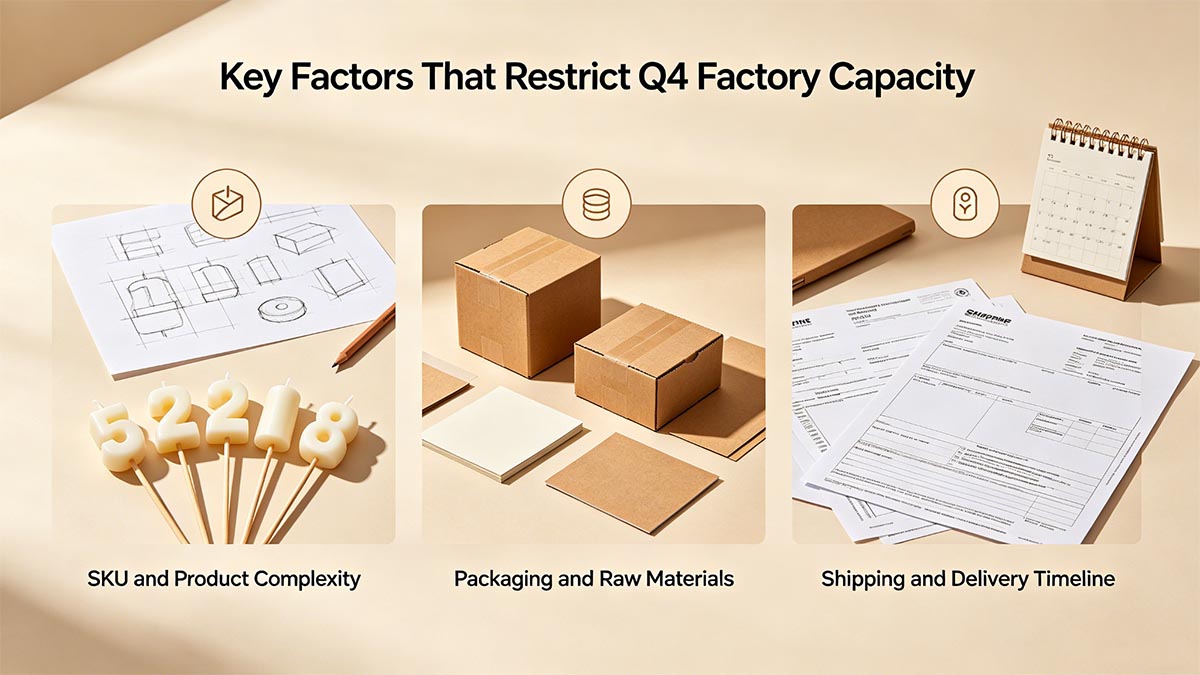
Production capacity does not depend only on the number of orders a factory receives. Three factors matter most.
Product and SKU complexity. A standard product with an existing specification can usually move through production more directly. A customized product may require additional work before production begins, including color confirmation, new designs, tooling, samples, or specification approval. The number of SKUs in an order can be just as important as total volume when discussing production timelines.
Packaging and materials. Packaging is often an overlooked part of the production timeline. A product may be ready to manufacture, but custom packaging may still require artwork confirmation, printing, material preparation, or assembly. For private-label and customized programs, packaging should be treated as part of the production schedule rather than as a separate final step.
Shipping and delivery requirements. Production is only one part of the timeline. After manufacturing, the order still needs to be prepared for shipment and transported to its destination. Ocean transit time can vary depending on destination, port, routing, carrier schedules, and seasonal conditions. Customs clearance and inland transportation add additional time.
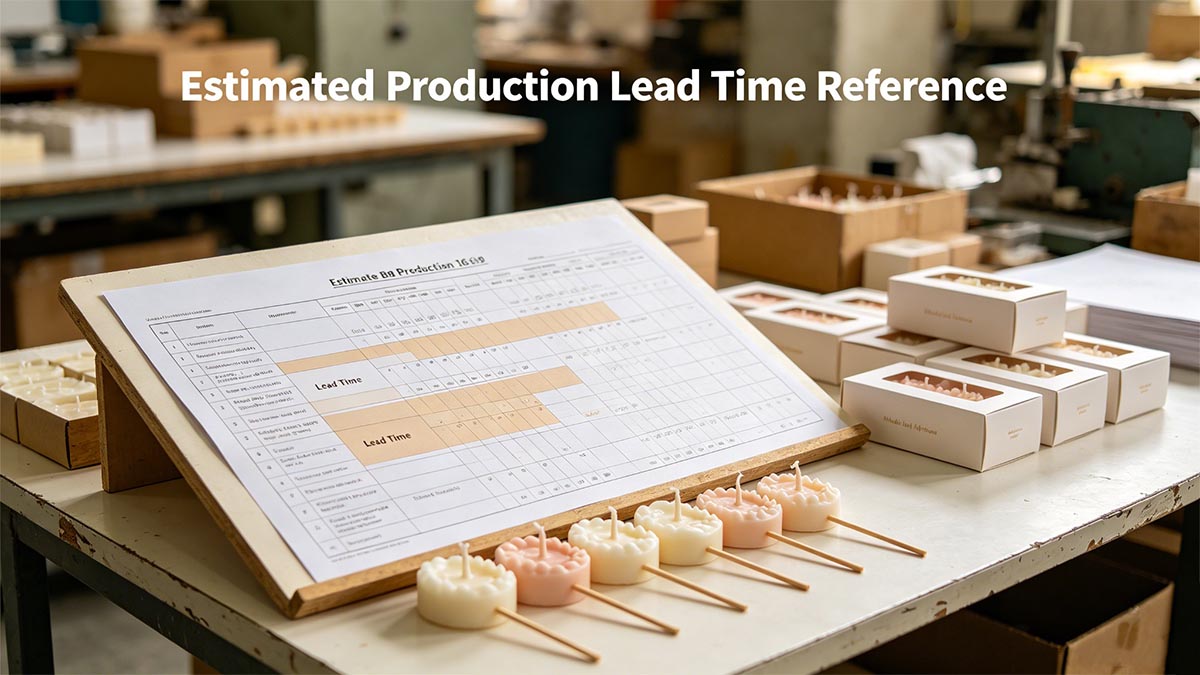
At our facilities in Xingtai and Shijiazhuang, Q4 production schedules are being coordinated according to order confirmation, product complexity, material requirements, and delivery timelines.
Our current planning reference is:
| Order Type | Estimated Production Lead Time |
|---|---|
| Standard products with existing specifications and packaging | 15–20 days |
| Customized products with new packaging or design requirements | 20–25 days |
| Customized products with customized packaging | 25–30 days |
These are production planning estimates only. They do not include freight, customs clearance, or inland delivery. Actual timing can vary according to product specifications, order quantity, customization requirements, material availability, packaging preparation, and the delivery destination.
Instead of asking only "How long will production take?", Q4 buyers can get a more useful picture by confirming the entire timeline.
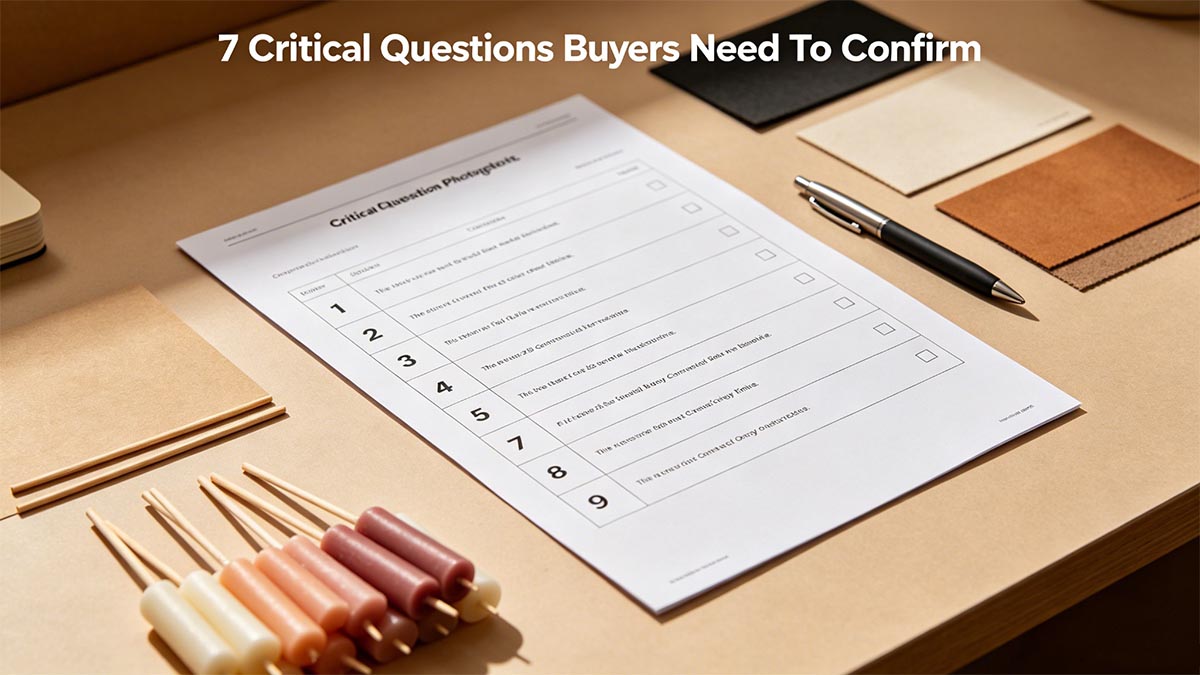
1. What is the current production slot? Ask when the supplier can realistically schedule the order based on the current production plan.
2. Are all materials available? If materials still need to be prepared or purchased, this can affect the actual production start date.
3. Is the packaging ready? For customized orders, confirm whether artwork, packaging materials, labels, and other components have been finalized.
4. What is the estimated production completion date? The production completion date provides a more useful reference than a general statement such as "15–20 days."
5. What shipping option matches the required delivery date? Ocean freight, air freight, or other shipping arrangements may lead to very different delivery timelines and costs.
6. What happens if the order contains multiple SKUs? Ask whether all products can be completed together or whether some items may require different production schedules.
7. Is there enough time for customs and inland delivery? The warehouse arrival date should be the final planning reference—not simply the factory completion date.
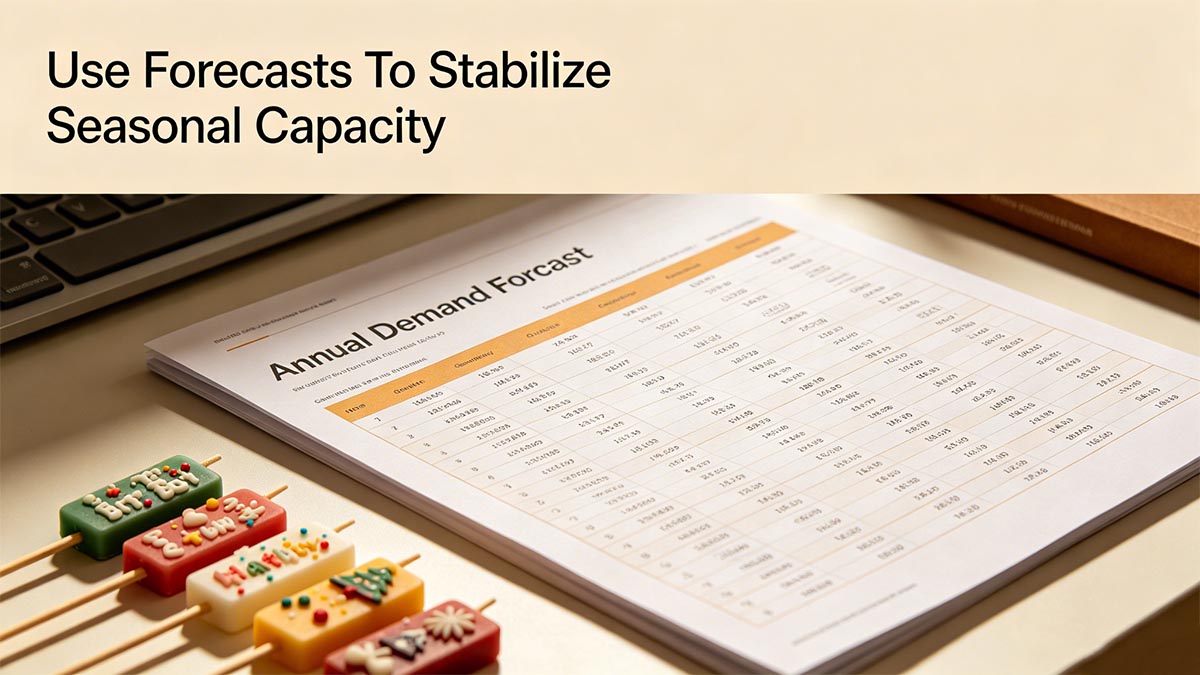
One useful change in Q4 sourcing is to think beyond individual holiday orders. For buyers with recurring programs, a production forecast can help suppliers understand expected demand before final purchase orders are issued.
A forecast does not necessarily need to be a fixed order. It can provide an early indication of expected quantities, product categories, seasonal timing, packaging requirements, potential new designs, and estimated shipping periods. This information can help manufacturers plan materials and production capacity more efficiently. It is particularly useful for buyers managing multiple stores, distributors, private-label programs, or recurring seasonal assortments.
Holiday sourcing is often discussed as a question of deadlines: When should we place the order?
But for overseas manufacturing, the more useful question is: What needs to happen before the order can reach the warehouse?
Product selection is only the beginning. Production capacity, product complexity, material preparation, packaging, SKU coordination, freight, customs clearance, and inland transportation all contribute to the final timeline.
By mid-September 2026, Halloween and Thanksgiving are already at very different stages of the sourcing cycle, while Christmas planning is moving deeper into production scheduling. For buyers, the practical approach is not simply to place every order as early as possible. It is to understand the requirements of each program and discuss the complete production and delivery timeline with the supplier before committing to a deadline.
In Q4 sourcing, the earlier the complete timeline is understood, the more flexibility buyers and manufacturers have to manage it.
 Big size decorative scented candle
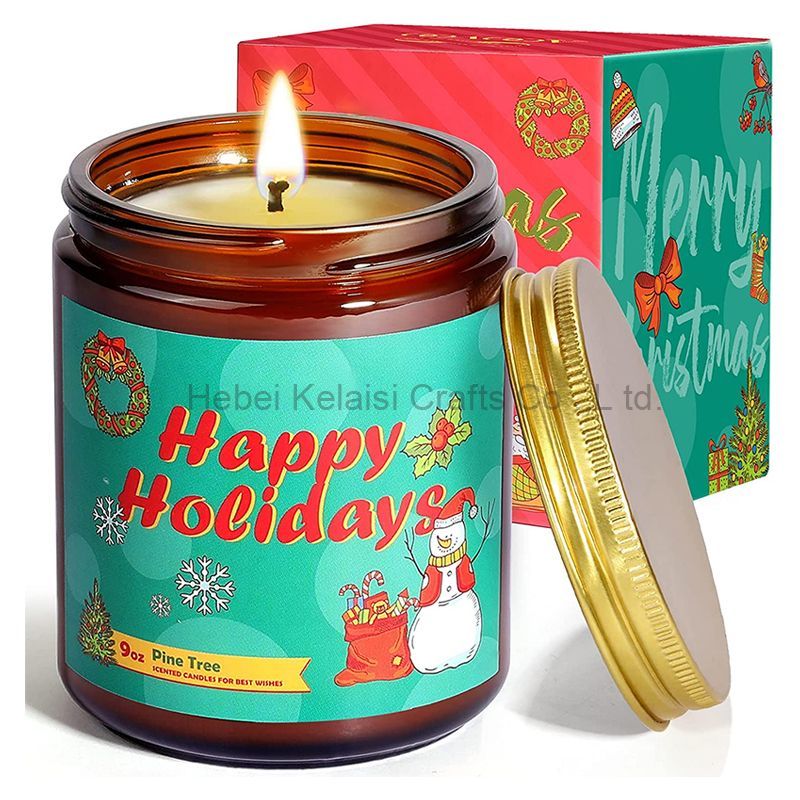 Christmas Scented Candles Gifts Sets for Women
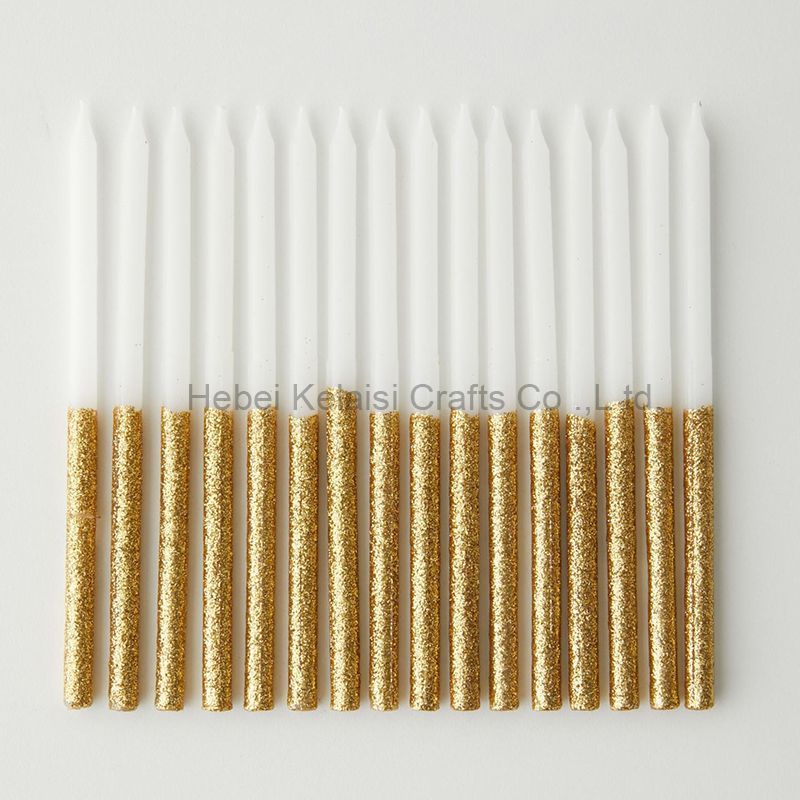 happy birthday long thin glitter cake candles
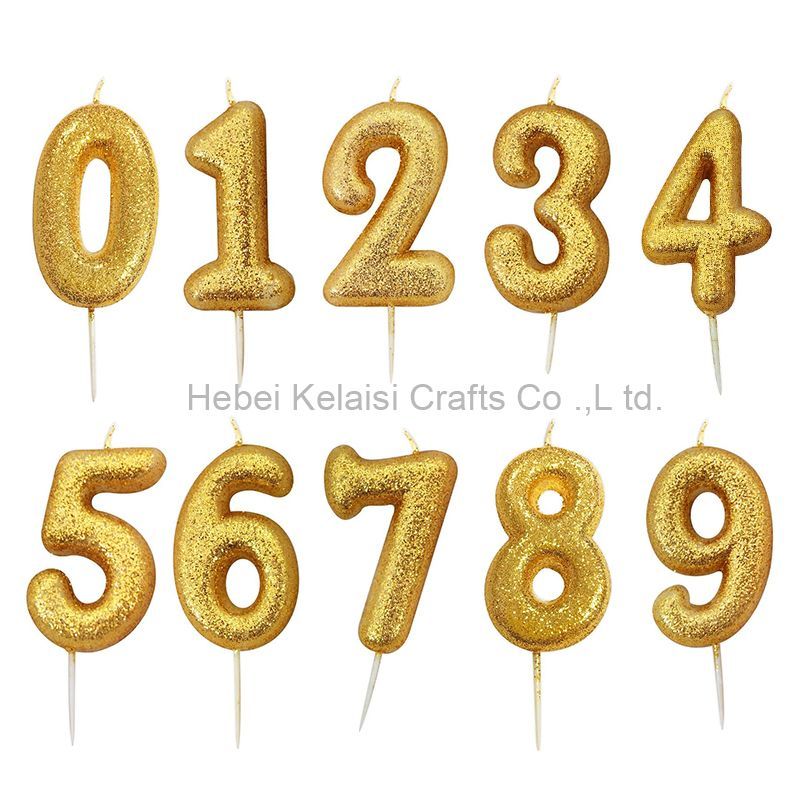 Luxury Golden Birthday Number Candle Sets
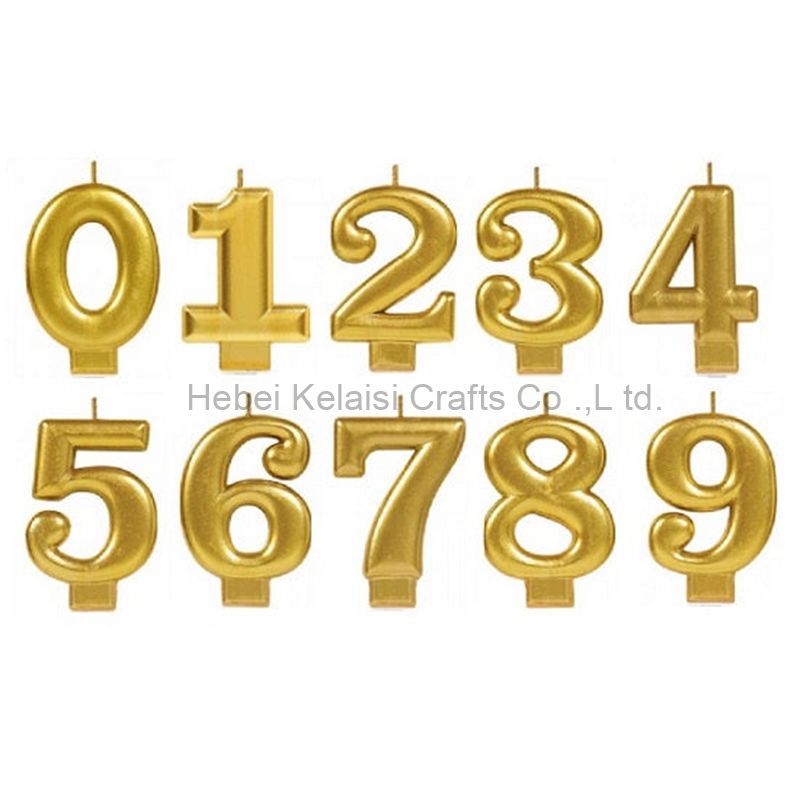 Fancy cake decoration number annual birthday candle
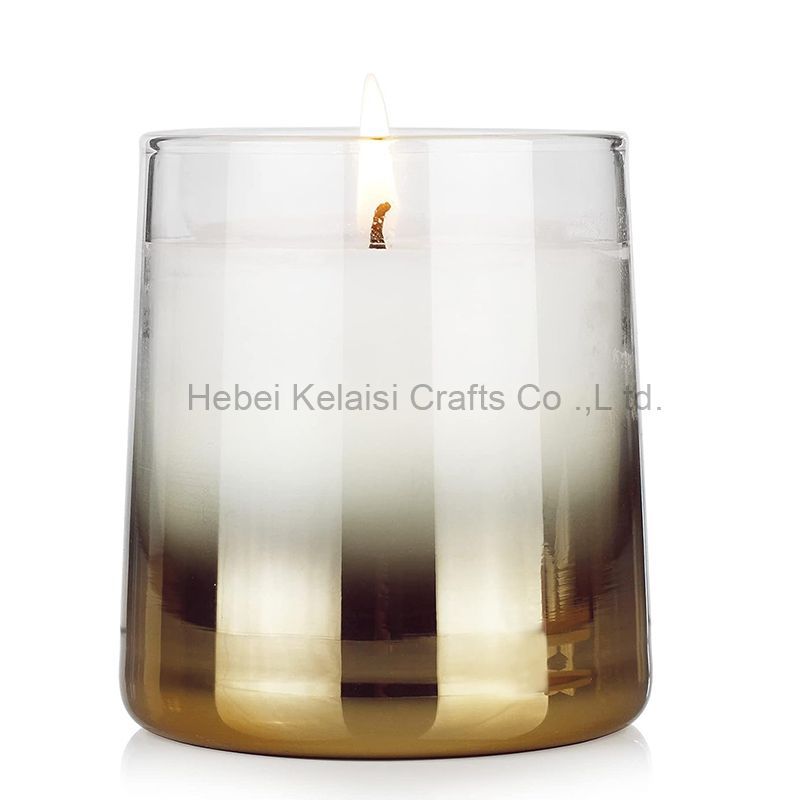 Gradient color Soy Wax Glass Jar Scented Candle
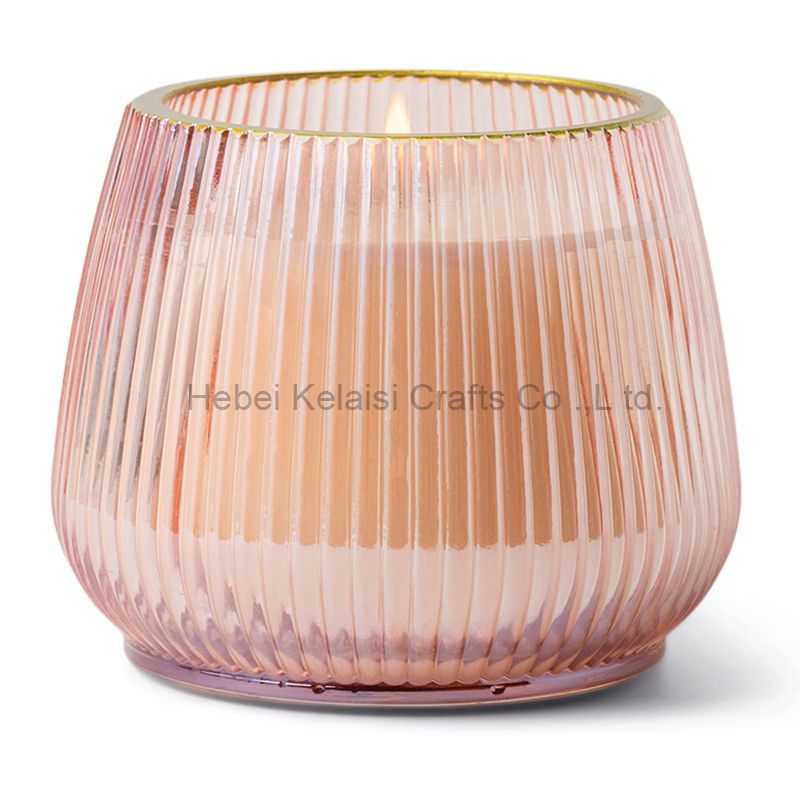 Origami Style Vertical Pattern Wine Glasses Jar Candles
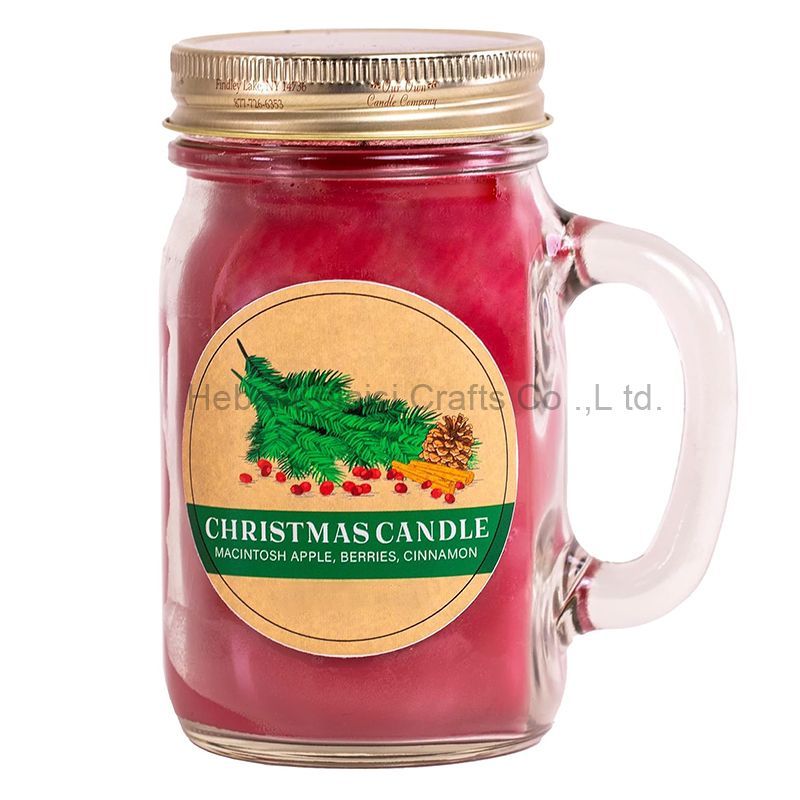 Custom Mini Glass Jar Scented Candle
 3D Letter Happy Birthday Candles
 Decorative Birthday Candles
 St. Patrick's Day Decorations Set
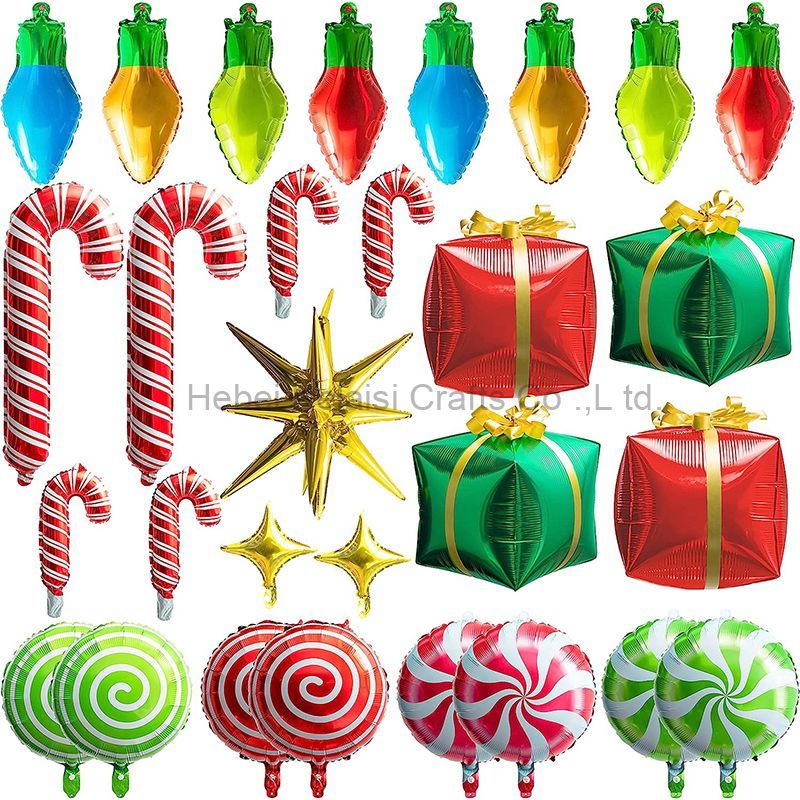 Christmas Party Balloons Supplies