Nov. 06, 2026
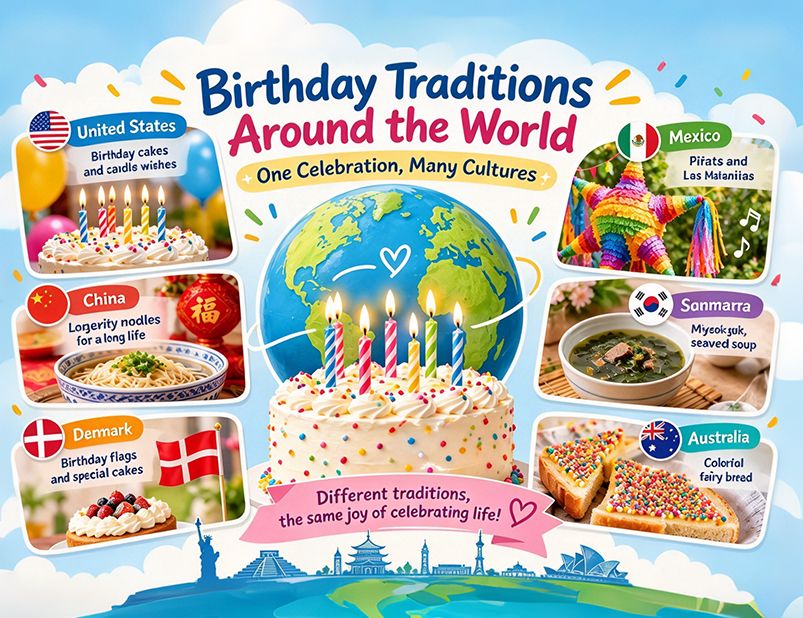
A birthday is a familiar occasion in many parts of the world, but the way people celebrate it can be surprisingly different. In some countries, a birthday cake decorated with candles is the center of the celebration. In others, special foods, traditional songs, family gatherings, or symbolic rituals play a more important role.
These customs reflect local culture, family values, and different ways of expressing good wishes. Looking at birthday traditions around the world also reveals how one occasion can bring people together in many different ways.
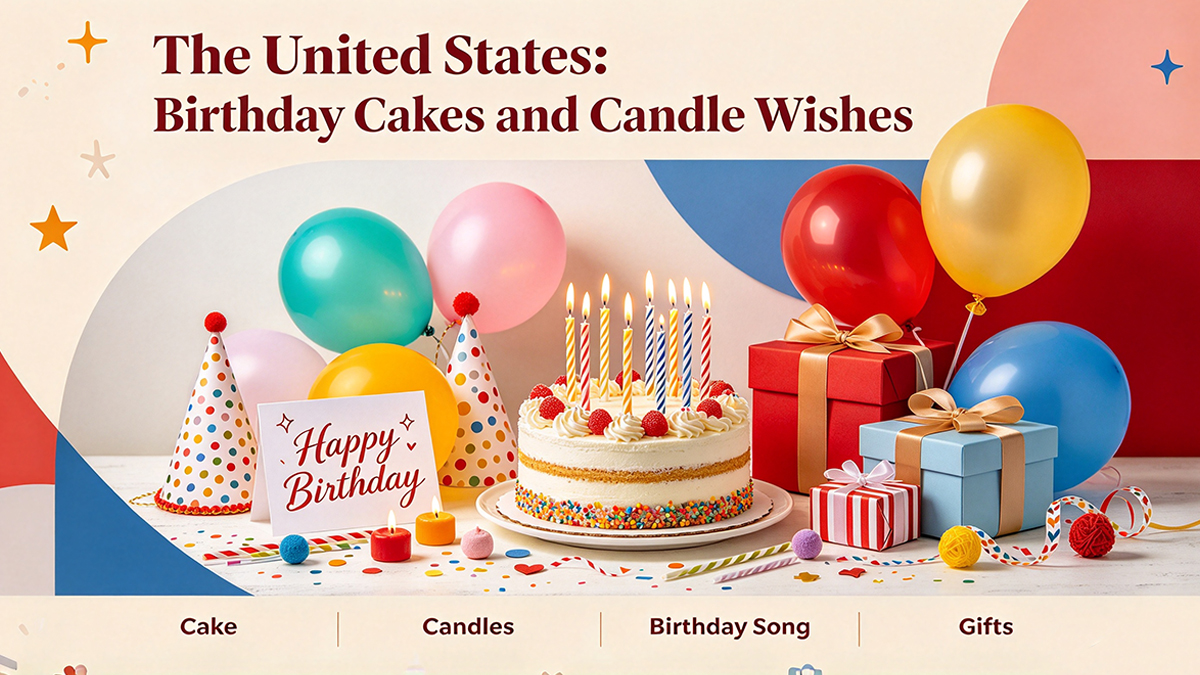
In the United States, birthday celebrations commonly include a cake, candles, a birthday song, and gifts. Family members and friends gather to celebrate the person whose birthday it is.
One familiar tradition is placing candles on the birthday cake. The birthday person makes a wish before blowing them out, often while everyone sings "Happy Birthday to You."
For children's birthdays, celebrations may also include themed decorations, games, balloons, and party activities. For adults, the occasion may be as simple as sharing a cake with family or meeting friends for dinner.
The birthday cake and candles have become recognizable elements of celebrations in many other countries as well, although local customs continue to influence how birthdays are organized.
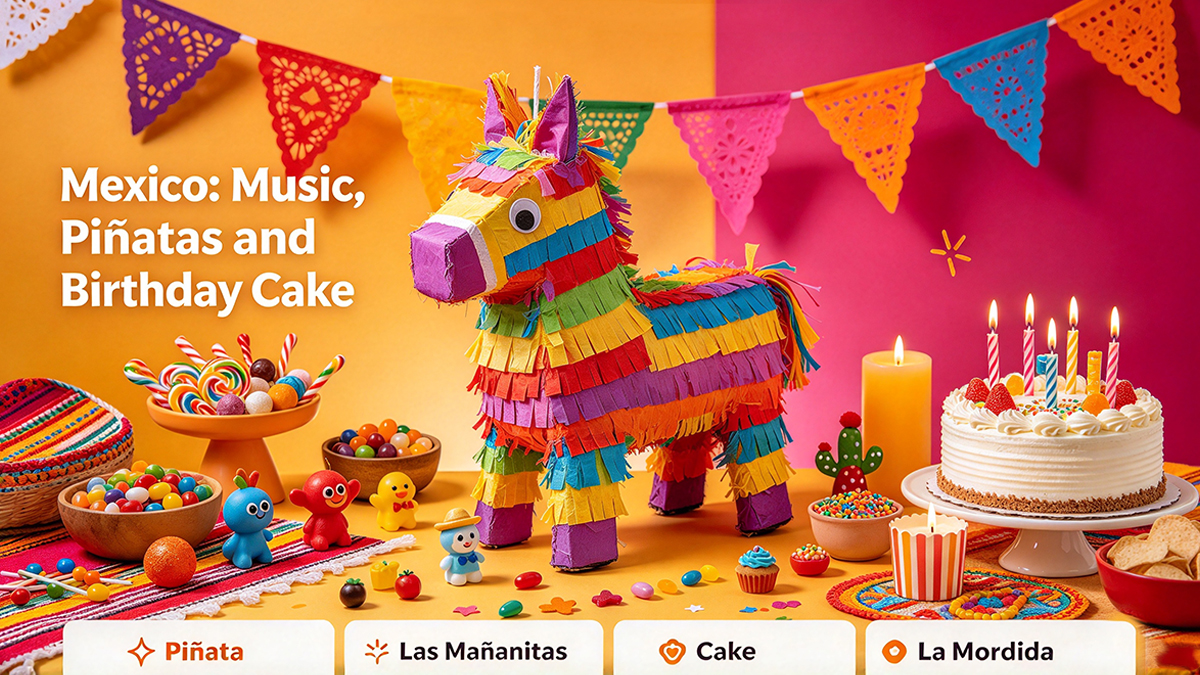
In Mexico, birthdays can be lively family and community occasions. Music, food, and shared activities often play an important role.
One well-known birthday song is "Las Mañanitas." It is traditionally sung to celebrate someone's birthday and may be performed in the morning or during a gathering around the birthday person.
Another familiar custom is the piñata. Often made from papier-mâché and filled with sweets or small toys, a piñata is suspended so that participants can take turns trying to break it open.
There is also a playful cake-related tradition known as "La Mordida." After the birthday person makes a wish and blows out the candles, guests may encourage them to take the first bite of the cake while everyone cheers.
These traditions show how music, games, and food can turn a birthday into a shared celebration involving the whole group.
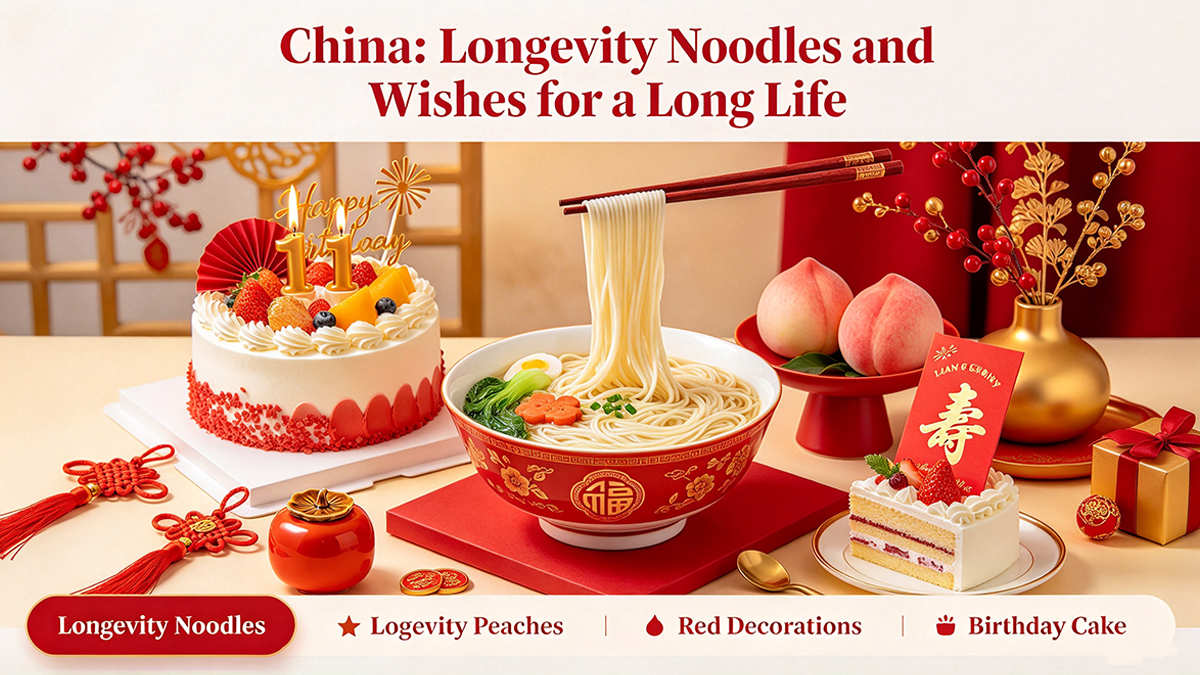
In China, birthday celebrations can include both modern birthday customs and traditional symbolic foods.
Longevity noodles, known as "Chang Shou Mian" (长寿面), are a familiar part of many birthday meals. Their long shape represents a wish for a long life. Traditionally, care is taken not to break the noodles while eating them.
For older family members, milestone birthdays may receive particular attention. Relatives gather to express respect and offer wishes for health, happiness, and longevity.
In some traditional celebrations, longevity peaches, red decorations, and special birthday foods are also used to express good wishes.
Birthday cakes and candles are now common in many Chinese celebrations, especially among younger generations. However, traditional foods and family customs continue to hold cultural significance.
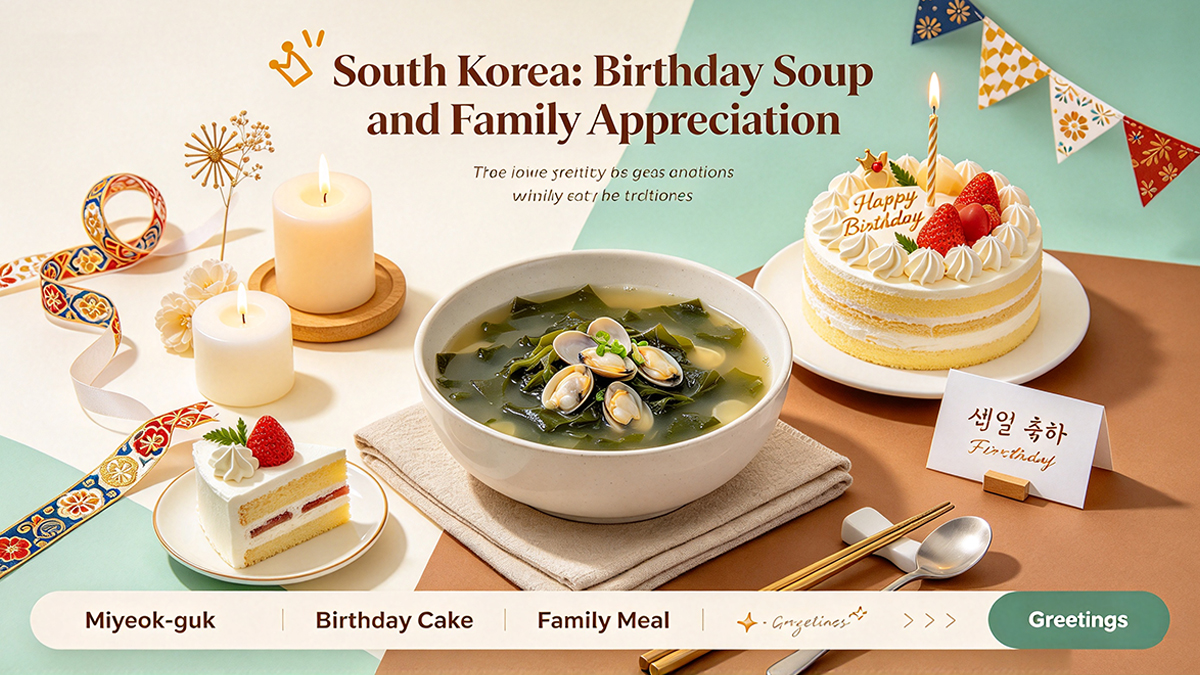
In South Korea, one of the most recognizable birthday food traditions is eating miyeok-guk, or seaweed soup.
The soup is traditionally associated with postpartum care because seaweed soup has long been served to mothers after childbirth. Eating it on a birthday is often understood as a way of remembering one's birth and appreciating one's mother.
Today, birthday celebrations may include a meal with family, a birthday cake, candles, and gatherings with friends. The traditional soup can remain part of the day even when modern birthday customs are also observed.
This combination of traditional food and contemporary celebrations illustrates how cultural practices can continue alongside changing lifestyles.
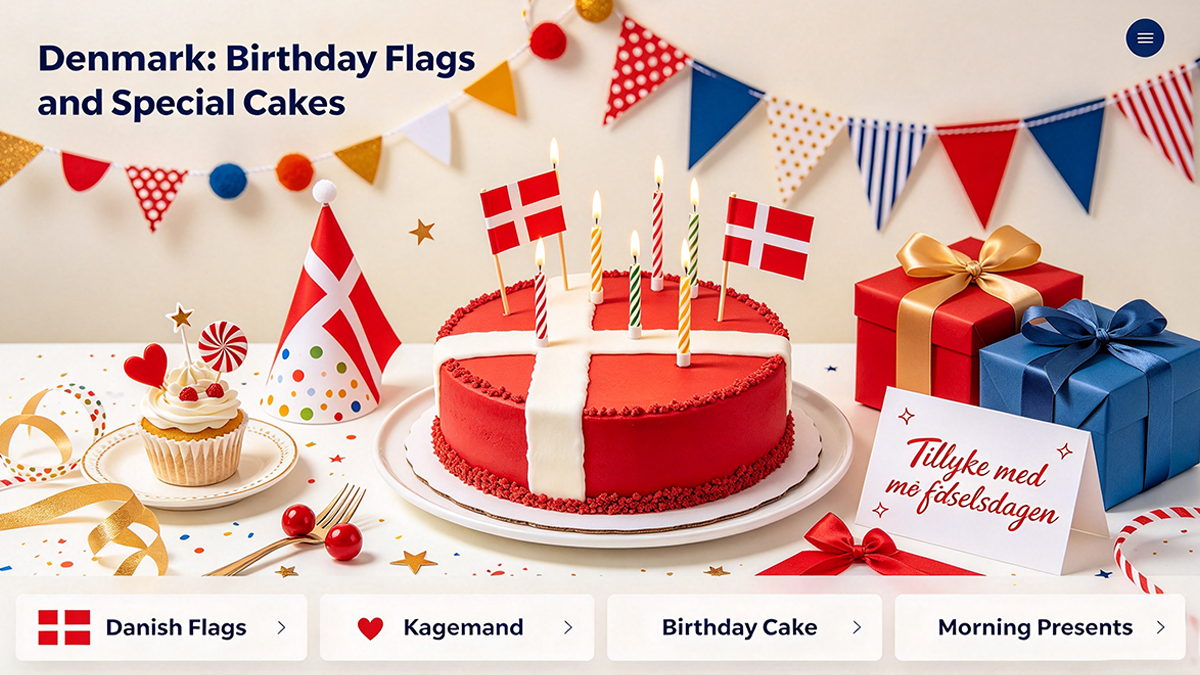
In Denmark, national flags are often used as cheerful birthday decorations.
A Danish flag may be displayed outside a home or used to decorate a birthday table. Flags can also appear on cakes and other decorations, making them a recognizable part of the celebration.
Birthday cakes are another familiar feature. One traditional example is Kagemand, or a cake man, which is shaped like a person and decorated with sweets.
For children, birthday mornings can be especially exciting when presents are arranged for them to discover after waking up.
These customs demonstrate how simple decorative details can become meaningful parts of a country's birthday traditions.
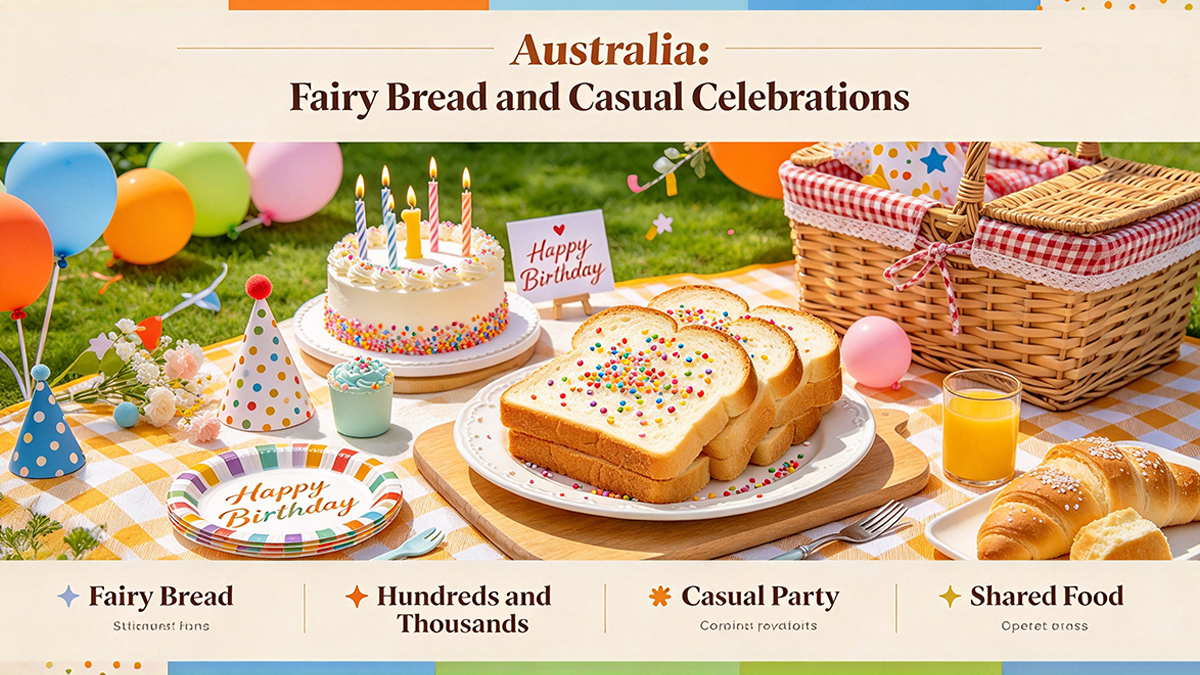
In Australia, birthday parties often combine relaxed gatherings with familiar party foods.
One popular example is fairy bread. It is made by spreading butter on slices of bread and covering them with colorful sprinkles, commonly called hundreds and thousands.
Fairy bread is particularly associated with children's birthday parties. Its bright appearance and simple preparation make it a recognizable part of Australian party culture.
Birthday cakes, candles, outdoor gatherings, and shared food are also common elements of celebrations.
Compared with some more elaborate birthday customs, fairy bread shows how a simple food can become an important part of childhood memories and family celebrations.
Although birthday customs vary from country to country, several common ideas appear across many cultures.
Family and friendship: Birthdays provide an opportunity for people to spend time together, reconnect, and show appreciation for someone important to them.
Food and sharing: Whether it is a birthday cake, longevity noodles, seaweed soup, or fairy bread, food often brings people together around the celebration.
Good wishes: Many traditions express hopes for health, happiness, success, and a long life. These wishes may be communicated through songs, special meals, gifts, or symbolic decorations.
Personal expression: Modern birthday celebrations often combine local traditions with individual preferences. People may choose a particular theme, favorite colors, decorations, or cake designs to make the occasion more personal.
Birthday celebrations do not look exactly the same everywhere. A cake with candles may be central to one gathering, while a traditional meal, a birthday song, or a family ritual may take priority in another.
Yet the meaning behind these customs is often similar: celebrating another year of life and sharing good wishes with the people who matter.
As cultures continue to interact and birthday celebrations evolve, traditional customs and modern ideas often appear side by side. From the familiar moment of blowing out birthday candles to the symbolic meaning of a bowl of longevity noodles, each tradition adds its own character to an occasion celebrated around the world.
Understanding these differences reminds us that birthdays are more than a date on the calendar. They are expressions of culture, family connections, and the many ways people make special moments memorable.
 Big size decorative scented candle
 Christmas Scented Candles Gifts Sets for Women
 happy birthday long thin glitter cake candles
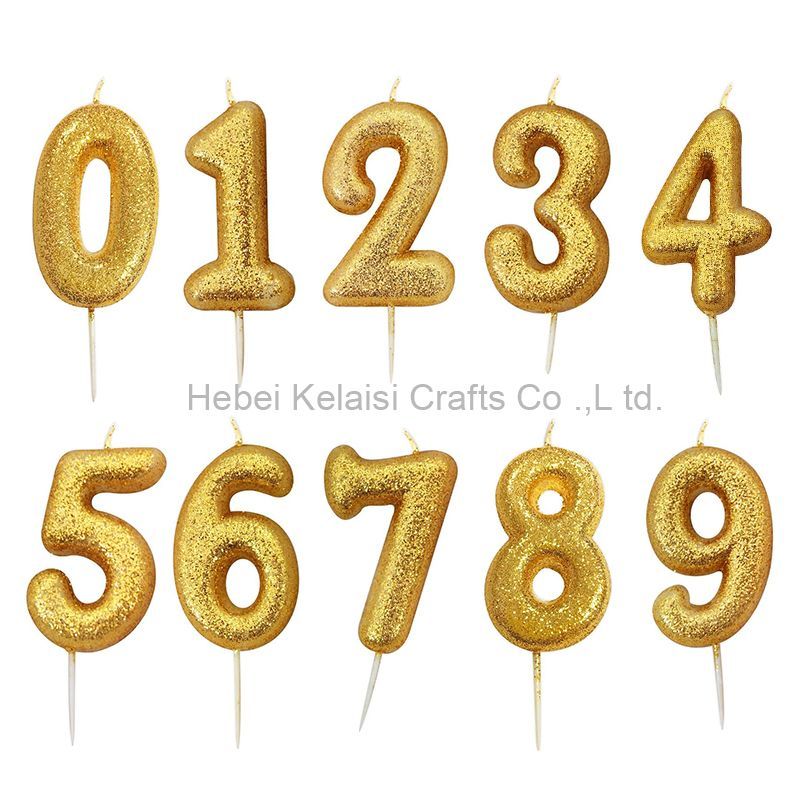 Luxury Golden Birthday Number Candle Sets
 Fancy cake decoration number annual birthday candle
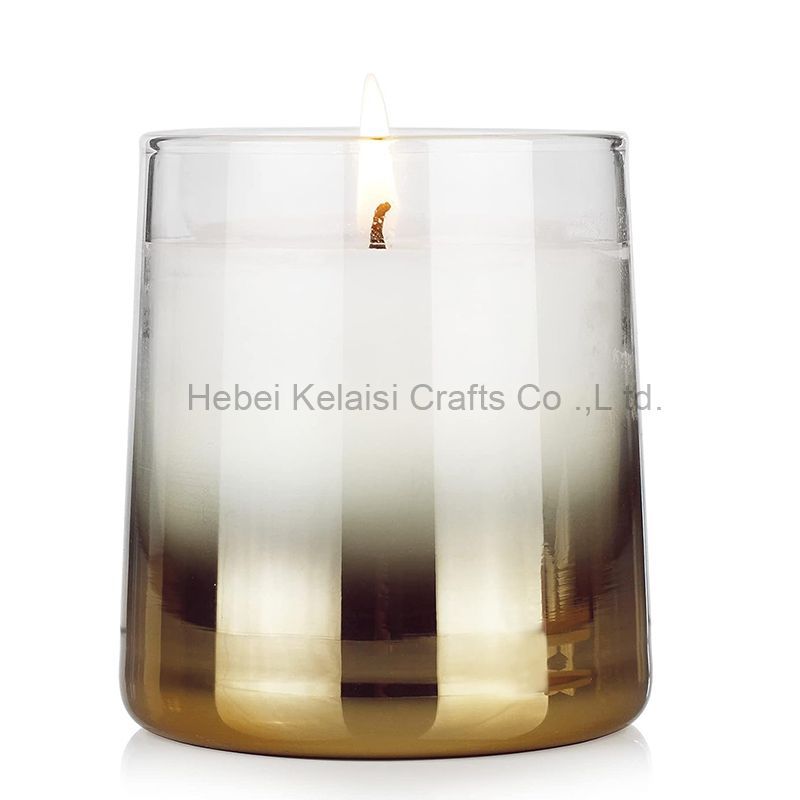 Gradient color Soy Wax Glass Jar Scented Candle
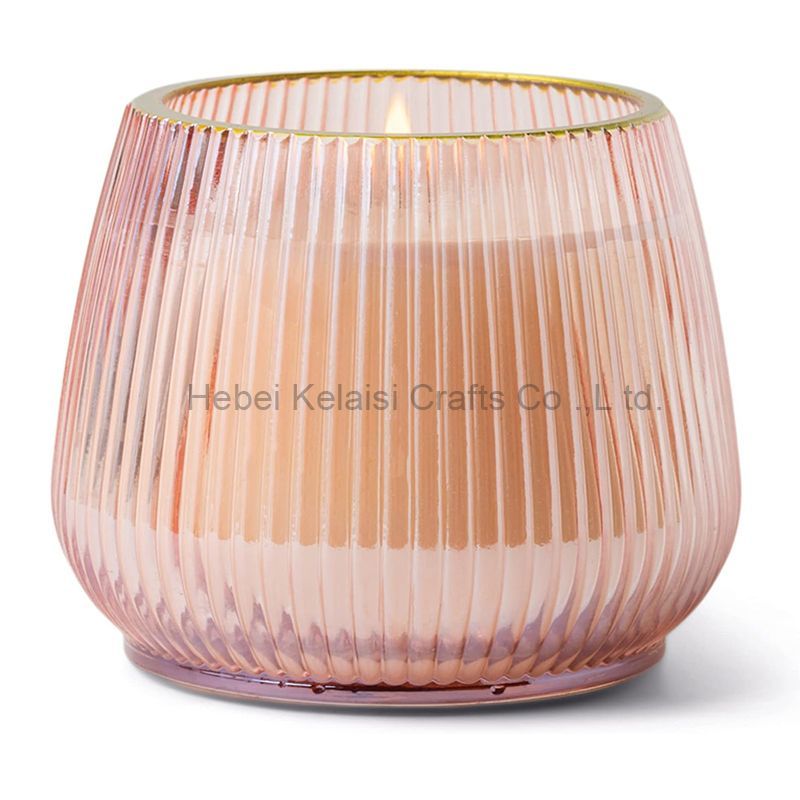 Origami Style Vertical Pattern Wine Glasses Jar Candles
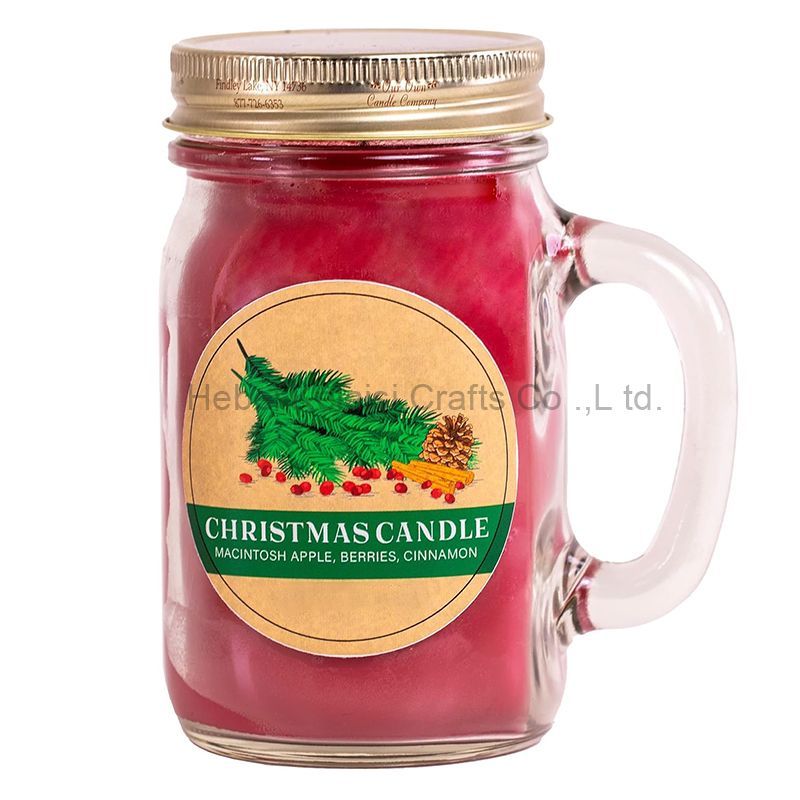 Custom Mini Glass Jar Scented Candle
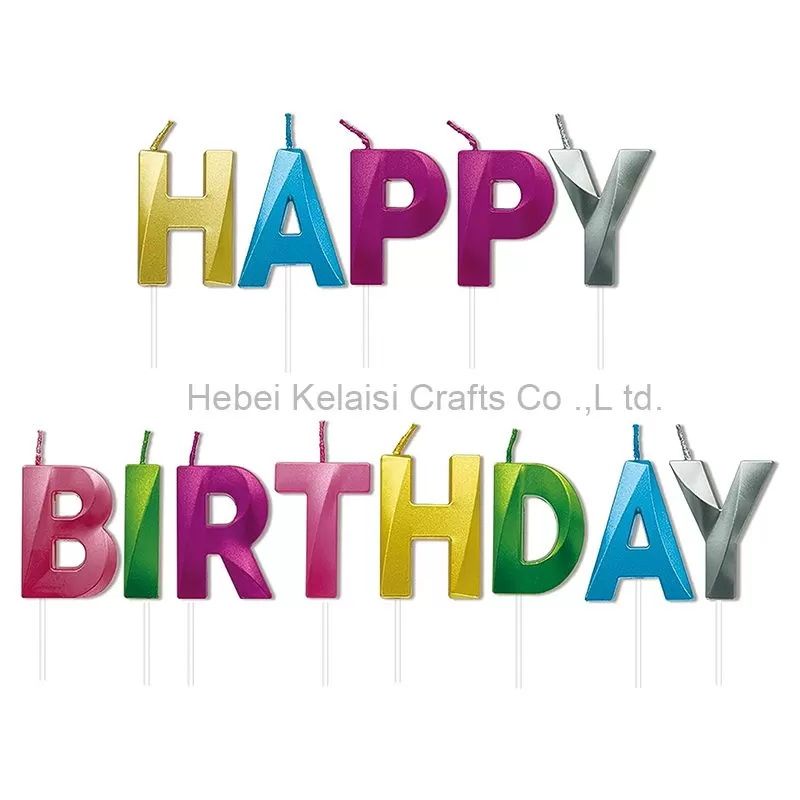 3D Letter Happy Birthday Candles
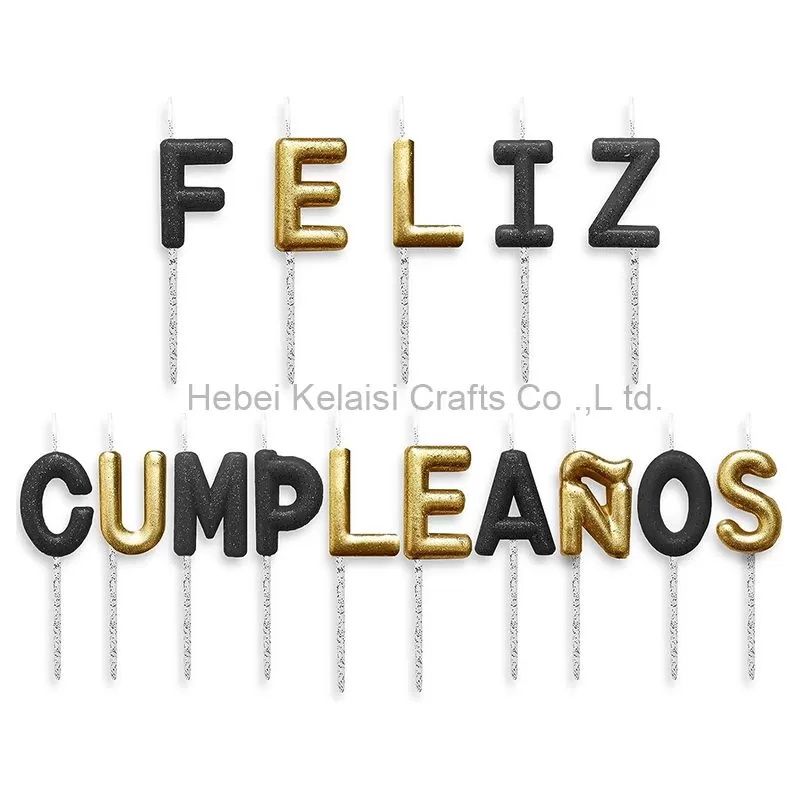 Decorative Birthday Candles
 St. Patrick's Day Decorations Set
 Christmas Party Balloons Supplies