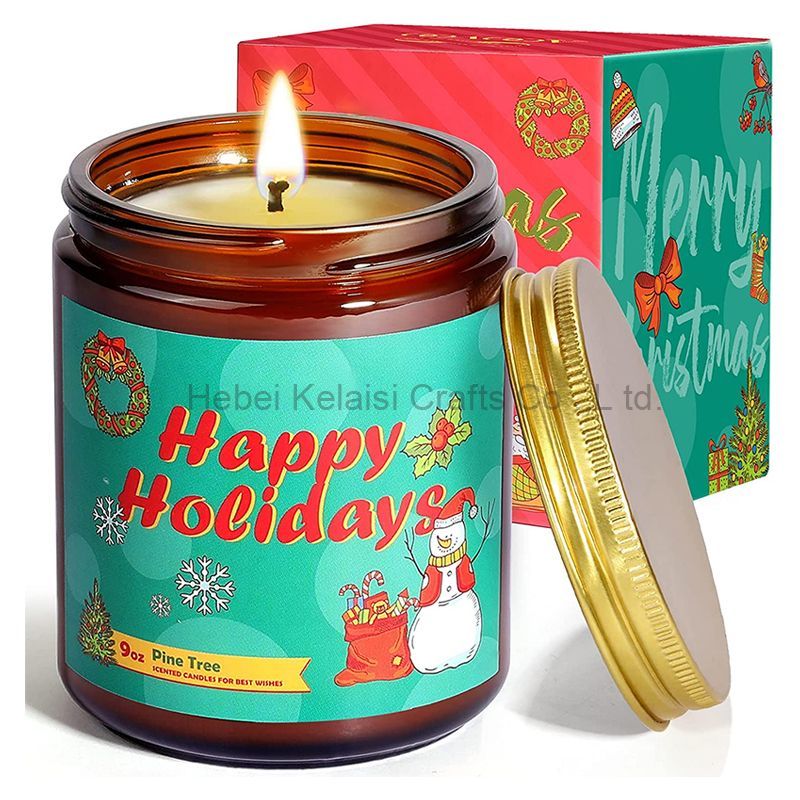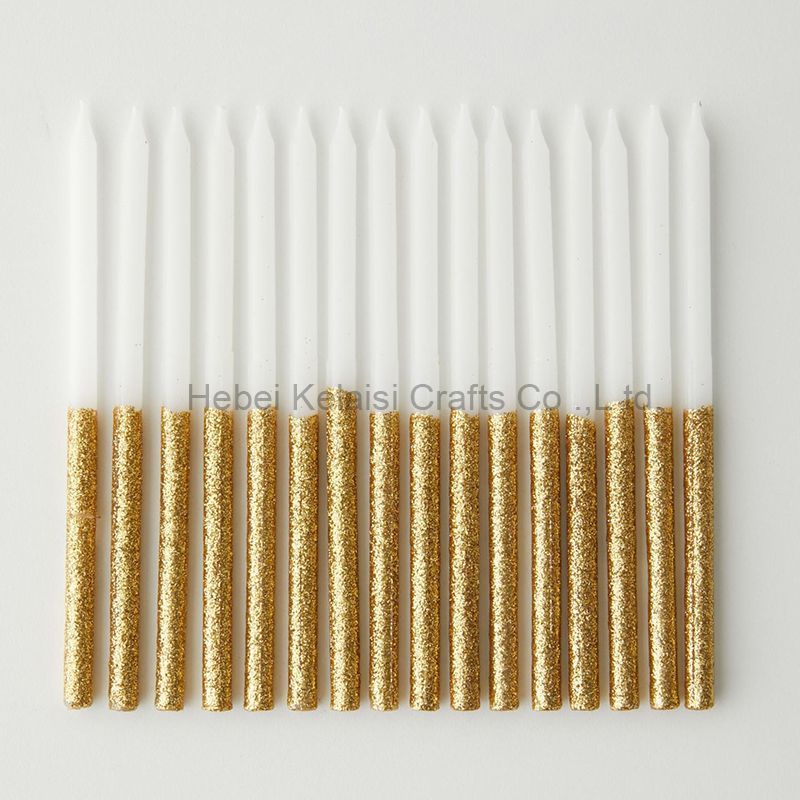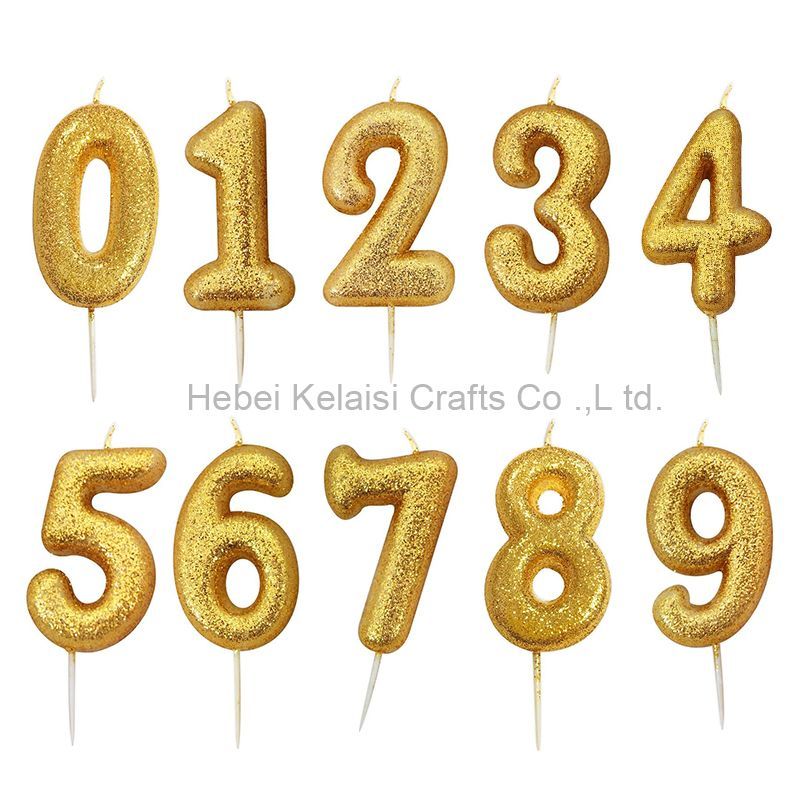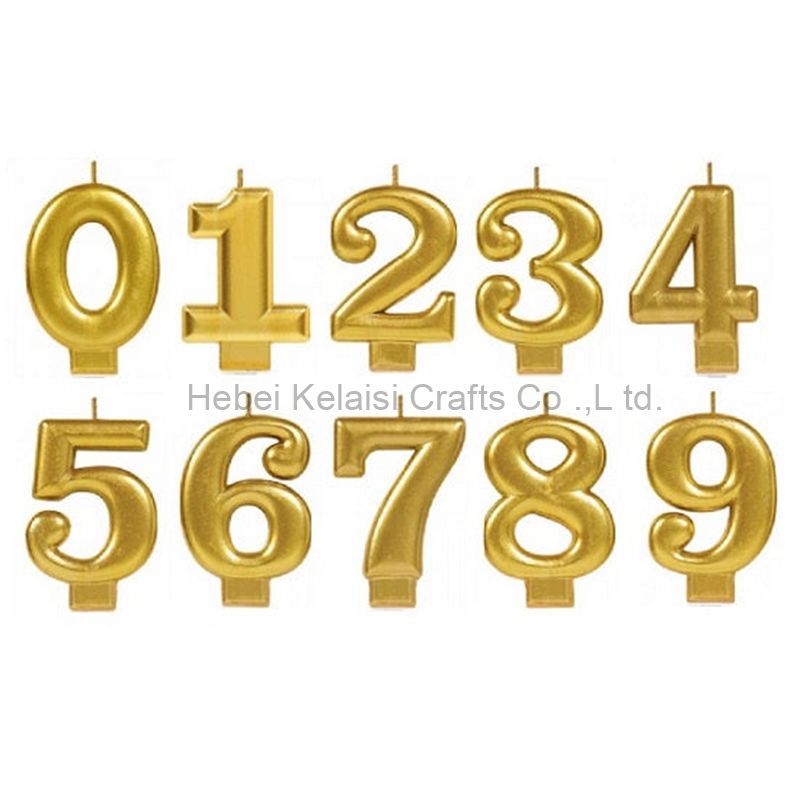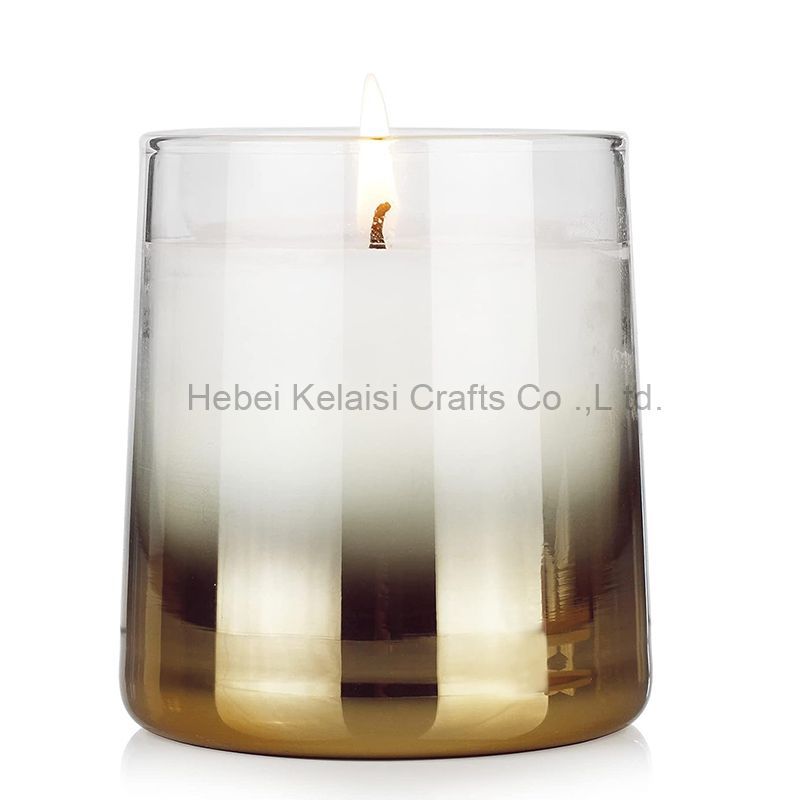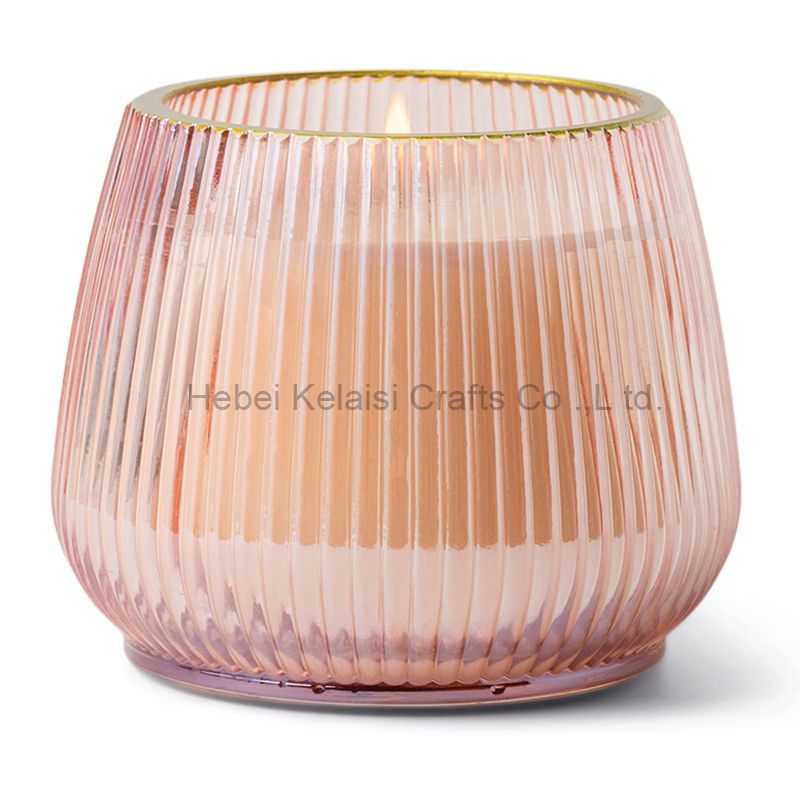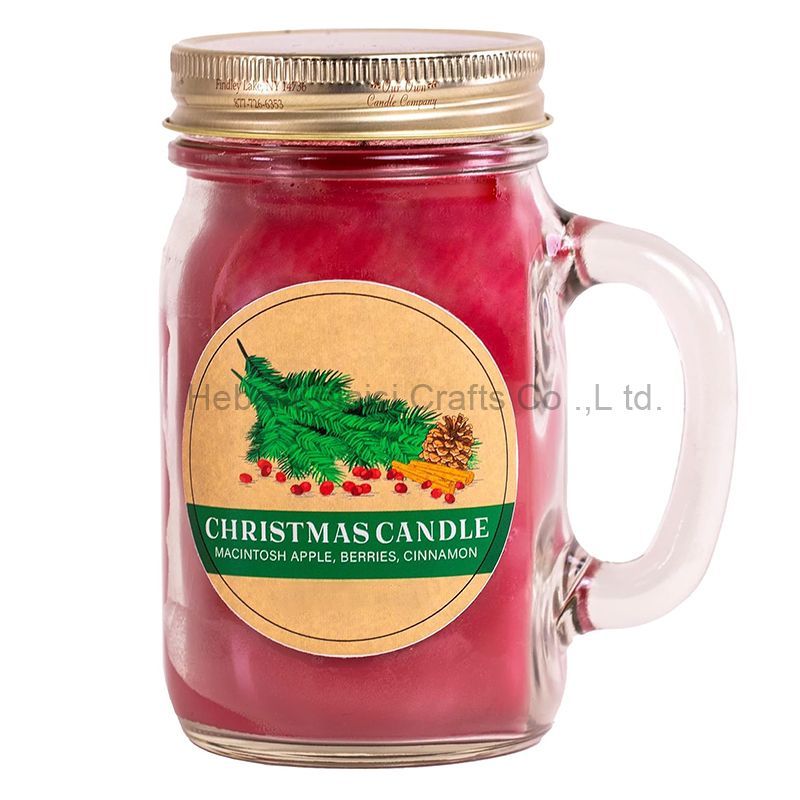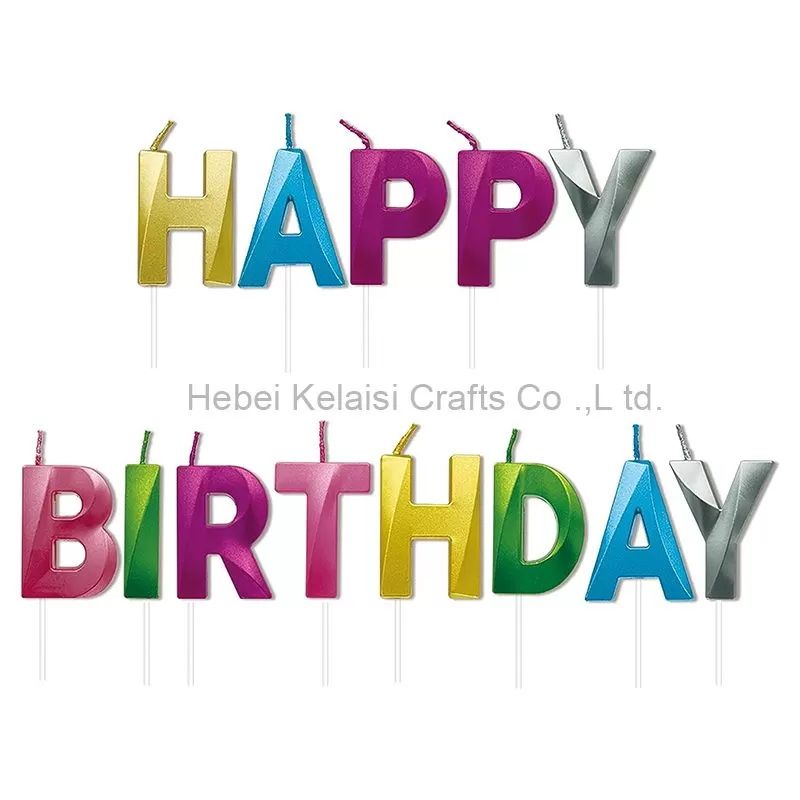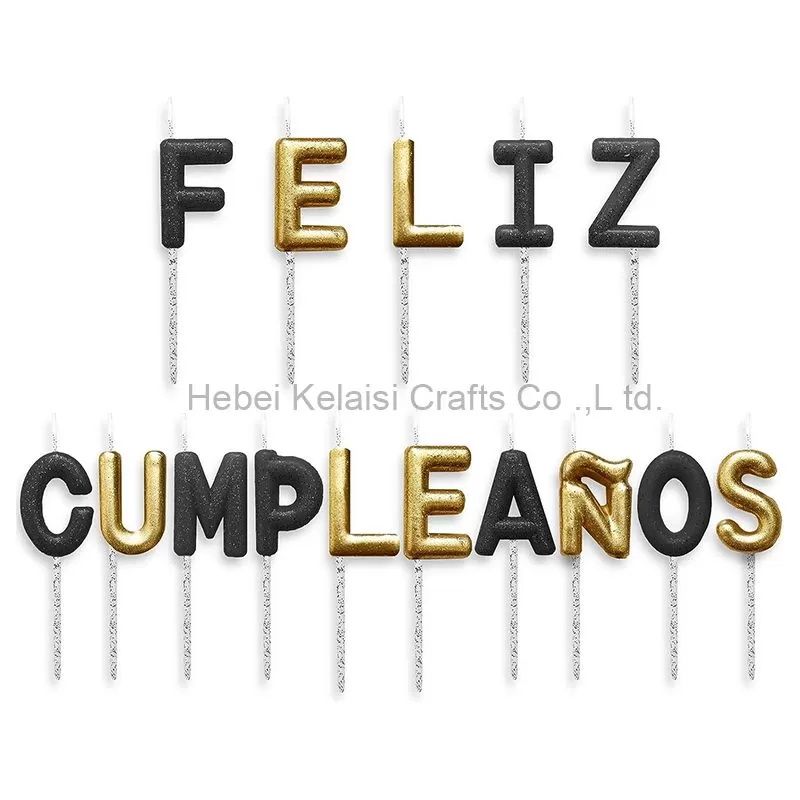

A customer buys two boxes of the same candle from the same retailer. One is deep gold. The other is pale yellow. Same brand. Same packaging. Different colors.
The customer does not call the factory. They stop buying that brand.
Color consistency is not a cosmetic issue. It is a trust issue — and for retailers, it is a brand risk issue.
This article explains why color variation happens, how manufacturers control it, and what buyers should look for in a supplier.
Why Color Variation Happens
Color inconsistency is not caused by one thing. It is the result of multiple variables.
Wax base color varies by batch. Paraffin wax can range from dark yellow to white depending on the source and refining process. Beeswax and soy wax have their own natural colors. The same dye added to different waxes produces different results.
Dye type and quality differ. Candle dyes are formulated specifically for wax. Dye blocks, liquid dyes, and dye powders behave differently. Food coloring and crayons will not work in candles — they cannot bond with wax and will clog the wick.
Temperature affects color absorption. Dye must be added at the correct temperature. Too cool, and crystals form without color, creating white spots. Too hot, and the dye can degrade or the wax can discolor.
Mixing time and intensity matter. Incomplete mixing leaves streaks. Over-mixing introduces air bubbles.
Fragrance oils alter color. Some oils, especially those high in vanillin, can darken or shift the finished color.
Natural essential oils like sweet orange can change hue over time.
How Professional Factories Control Color Consistency
Controlling color consistency requires control at multiple stages.
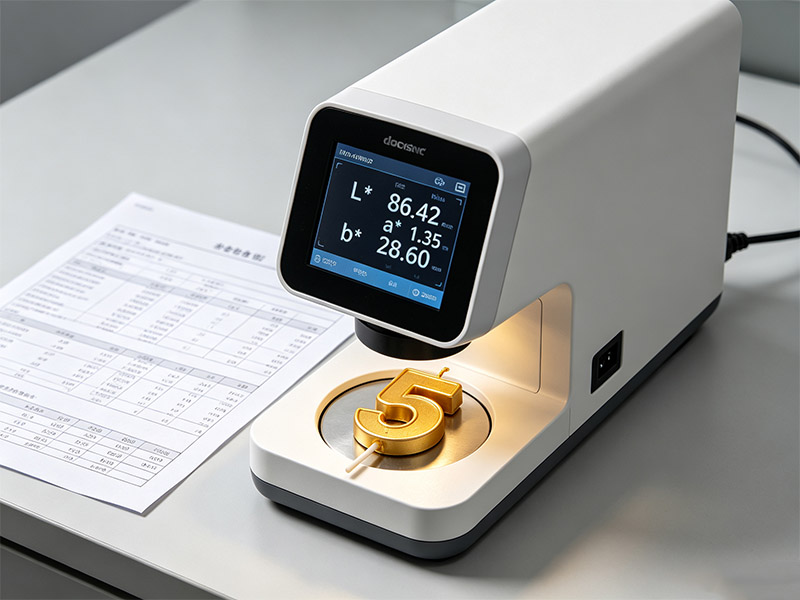
Spectrophotometric measurement. Modern color control uses instruments that measure color numerically using L*a*b* coordinates. By measuring a master sample and comparing every batch against it, manufacturers can detect differences before the wax hardens.
In-process monitoring. The most effective control happens while the wax is still molten. A spectrophotometer can measure liquid wax and allow adjustments before candles are formed — preventing entire batches from being rejected later.
Standardized dye measurements. Consistent results require consistent measurement. A common starting point is 1/4 teaspoon of dye flakes per pound of wax for medium colors. Dark colors require more. The key is measuring every time, not guessing.
UV inhibitors. Candle dyes are sensitive to ultraviolet light. Exposure to sunlight or bright lighting can cause colors to fade. UV inhibitors protect color stability over the product's shelf life.
Material consistency. Wax supplies vary from shipment to shipment. Manufacturers who maintain relationships with consistent suppliers reduce this variable.
Temperature control. Dye must be added within a controlled temperature range defined by the wax formula. Pouring temperatures must also be consistent.
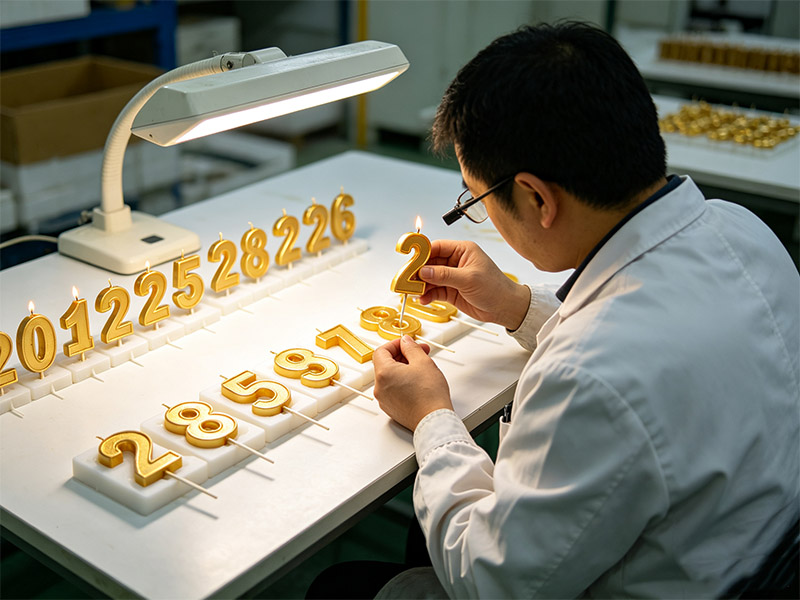
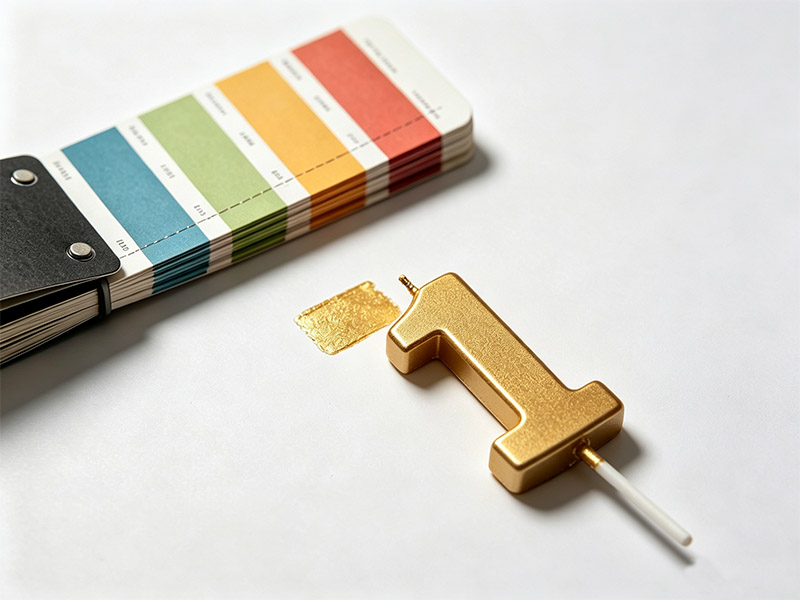
Approved color sample before production. Every order begins with a color sample approved by the buyer. This physical sample becomes the reference standard every batch is measured against.
Batch production records. Each batch is documented with dye formulation, wax source, temperature settings, and inspection results. This ensures repeatability across future orders.
Incoming wax inspection. Wax shipments are tested for base color and consistency before production. Variations are flagged and adjusted before dye is added.
Production QC checkpoints. Quality control happens during melting, after molding, and before packaging. Color checks are performed at each stage.
Final random inspection. A final color check is conducted on randomly selected pieces from the completed order before the container is sealed.
What This Means for Retail Buyers
Color consistency is a signal of supplier capability.
Suppliers who control color have control over their process. A supplier who cannot maintain color consistency is likely not controlling other variables either. Color is the visible signal of a larger problem.
The risk of inconsistency is bigger than most buyers realize. A customer who receives a color mismatch may not complain. They just stop buying. For retailers, this affects brand perception and repeat purchase rates.
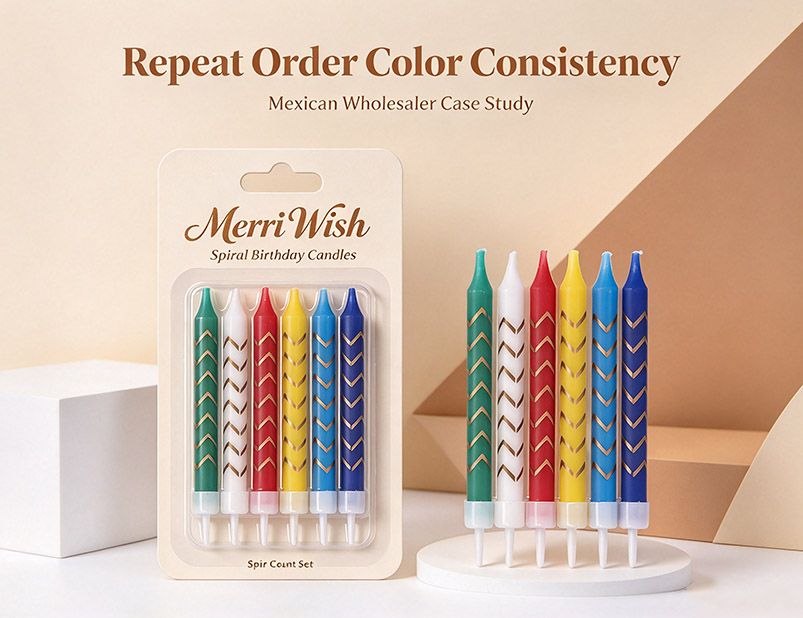
For private label buyers, consistency matters even more. The same design may be reordered multiple times across different seasons. If the color shifts between orders, the brand looks inconsistent — even if the product itself is fine.
Ask about measurement methods. A supplier who says "we check by eye" is not using the same standard you expect. Ask whether they use spectrophotometers and whether they test every batch.
Request a physical color standard. A physical sample representing the approved color is essential. Without it, you cannot verify that a batch matches what was approved.
Ask about incoming material inspection. Suppliers who test wax shipments before production have lower risk of variation.
Understand the cost of inconsistency. A batch with unacceptable color variation cannot be sold at full price. The cost of inconsistency is higher than the cost of control.
How We Manage Color Consistency at Kelaisi Candle
Every custom candle project begins with an approved color sample. Before mass production, our team confirms wax formula, color standard, and packaging requirements.
Our production process includes incoming wax inspection, standardized dye measurement, and QC checkpoints at multiple stages. Each batch is documented for traceability. Final random inspection confirms that the finished product matches the approved sample before shipment.
This helps retailers maintain consistent products across repeat orders — whether the same SKU is reordered next season or next year.
The Takeaway
Color consistency is not about aesthetics. It is about trust.
A customer who buys a candle in a specific color expects that color. When the color varies, the trust breaks. The customer does not call the factory. They simply do not buy again.
For retail buyers, color consistency is a signal. A supplier who controls color has a system for controlling everything else.
The question is not whether a candle looks good. It is whether it looks the same, every time, batch after batch.
Kelaisi Candle has manufactured candles and party supplies since 1991, with facilities in Xingtai and Shijiazhuang, Hebei. We hold BSCI, SEDEX, CE, RoHS, EN71, and ASTM F963 certifications.