Jul. 16, 2026
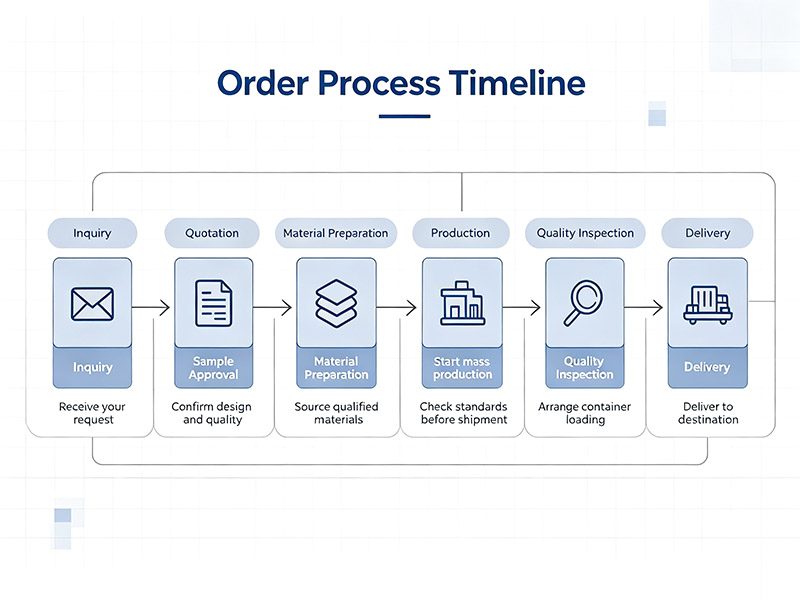
For buyers sourcing candles from China for the first time, the process can feel uncertain. For buyers who have done it before, the variability between suppliers is the real challenge. Every factory has a different process. The difference between a smooth order and a problematic one is often determined by how clearly the supplier communicates each step — and how well the buyer prepares.
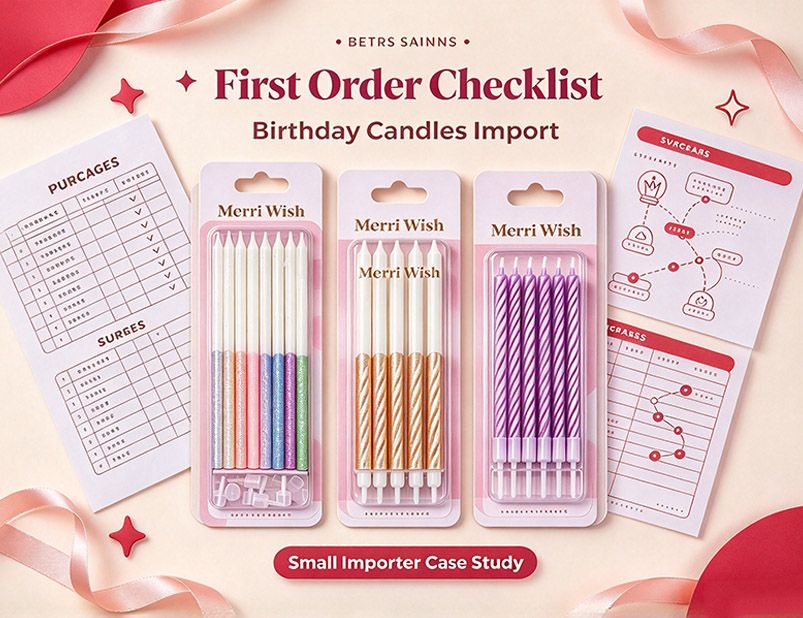
This article outlines our standard order process from inquiry to shipment. The goal is to show buyers what to expect, where delays typically occur, and how to avoid them.
The process starts with an inquiry. Most buyers provide basic information: product type, quantity, packaging requirements, and target price.
We respond with a formal quotation. The quotation includes:
Product specifications (size, color, material)
Unit price (FOB or CIF)
Packaging details (blister, box, carton dimensions)
Estimated lead time (production + shipping)
Payment terms
The most common buyer mistake: providing incomplete information. A quote is only as accurate as the information it is based on. Buyers who say “standard birthday candle” without specifying color, packaging, or quantity will receive a vague quote that will change later. Every change after the quote adds time.
What buyers should verify: The quotation should clearly state what is included and what is not. It should also confirm that all compliance requirements (like EN 15493 or REACH) have been accounted for. A supplier that cannot provide a detailed quotation is not ready for large-volume orders.
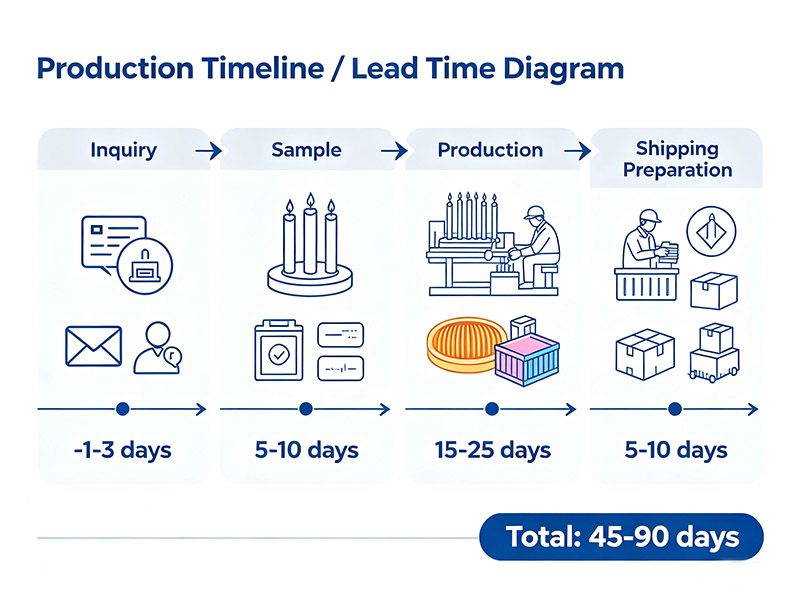
Timeline: 1–3 business days after receiving inquiry.
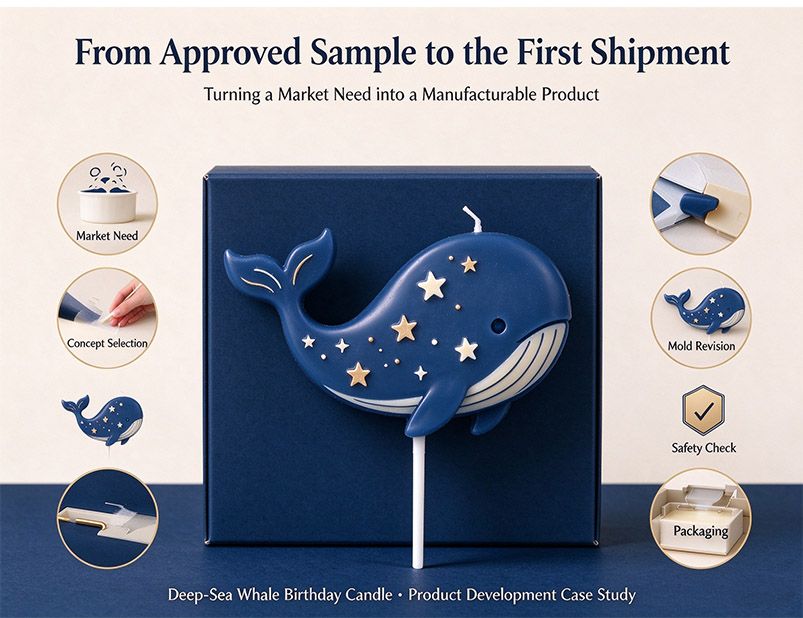
Before full production begins, we produce samples for buyer approval. The sample stage is essential for confirming:
Product appearance and color accuracy
Packaging design and material quality
Compliance documentation (test reports, labels)
Functionality (burn time, soot behavior, stability)
Samples are sent via courier. Once the buyer approves the sample, production can proceed. This is the point at which specifications are locked. Changes after sample approval will delay the order.
What buyers should verify: The sample must match the final product exactly. If the buyer approves a sample with certain specifications, any change later will add cost and time. A recent order of 120,000 custom candle sets was delayed by 10 days because the buyer requested a packaging color change after sample approval.
Timeline: 5–10 business days for sample production; 3–5 days for shipping depending on destination. Samples should be approved within 5 business days. Delays here push everything back.

Once the sample is approved, we schedule production. This stage involves:
Wax and raw material procurement
Colorant and wick sourcing
Packaging material ordering (blister trays, cartons, outer boxes)
Lead times for materials vary. Wax is usually available in bulk and can be procured quickly. Custom packaging takes longer — usually 15–20 days. For orders requiring custom printing or packaging, this stage is the longest part of the process.
What buyers should verify: If the buyer is providing custom artwork or packaging designs, all files should be submitted at this stage. A delay in artwork submission of just one week can push the entire order back by 10–14 days, because production slots are scheduled in advance and cannot always be moved.
Timeline: 5–15 days depending on material availability and packaging complexity.
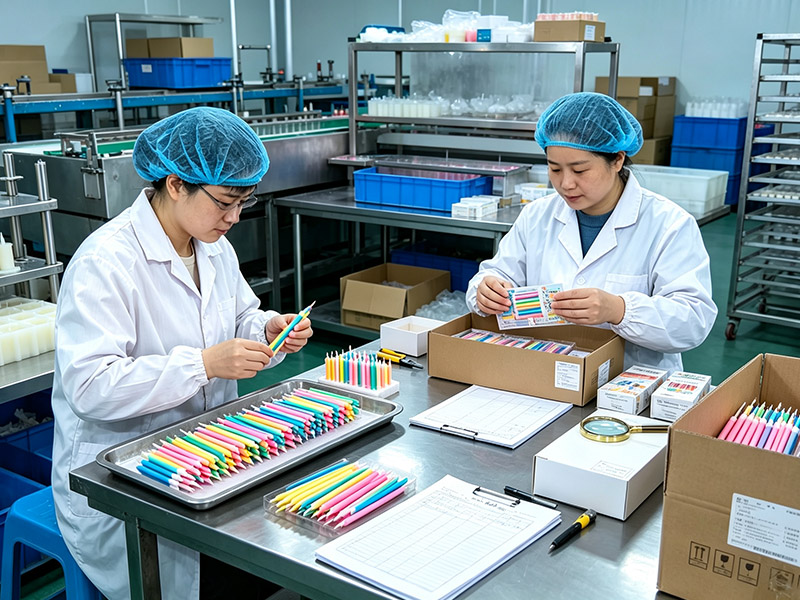
Production begins once all materials are in place. During production, quality control happens at three checkpoints:
First: during production. Inline quality checks are performed at each stage — wax melting, molding, packaging — to catch issues early. Defects are identified and removed before they reach the next stage.
Second: before packaging. A sample is pulled from each production batch for inspection. Dimensional checks, color verification, and burn tests are conducted. Our target defect rate is below 0.3 percent — a level required by large-scale retail buyers. In a recent 120,000-unit order, the final defect rate was 0.18 percent, well below the target.
Third: after packaging. Final inspection of finished products before shipment. This includes packaging integrity, label accuracy, and carton quality.
What buyers should verify: Ask whether inspection reports are available. A supplier that cannot provide quality control documentation is not serious about quality.
Timeline: 15–25 days depending on order volume and product complexity.
When production is complete, the order is prepared for shipment. This stage includes:
Container booking and scheduling
Export documentation (commercial invoice, packing list, bill of lading)
Customs clearance
Loading and sealing the container
Most of our shipments are FOB Tianjin. Buyers work with their freight forwarder to arrange shipping from the port. We provide all necessary export documents to ensure smooth customs clearance.
What buyers should verify: Confirm shipping terms and documentation requirements well before the shipment date. Missing documents cause delays at the port. During peak season (August–October), container availability can be tight. Booking early is essential.
Timeline: 5–10 days for shipping preparation and container loading.
Once the shipment is on its way, the order is considered delivered. But the process does not end there. After delivery, buyers should verify:
Product quantity matches the packing list
Product quality matches the approved sample
Packaging is intact with no damage
We follow up with buyers after delivery to confirm everything is in order. Any discrepancies are reviewed and resolved promptly.
What buyers should verify: Report any quality or quantity issues within the timeframe specified in the contract. Most claims must be filed within a certain period of receipt.
The most common causes of delays are:
| Stage | Common Delay | Solution |
|---|---|---|
| Artwork submission | Buyer provides files late | Submit artwork at sample approval stage |
| Sample approval | Buyer takes time to approve | Set clear deadlines for approval response |
| Raw materials | Custom materials take longer | Confirm material availability before order |
| Shipping | Container availability | Book containers early during peak season |
The best way to avoid delays is to plan ahead. Buyers who communicate clearly, respond quickly, and provide all necessary documents early will keep orders on schedule.
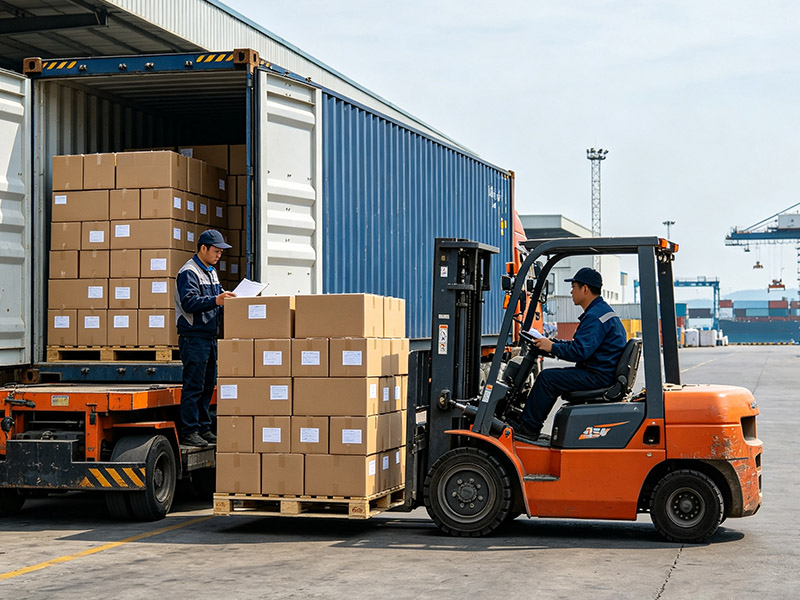
A smooth order does not happen by chance. It is the result of clear communication, early planning, and a supplier who knows where delays hide.
A typical order from inquiry to shipment takes 45 to 90 days. Simple orders with standard products and existing packaging can take 45–60 days. Complex orders with custom packaging, multiple SKUs, and longer shipping times can take 60–90 days.
The timeline is long. That is why lead time planning is essential. Buyers who start early secure the best production slots, avoid rush fees, and get their products on shelves in time.
Every step requires attention. The difference between an order that arrives on time and one that does not is often decided before production even begins.
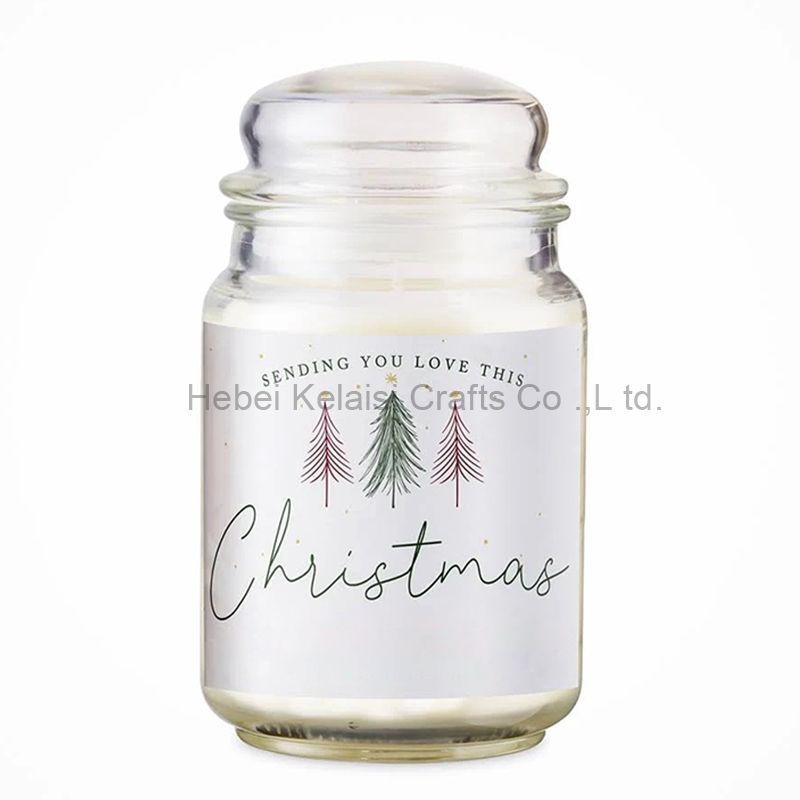 Big size decorative scented candle
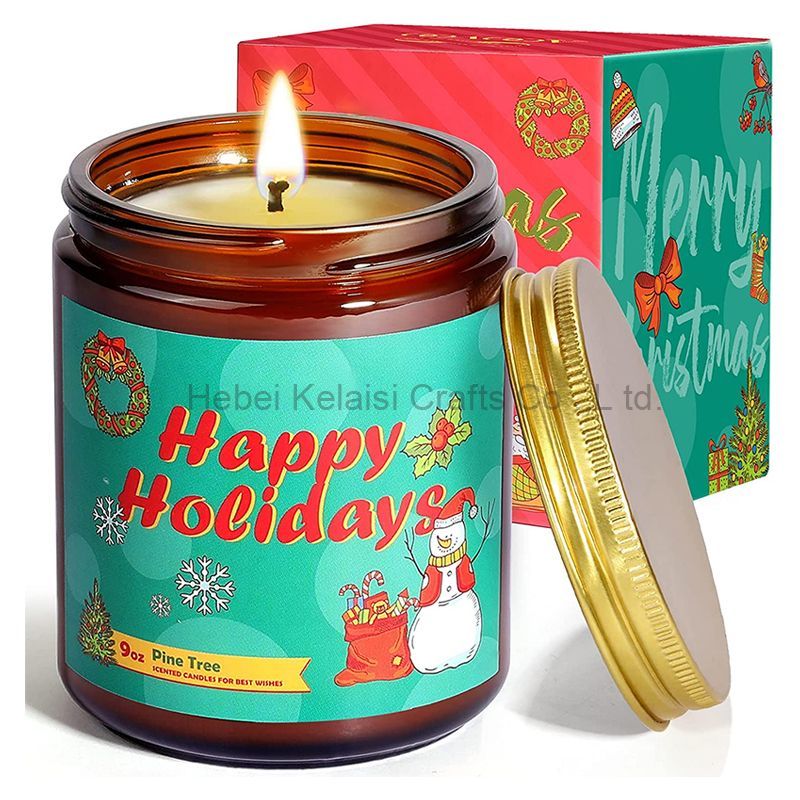 Christmas Scented Candles Gifts Sets for Women
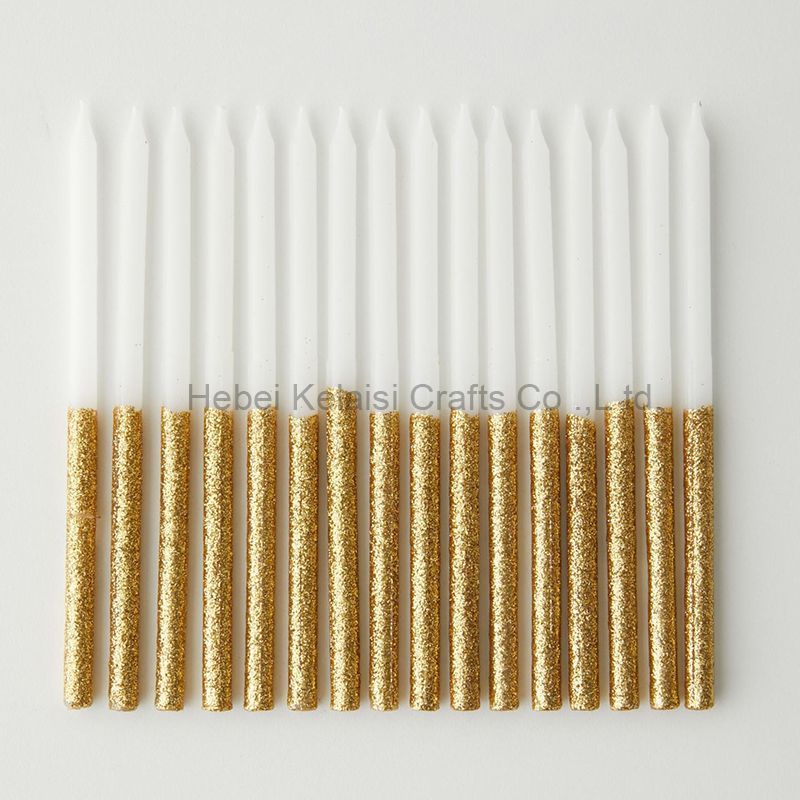 happy birthday long thin glitter cake candles
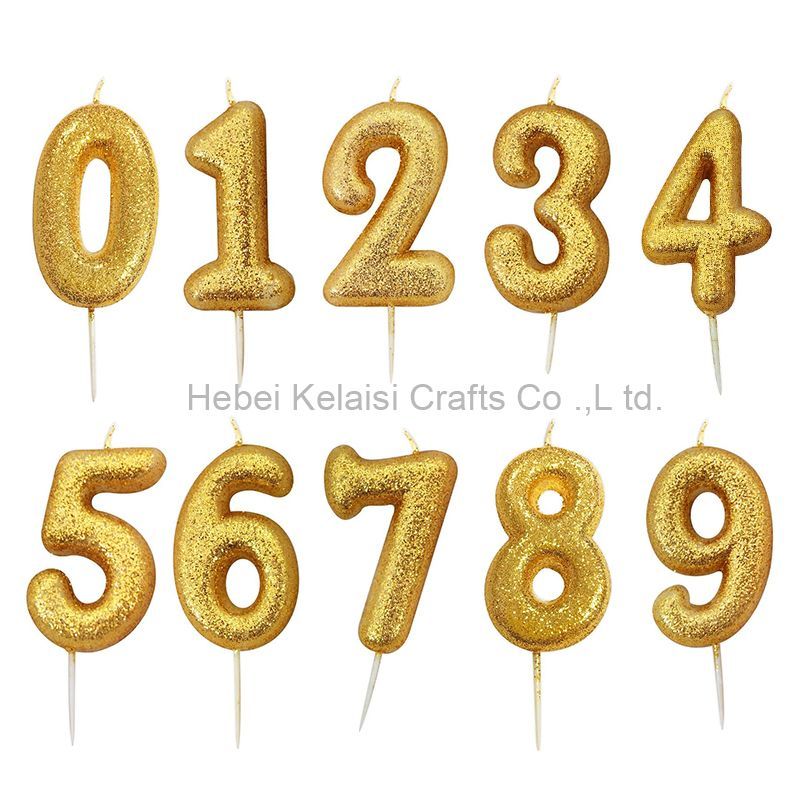 Luxury Golden Birthday Number Candle Sets
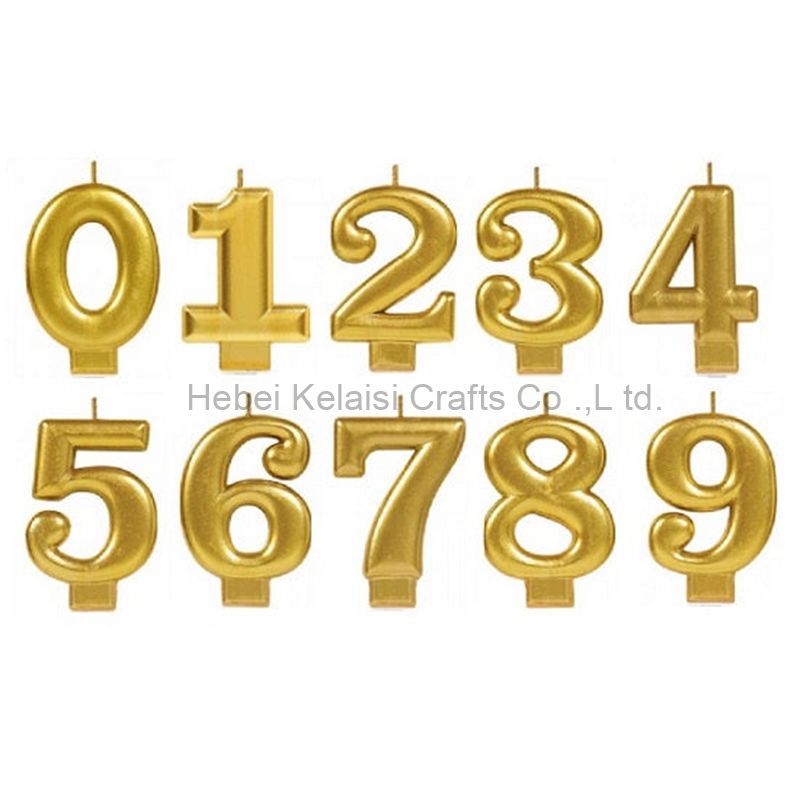 Fancy cake decoration number annual birthday candle
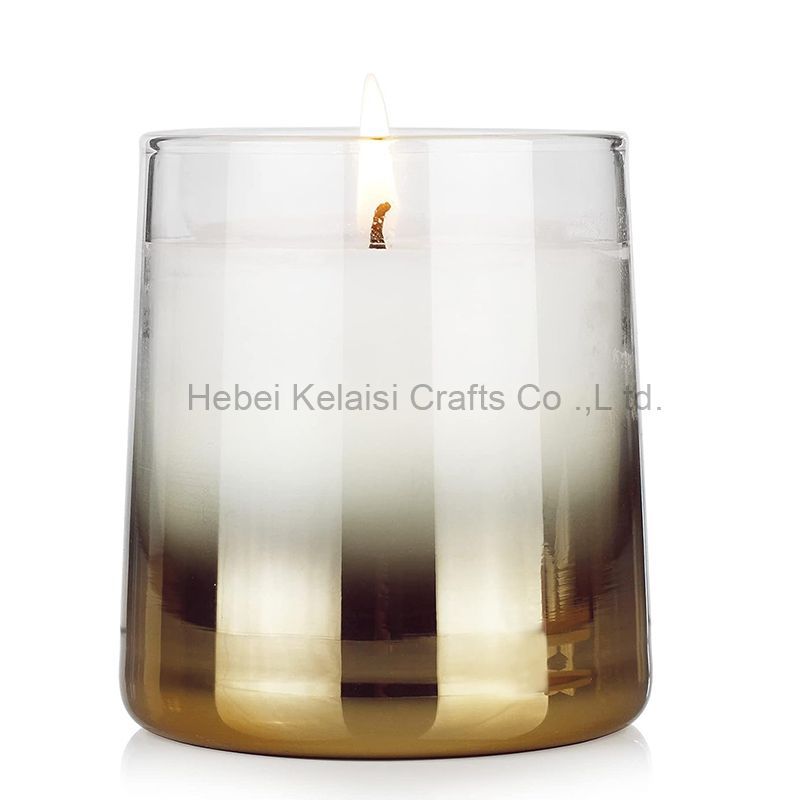 Gradient color Soy Wax Glass Jar Scented Candle
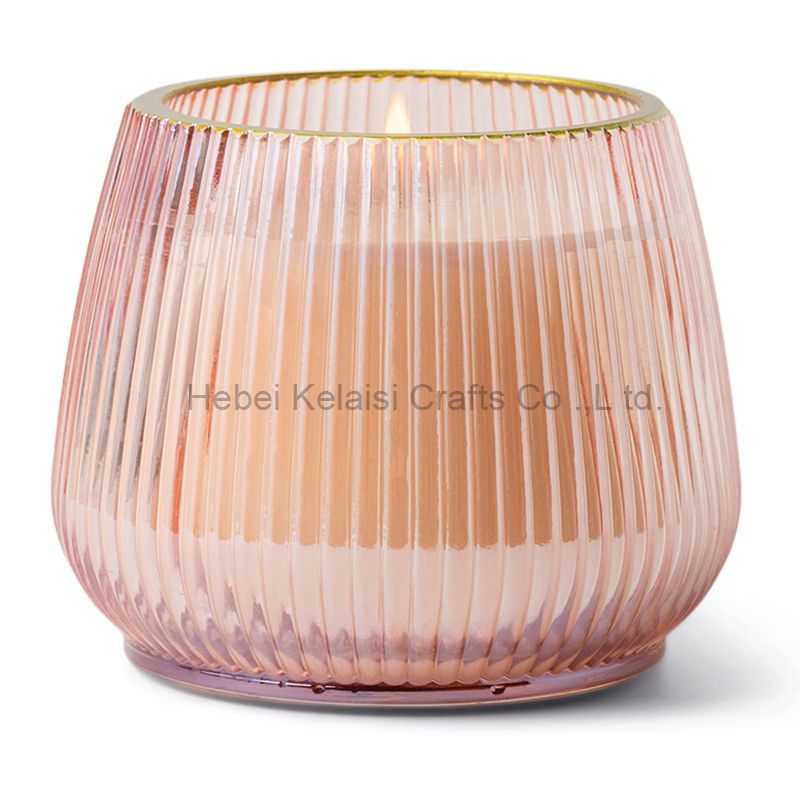 Origami Style Vertical Pattern Wine Glasses Jar Candles
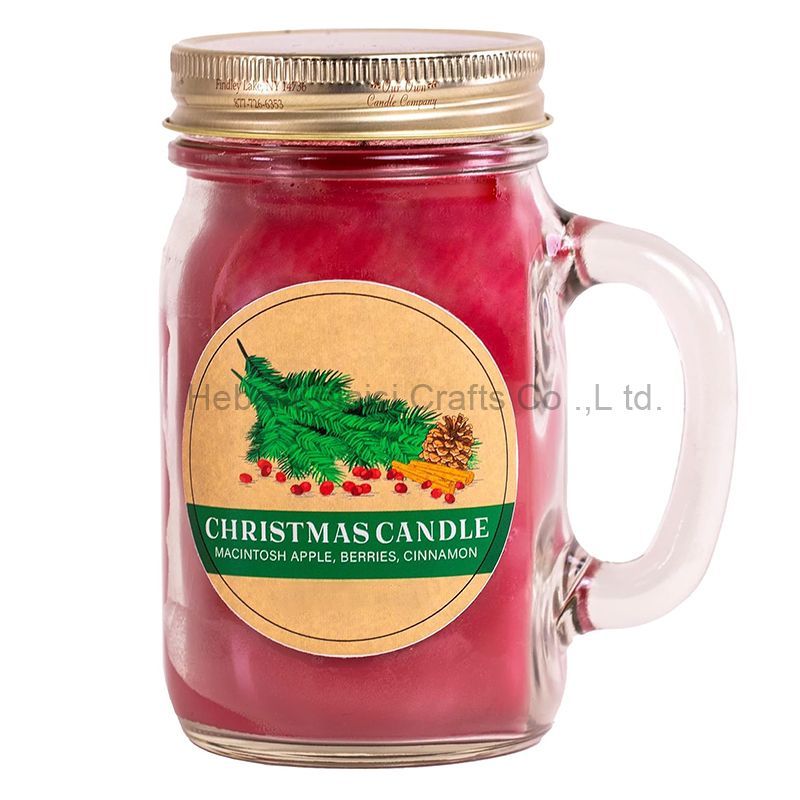 Custom Mini Glass Jar Scented Candle
 3D Letter Happy Birthday Candles
 Decorative Birthday Candles
 St. Patrick's Day Decorations Set
 Christmas Party Balloons Supplies