Nov. 10, 2026
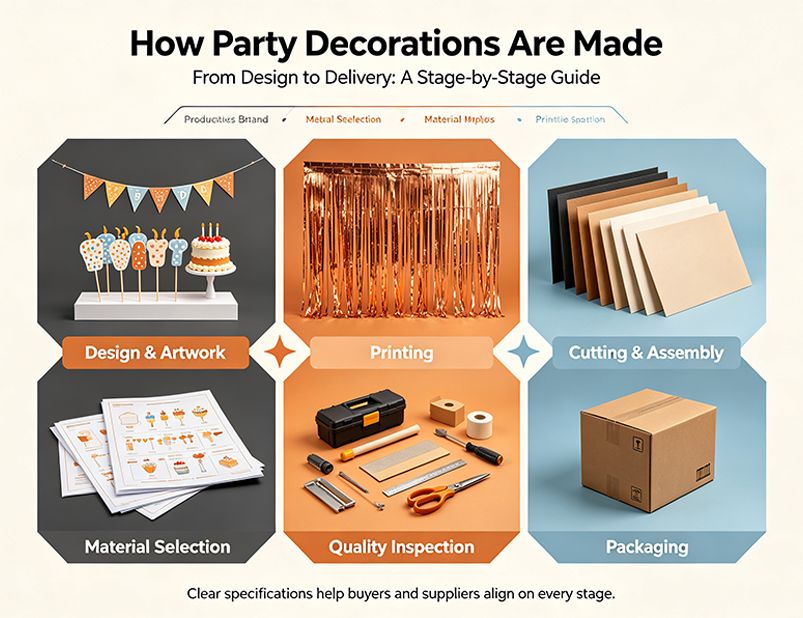
Party decorations may look simple when displayed in a store or arranged at a celebration. However, turning an initial design into a finished product involves several steps, from material selection and artwork preparation to manufacturing, inspection, and packaging.
Different decorations require different production methods. A paper banner, a foil curtain, and a cake topper may serve similar purposes at a party, but their materials, structures, and manufacturing processes are not the same.
Understanding how party decorations are made helps retailers, wholesalers, and buyers better evaluate product design, production requirements, and the factors that influence the final result.
The manufacturing process usually begins with a design concept.
Before production starts, the product's intended use, theme, appearance, dimensions, and structure need to be considered. For example, a birthday banner may need to be readable from a distance, while a small cake decoration needs to fit naturally on top of a cake.
Artwork preparation is another important part of this stage. Designers may work with colors, patterns, lettering, illustrations, and decorative elements to create the desired appearance.
For products with multiple components, the design also needs to consider how the individual pieces will look together. A coordinated collection should maintain a consistent visual style across its different items.
Once the design is finalized, production files and specifications can be prepared for the next stage.
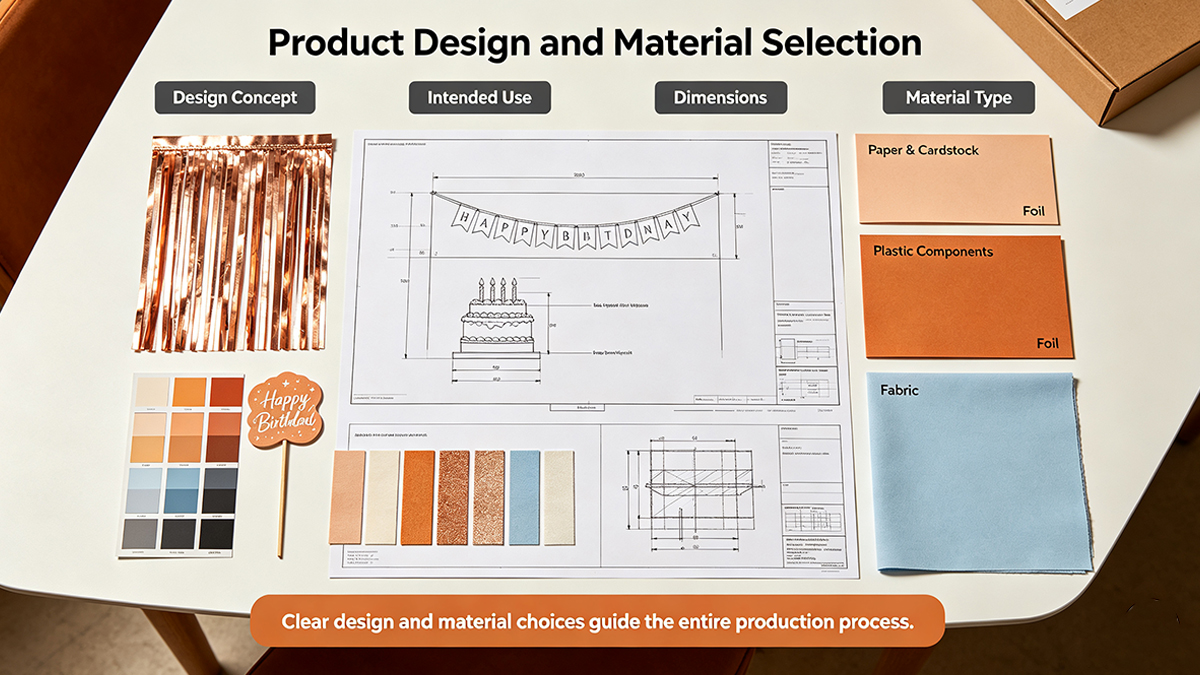
Material selection directly affects a decoration's appearance, structure, durability, and production method.
Different party decorations commonly use different materials:
Paper and cardstock: Often used for banners, flags, cake toppers, and printed decorations.
Foil materials: Commonly used for shiny hanging decorations and decorative curtains.
Plastic materials: Used in certain lightweight decorative components and accessories.
Fabric and textile materials: Sometimes used for reusable banners and decorative items.
The choice depends on the product's intended function and design.
For example, a hanging decoration needs to be lightweight enough for convenient installation. A printed paper decoration needs a suitable surface for clear graphics and colors. A product with several connected parts may require materials that can maintain their shape during handling and transportation.
Choosing a material based only on appearance may not be sufficient. Its suitability for the product's intended use should also be considered.
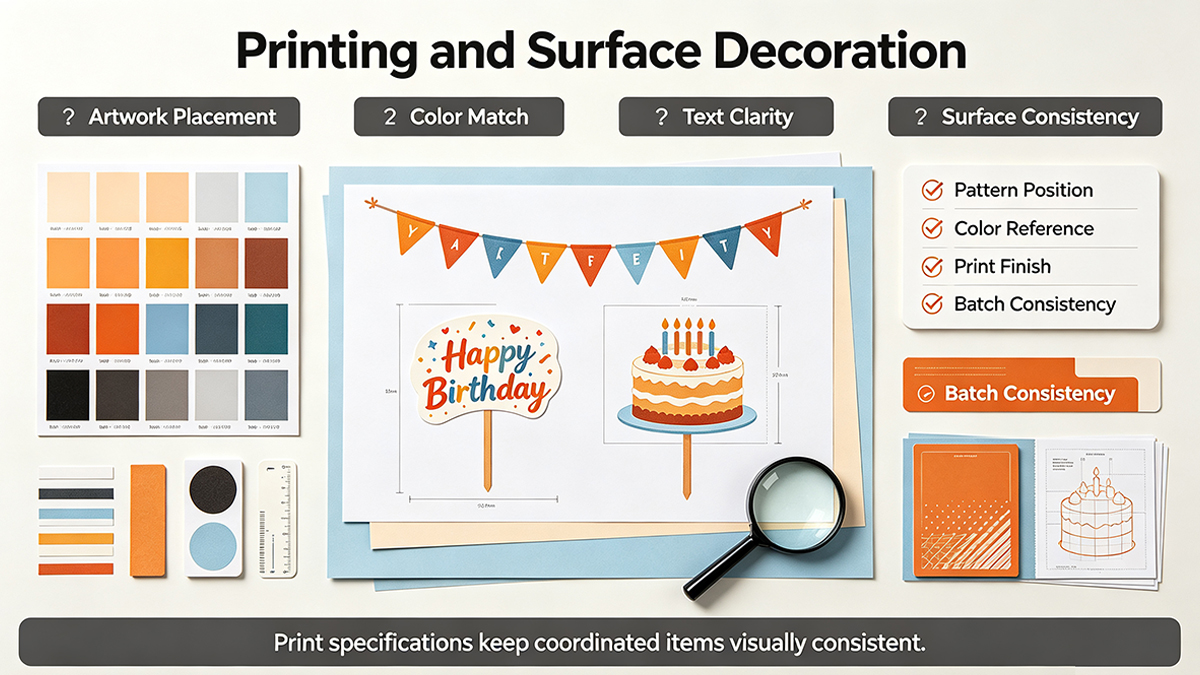
For many party decorations, printing is one of the most visible manufacturing stages.
Artwork is transferred onto the selected material using a suitable printing process. Depending on the product, this may involve patterns, text, illustrations, or decorative color combinations.
Several factors can influence the final printed appearance:
Whether the artwork is correctly positioned
Whether the selected colors match the approved design
Whether text and graphics remain clear
Whether the printed surface is consistent
Whether the material is suitable for the printing process
For products containing multiple printed pieces, visual consistency is especially important. Different components may be produced separately but eventually appear together in one party setup or product package.
This makes artwork preparation and production specifications important references throughout manufacturing.
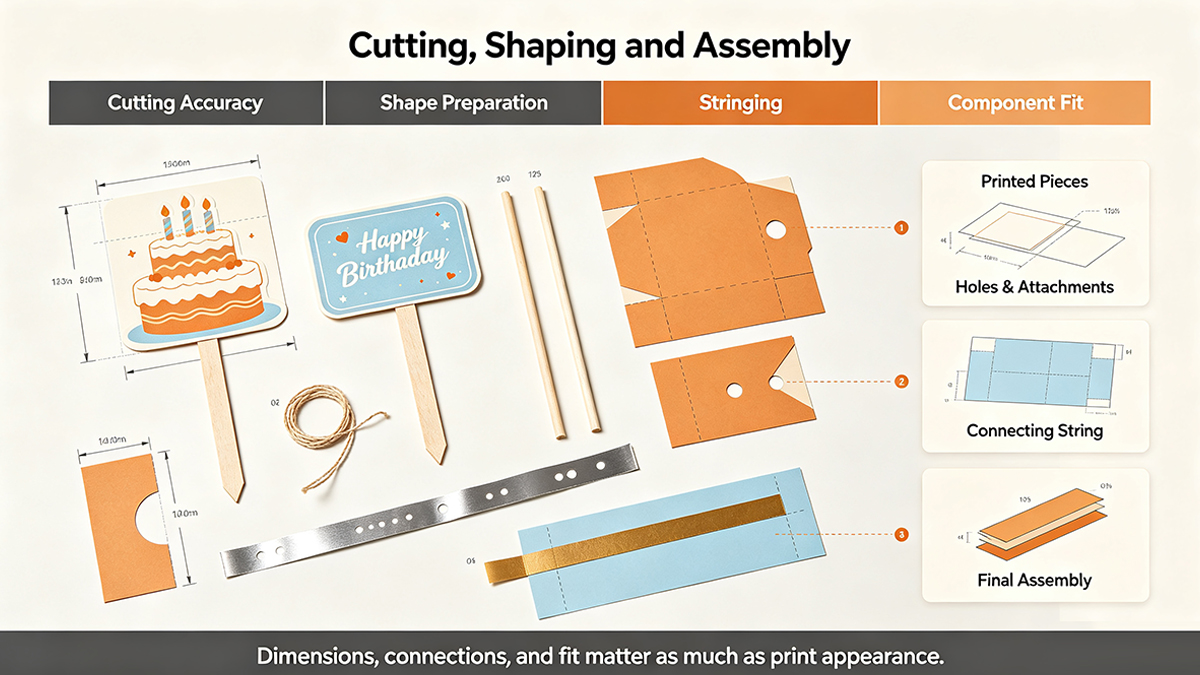
After material preparation and printing, many decorations move into cutting and shaping.
The process varies according to product structure. Paper banners may need individual letters or shapes cut out. Foil curtains may require material to be divided into strips. Cake toppers may need decorative shapes prepared and connected to supporting sticks.
Some products involve several manufacturing steps before they become complete.
For example, a banner may require printed pieces, holes or attachment points, and a connecting string. A cake topper may need a decorative element and a supporting component. A multi-piece decoration set may require different items to be prepared separately before assembly.
At this stage, dimensions, cutting accuracy, connection methods, and overall appearance all contribute to the finished product.
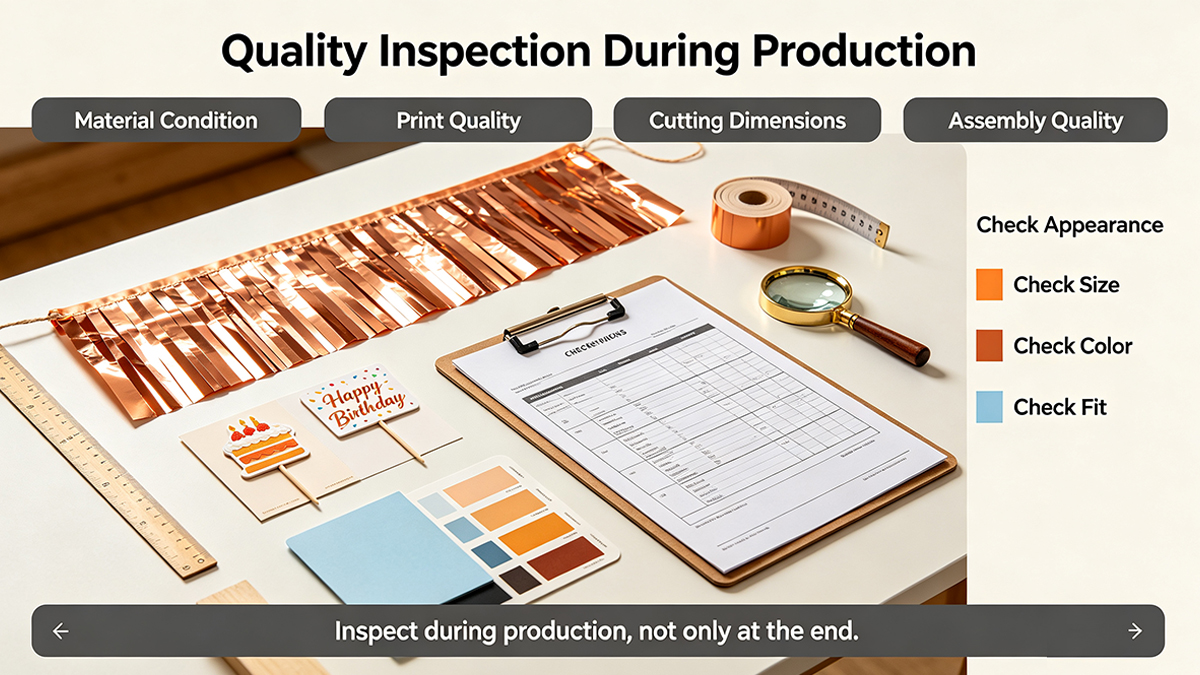
Quality inspection is not limited to the final stage. Checking products during manufacturing can help identify problems before they affect a larger quantity.
The inspection points depend on the type of decoration, but may include:
Material appearance and condition
Printing clarity and color consistency
Cutting dimensions and shape accuracy
Assembly and connection quality
Overall appearance of finished components
For products with multiple parts, it is also useful to check whether the components match the approved design and specifications.
Different products require different inspection standards. A paper banner and a foil curtain do not have identical quality requirements, so inspection should reflect their actual structures and intended uses.
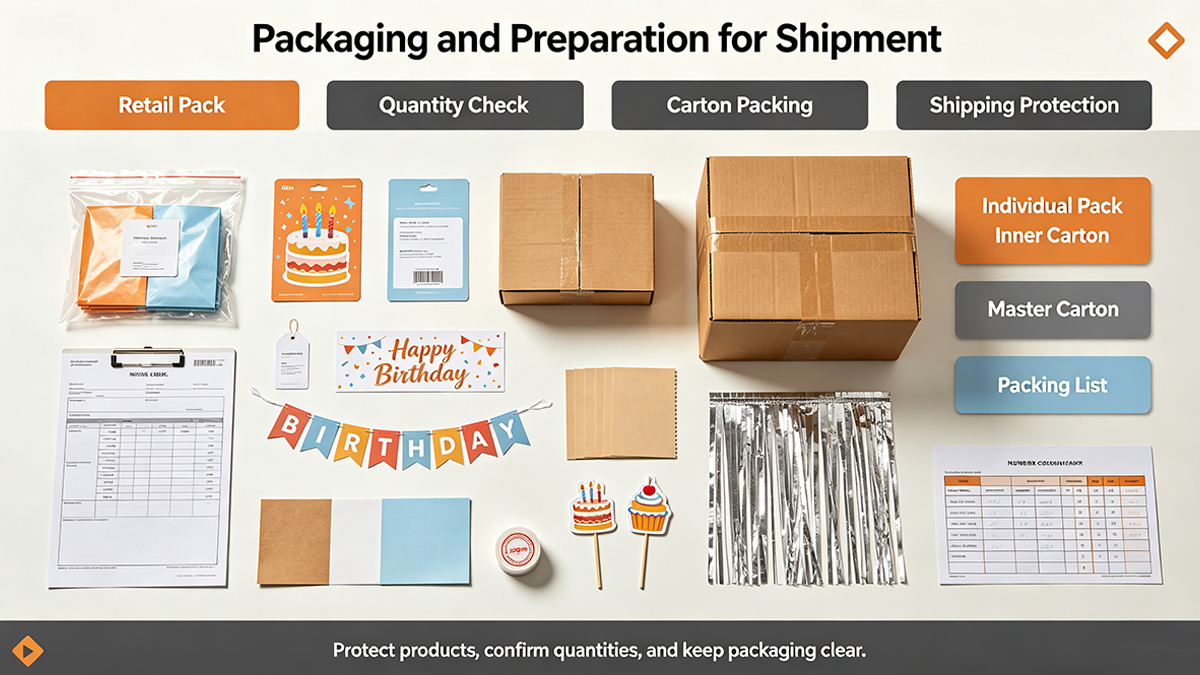
Packaging is the final stage before products are prepared for delivery.
Party decorations may be packed individually, in sets, or in larger wholesale cartons. The appropriate method depends on the product's size, structure, quantity, and sales requirements.
Packaging needs to protect the products during storage and transportation while also making them convenient to handle.
For retail products, individual packaging may include product information, branding, and display considerations. For wholesale orders, carton arrangements and packing quantities are also important.
When a set contains several different decorations, the packing process needs to ensure that the required components and quantities are included together.
Clear packaging specifications help reduce confusion during packing and receiving.
A finished party decoration is the result of several connected processes. A design may look attractive on screen, but its final appearance also depends on the selected materials, printing method, cutting accuracy, assembly, and packaging.
Problems at an early stage can affect later production. For example, unclear artwork may lead to printing differences, while unsuitable material choices may influence the product's structure or appearance.
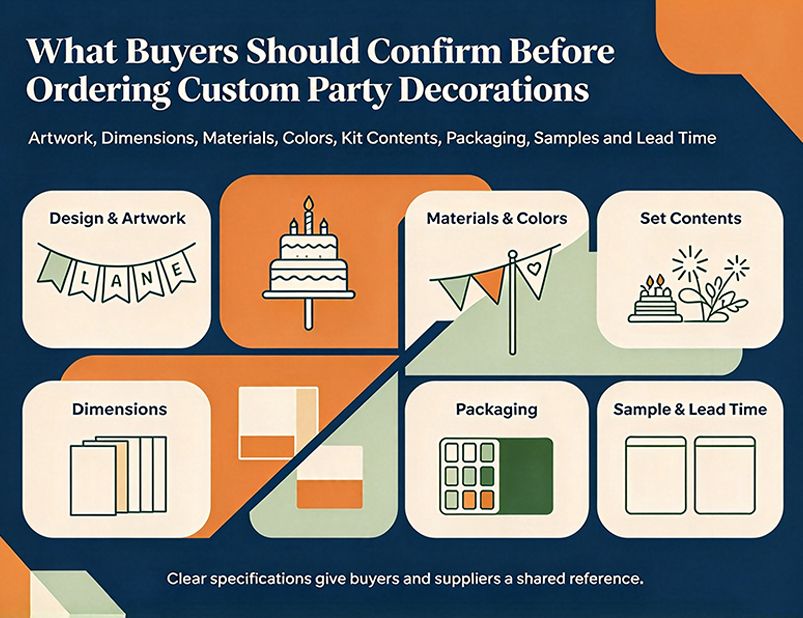
For buyers and suppliers, understanding these stages creates a clearer basis for communication. Discussing product specifications before production helps both sides understand what needs to be achieved and how the finished product will be evaluated.
Party decorations are created through more than one manufacturing step. From the first design concept to material selection, printing, shaping, assembly, inspection, and packaging, each stage contributes to the finished product.
Although different decorations require different processes, careful planning and clear specifications remain important throughout production.
Understanding how party decorations are made gives buyers a better perspective on product development and helps them
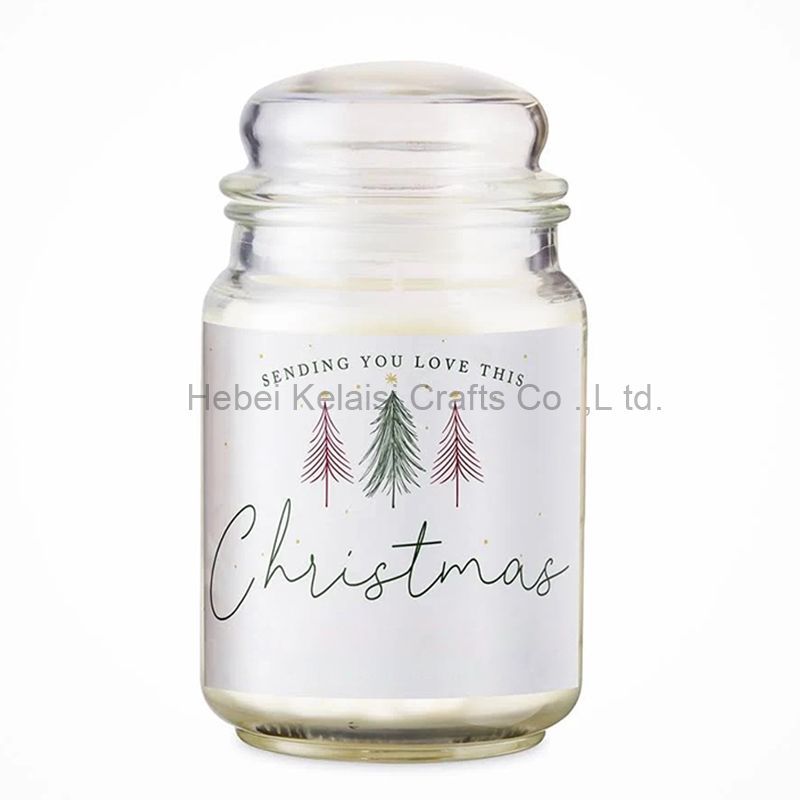 Big size decorative scented candle
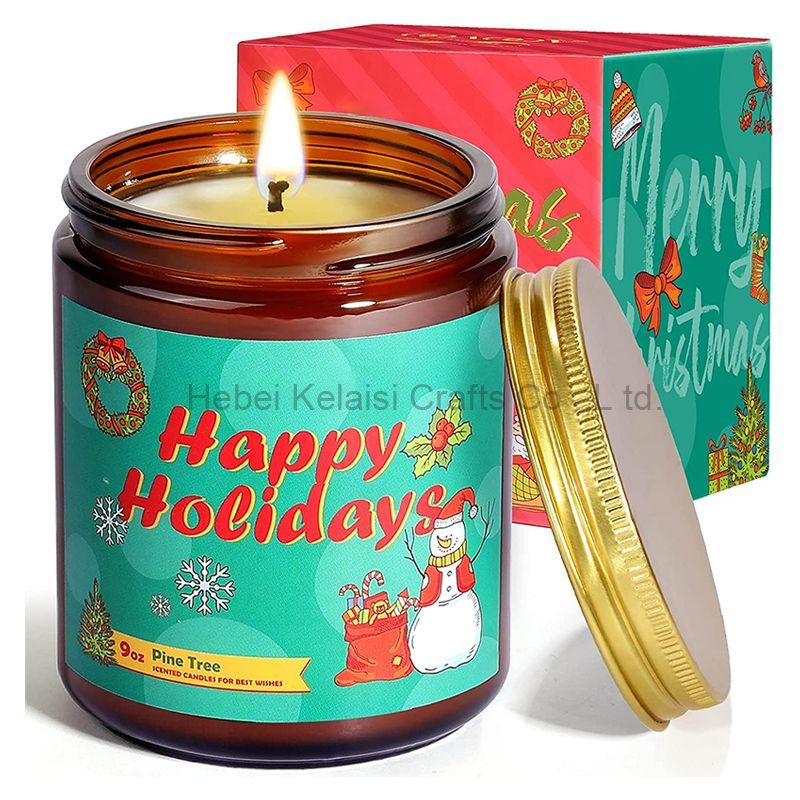 Christmas Scented Candles Gifts Sets for Women
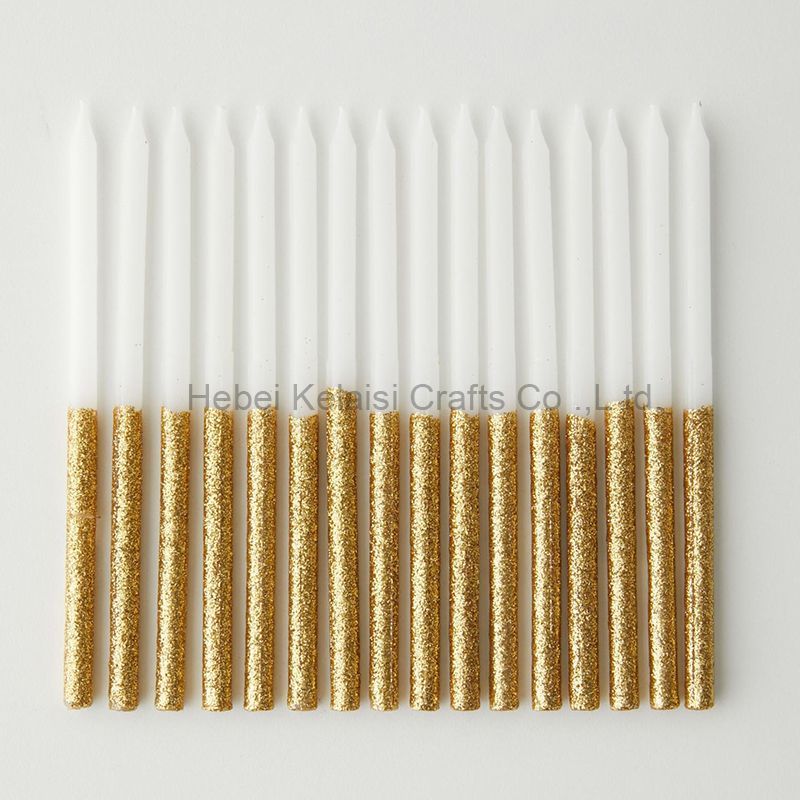 happy birthday long thin glitter cake candles
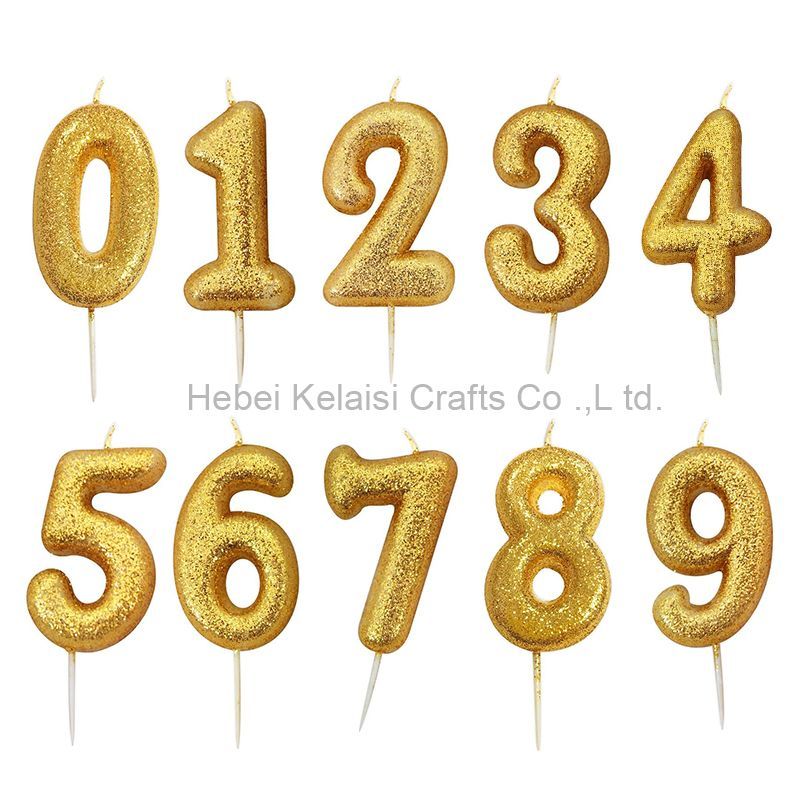 Luxury Golden Birthday Number Candle Sets
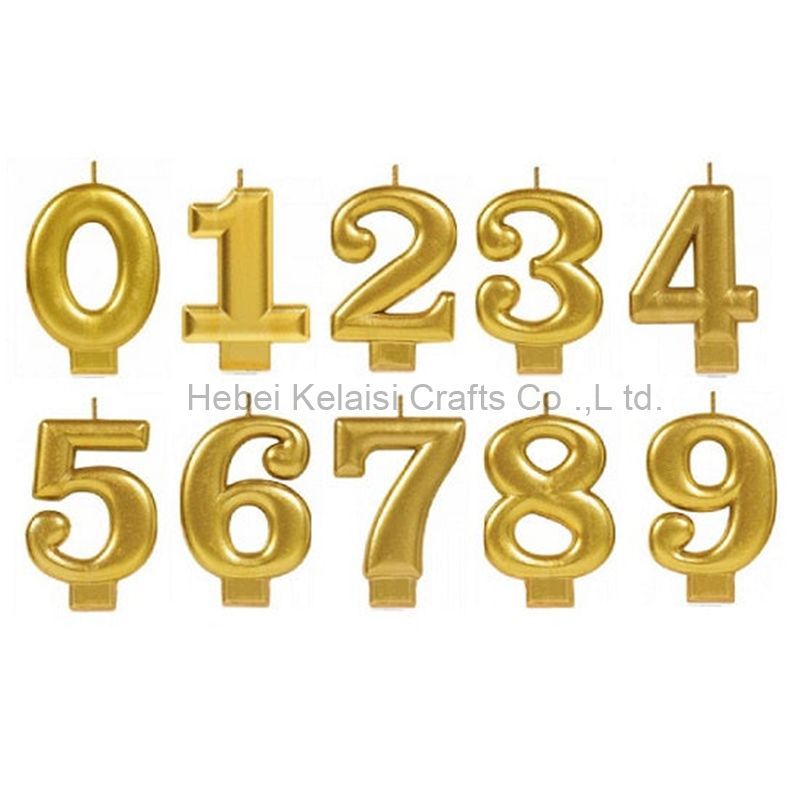 Fancy cake decoration number annual birthday candle
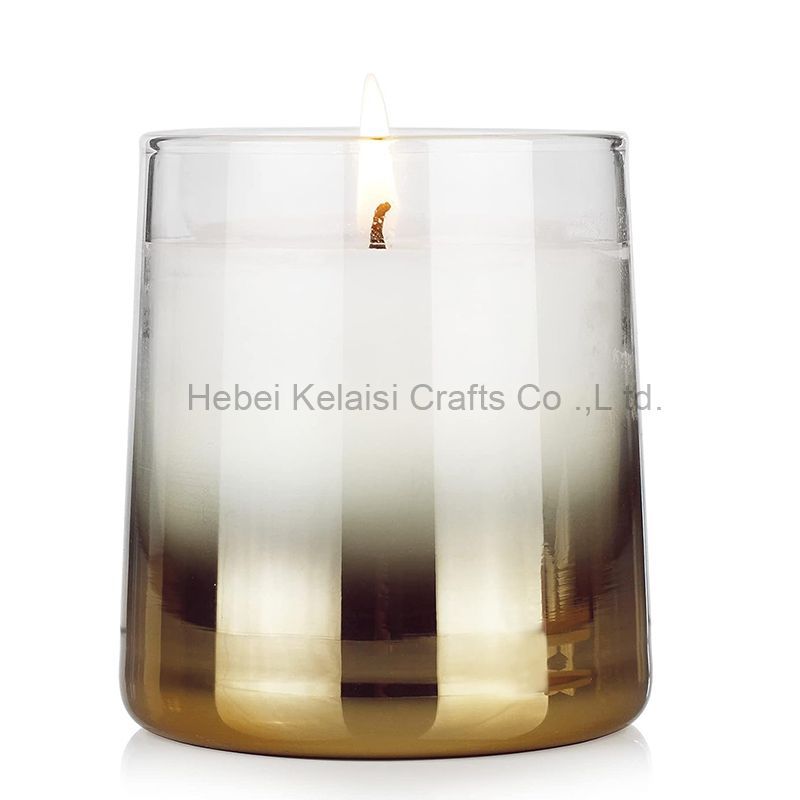 Gradient color Soy Wax Glass Jar Scented Candle
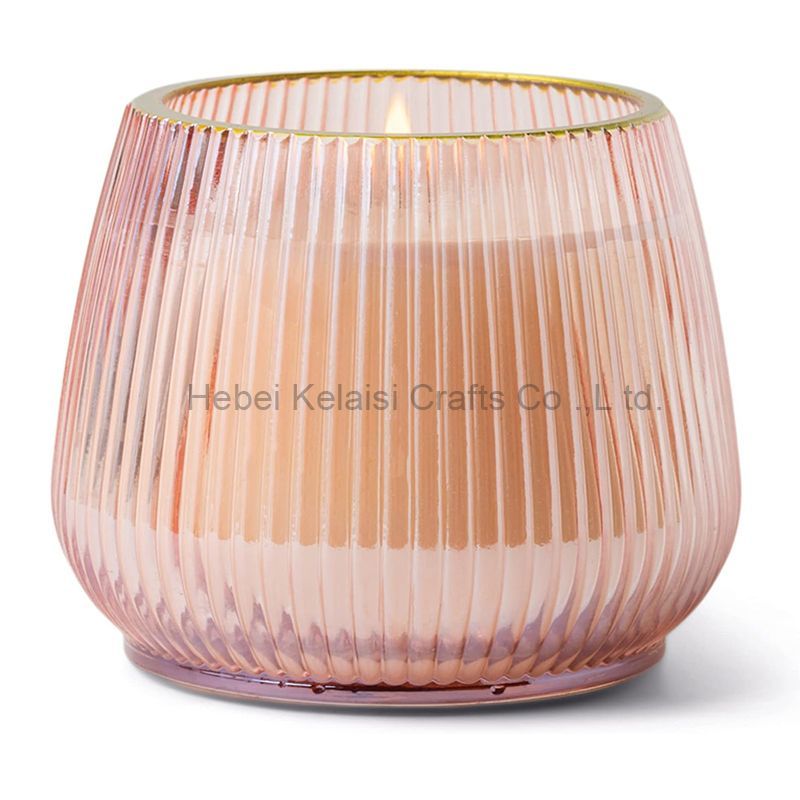 Origami Style Vertical Pattern Wine Glasses Jar Candles
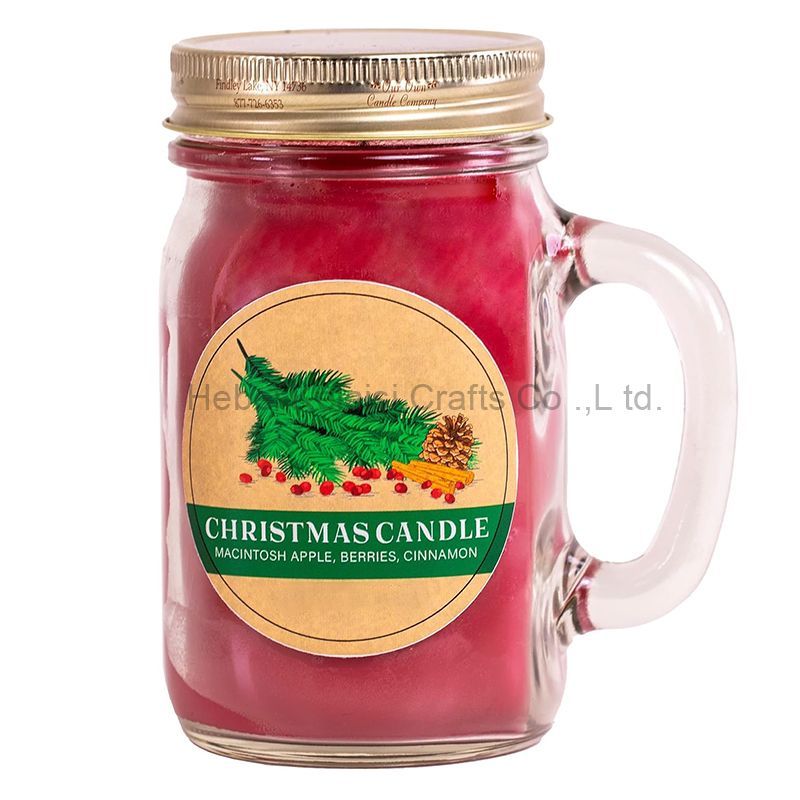 Custom Mini Glass Jar Scented Candle
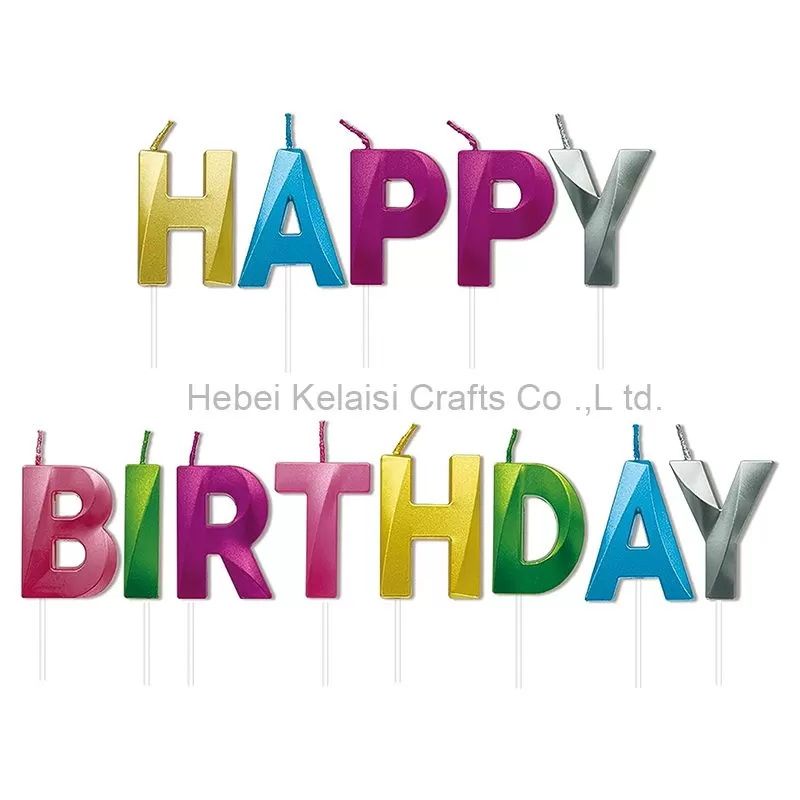 3D Letter Happy Birthday Candles
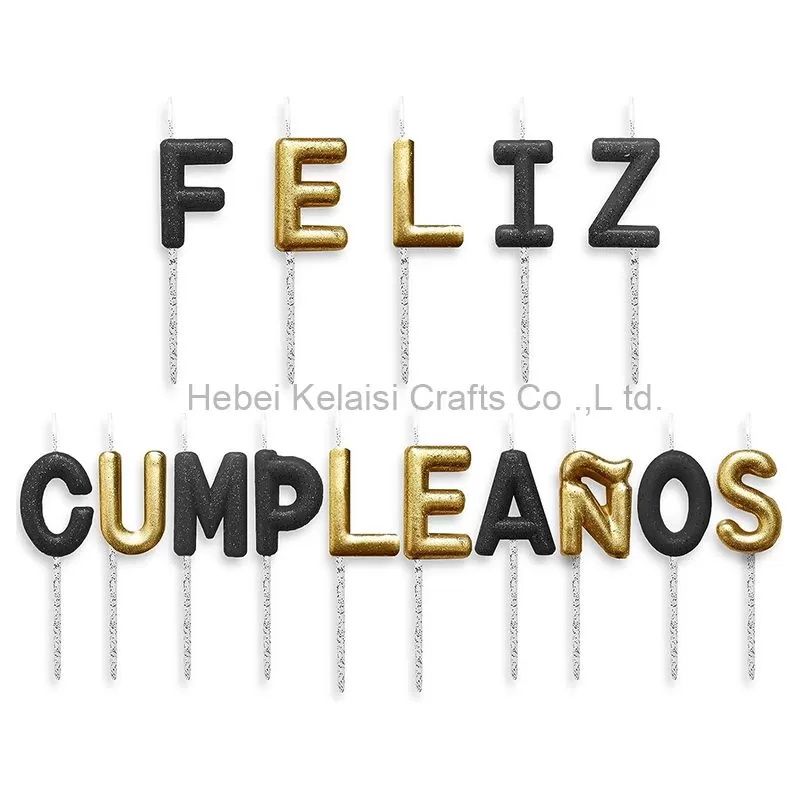 Decorative Birthday Candles
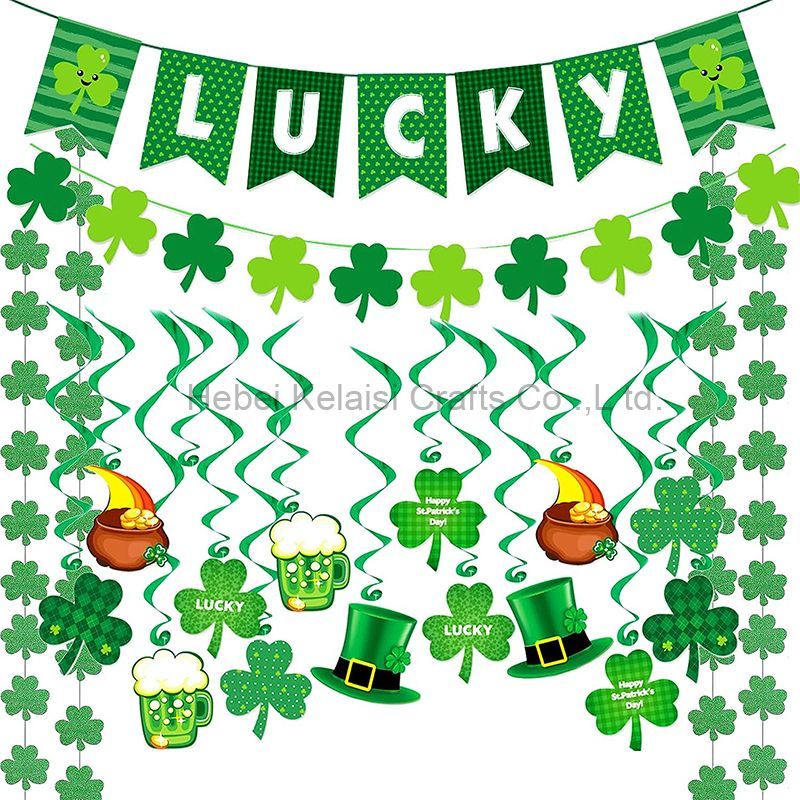 St. Patrick's Day Decorations Set
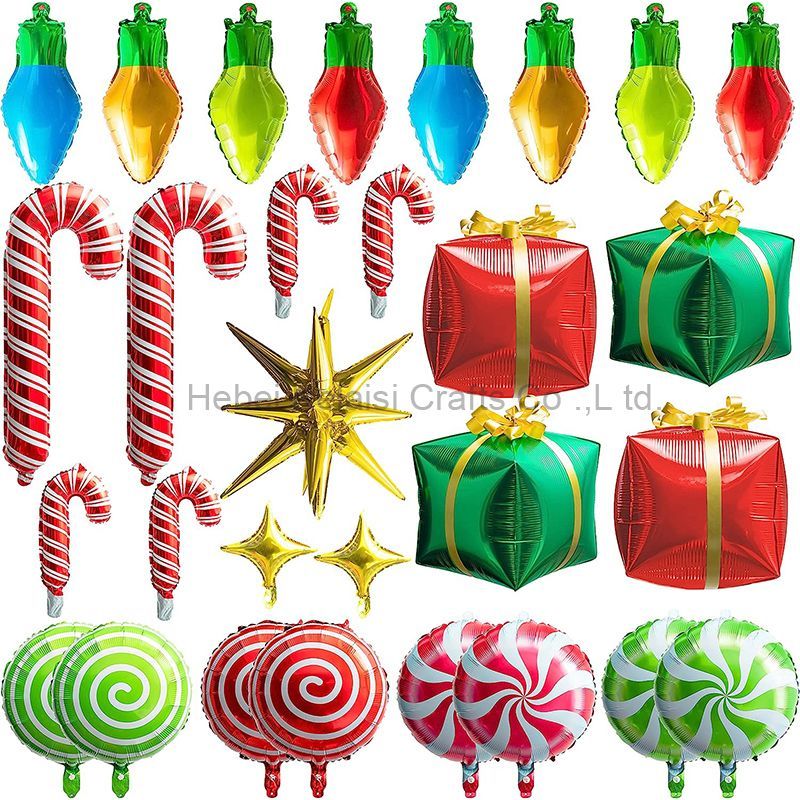 Christmas Party Balloons Supplies