Nov. 11, 2026
For retailers and wholesalers, managing inventory is not simply about keeping enough products in stock. It is also about understanding which items sell regularly, which products are seasonal, and which decorations remain on shelves longer than expected.
Party decorations can be particularly challenging to manage because purchasing demand is often connected to occasions, holidays, themes, and changing customer preferences. A product that sells well during one season may attract much less attention at another time.
Slow-moving inventory does not always mean that a product is unpopular or unsuitable for the market. Sometimes, the issue is related to product selection, timing, pricing, presentation, or the way an assortment is organized.
Understanding these factors can help businesses make better inventory decisions and reduce unnecessary stock pressure.
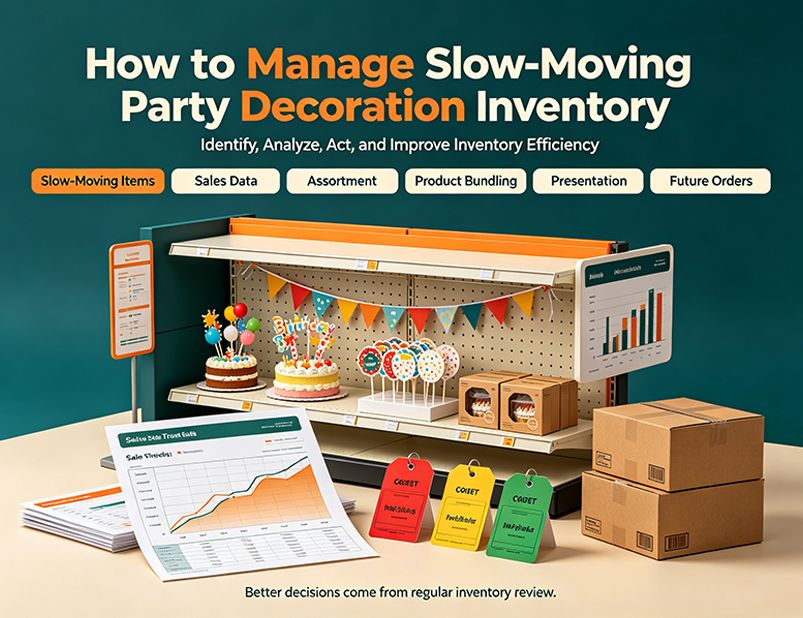
The first step is to understand what is actually happening with inventory.
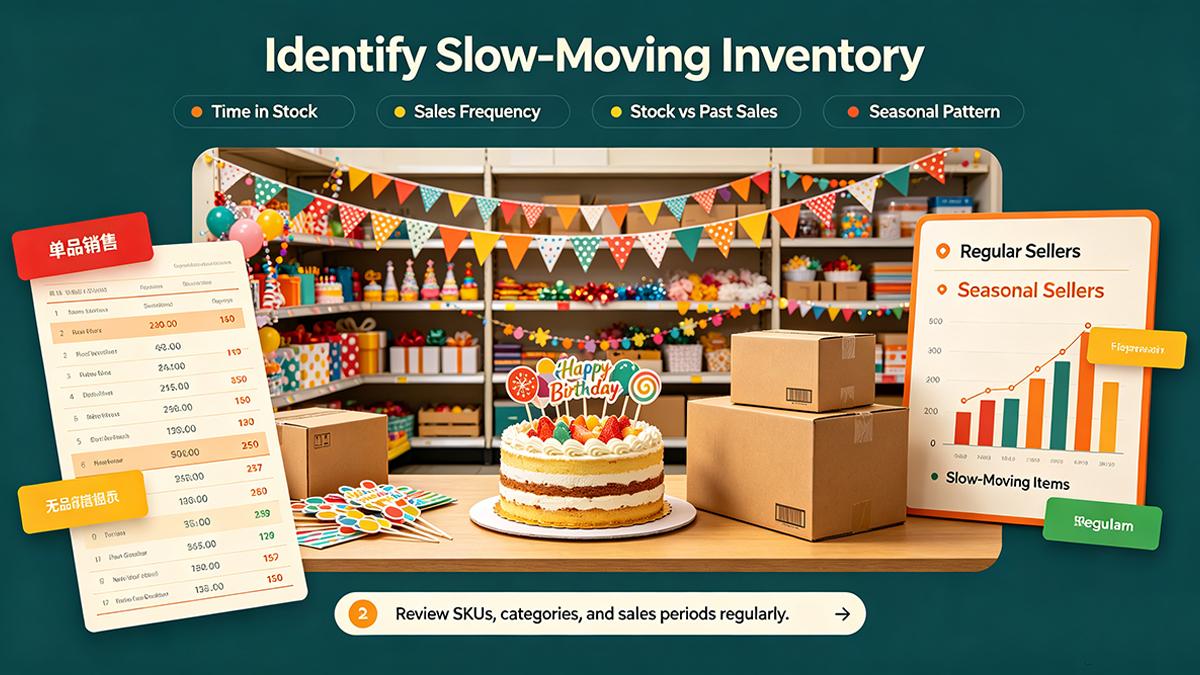
Retailers should regularly review sales records and compare the performance of different products. Instead of looking only at total sales, it is useful to examine individual items, product categories, and sales periods.
For example, a retailer may discover that birthday banners sell steadily throughout the year, while certain holiday-themed decorations experience strong demand only during a short period.
Useful indicators include:
How long a product has remained in stock
How frequently it sells
Whether sales have declined over time
How much inventory remains compared with previous sales
Whether the product is approaching the end of its relevant selling season
This information helps retailers distinguish between products with consistently low demand and products that simply follow seasonal sales patterns.
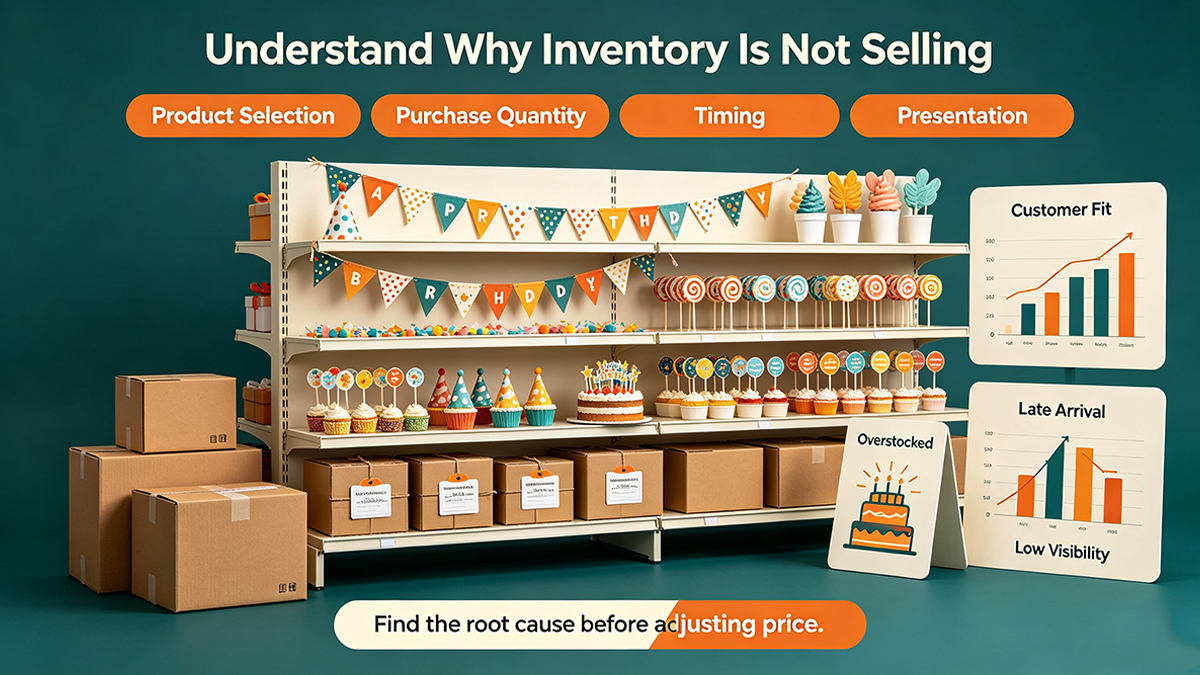
Before deciding what to do with slow-moving products, businesses need to understand the possible reasons behind their performance.
Product selection may not match customer demand.
A design may look attractive to buyers but may not appeal to the retailer's actual customer base. For example, a highly specific party theme may have a smaller audience than more flexible decorations that can be used for different occasions.
The purchasing quantity may be too high.
Ordering large quantities before testing customer interest can create unnecessary inventory pressure, especially for products with limited seasonal demand.
The timing may be incorrect.
Seasonal decorations need to reach stores before the relevant celebration period. Products arriving too late may miss their main selling opportunity.
Product presentation may be ineffective.
Sometimes customers simply do not notice certain items. Poor shelf placement, unclear product descriptions, or unattractive online images can make products harder to sell.
Identifying the underlying reason is more useful than immediately reducing prices.
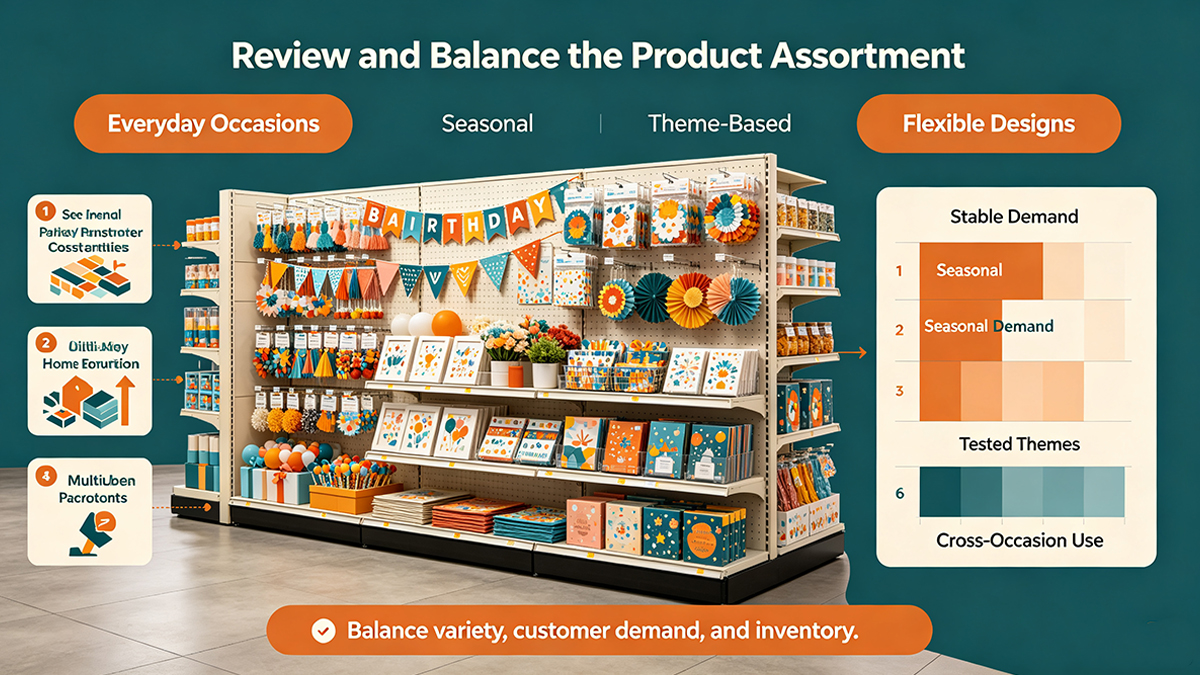
A balanced product assortment can help retailers avoid relying too heavily on a small number of designs or themes.
For party decoration businesses, it may be useful to combine products with different demand patterns.
For example:
Everyday occasion products: Birthday banners, general celebration decorations, and versatile party accessories.
Seasonal products: Decorations for Halloween, Christmas, and other holiday periods.
Theme-based products: Decorations designed around particular colors, styles, or celebration concepts.
Flexible designs: Products that can be used for several occasions rather than only one specific event.
The purpose is not to stock every possible design. Instead, retailers should consider how different products complement one another and whether the overall assortment matches their customers' purchasing habits.
Reviewing sales performance by category can also help businesses identify which types of products deserve more shelf space or purchasing attention.
Products that sell slowly as individual items may have more potential when combined with other relevant decorations.
For example, a retailer with remaining stock of certain banners could consider displaying them together with matching table decorations or cake accessories.
The goal is to create a more complete celebration solution rather than simply placing unrelated products in one package.
However, product bundling should be based on practical compatibility.
Colors, themes, sizes, and intended uses should make sense together. A combination that looks inconsistent may not provide much additional value to customers.
Retailers should also consider whether the bundled price is attractive and whether the combination meets a real customer need.
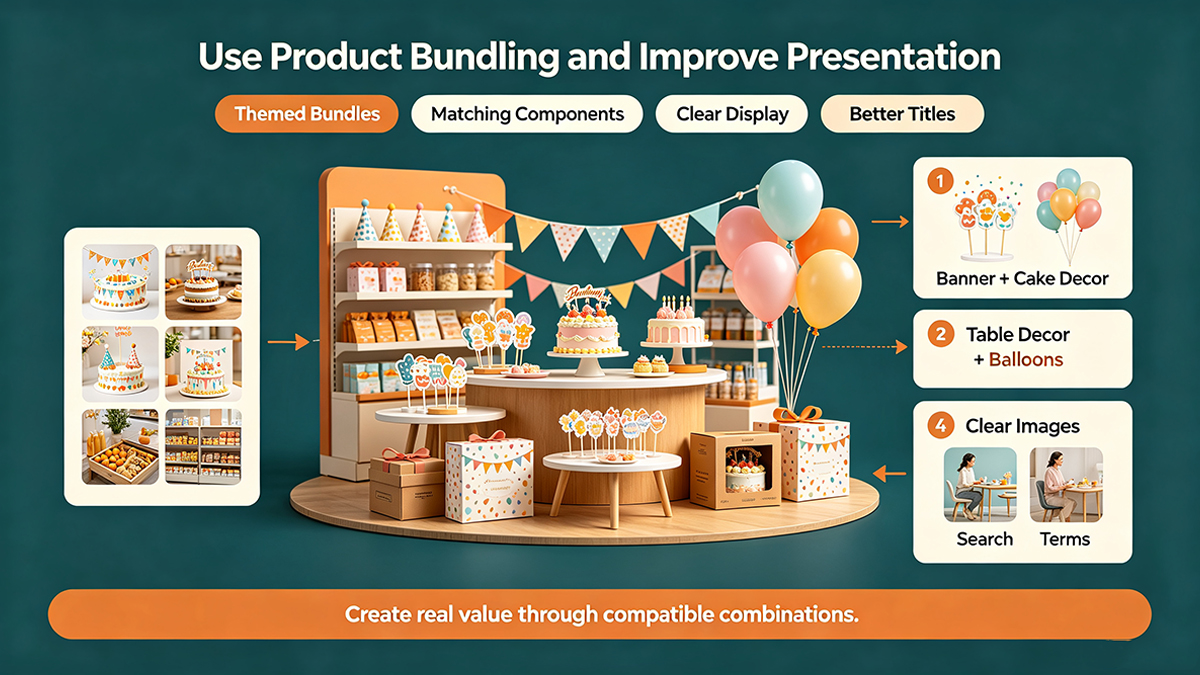
Inventory performance can be influenced by how products are displayed and described.
In physical stores, decorations with similar themes or occasions can be displayed together to help customers find related items more easily. Seasonal products may benefit from more visible placement before the relevant celebration period.
For online stores, clear product images and accurate descriptions are important. Customers should be able to understand the product's size, material, design, and intended use without having to guess.
Retailers can also review product titles, categories, and search terms to make sure shoppers can find the items they are looking for.
A product that receives little attention may need better presentation before it is considered unsuitable for the market.
One of the most effective ways to reduce slow-moving inventory is to improve purchasing decisions before new orders are placed.
Historical sales data can provide useful guidance, although past performance should not be treated as a guarantee of future demand.
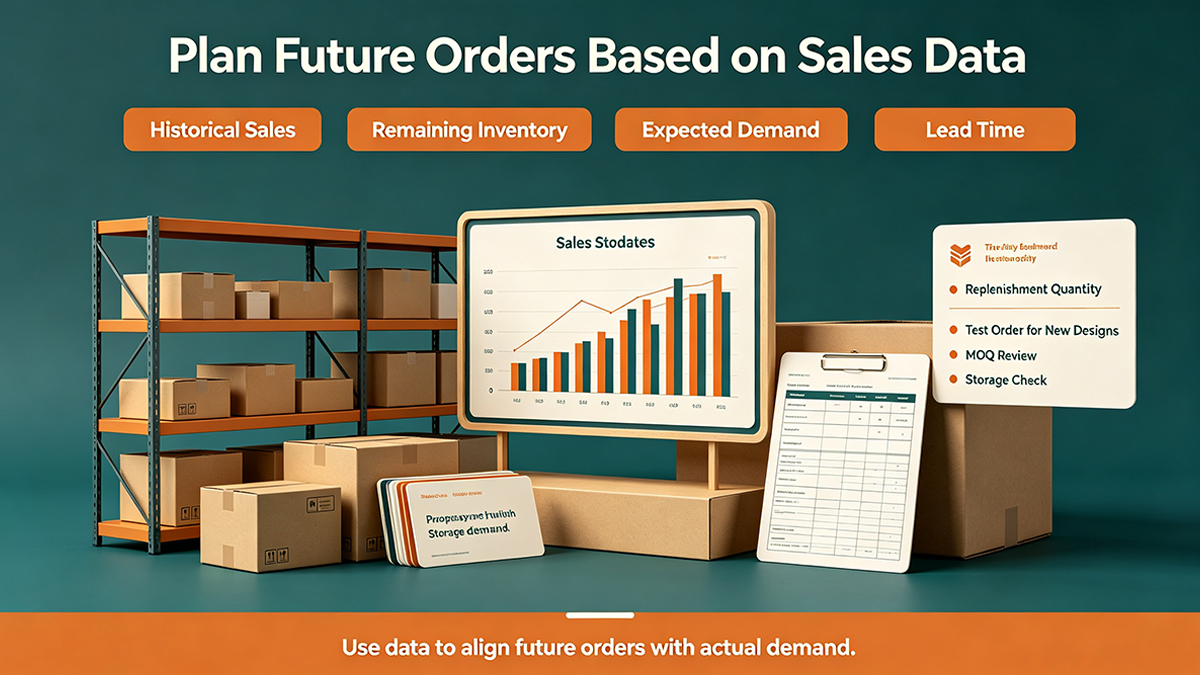
When planning replenishment, retailers can consider:
Previous sales by product and season
Remaining inventory
Expected demand during upcoming occasions
Supplier production and delivery lead times
Minimum order quantities
Available storage space
For new designs, a smaller initial order or a limited product test may help businesses understand customer interest before committing to larger quantities, when supplier order requirements allow.
It is also useful to review the performance of similar products. A new design may have a better chance of selling if it builds on an established customer preference rather than relying entirely on an untested concept.
Inventory management should be an ongoing process rather than a task that only happens when storage space becomes limited.
A monthly or quarterly review can help retailers identify changes in demand, products that need attention, and categories that may require new purchasing decisions.
For seasonal products, reviews should also take place before and after major selling periods.
Businesses can classify products into three practical groups:
Regular sellers: Products with stable demand that may need routine replenishment.
Seasonal sellers: Products that perform well during specific periods and require careful timing.
Slow-moving products: Products that need further evaluation, improved presentation, adjusted purchasing plans, or other selling strategies.
This simple classification gives retailers a clearer picture of their inventory and helps them make decisions based on performance rather than assumptions.
Slow-moving party decoration inventory is not always the result of poor product quality or weak market demand. Product selection, purchasing quantities, seasonal timing, presentation, and assortment planning can all influence how quickly products sell.
For retailers and wholesalers, the most useful approach is to review inventory regularly, understand the reasons behind slow sales, and use actual purchasing patterns to guide future orders.
A well-managed assortment is not necessarily the one with the largest number of products. It is the one that balances variety, customer demand, and inventory efficiency.
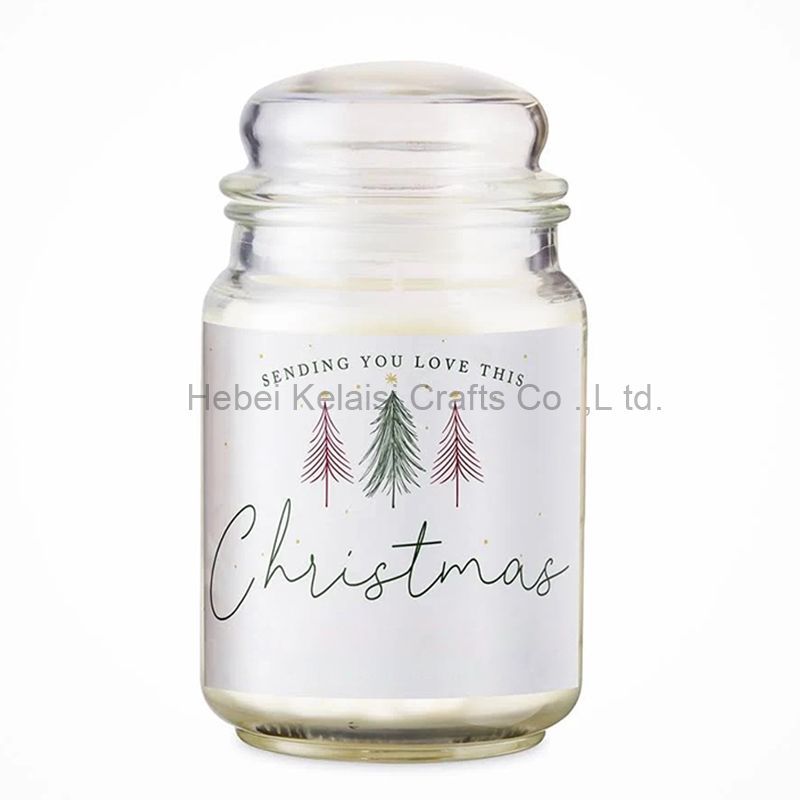 Big size decorative scented candle
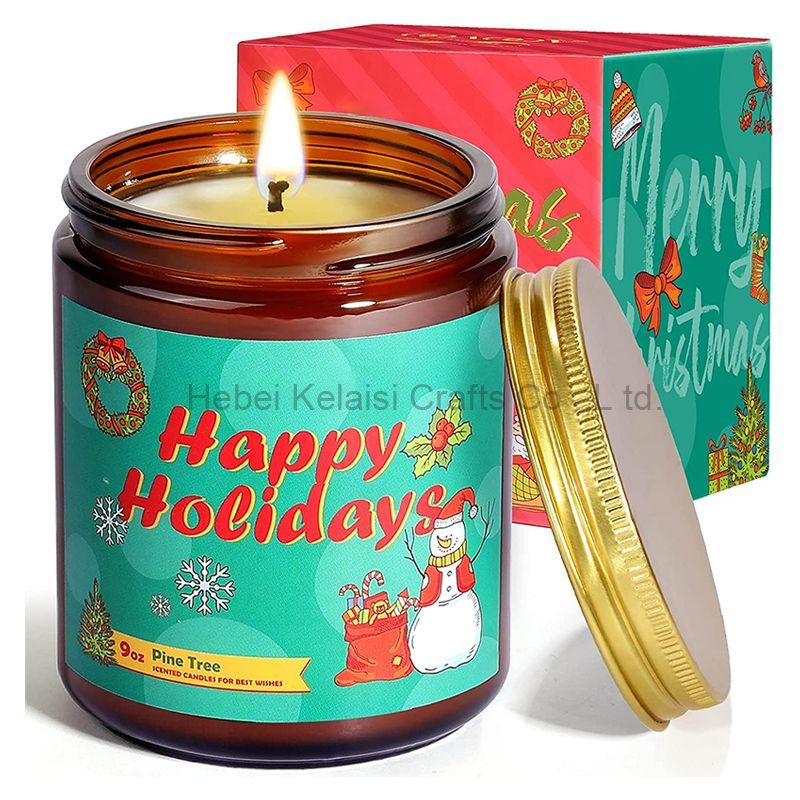 Christmas Scented Candles Gifts Sets for Women
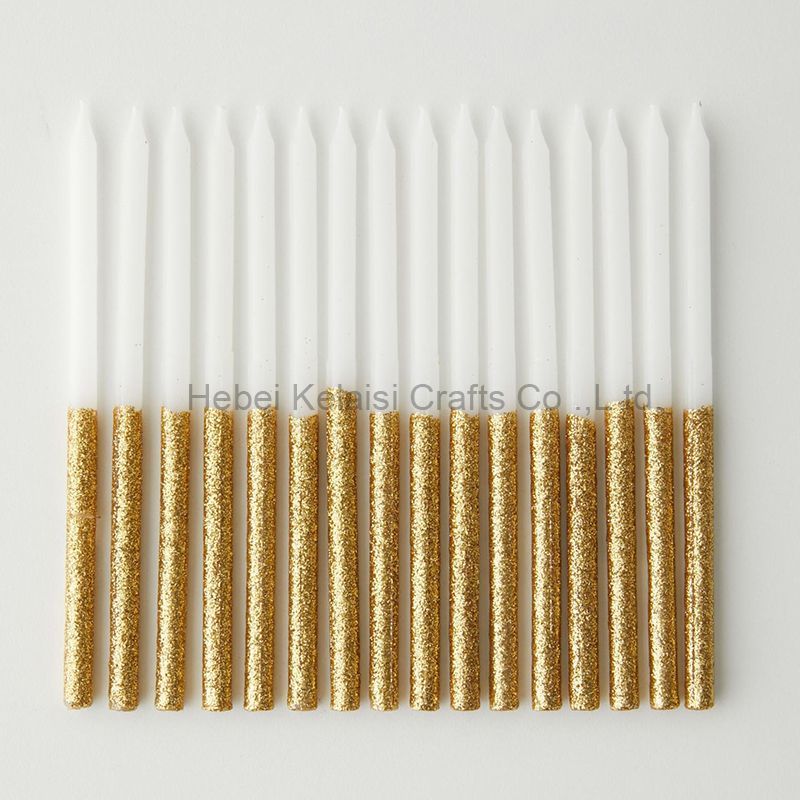 happy birthday long thin glitter cake candles
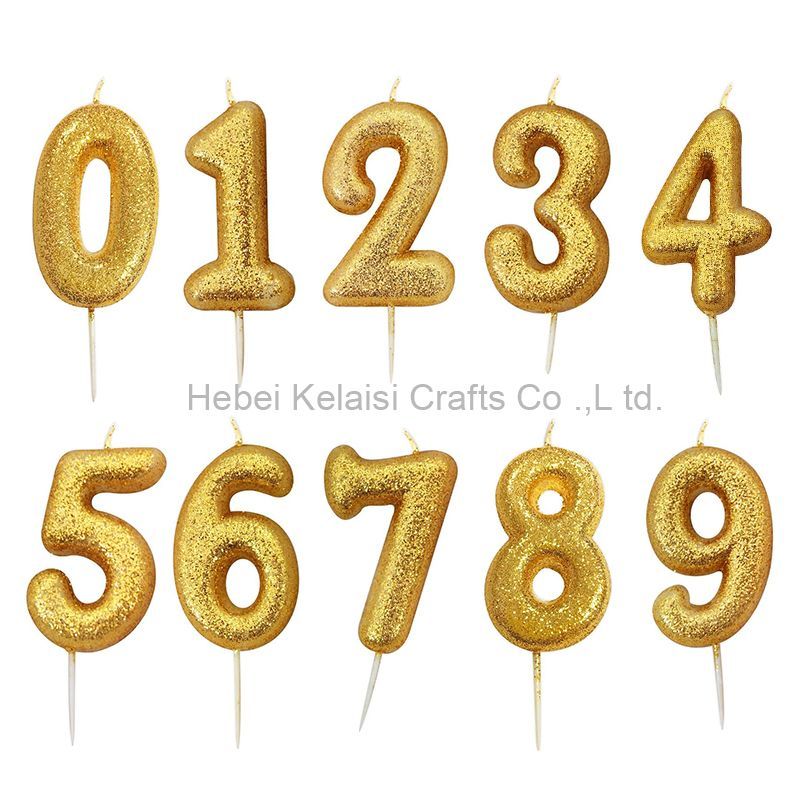 Luxury Golden Birthday Number Candle Sets
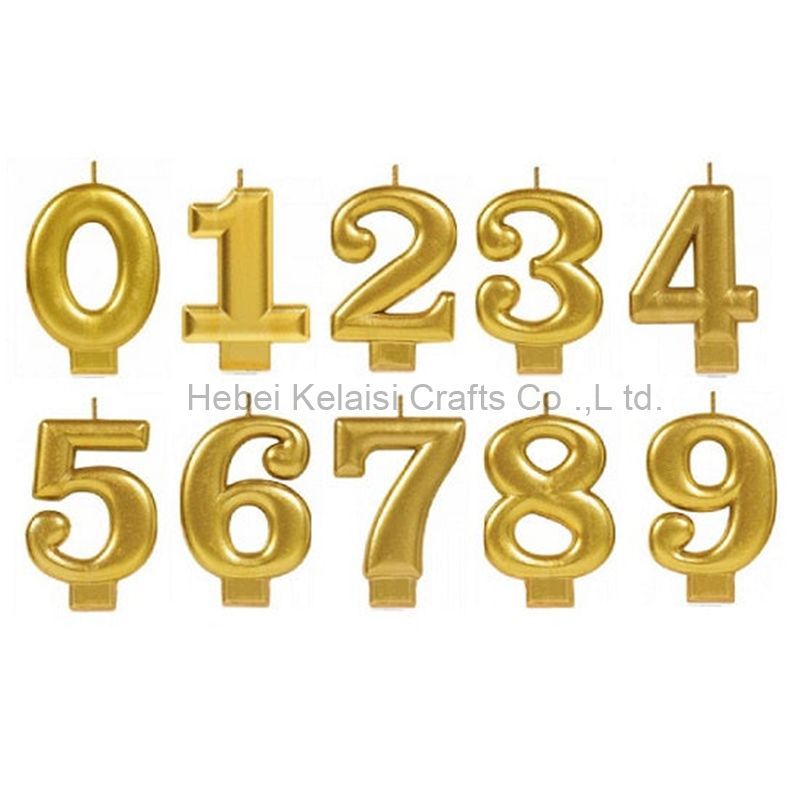 Fancy cake decoration number annual birthday candle
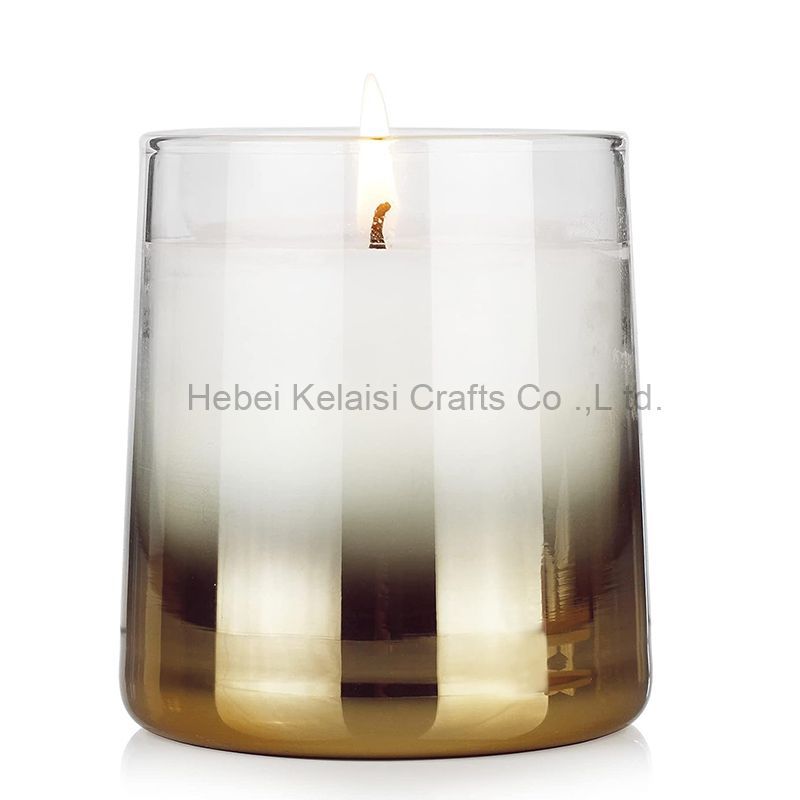 Gradient color Soy Wax Glass Jar Scented Candle
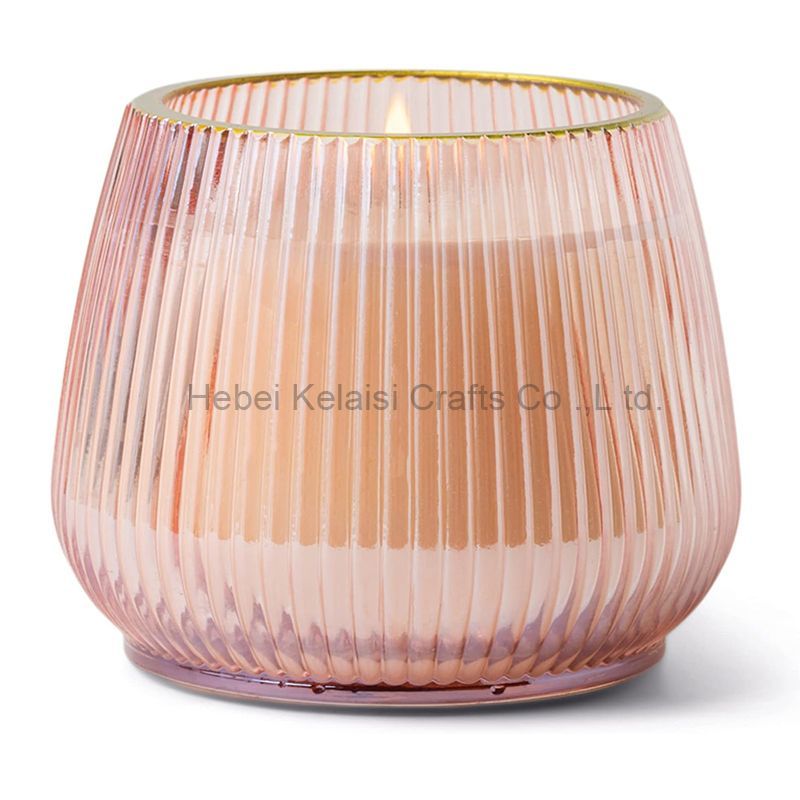 Origami Style Vertical Pattern Wine Glasses Jar Candles
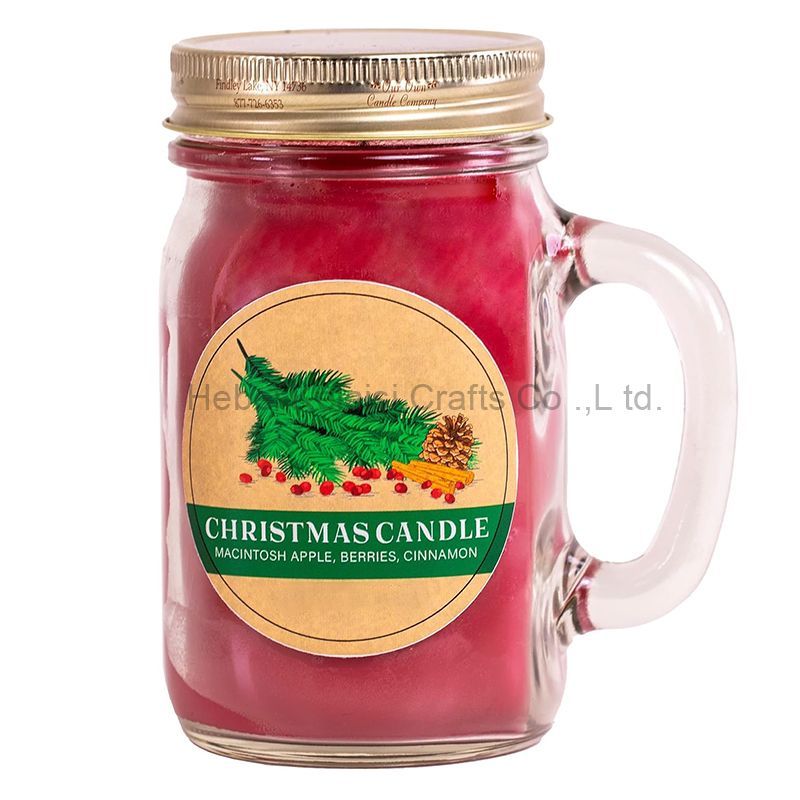 Custom Mini Glass Jar Scented Candle
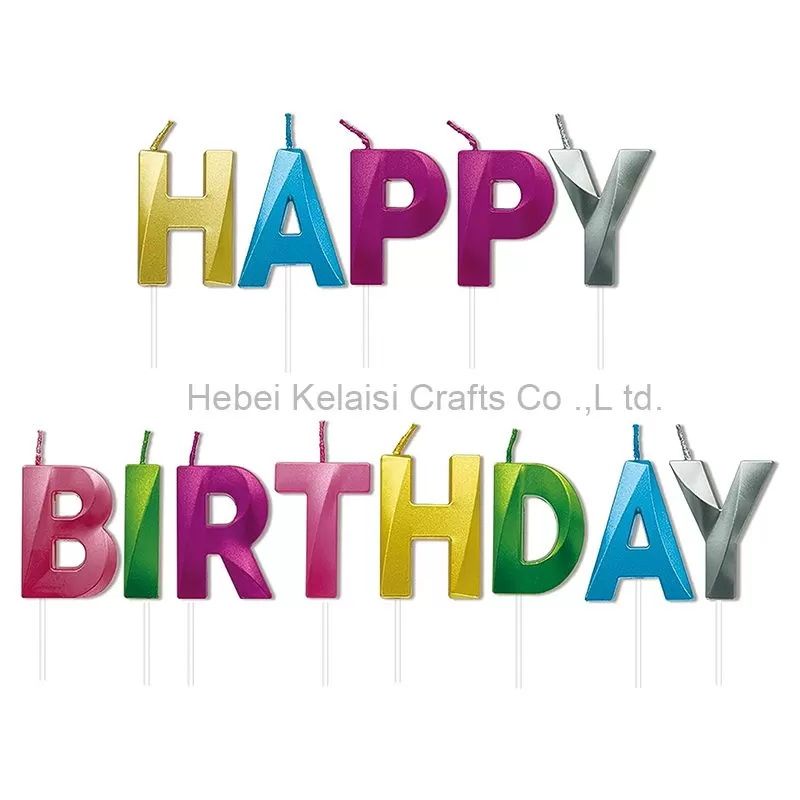 3D Letter Happy Birthday Candles
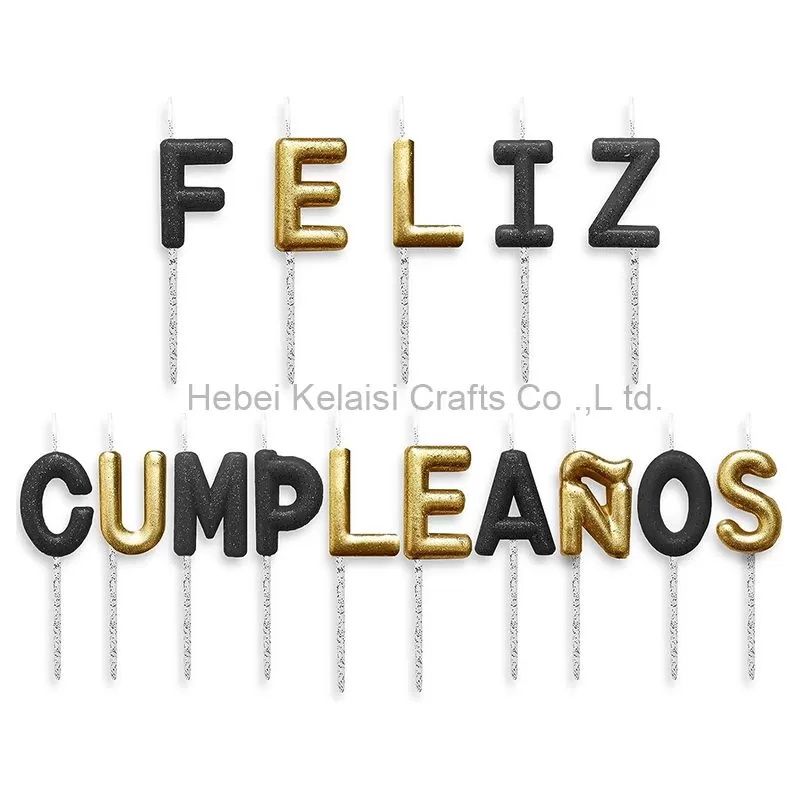 Decorative Birthday Candles
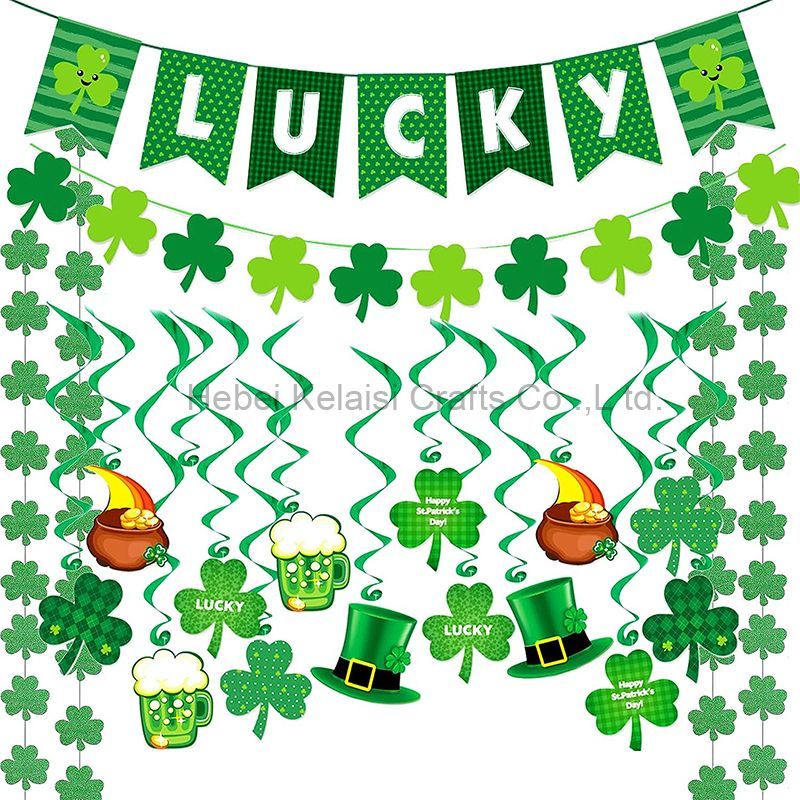 St. Patrick's Day Decorations Set
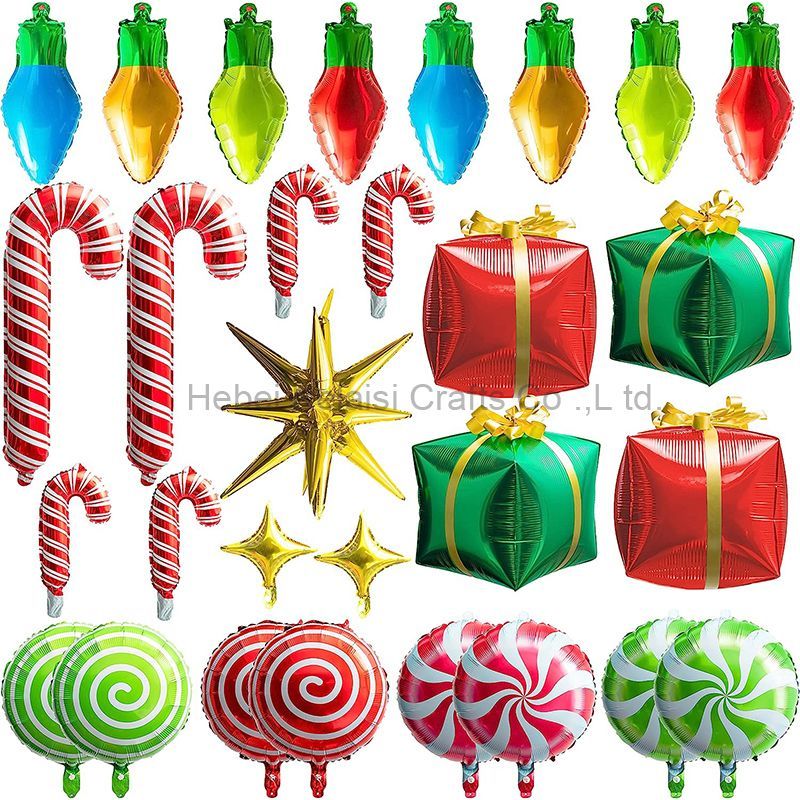 Christmas Party Balloons Supplies