Sep. 20, 2026
On September 21, the world observes the International Day of Peace—a United Nations observance dedicated to strengthening the ideals of peace and promoting non-violence and ceasefire. In 2026, the theme is "Invest in Peace: For Everyone, Everywhere, Every Day," highlighting the role of everyday actions and communities in building peace. Around the world, communities mark the occasion through educational programs, public gatherings, and other symbolic acts of reflection and solidarity.
In some local observances, candles may also be used as symbols of peace or remembrance. But the candle itself is not the point. The moment is.
A small flame can become part of a ceremony, a remembrance, a reflection, or a celebration. That is what makes candles interesting as products: their value is not limited to what they physically do. They can help people mark a moment.
A candle is a simple object. It produces light, takes up little space, and can be used almost anywhere. But across different occasions, people often use candles for something beyond illumination.
They light them to begin something. They light them to remember something. They light them to create a pause. And they light them to celebrate something.
The physical function remains simple. The social and emotional context changes.
This is the first thing to understand about candles as products. Their value is not limited to what they physically do. They also gain meaning from what they help people mark. A candle on a dinner table, a candle in a memorial service, a candle on a birthday cake—the object is similar, but the meaning is entirely different. The product does not change. The moment does.
The value of a candle is not only in what it illuminates, but in the moment it helps mark.
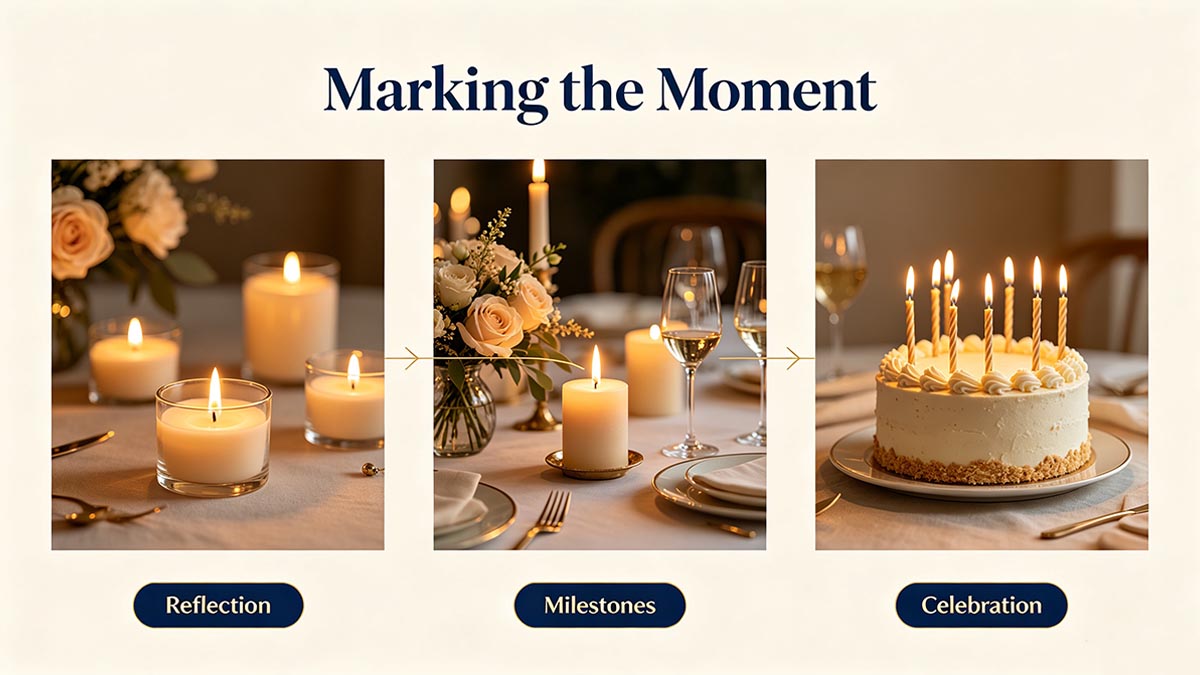
Across cultures and occasions, candles can take on very different meanings. The same physical object can become part of reflection, remembrance, religious practice, or celebration depending on the context.
| Occasion | What the candle helps mark |
|---|---|
| Peace and remembrance activities | Reflection, solidarity, remembrance |
| Birthdays | Age, personal milestones, wishes |
| Weddings | A shared life milestone |
| Religious ceremonies | Faith and tradition |
| Memorials | Remembrance |
This range is what makes candles unusual as a product category. They are not tied to a single use case. They can serve a broader function—marking a moment—that appears across many different occasions. And that function is remarkably durable.
A birthday candle does more than decorate a cake. It helps create a moment in the celebration. It is both a decorative element and a ritual object.
Consider the sequence. The cake is placed on the table. The candles are lit. Everyone gathers. The room quiets. The birthday person makes a wish. Then they blow out the candles. Then everyone celebrates.
That sequence—light, gather, wish, blow, celebrate—is a ritual. It has a beginning, a moment of participation, a climax, and a memory. It happens in seconds. But it can become one of the defining moments of the celebration.
The birthday candle gives this sequence a visible focal point. The cake can still be the center of the celebration without candles. But the candles add a specific shared moment: gathering, making a wish, blowing them out, and capturing the occasion.
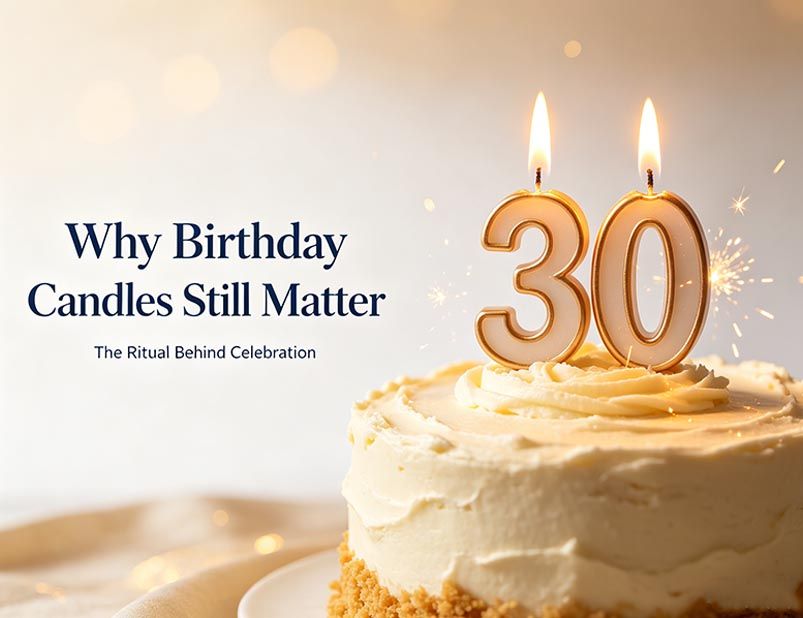
Number candles illustrate this even more clearly. A "30" candle is not simply thirty individual candles compressed into one shape. It turns an age into a visible statement. It identifies the milestone. It makes the age part of the celebration's visual identity. It becomes part of the photograph. It becomes part of the memory.
The function is small. The meaning is large.
This is why birthday candles remain relevant even as celebrations change. The format may vary—from traditional candles to number candles to LED alternatives—but the ritual function stays the same. Consumers are buying more than wax and wicks. They are also choosing products that contribute to the moment, meaning, and visual expression of the celebration.
In an era of digital invitations, social media posts, and virtual celebrations, the physical candle still has a role to play. It anchors the celebration in something tangible: a shared object, a shared action, and a shared moment.
When the candles are lit, everyone in the room stops. The phones may be out, but they are pointed at the cake. The attention is collective. The wish is silent. The blow is a single action that everyone witnesses together. The moment is not just shared—it is performed.
This is a fundamentally different experience from sending a digital message or posting a photo. The candle creates a pause. It marks a transition. It gives the celebration a moment that is not just seen, but experienced.
The candle's role is not to compete with digital celebration. It is to anchor the physical one.
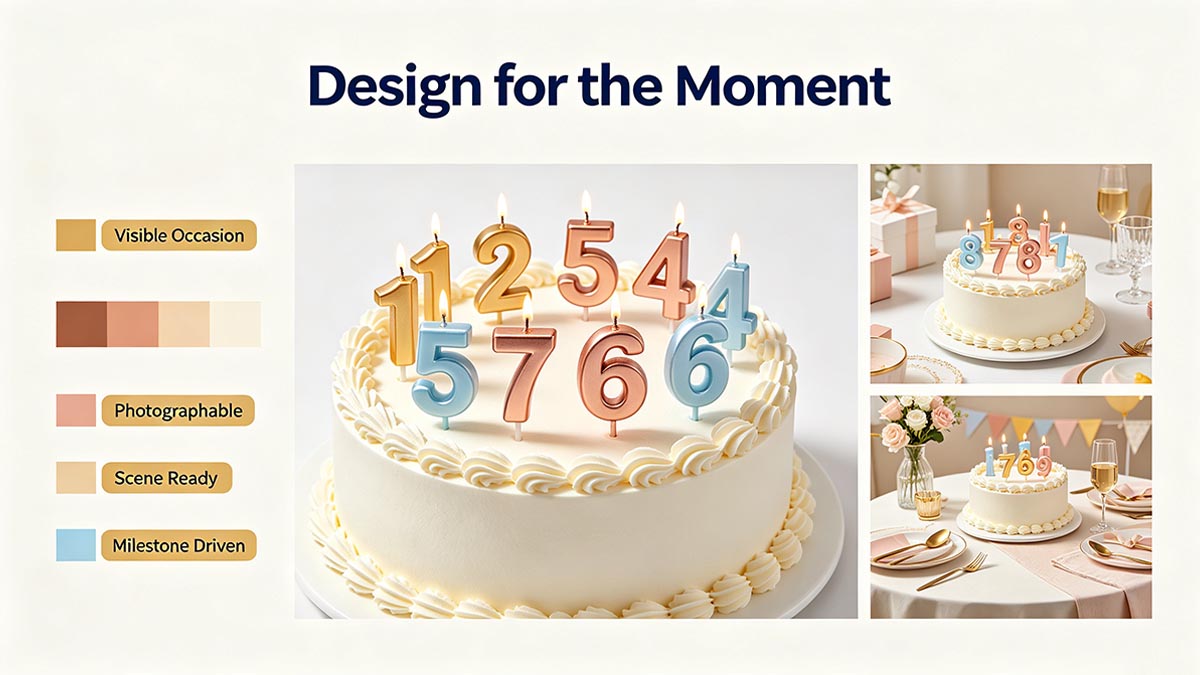
If a product participates in a ritual, its design matters more than its basic function.
Make the moment visible. Number candles, letter candles, shaped candles—these are not just product variations. They are ways to make the occasion visible. A "30" candle communicates more than thirty individual candles. It communicates a milestone.
Make the product photographable. The birthday candle moment is inherently visual. Products designed with this in mind—colors that photograph well, designs that stand out on a cake, packaging that communicates the concept—add value beyond the candle itself.
Make products work with the scene. A candle is not an isolated SKU. It is part of a celebration environment—cake, tableware, decorations, photo backdrops. Suppliers who can develop candles that work with complementary products can give buyers more flexibility when building coordinated collections.
Design for different milestones. Different milestones often call for different visual languages. An 18th birthday, a 30th birthday, a 50th birthday, a first birthday, or a graduation celebration may each call for different colors, shapes, messages, and styling.
For buyers, the question is no longer simply whether a candle works. It is whether the product adds something to the moment it is designed for.
Does the design immediately communicate the occasion and milestone it is intended for? Number, color, shape, message, and scale can all contribute to that visual communication.
Is the size appropriate for the cake and setting? A candle that is too large for the cake or too small for the occasion creates friction.
Does the product photograph well? The birthday moment is visual. Products that photograph well have a natural advantage.
Can it work with complementary party products? The candle is part of a larger celebration scene. Products designed to work together create more value than isolated items.
Can the supplier offer variations for different occasions? Number candles, themed candles, and color-coordinated collections can give buyers more options when building an occasion-specific assortment.
For buyers, suppliers that can connect candles with complementary products may offer greater assortment flexibility. This also creates opportunities to build coordinated collections rather than treating each candle as an isolated SKU.
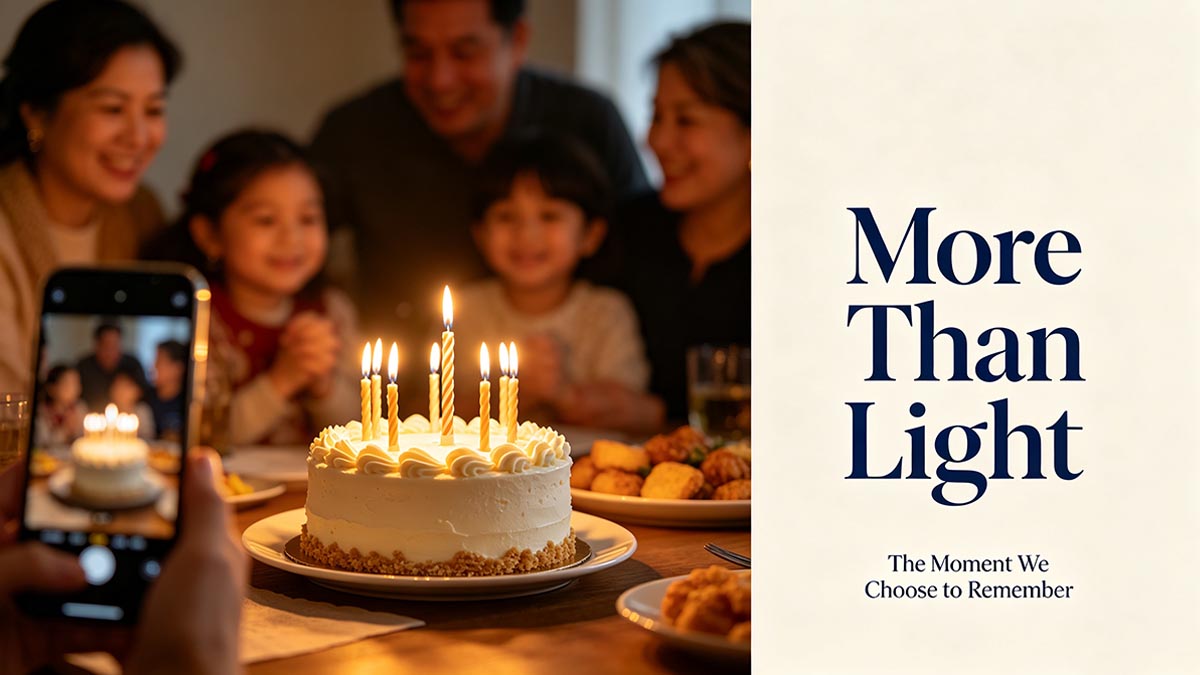
A candle lit for peace and a candle placed on a birthday cake may seem to belong to completely different worlds.
They do.
One may accompany reflection; the other accompanies celebration. One may be part of a solemn ceremony; the other is part of a joyful gathering. One may represent a collective hope; the other represents a personal milestone.
But both demonstrate the same underlying function. A candle can help mark a moment. It gives that moment a visible beginning, a pause, or a memory. That is why candles continue to matter—in peace observances, in birthday celebrations, and in the many occasions in between.
Their value is not only in the light they produce, but in the moments they help people remember.
That is what makes candles more than simple functional products: they can become part of the moments people choose to remember.
Kelaisi Candle has manufactured candles and party supplies since 1991, with facilities in Xingtai and Shijiazhuang, Hebei. We support international buyers with social-compliance, product-testing, and quality documentation covering requirements such as BSCI, SEDEX, CE, RoHS, EN71, and ASTM F963, where applicable.
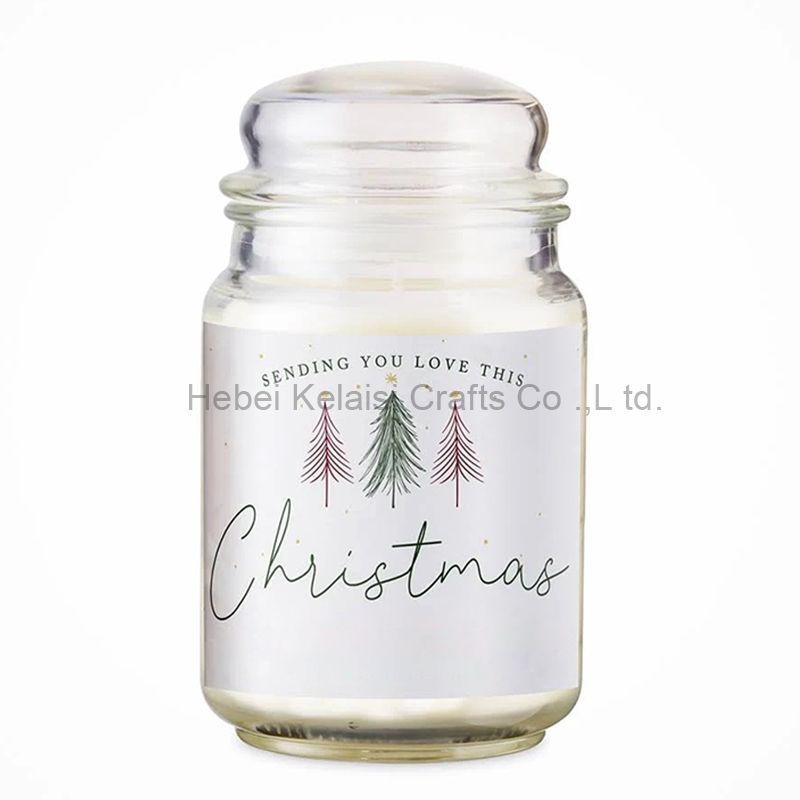 Big size decorative scented candle
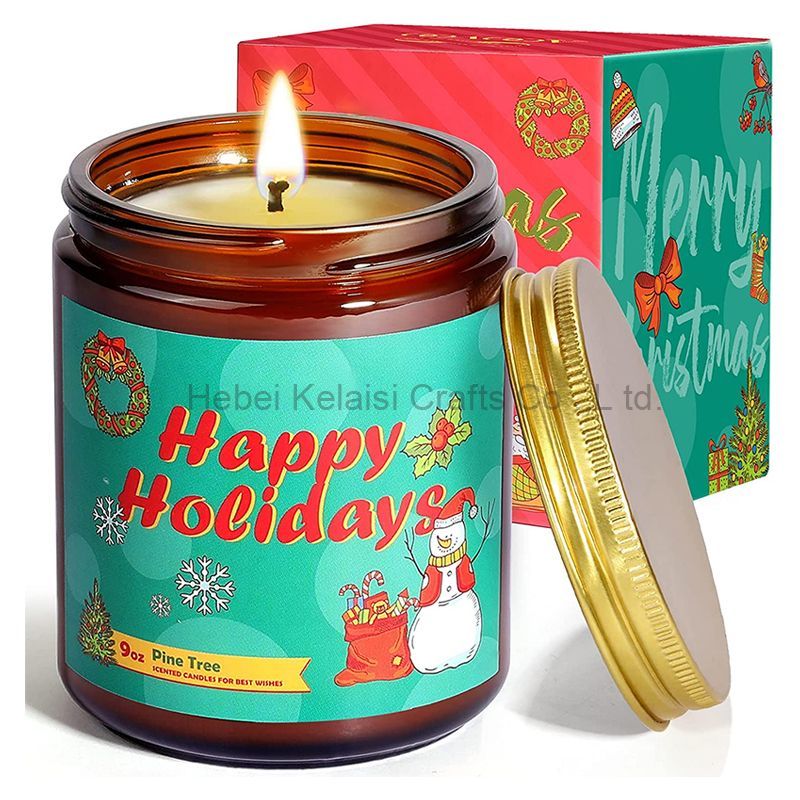 Christmas Scented Candles Gifts Sets for Women
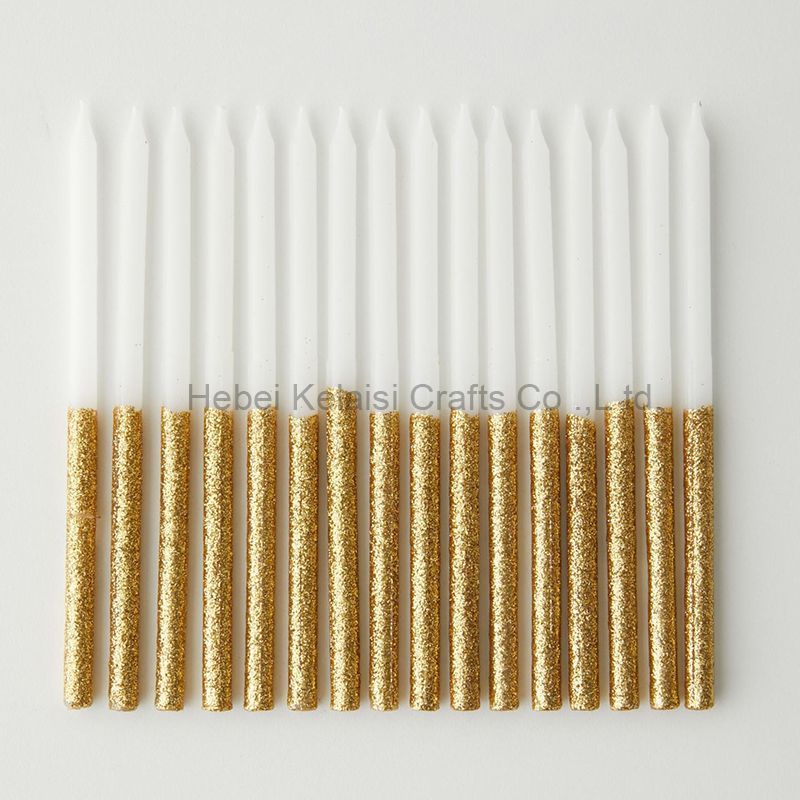 happy birthday long thin glitter cake candles
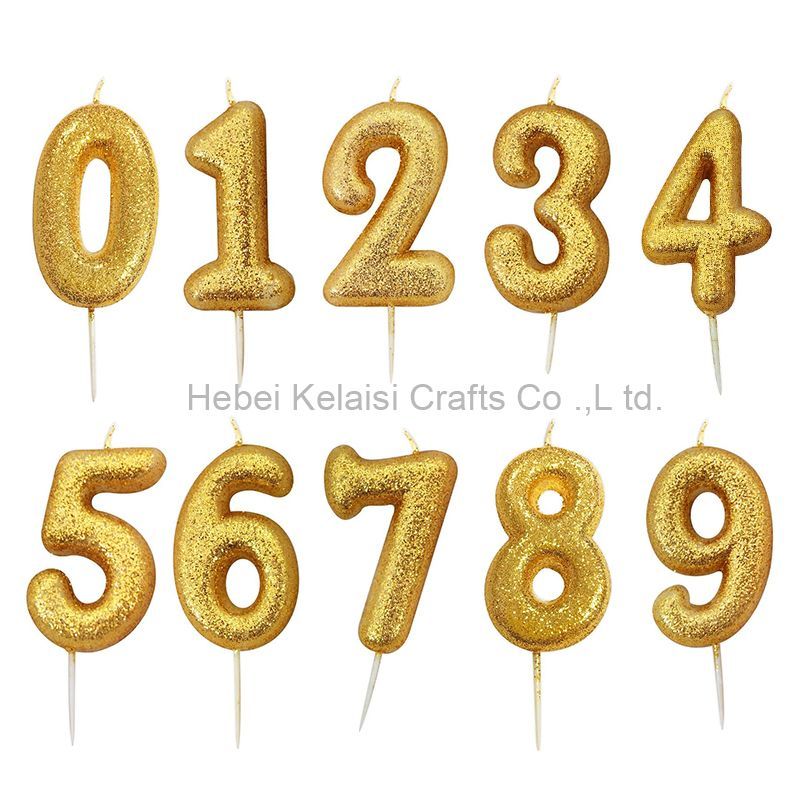 Luxury Golden Birthday Number Candle Sets
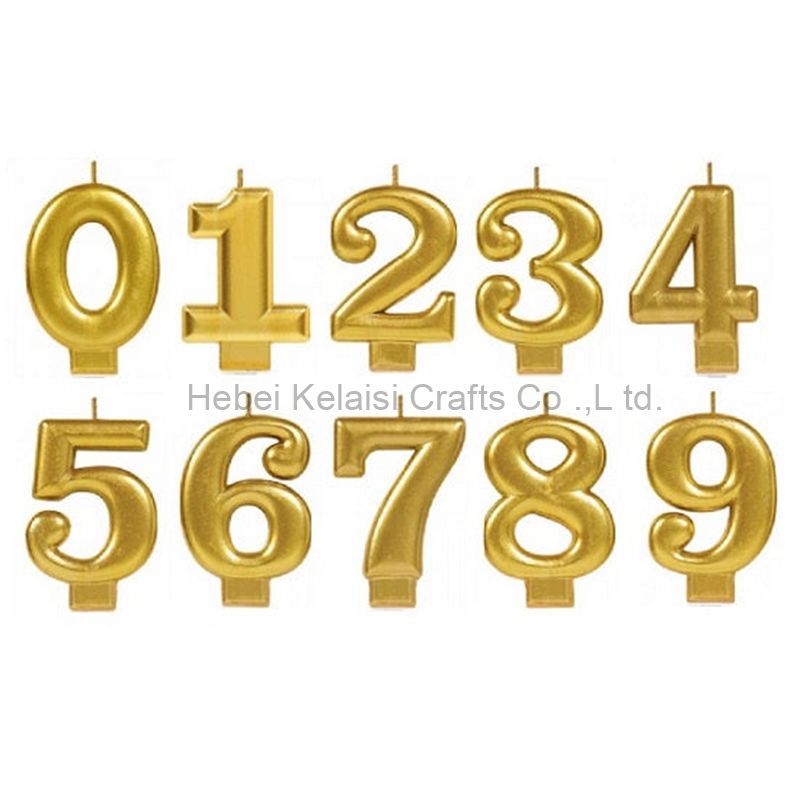 Fancy cake decoration number annual birthday candle
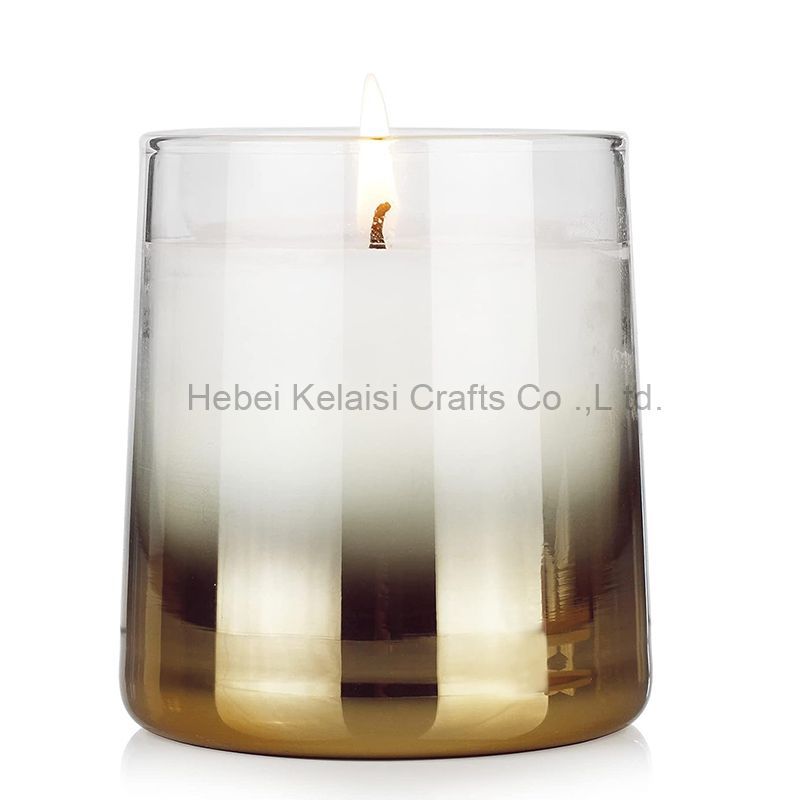 Gradient color Soy Wax Glass Jar Scented Candle
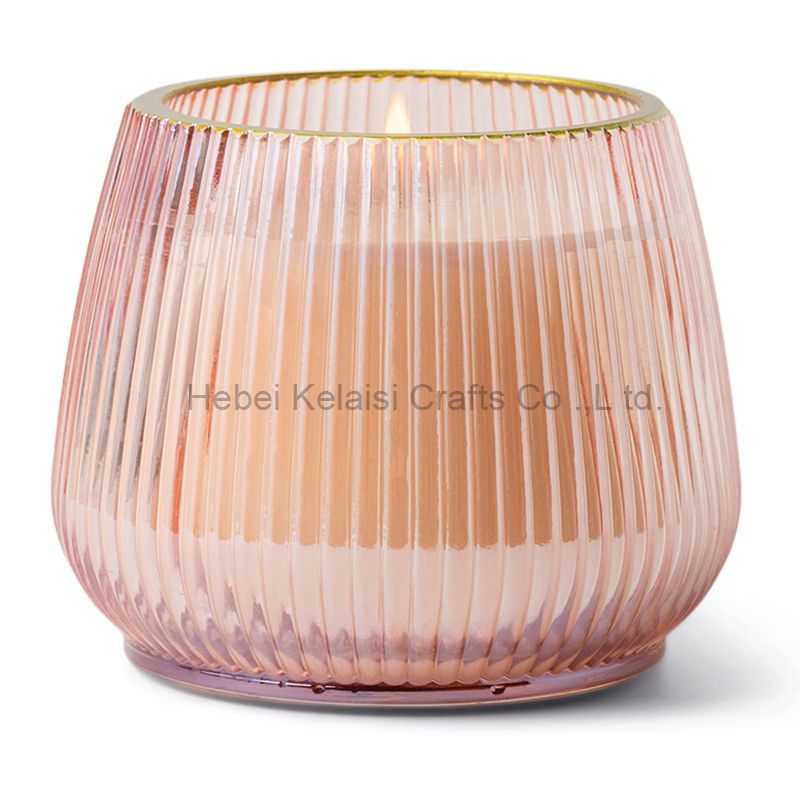 Origami Style Vertical Pattern Wine Glasses Jar Candles
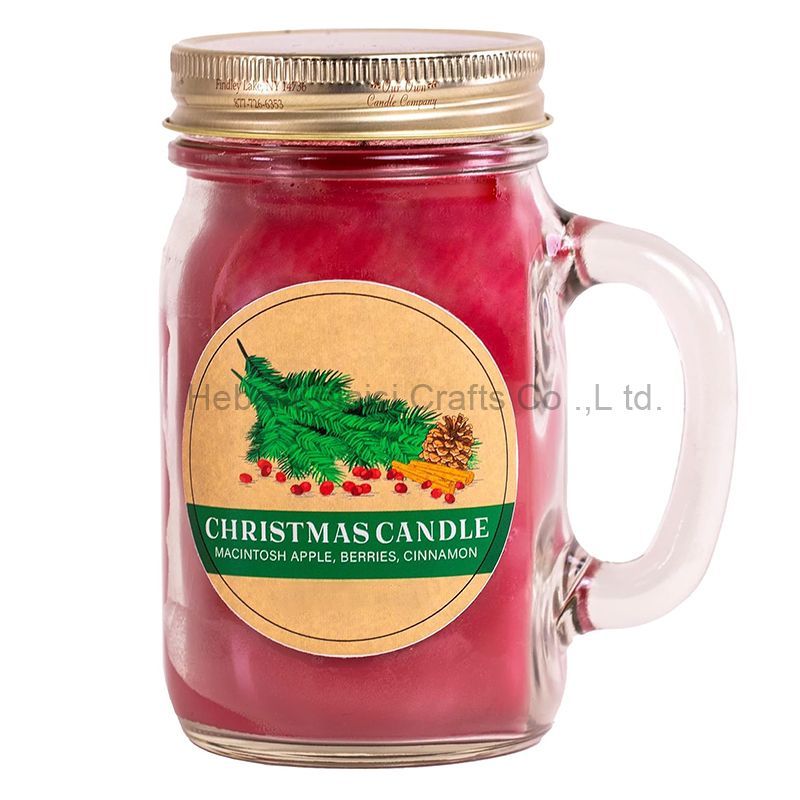 Custom Mini Glass Jar Scented Candle
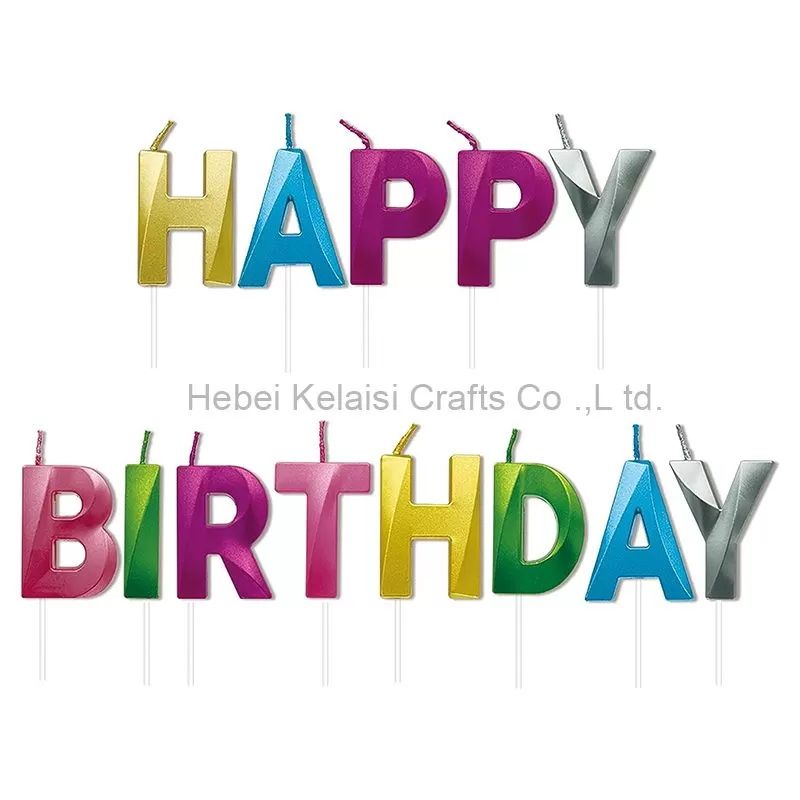 3D Letter Happy Birthday Candles
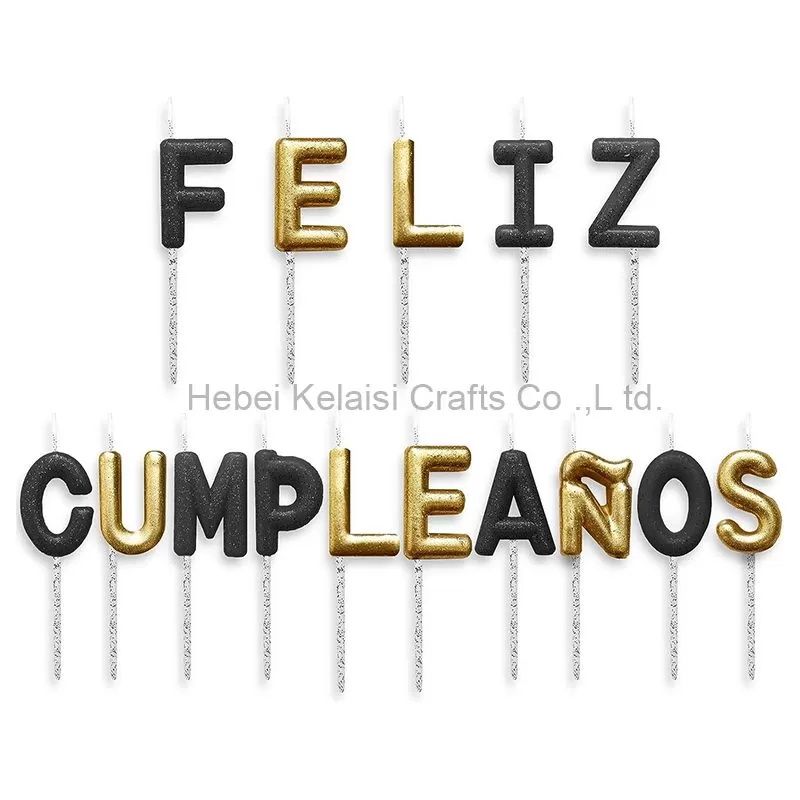 Decorative Birthday Candles
 St. Patrick's Day Decorations Set
 Christmas Party Balloons Supplies