Oct. 19, 2026
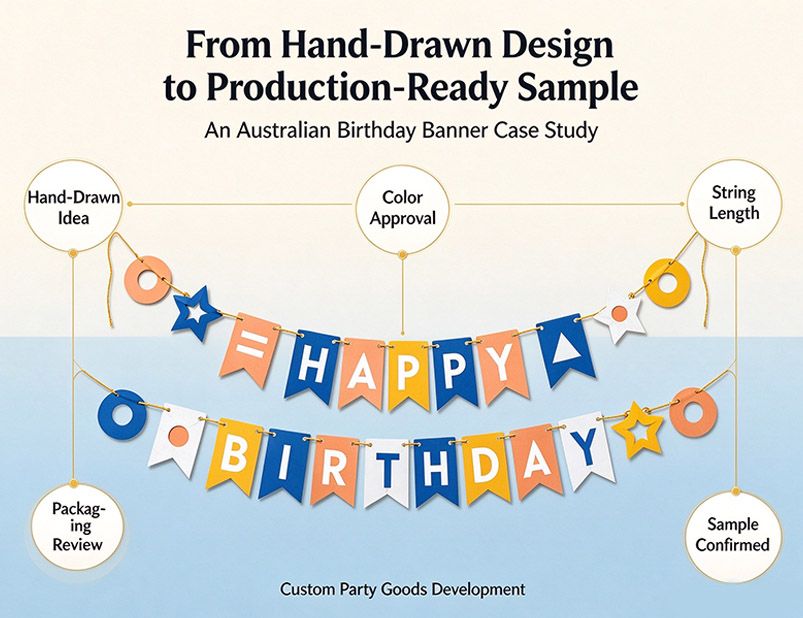
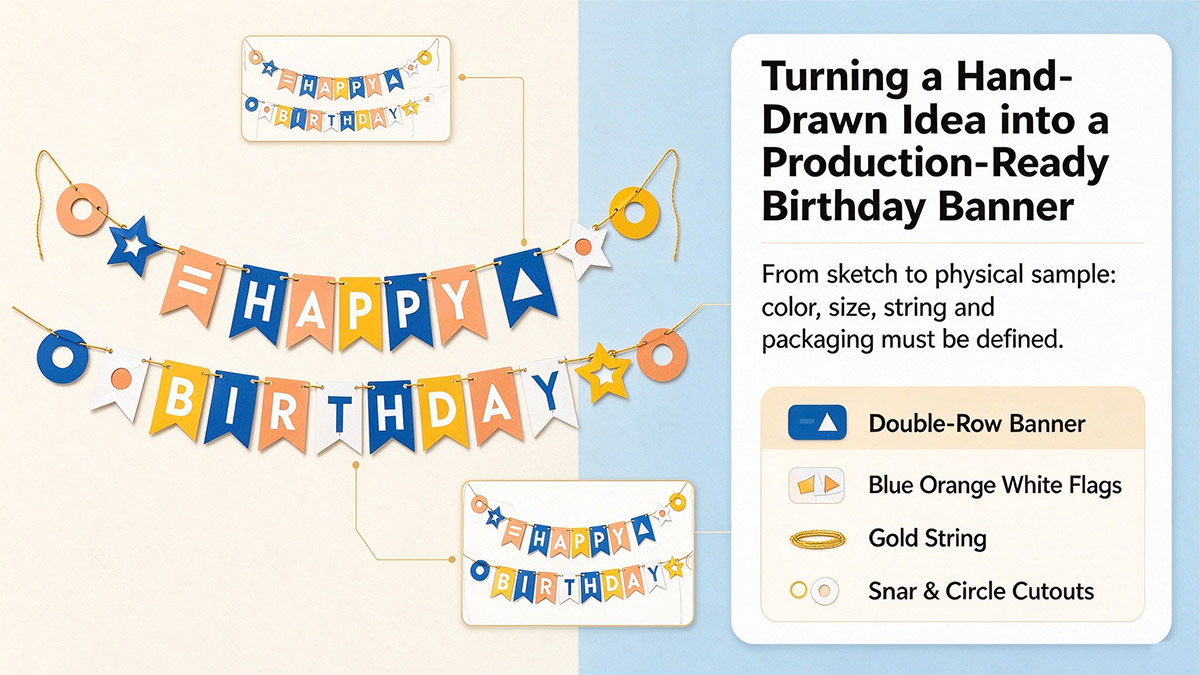
But turning a hand-drawn idea into a production-ready product can involve more decisions than the design itself suggests. Colors need to be approved, letter spacing needs to work when the banner is displayed, and changes to the string length can affect packaging and shipping calculations.
In this project, an Australian party supplies company approached us with hand-drawn designs for a paper birthday banner. The brief included “Happy Birthday” letter flags, gold stars, a light blue background, and silver string.
However, the initial brief did not include vector files, formal color references, or a complete dimensional specification. Even the spacing between the letters was only approximately indicated in the sketch.
The project became a practical lesson in custom product development: a sample is not ready for production simply because the customer likes how it looks. Its design, dimensions, assembly, and packaging requirements must also be clearly defined.
The first challenge was the background color.
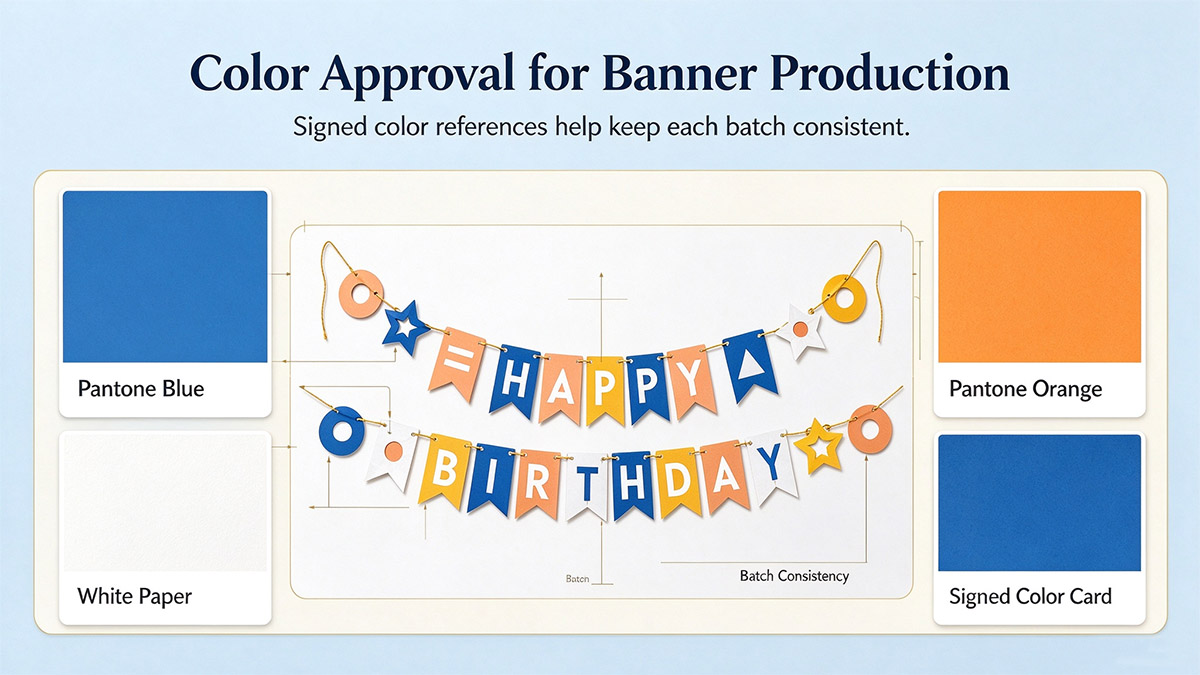
The customer wanted a light blue, but the original sketch did not specify a color code. Rather than allowing the factory to choose a conventional light blue, we arranged a color comparison.
The first sample used PANTONE 287 C, which appeared too dark for the customer's intended look. The customer explained that they wanted something lighter, closer to the blue of a clear sky.
Instead of selecting a replacement color on the customer's behalf, we prepared an A4 comparison sheet showing PANTONE 287 C, PANTONE 299 C, and the blue area from the original sketch.
After reviewing the comparison, the customer confirmed that PANTONE 299 C was closer to the intended sky-blue appearance.
We then added a clear requirement to the sampling feedback record: mass printing had to follow the approved, signed color card, and the letter flags within the same batch should not show obvious visible color differences.
For a multi-piece birthday banner, consistency matters across the entire set. A color that looks acceptable on one letter may become noticeable when several flags are displayed together.
The important step was not simply changing the color code. It was establishing a reference that both the customer and the factory could use.
The second issue concerned the string.
The original design specified a total banner length of 1.5 meters. Before sampling, we warned that this might leave the letters crowded when displayed and suggested considering a longer length. The customer nevertheless requested a 1.5-meter sample to assess the more compact arrangement.
After receiving the sample in Australia, the customer reported that the string was too short and the letters looked crowded together.
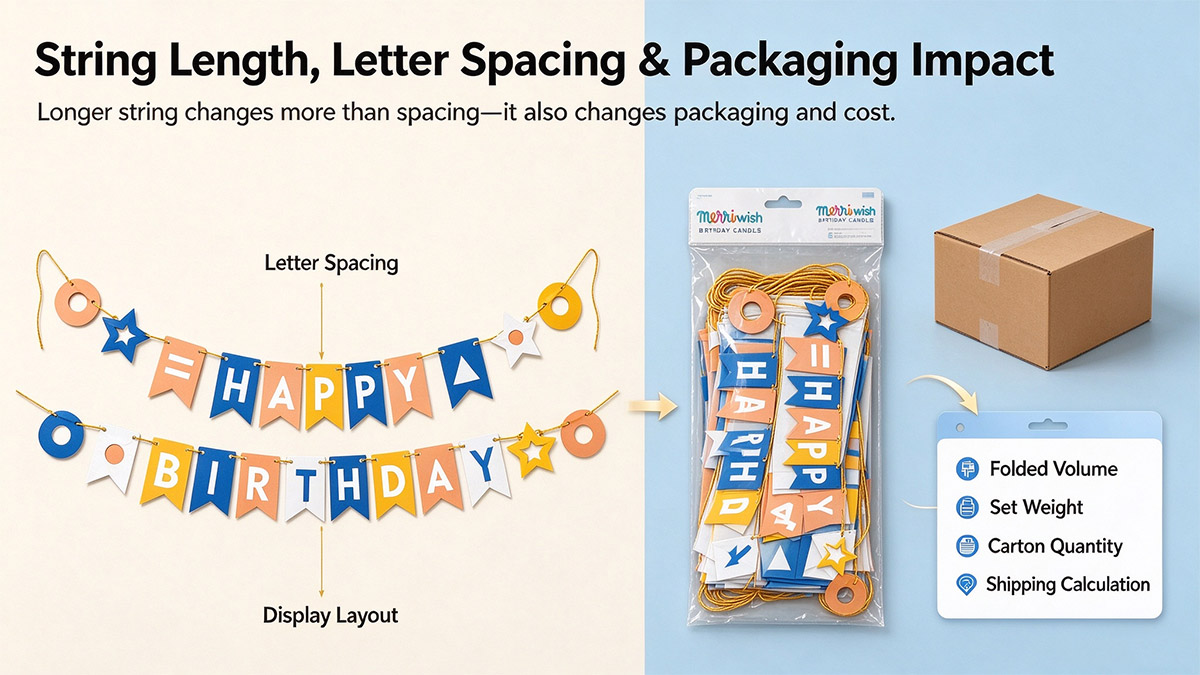
It would have been easy to change the specification immediately to 2.5 meters. However, a longer string could increase the folded volume and weight of each set. Even a small difference per set can accumulate across multiple cartons.
That could affect the gross carton weight, packing quantity, total carton count, and shipping calculations.
We therefore reviewed the string length alongside the packaging and weight requirements rather than treating it as an isolated change.
The string was recut to 2.2 meters, and the banner was photographed laid out at full length so the customer could review the spacing.
We also reweighed the individual set and recalculated the packing data, including the quantity per carton, gross carton weight, and total carton count. The retail box dimensions remained unchanged. The revised packing information was then confirmed with the customer.
Instead of sending only a spreadsheet, we provided three items for review:
A photograph of the banner laid out at full length
A photograph showing the product folded into its retail box
An updated packing and weight sheet
After reviewing the revised arrangement and information, the customer replied: “Perfect.”
The important point was not simply that the string became longer. The revised specification was reviewed together with its packaging and shipping implications before production moved forward.
The sampling process also highlighted the need to translate subjective comments into specific, checkable requirements.
Comments such as “make it lighter,” “make it longer,” or “the edges should be neater” are useful starting points, but they leave room for different interpretations.
We organized the feedback into four areas:
Color: Compare the specified color references and retain the approved color card.
Dimensions: Confirm the string length and review the spacing of the flags when laid out.
Cutting and assembly: Check the cut edges, hanging holes, letter sequence, and front-and-back orientation.
Packaging and shipping data: Verify the folding method, retail-box fit, set weight, packing quantity, and gross carton weight.
Each feedback item was linked to a factory action, an associated check, and a final confirmation method.
For example, changing the string length triggered a review of the individual set weight and carton data. Adjusting the color required a signed reference card. Improving the cutting quality required a review of the finished edges and the way the paper flags were stacked.
This approach helped prevent one correction from being made without considering its effect on other parts of the product.
The customer initially said that a pre-production sample did not need to be sent. We still requested one because the paper used for mass production would come from a different batch than the approved sample, and the brightness of the gold foil could vary.
For this project, we used a 20-item inspection checklist covering color, paper weight, cutting quality, foil stamping, string length, hanging-hole position, spelling, packaging, barcode placement, quantity per set, and gross carton weight, among other details.
The pre-production sample review identified two issues.
First, we found a carton in which the hangtag labels had been attached upside down. Second, the ends of some strings had not been heat-sealed, leaving them prone to unraveling.
The factory corrected these issues that day, before mass production proceeded.
These details might have been overlooked if the sample had been judged only by its overall appearance. Yet a reversed label or an unsecured string end can affect the presentation and handling of a finished product.
The pre-production review gave the factory an opportunity to correct the problems before they became part of the bulk order.
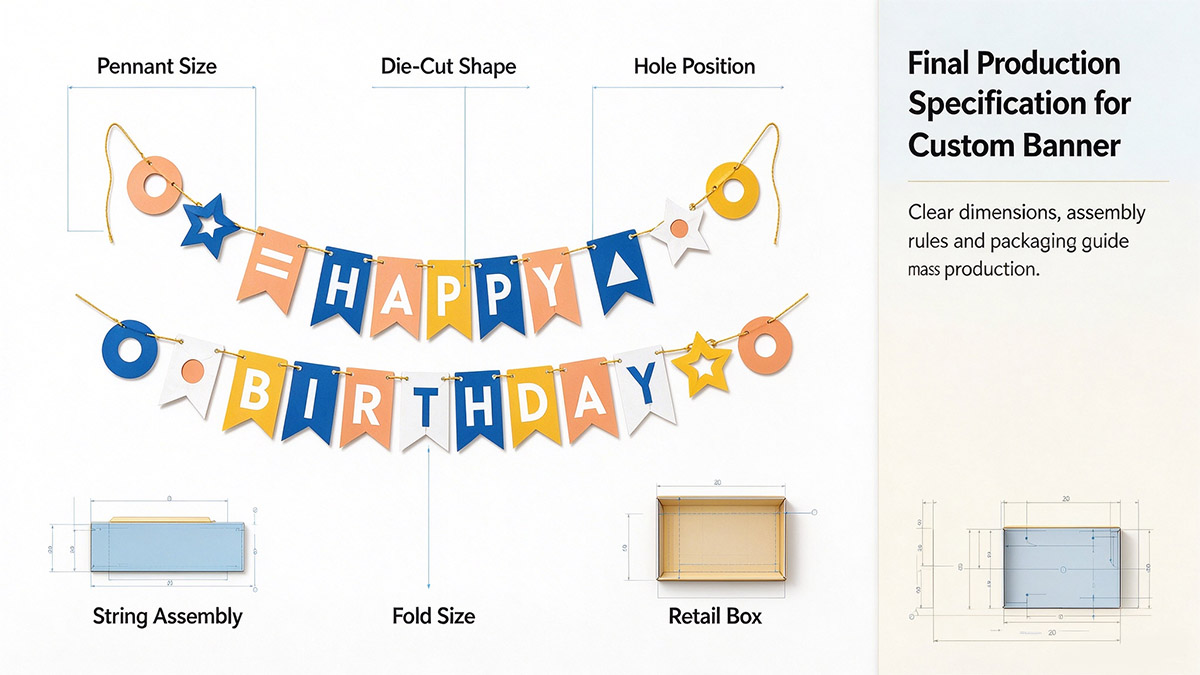
The project progressed from the initial hand-drawn brief through sample revisions, pre-production checks, mass production, and delivery.
After the project, we incorporated the lessons into a more structured confirmation process for hand-drawn designs.
Before forwarding a design to the factory, we prepare a requirement sheet covering color references, dimensions, string length, folding method, packaging dimensions, quantity per set, individual set weight, gross carton weight, and barcode position.
Customer feedback is recorded in measurable terms wherever possible, and revisions are tracked by version. When a change affects other specifications, those related items are reviewed before the revised version is confirmed.
The goal is not to eliminate every round of sampling. It is to make each round more useful by ensuring that the customer, factory, and packaging requirements are working from the same information.

The main challenge in this Australian birthday banner project was not a single color adjustment or a longer string. It was translating an incomplete visual idea into a specification that could be checked before production.
The color comparison established an approved reference. The string revision triggered a review of weight and packing data. The pre-production sample revealed assembly details that needed correction before mass production.
Together, these steps connected design approval with manufacturing and packaging decisions. The project proceeded to mass production and was delivered after the sampling and pre-production issues had been addressed.
For custom birthday banners, a successful sample is more than a product that looks right in a photograph. It is a product whose appearance, dimensions, assembly, and packing requirements have been documented, reviewed, and confirmed before production begins.
 Big size decorative scented candle
 Christmas Scented Candles Gifts Sets for Women
 happy birthday long thin glitter cake candles
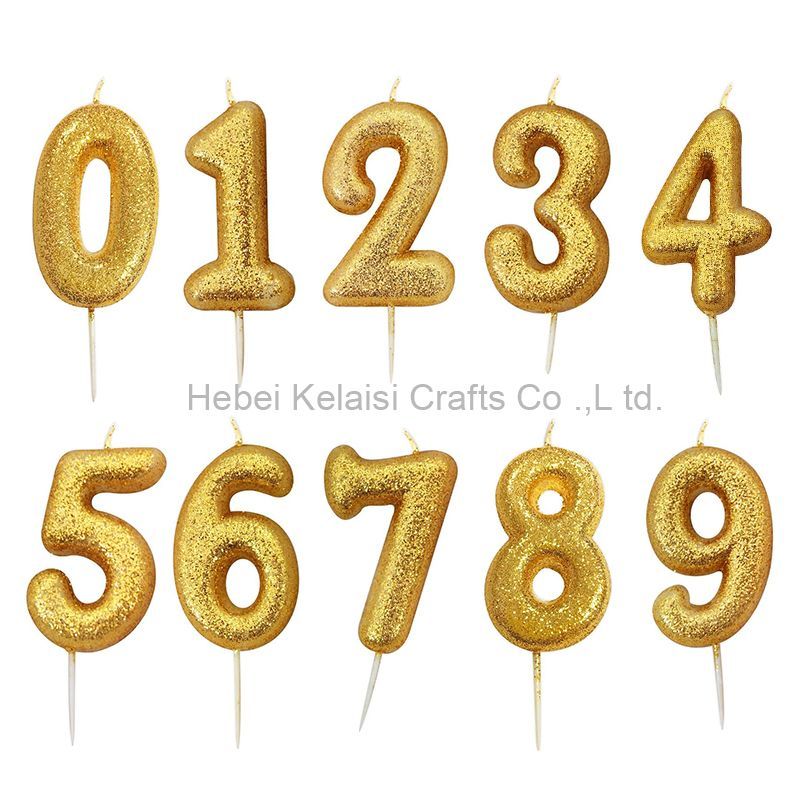 Luxury Golden Birthday Number Candle Sets
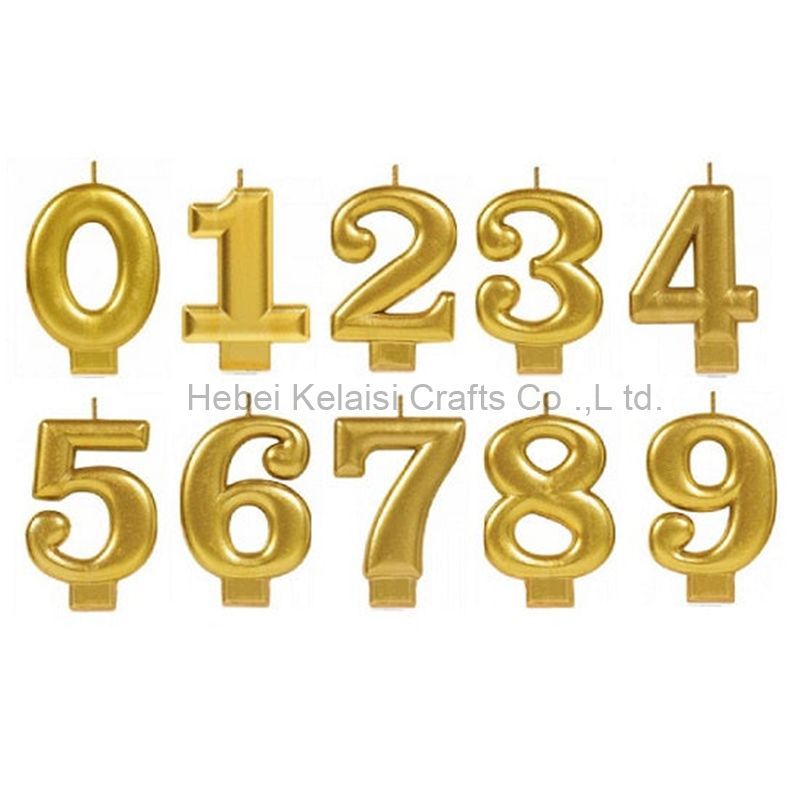 Fancy cake decoration number annual birthday candle
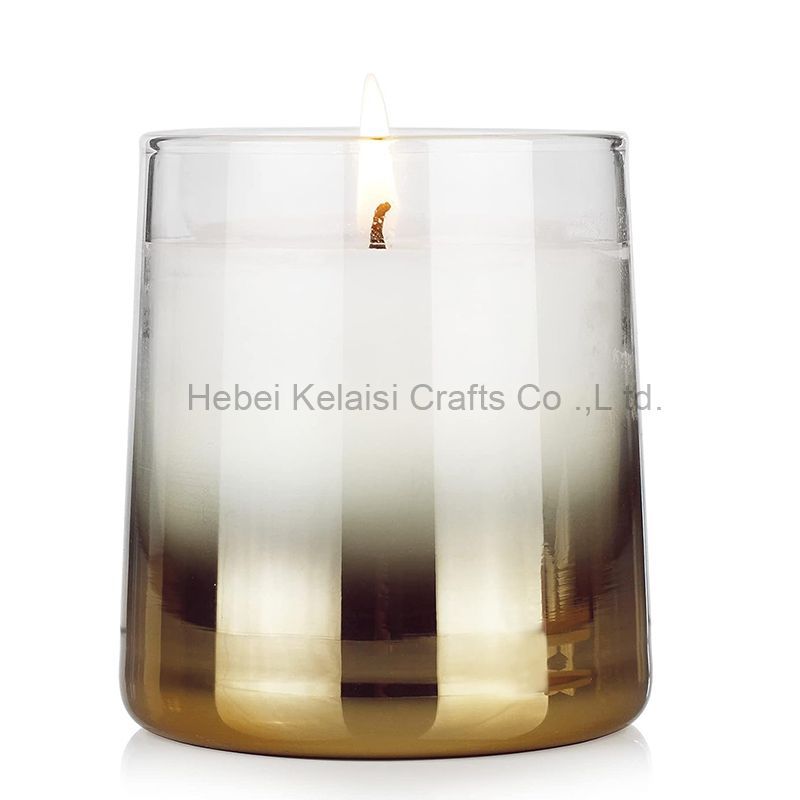 Gradient color Soy Wax Glass Jar Scented Candle
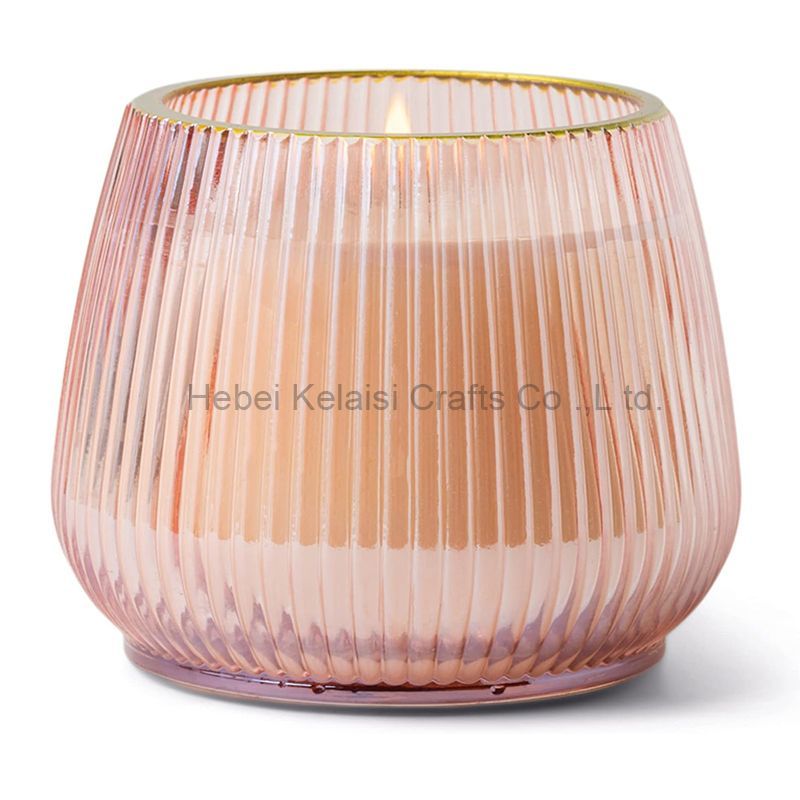 Origami Style Vertical Pattern Wine Glasses Jar Candles
 Custom Mini Glass Jar Scented Candle
 3D Letter Happy Birthday Candles
 Decorative Birthday Candles
 St. Patrick's Day Decorations Set
 Christmas Party Balloons Supplies