Oct. 20, 2026
Custom party supplies often begin with a clear visual idea but an incomplete set of production files. A design may show the intended colors, product shapes, and packaging style, yet still leave important details unresolved before manufacturing can begin.
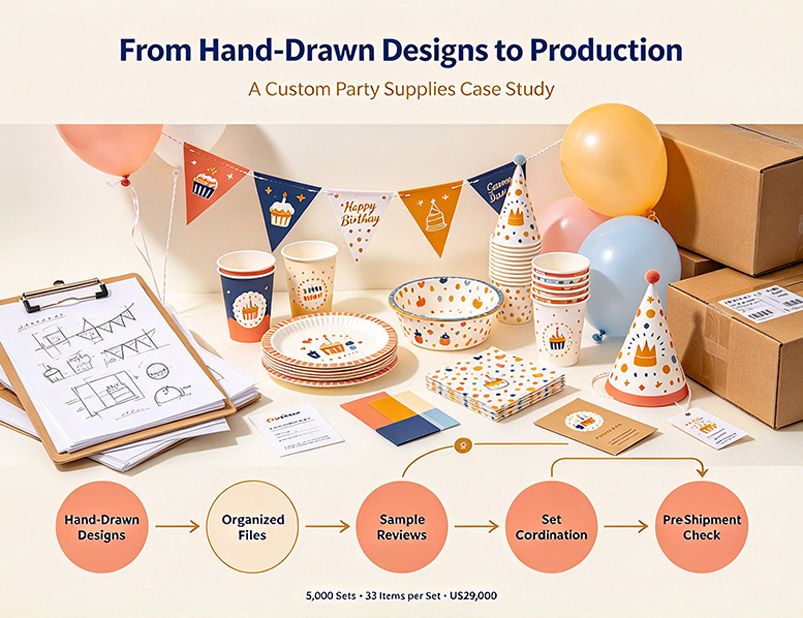
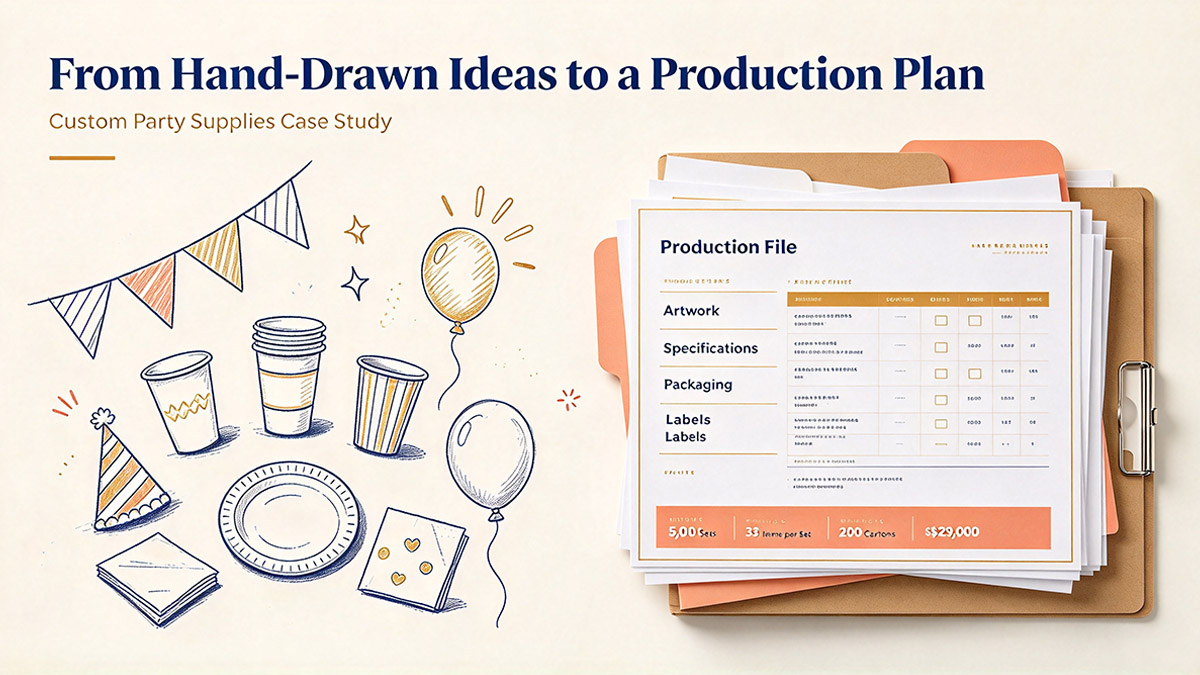
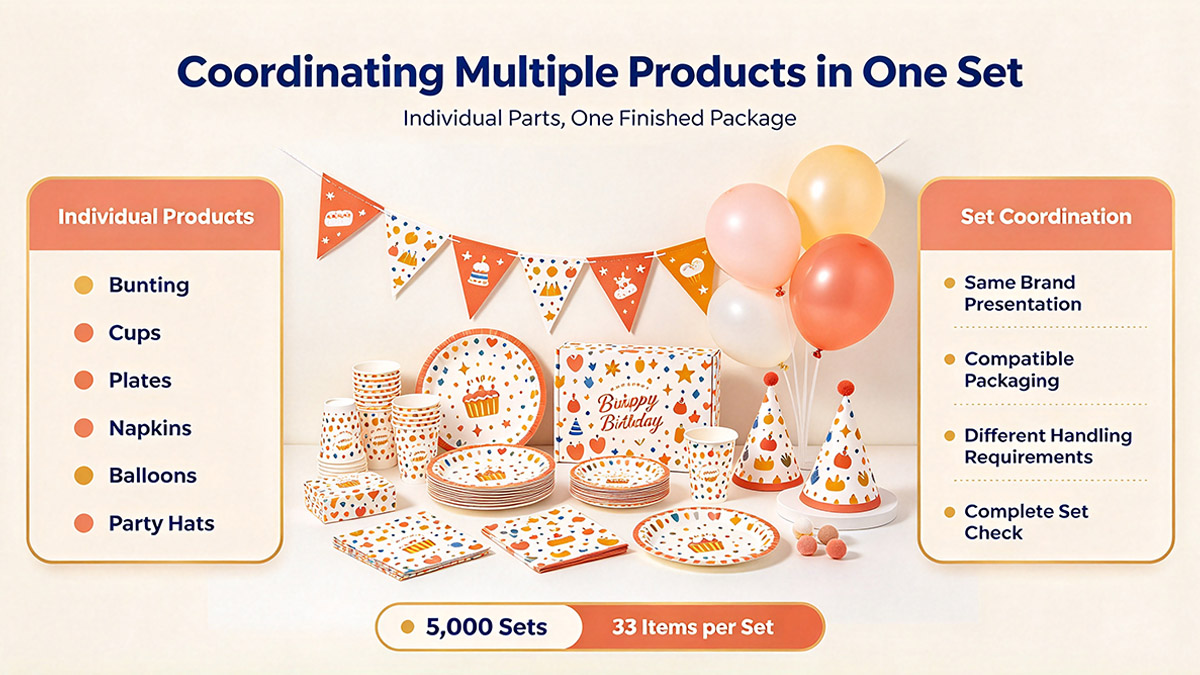
This was the starting point for a first-time project with a party supplies company based in the Dominican Republic. The customer wanted a custom-branded birthday party set built around its own designs. The order covered 5,000 sets, with 33 individual items in each set, packed into 200 cartons. The total order value was US$29,000.
From the initial hand-drawn designs to the completion of production, the project took approximately two months. The process involved organizing production files, reviewing samples, confirming packaging details, and checking the finished order before shipment.
The customer supplied hand-drawn designs for a coordinated birthday party collection. The set included Happy Birthday paper bunting, paper cups, paper plates, napkins, balloons, and party hats.
The designs communicated the customer's ideas, but they were not yet a complete production package. Manufacturing required more precise information about artwork, product specifications, labels, and packaging.
Transferring a sketch directly to a factory would have left too much room for interpretation. Small differences in layout, dimensions, or printed details could lead to repeated revisions later in the process.
The first task was therefore to organize the design information into files that could be reviewed, confirmed, and used for production. The aim was not to change the customer's design, but to translate it into clearer manufacturing requirements.
Because the products were intended to carry the customer's own brand, consistency across the collection was especially important. Each component needed to fit into the same overall design and packaging plan.
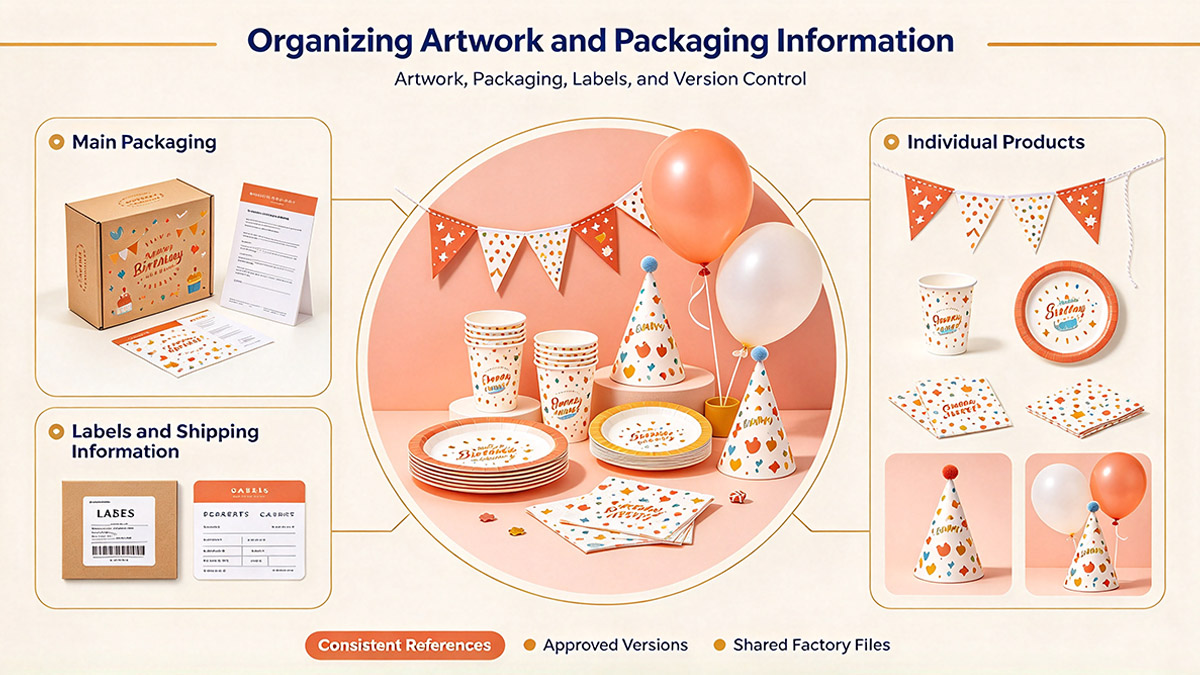
A multi-item party set involves more than one print file. The artwork for the individual products must be coordinated with the packaging and the information used to identify the finished set.
For this project, the preparation work covered three main areas:
Main packaging: Files for the primary packaging and the overall presentation of the set.
Individual products: Artwork and specifications for the bunting, cups, plates, napkins, balloons, and party hats.
Labels and shipping information: Details required to identify the products, packaging, and cartons.
Keeping these materials organized made it easier to review different parts of the order without treating each item as an isolated product.
Version control was also an important part of the process. When several products and packaging components are developed together, a revised file must be distinguishable from an earlier version. Otherwise, an outdated design or specification can be used during a later production step.
The goal was to establish a consistent reference for the customer and the factory before the project moved further into production.
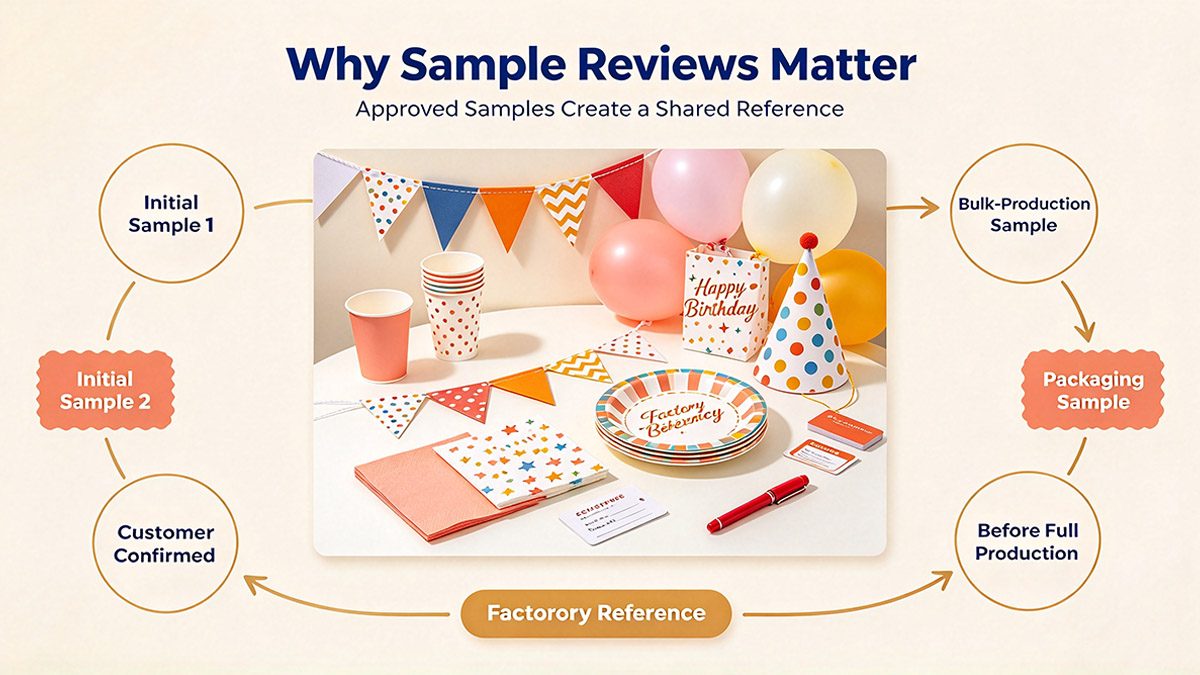
The project went through two rounds of initial samples, followed by one bulk-production sample and one packaging sample.
Each stage served a different purpose within the overall approval process. Initial samples allowed the customer and production team to review the developing products. The bulk-production sample provided a further reference before full production began, while the packaging sample allowed the packaging arrangement to be reviewed separately.
The customer confirmed the bulk-production sample before manufacturing started.
That approval point was important because a custom order should not move into full production simply because the initial design looks acceptable. The sample needs to provide a shared reference for what has been approved.
Packaging also deserves its own review. Even when individual products look correct, the complete set must still work as a coordinated package. The products, presentation, labels, and packing arrangement all need to be considered together.
For a first-time customer, a structured sample process also creates a clearer basis for communication. Rather than relying entirely on written descriptions, both sides can refer to the approved sample when discussing the finished products.
The order included 5,000 sets, each containing 33 individual items. This made coordination across the collection an important part of the project.
A problem with one component can affect the presentation or completeness of the entire set. The products therefore needed to be considered both individually and as parts of one finished package.
For example, the review process had to account for the different physical forms of the products, from paper items to balloons and party hats. These products do not all have the same packaging or handling requirements.
A consistent set of specifications helps make those differences easier to manage. It also gives the production team a clearer basis for checking the relationship between the individual products and the finished package.
The same principle applies to the customer's branding. When a customer supplies its own logo and packaging design, the finished collection needs to follow the approved brand presentation rather than relying on separate, informal decisions for each item.
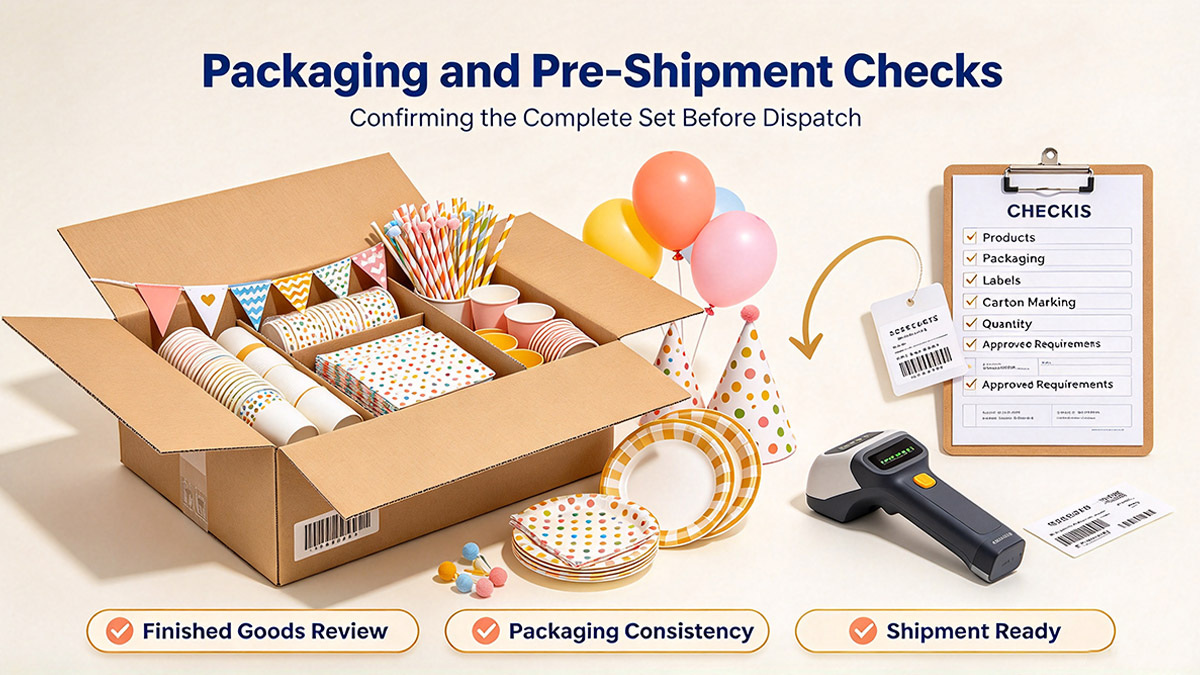
Before shipment, the order needed to be reviewed as a complete set rather than only as a collection of individual products.
The purpose of pre-shipment checking is to confirm that the finished goods correspond to the approved requirements. For a customized party supplies order, this includes the products themselves, the packaging, the labels, and the information used for carton identification and shipment.
These checks are particularly relevant when an order contains many components. A product may appear acceptable on its own while a mismatch elsewhere in the set creates a problem during packing or receiving.
Packaging information also needs to remain consistent with the final configuration. If the approved product or packing arrangement changes during development, the corresponding specifications and shipping information may need to be reviewed as well.
In this project, the work extended beyond preparing artwork and reviewing samples. Packaging details and pre-shipment requirements were also part of the overall coordination process before the goods were dispatched.
From the receipt of the customer's hand-drawn designs to the completion of production, the project took approximately two months.
The order was completed and shipped to an address in the United States designated by the customer. Although the customer company was based in the Dominican Republic, the shipping destination was the customer's specified US address.
At the time this case was documented, the goods had been shipped, but receipt at the destination had not yet been confirmed. The project outcome should therefore be understood as completed production and dispatch, rather than confirmed delivery or final customer acceptance.
The project illustrates an important distinction in custom manufacturing: having a design concept is not the same as having a production-ready specification.
Hand-drawn designs can communicate a customer's vision, but a multi-item order also requires coordinated artwork, sample approvals, packaging information, and a shared understanding of the final requirements.
For buyers developing their own branded party supplies, it is worth considering several points before placing an order:
Prepare clear specifications for the individual products and the complete set.
Organize artwork, packaging files, and labels so that the approved versions can be identified.
Review initial samples before approving the final production reference.
Confirm the bulk-production sample before full manufacturing begins.
Review the packaging as well as the products themselves.
Check the finished order against the approved requirements before shipment.
These steps do not eliminate every possible production issue. They do, however, create a more structured basis for decisions and help both parties identify questions before they become harder to resolve.
For this first-time customer, the project brought together 5,000 custom party supplies sets, each containing 33 items, within an approximately two-month period from initial design submission to production completion.
The broader lesson is straightforward: successful customization depends not only on the design itself, but also on how clearly that design is translated into specifications, samples, packaging, and production requirements.
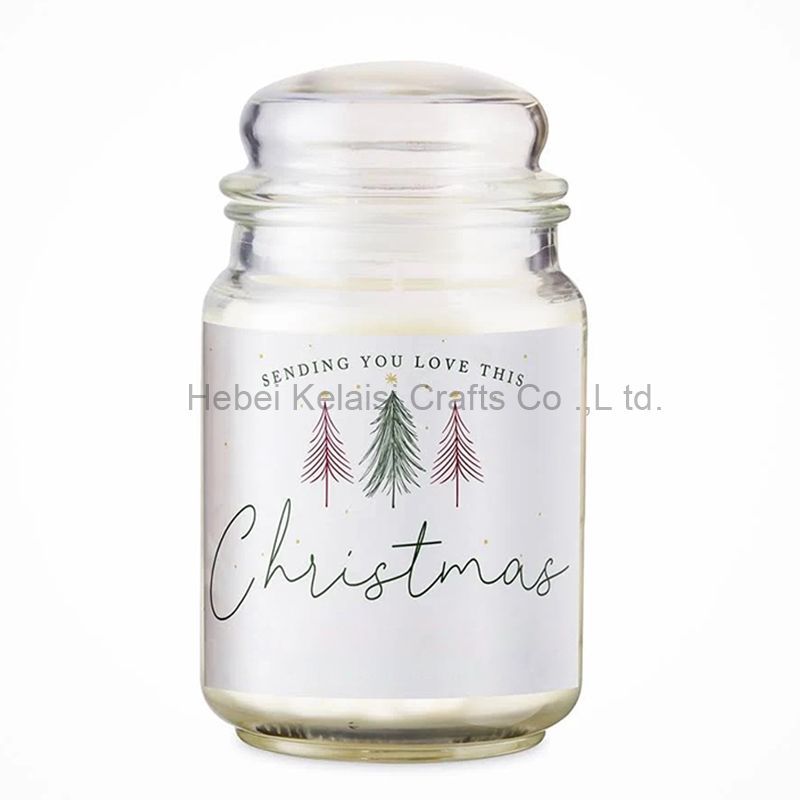 Big size decorative scented candle
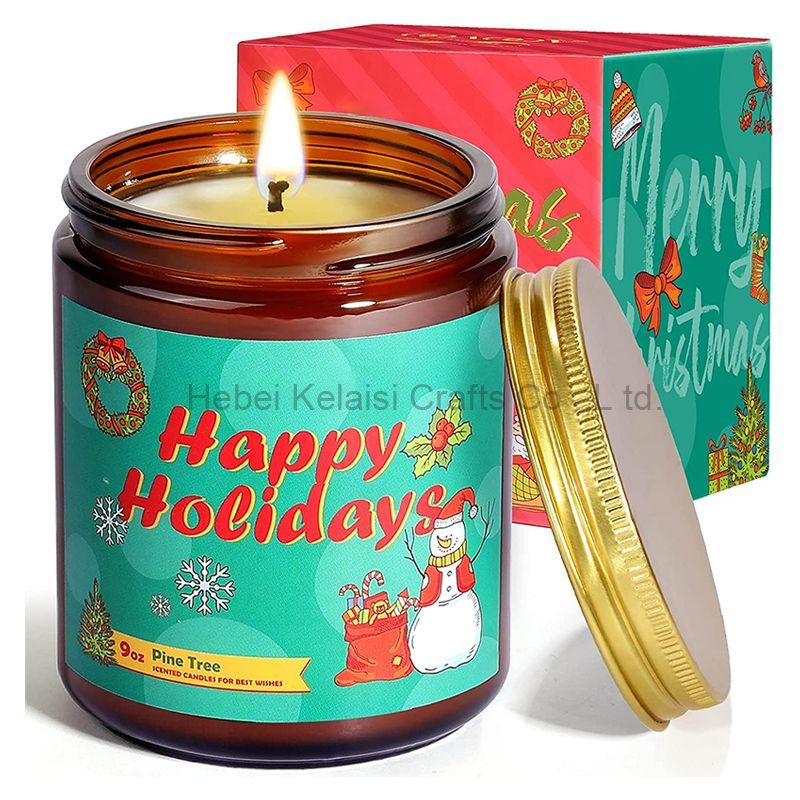 Christmas Scented Candles Gifts Sets for Women
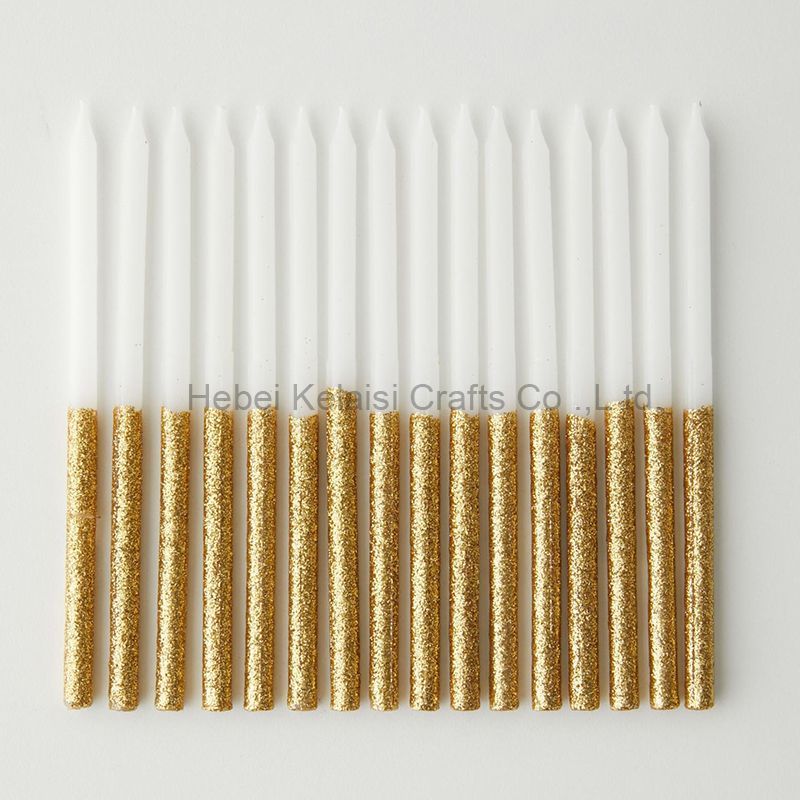 happy birthday long thin glitter cake candles
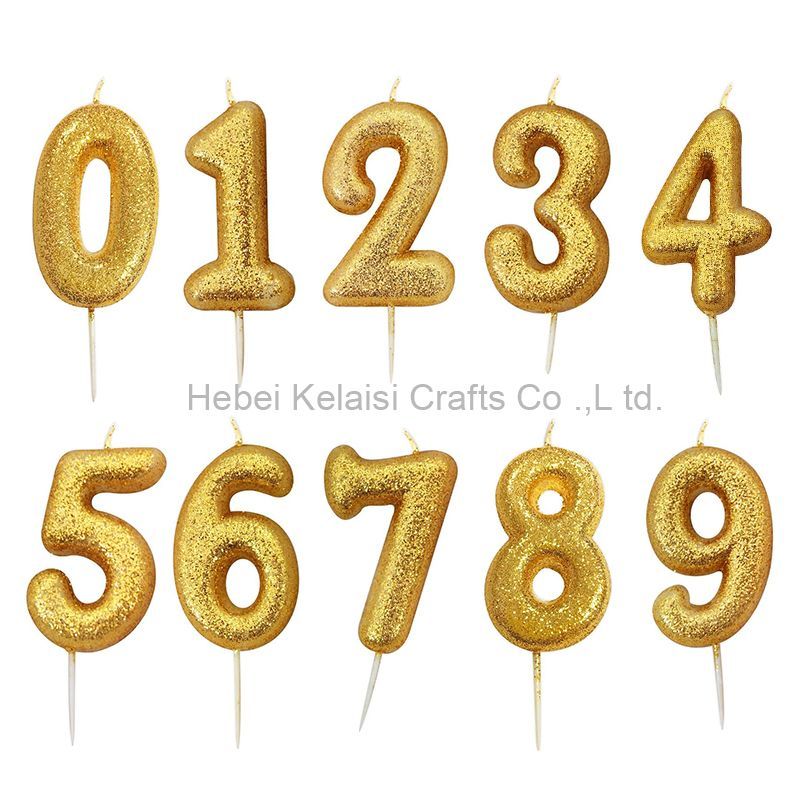 Luxury Golden Birthday Number Candle Sets
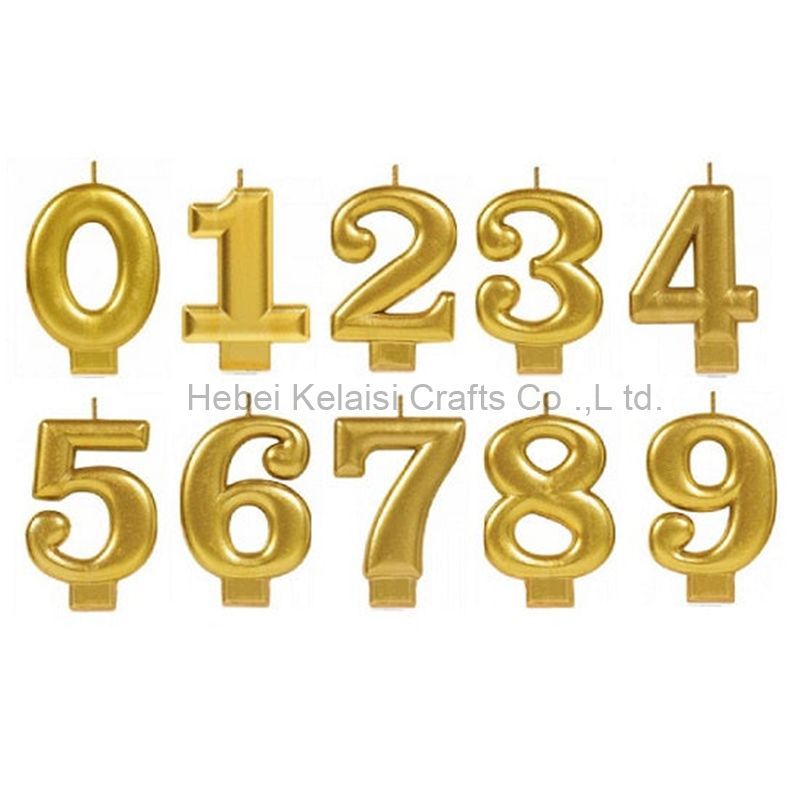 Fancy cake decoration number annual birthday candle
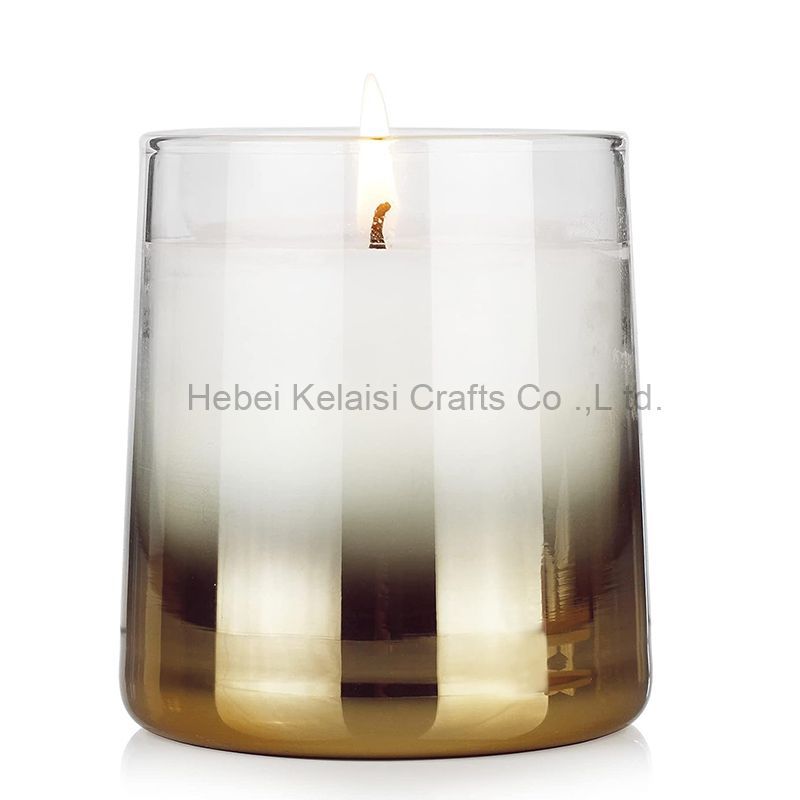 Gradient color Soy Wax Glass Jar Scented Candle
 Origami Style Vertical Pattern Wine Glasses Jar Candles
 Custom Mini Glass Jar Scented Candle
 3D Letter Happy Birthday Candles
 Decorative Birthday Candles
 St. Patrick's Day Decorations Set
 Christmas Party Balloons Supplies