Sep. 15, 2026
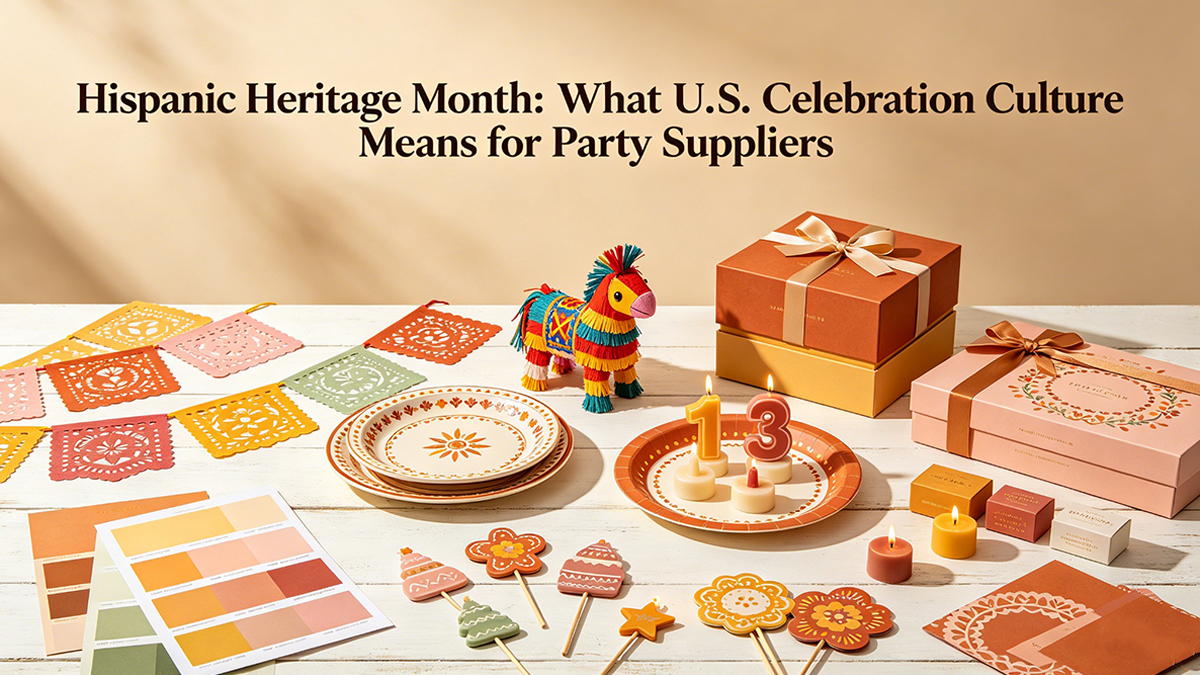
Every year from September 15 to October 15, the United States observes Hispanic Heritage Month—a monthlong celebration of the history, culture, and contributions of Americans with roots in Spain, Mexico, Central America, South America, and the Spanish-speaking nations of the Caribbean.
For party suppliers, this observance is not just a cultural moment. It is a useful lens into a much larger shift in U.S. celebration culture: consumers increasingly expect party assortments to reflect identity, tradition, and cultural relevance.
Hispanic Heritage Month is the entry point for understanding the market—not the market itself.
Hispanic and Latino communities are not a single, uniform group. Traditions vary significantly by country, region, and family. But many celebrations within these communities place strong emphasis on family, visual presentation, and shared participation.
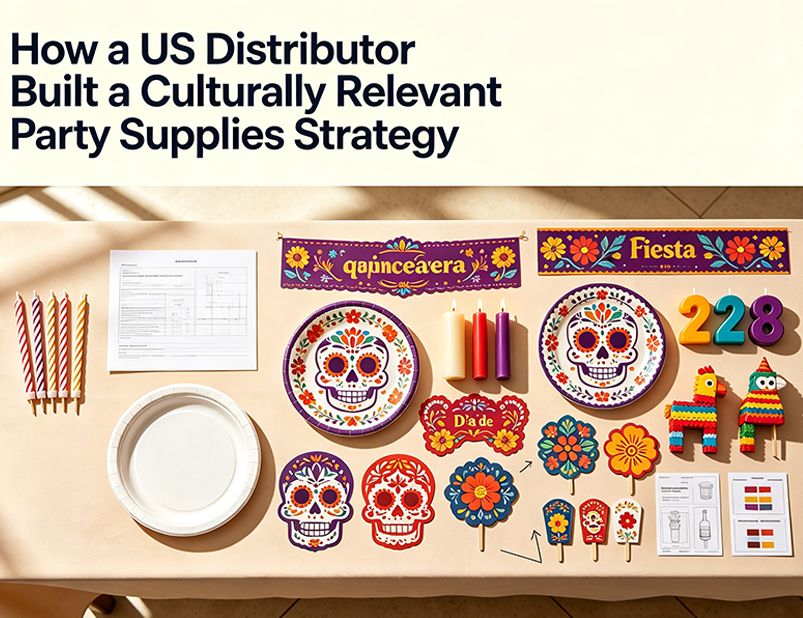
Events like quinceañeras, Día de los Muertos, birthdays, baptisms, graduations, and fiestas patrias typically involve coordinated decorations, themed tableware, photo backdrops, balloons, party favors, banners, paper decorations, and dessert displays. That list looks less like a party supply catalog and more like a comprehensive product plan.
Quinceañeras are a substantial category in their own right. These coming-of-age celebrations often include a candle-lighting ceremony, where the birthday girl lights a candle for each person who has influenced her life. The visual elements—coordinated tableware, floral arrangements, photo backdrops, and themed décor—drive demand for complete party collections rather than individual items.
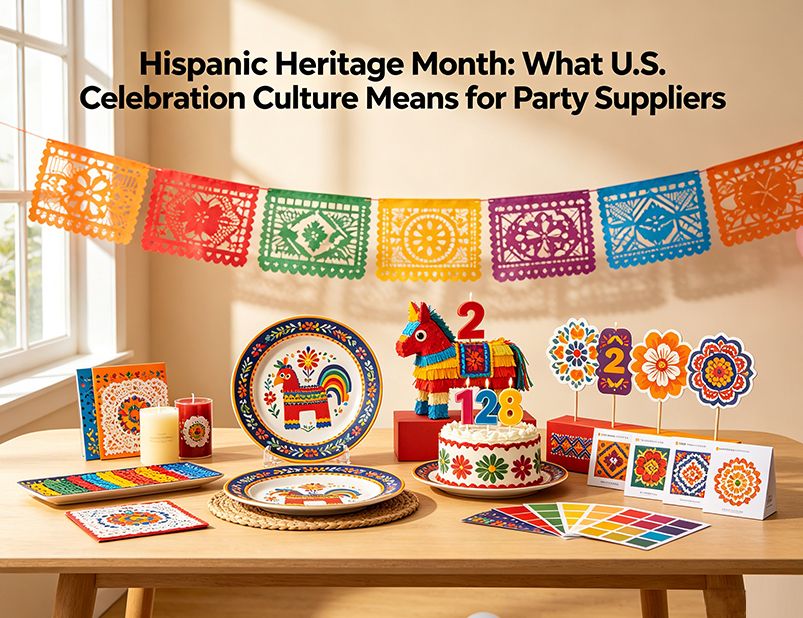
Día de los Muertos is another major observance. Unlike Halloween, which centers on costumes and candy, Día de los Muertos is a family-centered tradition involving altars, marigolds, sugar skulls, and candles. The product needs are distinct: papel picado, laser-cut skull decorations, marigold arrangements, and LED candles as a safer alternative to traditional flames.
Birthdays are also an important part of celebration culture, with family gatherings, themed decorations, and coordinated party products creating recurring demand throughout the year.
Fiestas Patrias—celebrating Mexican independence and other Latin American national days—drive demand for flags, banners, traditional patterns, and themed party supplies.
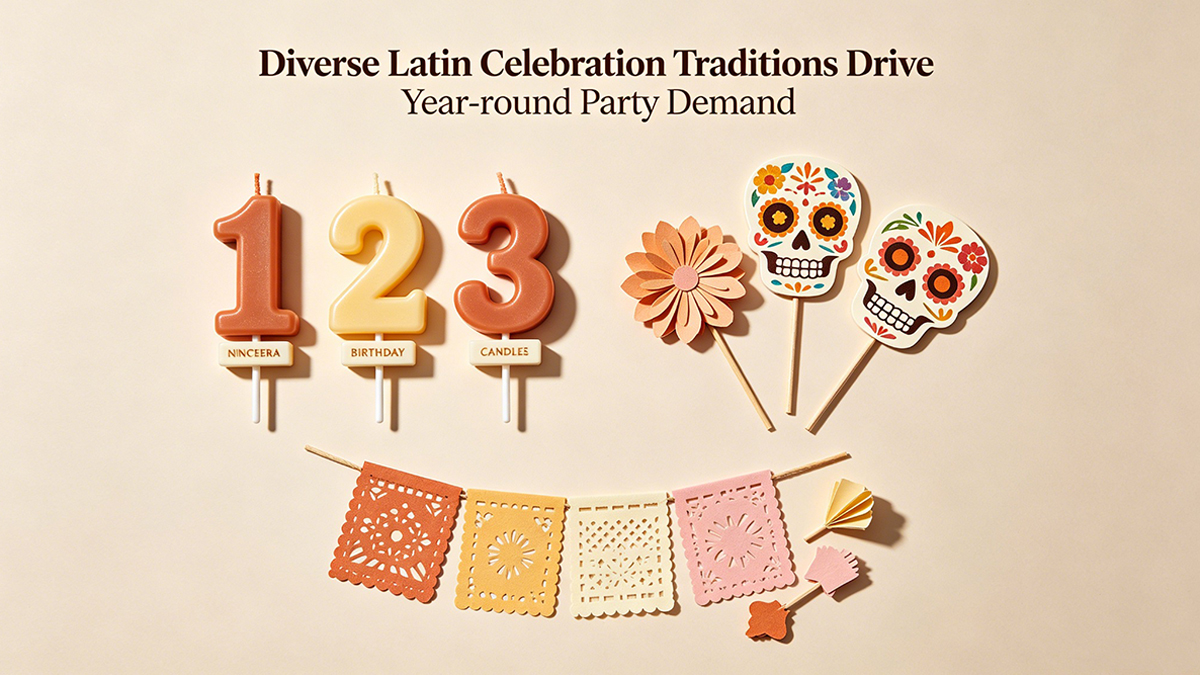
The product categories driving this market are specific and identifiable.
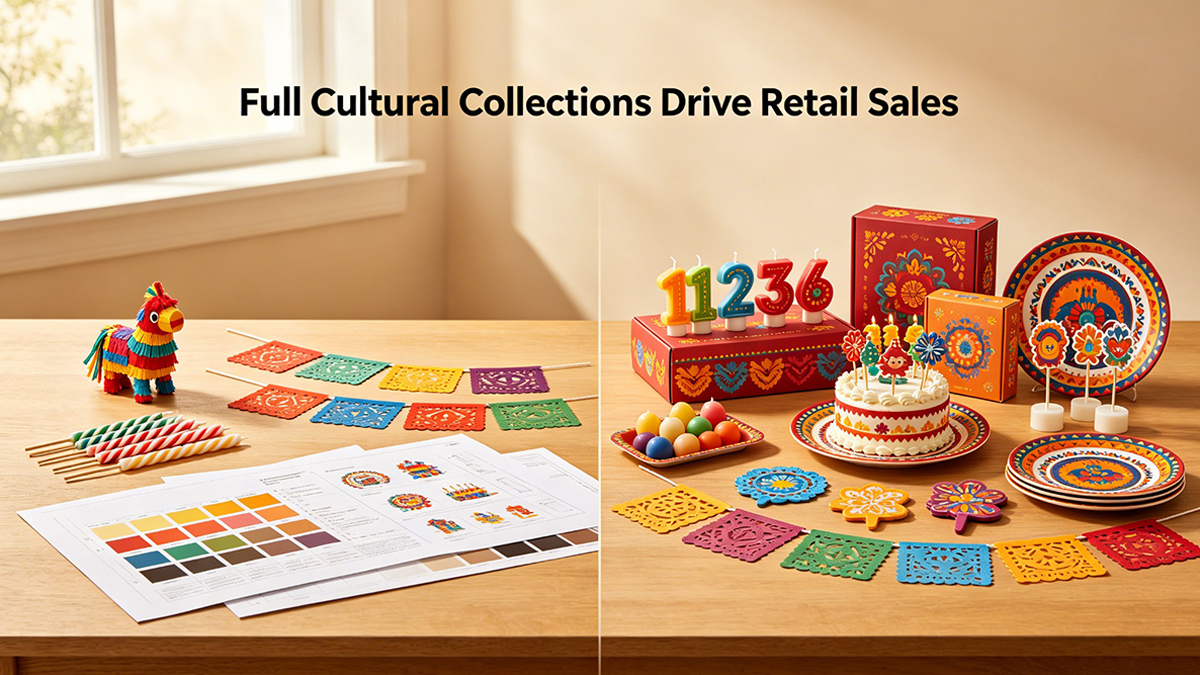
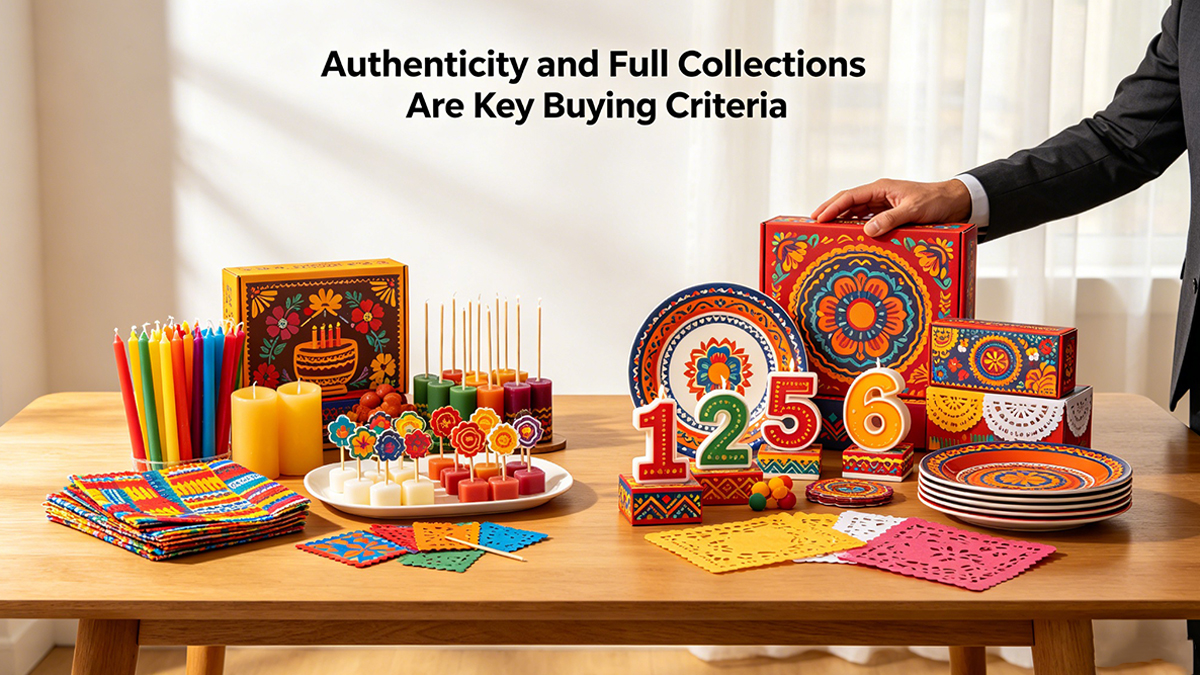
Coordinated collections. Rather than selling individual decorations, suppliers who build complete cultural collections—matching balloons, tableware, banners, backdrops, papel picado, party favors, and themed accessories—enable retailers to build full displays and increase multiple-item purchases.
Piñatas. Piñatas are not a novelty for this market—they are a staple. The fact that mainstream retailers like Michaels added piñatas as an entirely new category in 2026 signals something broader: party products that were once considered culturally specific are becoming part of mainstream retail assortments.
Balloons and balloon garlands. Balloon arches and garlands are a core component of quinceañera and fiesta celebrations. The balloon business has become a significant category for retailers serving Hispanic communities.
Themed tableware and decorations. Bright colors, floral decorations, traditional patterns, and handcrafted-inspired elements are natural fits for Latino-inspired themes. These are not generic party supplies—they carry cultural meaning.
Photo backdrops and social media setups. Instagram, TikTok, and Pinterest have transformed the party business. Consumers now want visually impressive parties that look colorful, unique, and culturally authentic. This trend especially benefits Latino-inspired themes because they naturally include strong visual identity.
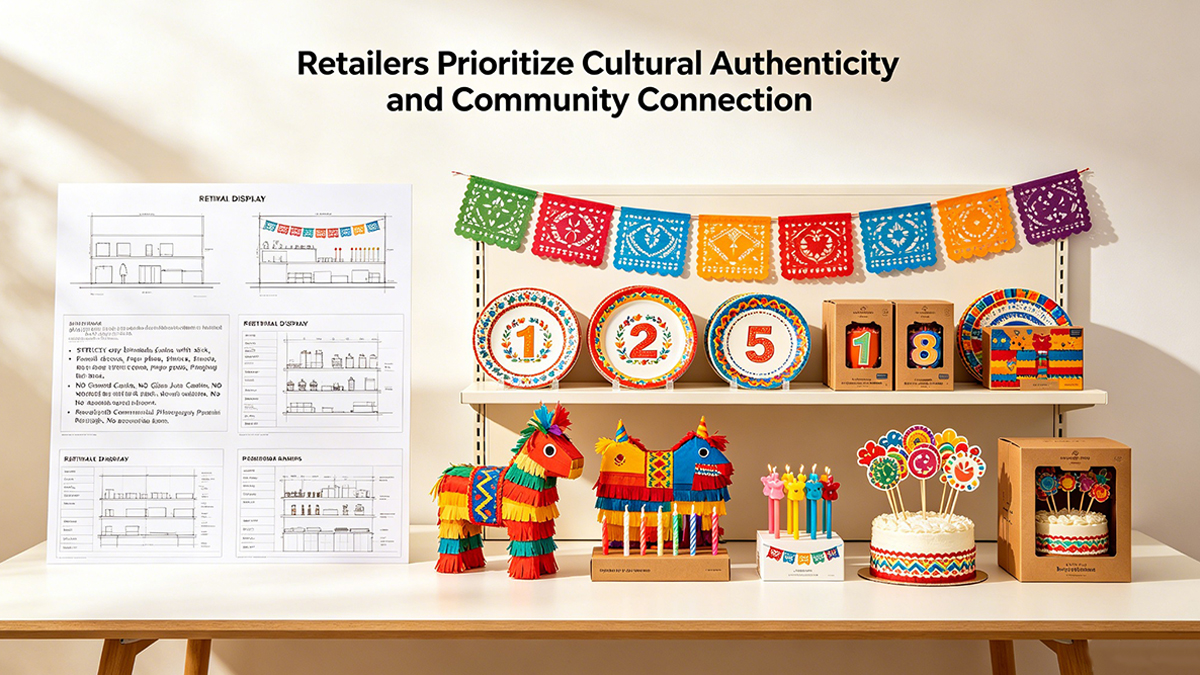
Several retailers have moved beyond generic "Hispanic Heritage Month" signage and are building campaigns around identity, authenticity, and community connection.
El Rio Grande Latin Market, a Dallas-Fort Worth area grocery chain, centered its campaign on a question most grocery circulars never ask: what does being Hispanic actually mean to you? The answer—reflected in influencer partnerships, in-store signage, and community events—is that Hispanic identity is broad and diverse. The chain is bringing hand-painted ceramic dishware into stores for retail sale, signaling that retailers want to sell an experience, not just products.
JCPenney launched a Hispanic Heritage Month collection in collaboration with Latinitas, with 100% of net profits going to the organization. Southeastern Grocers used the month to launch private label products developed with Hispanic suppliers, spotlighting more than 60 vendors across its stores. Cardenas Markets and Tops Friendly Markets paired vendor partners with in-store events and community giveaways.
The common thread is not simply Hispanic-themed products. It is representation, authenticity, and supplier diversity. Retailers are not just adding a few "Mexican-style" items to their shelves. They are building campaigns around cultural connection—and they are looking for suppliers who can support that effort with products that feel genuine, not generic.
The data and retail activity point to several clear directions for buyers.
First, cultural celebrations are not seasonal. They are year-round. Hispanic Heritage Month runs from September 15 to October 15, but quinceañeras, birthdays, baptisms, and family gatherings happen every month of the year. Buyers who treat this as a seasonal category will miss the larger opportunity.
Second, authenticity matters more than proximity. A generic "Mexican-style" decoration does not meet the needs of consumers who are celebrating their own culture. For party suppliers, this means the products must be genuinely connected to cultural traditions—not generic items in bright colors.
Third, coordinated collections give buyers more ways to build complete celebration assortments. Retailers serving Hispanic communities need complete cultural collections that allow them to build immersive displays. A single piñata or a pack of papel picado is not enough. The opportunity is in complete collections that cover decorations, tableware, favors, and photo setups.
Fourth, social media drives demand for visual authenticity. Latino-inspired themes naturally include bright colors, papel picado, floral decorations, traditional patterns, and strong visual identity—all of which photograph well and perform on social media. Suppliers who understand this can position their collections as social-media-ready, not just culturally appropriate.
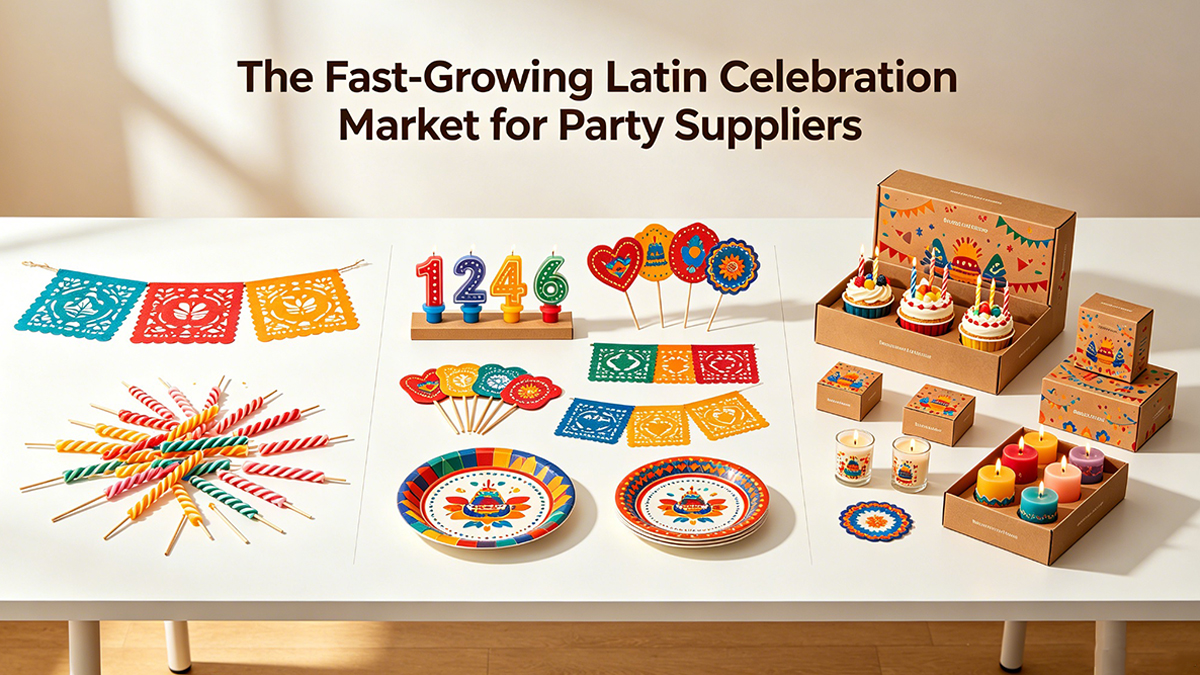
The Hispanic and Latino party supplies market is not a niche. It is one of the fastest-growing consumer segments in the United States, with a celebration culture that naturally drives higher spending per event and stronger demand for coordinated, culturally relevant products.
Yet many major party supply wholesalers have historically carried only a few generic items or seasonal Cinco de Mayo decorations. The gap between the size of the market and the availability of authentic products is the opportunity.
For suppliers, the question is not whether to serve this market. It is whether they can build the product capabilities—coordinated collections, cultural authenticity, visual appeal—that this consumer segment expects.
For buyers, the question is whether their assortment reflects the communities they serve. A party supplies aisle that does not carry quinceañera decorations, Día de los Muertos supplies, or fiesta-themed collections is not serving a market that represents a significant and growing share of the U.S. population.
The larger question is not whether Hispanic celebration culture represents an opportunity. It is whether party assortments are evolving quickly enough to reflect the consumers they serve.
Kelaisi Candle has manufactured candles and party supplies since 1991, with facilities in Xingtai and Shijiazhuang, Hebei. We support international buyers with social-compliance, product-testing, and quality documentation covering requirements such as BSCI, SEDEX, CE, RoHS, EN71, and ASTM F963, where applicable.
 Big size decorative scented candle
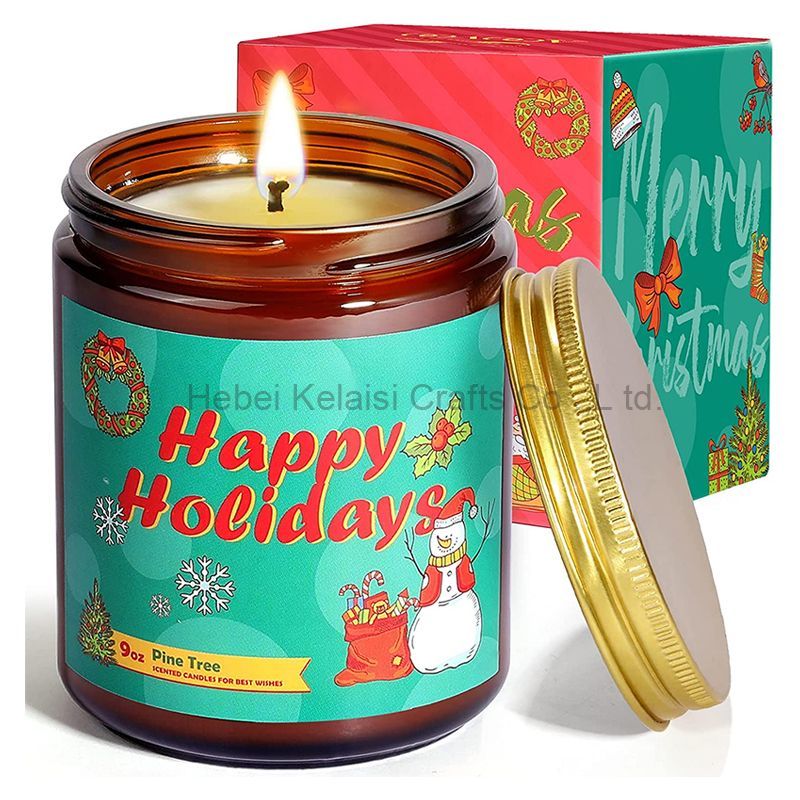 Christmas Scented Candles Gifts Sets for Women
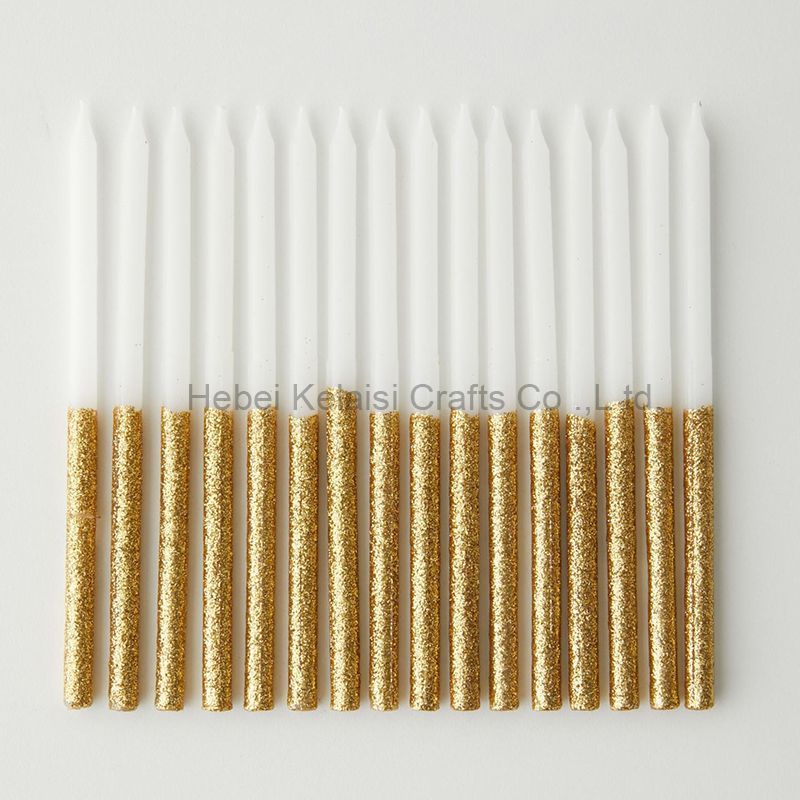 happy birthday long thin glitter cake candles
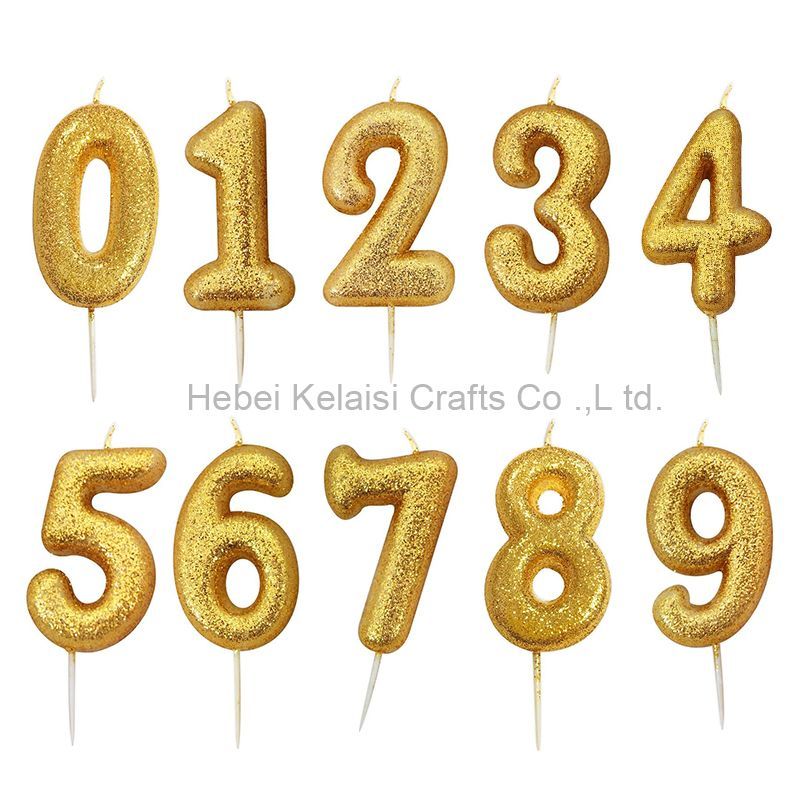 Luxury Golden Birthday Number Candle Sets
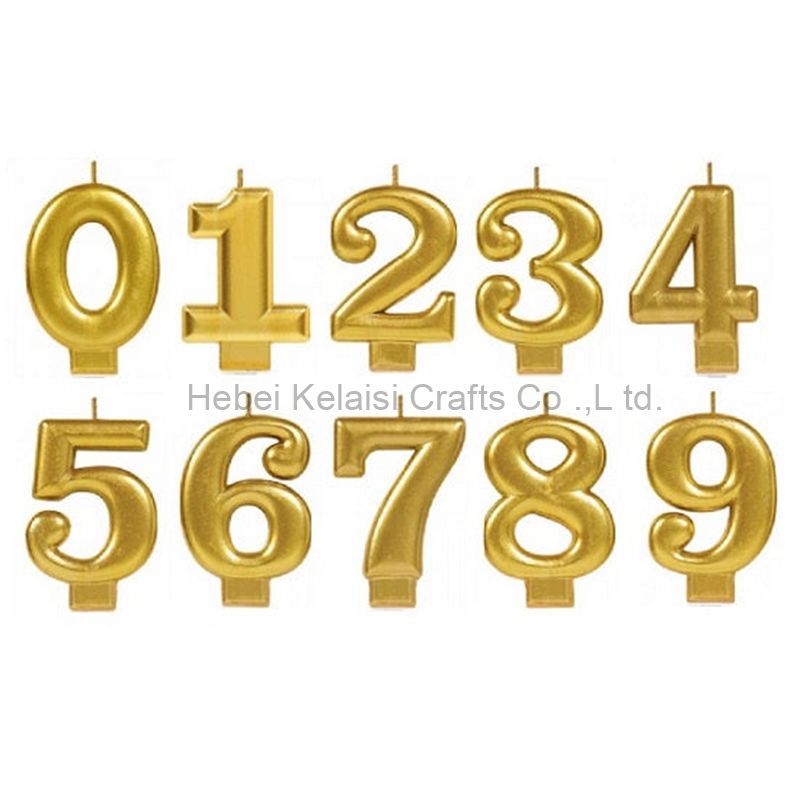 Fancy cake decoration number annual birthday candle
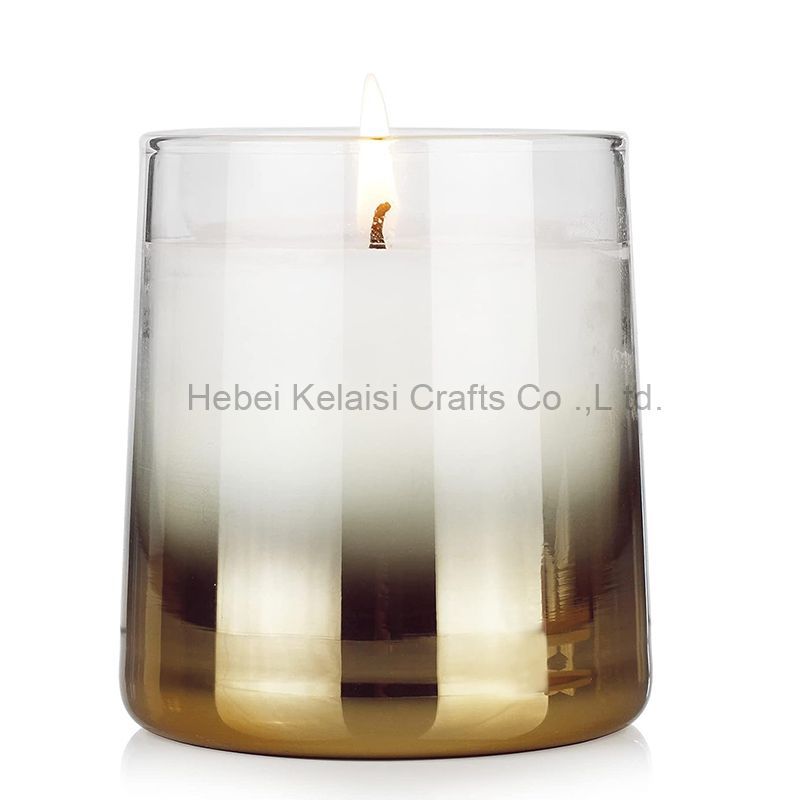 Gradient color Soy Wax Glass Jar Scented Candle
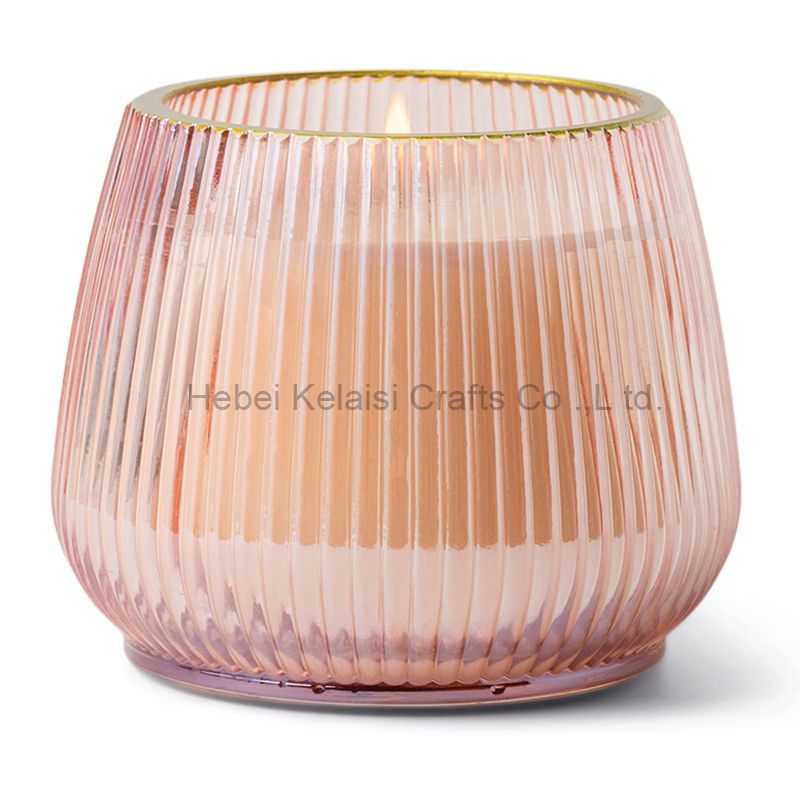 Origami Style Vertical Pattern Wine Glasses Jar Candles
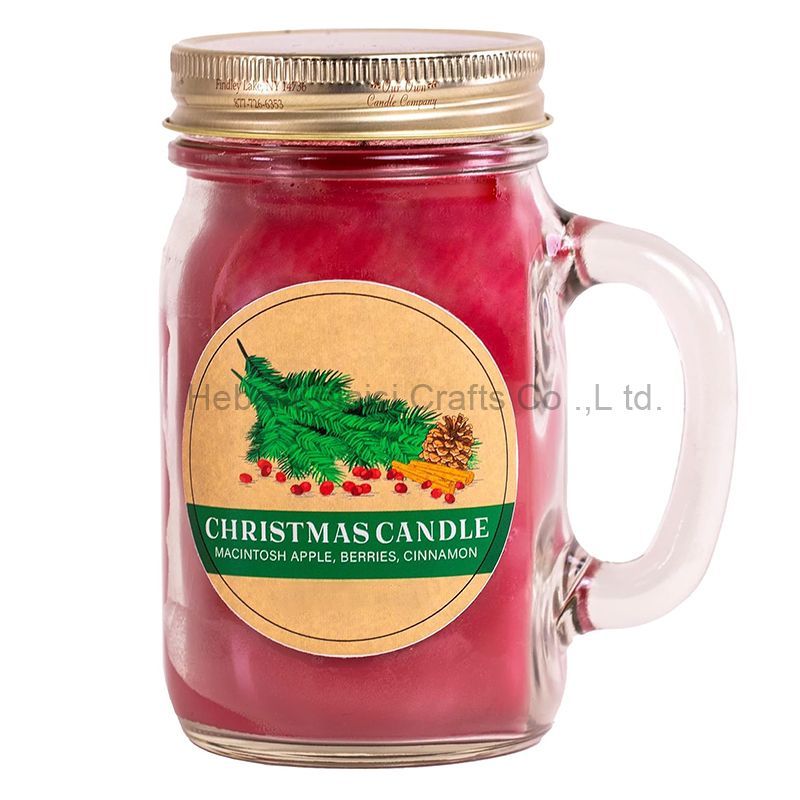 Custom Mini Glass Jar Scented Candle
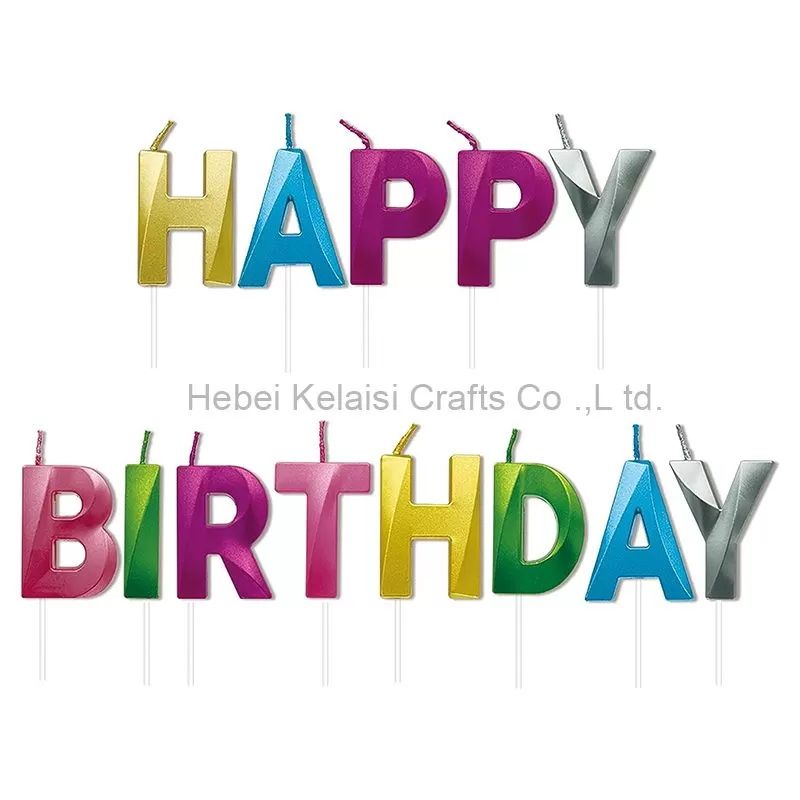 3D Letter Happy Birthday Candles
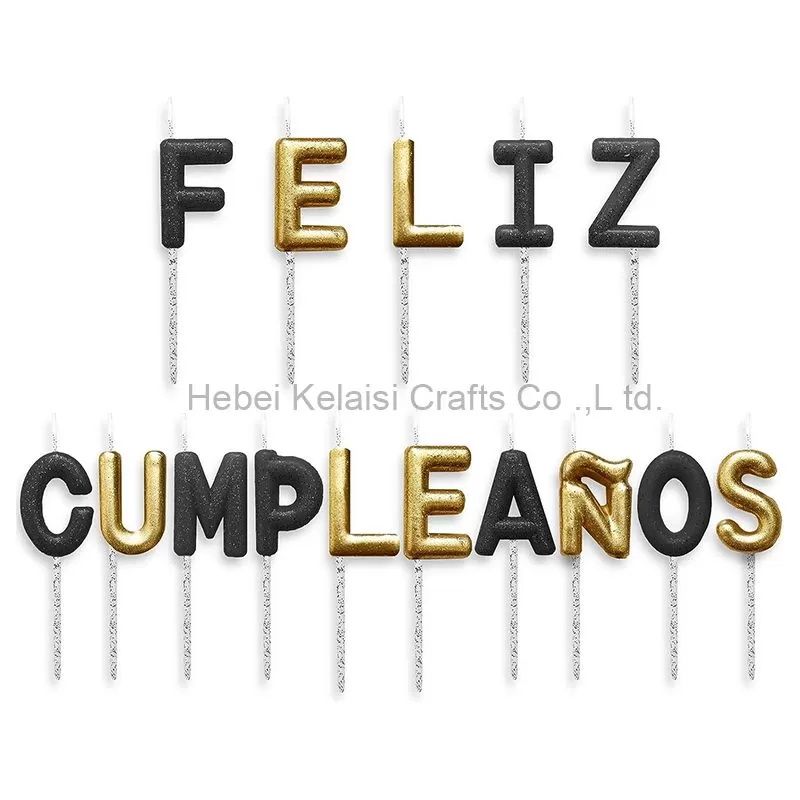 Decorative Birthday Candles
 St. Patrick's Day Decorations Set
 Christmas Party Balloons Supplies