Jul. 21, 2026
In early 2025, a German client reached out to us through an industry referral. His company operated a party supplies wholesale business in Germany, supplying disposable tableware, party hats, banners, and other party products to offline retailers and event planners. The business was stable, the channels were established. But one thing had been worrying him for months.
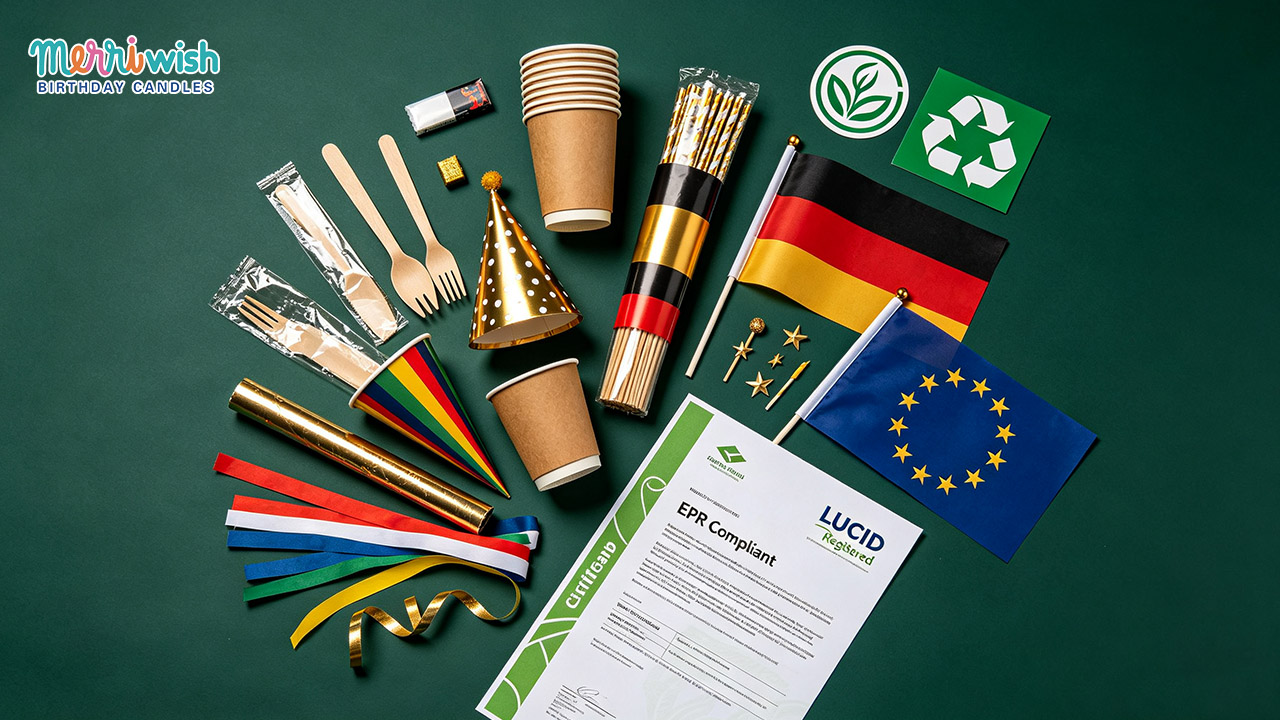
The client's anxiety came from the tightening of Germany's Extended Producer Responsibility (EPR) regulations.
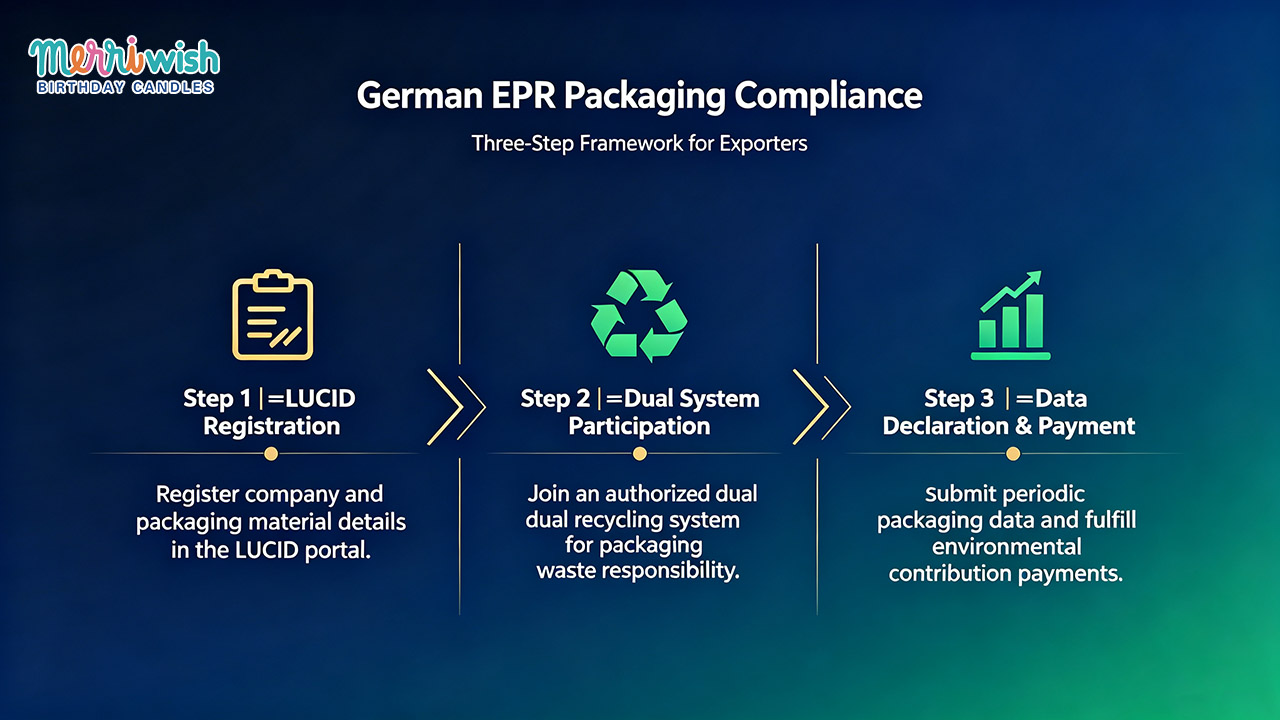
Germany's EPR system requires any company that first introduces packaged goods into the German market to take responsibility for the entire lifecycle of its product packaging. Specifically for packaging, companies must register in the LUCID system run by the Central Agency Packaging Register (ZSVR), and join a dual system (such as the "Green Dot" system) to declare and pay recycling fees. Any seller shipping goods to a German address must comply.
The client faced compliance pressure on multiple fronts:
First, non-compliant packaging materials. His existing party product packaging used multiple materials — plastic wrapping for disposable tableware, paper cards with plastic blisters for party hats, plastic bags for banners — some of which did not meet German packaging law requirements for recyclability and environmental standards.
Second, no LUCID registration. The client had never registered in Germany's LUCID system nor obtained an EPR registration number.
Third, no dual system participation. He had not declared packaging material types and weights to any dual system, nor paid any recycling fees.
More critically, Germany's Single-Use Plastics Fund Act (EWKFondsG) had taken effect on 1 January 2024, requiring affected producers to register on the German Environment Agency's DIVID platform. Producers who started operations before 1 January 2024 were required to register by 31 December 2024, and the first data report for the 2024 calendar year was due by 15 May 2025. Meanwhile, the new EU Packaging and Packaging Waste Regulation (PPWR) had taken effect on 11 February 2025 and would become fully enforceable in Germany from 12 August 2026.
In the first quarter of 2025, the client's retail buyer gave him a clear notice: If he could not provide complete EPR compliance documentation by June 2025, his products would be removed from shelves. Non-compliance could result in fines of up to €200,000, product delisting, and even market access restrictions. The client faced not just losing an order, but being excluded from the German market entirely.
He contacted us. "The products are fine, the orders are fine, but I can't figure out the compliance paperwork," he said. "Can you help?"
The client's need was clear: complete German EPR packaging compliance, obtain all necessary documentation, and secure the order and shelf position.
But the client was unfamiliar with the specific operations of German EPR regulations, and the language barrier made direct communication with German authorities difficult. He needed not just a factory that could make party supplies, but a partner who could help him navigate compliance.
Our team stepped in and did four things:
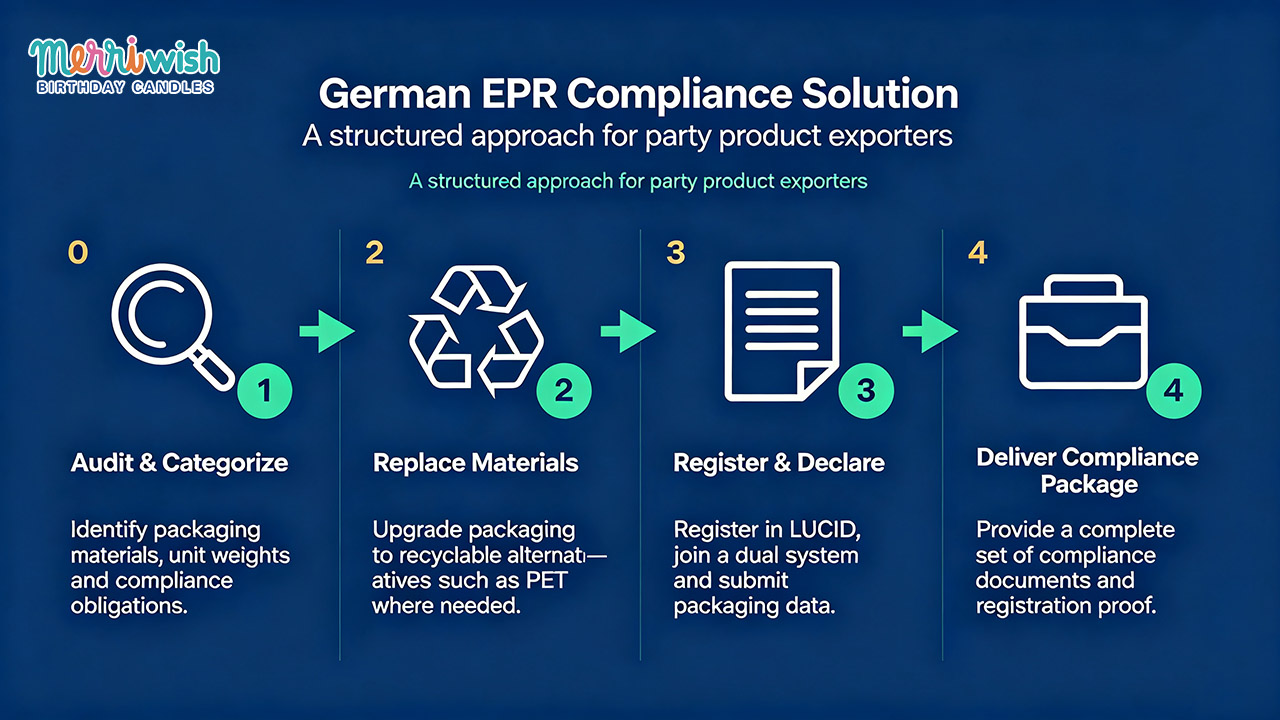
First, we audited and categorised all packaging materials. We worked with the client to inventory every packaging type across his party products: plastic wrapping for disposable tableware, paper cards and plastic blisters for party hats, plastic bags and paper tubes for banners, and the outer shipping cartons. Following German packaging law requirements, we categorised each material by type (plastic, paper, cardboard) and function (sales packaging, transport packaging).
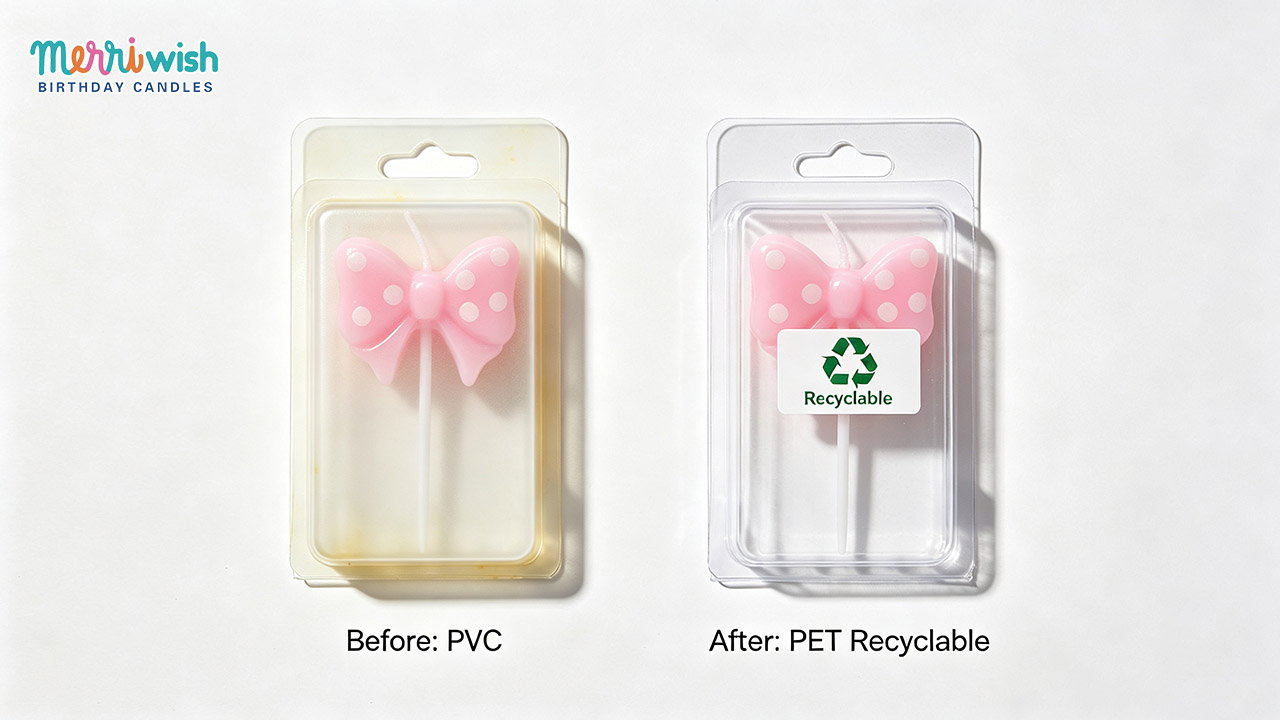
Second, we provided compliant packaging alternatives. For packaging materials that did not meet requirements, we helped the client find alternatives. We replaced certain plastic blisters with PET recyclable materials and adjusted the material composition of paper cards and banner packaging. We also provided environmental test reports and recyclability certificates for each alternative material, laying the groundwork for compliance declarations.
Third, we assisted the client with LUCID registration and dual system declaration. We helped the client compile and submit the company information and packaging data required for LUCID registration in Germany. Once registered, we assisted in declaring packaging materials by type and weight to a dual system. The entire registration and declaration process was completed within six weeks, and the client successfully obtained his LUCID registration number.
Fourth, we delivered a complete compliance package for retailer review. We compiled all documents into a complete compliance package, including the LUCID registration number, dual system declaration proof, packaging material test reports, and recyclability certificates. The client submitted the package to his retail buyer and passed the review.
The client's order was not delisted. His products continued to sell normally through German retail channels.
More importantly, the retail buyer told him after the review: "You are one of the few suppliers who completed compliance before the deadline."
The client later told us that one of his peers lost the retailer's order entirely because they failed to complete EPR compliance in time.

After the order was secured, the client sent us a message:
"I really appreciate your help this time. I spent months trying to figure out this EPR stuff on my own, and the more I read, the more confused I got. You helped me make sense of it and got all the paperwork done. Now I know who to turn to when I run into compliance issues."
In the German and EU markets, environmental compliance is no longer a "nice to have." It is a ticket to entry.
Germany's Packaging Act requires any company placing packaged goods on the German market to register and declare. The EU's PPWR is further tightening standards and will take full effect from 12 August 2026. For suppliers, this means paying attention not just to product quality and pricing, but also to regulatory changes in destination markets — and being able to help clients navigate compliance.
For buyers, the criteria for selecting suppliers are changing. A supplier who can help you understand regulations and complete compliance paperwork has a fundamentally different value from one who only manufactures products.
What we do goes beyond making party supplies. We help clients understand regulatory changes in German and EU markets, and support them in executing compliance — from packaging material selection to LUCID registration, from dual system declaration to complete compliance documentation.
Kelaisi Candle has manufactured candles and party supplies since 1991, with facilities in Xingtai and Shijiazhuang, Hebei. We hold BSCI, SEDEX, CE, RoHS, EN71, and ASTM F963 certifications.
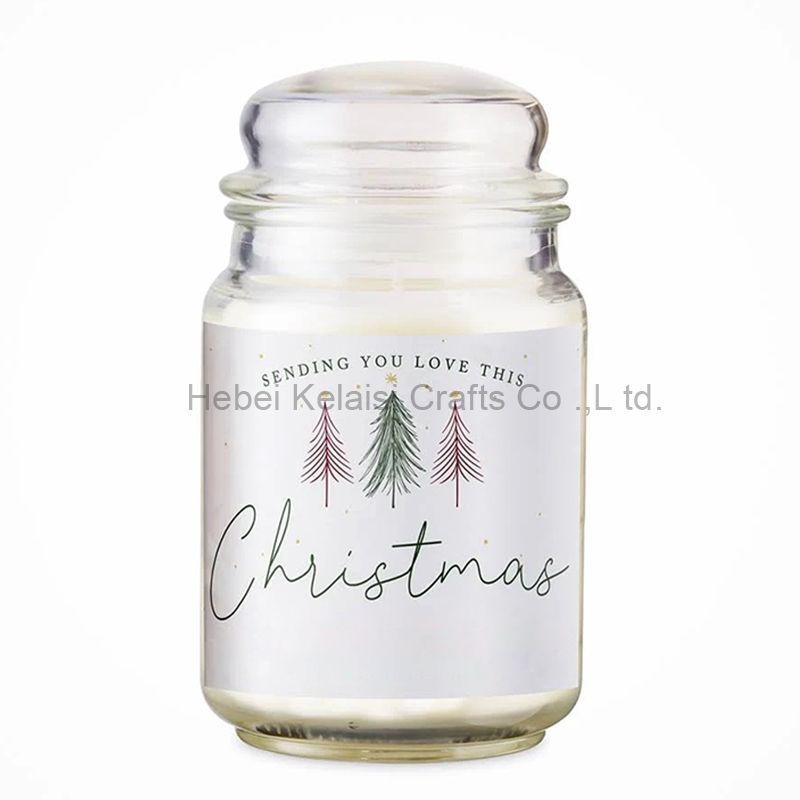 Big size decorative scented candle
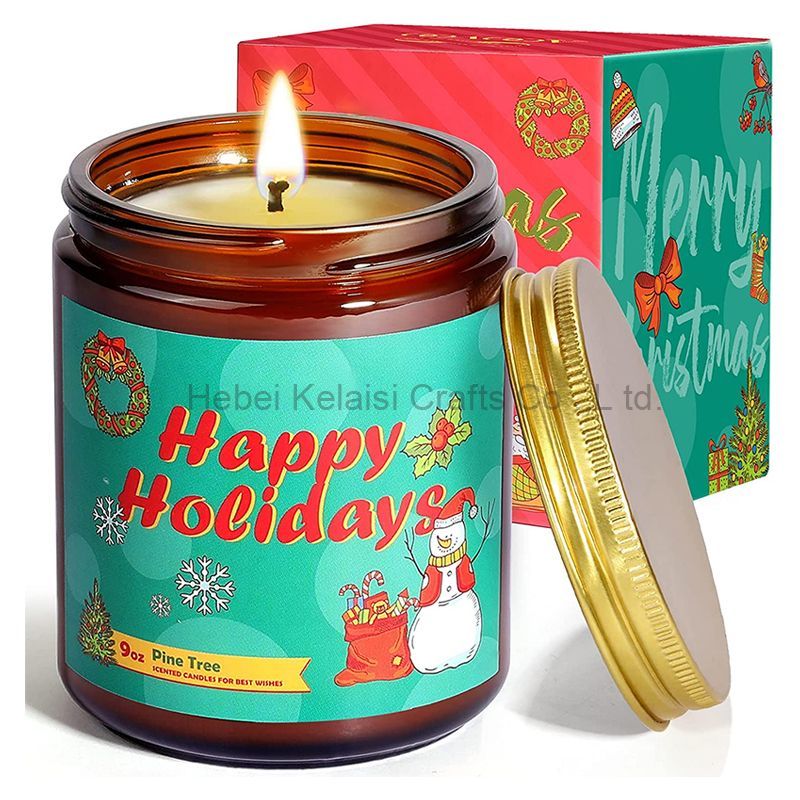 Christmas Scented Candles Gifts Sets for Women
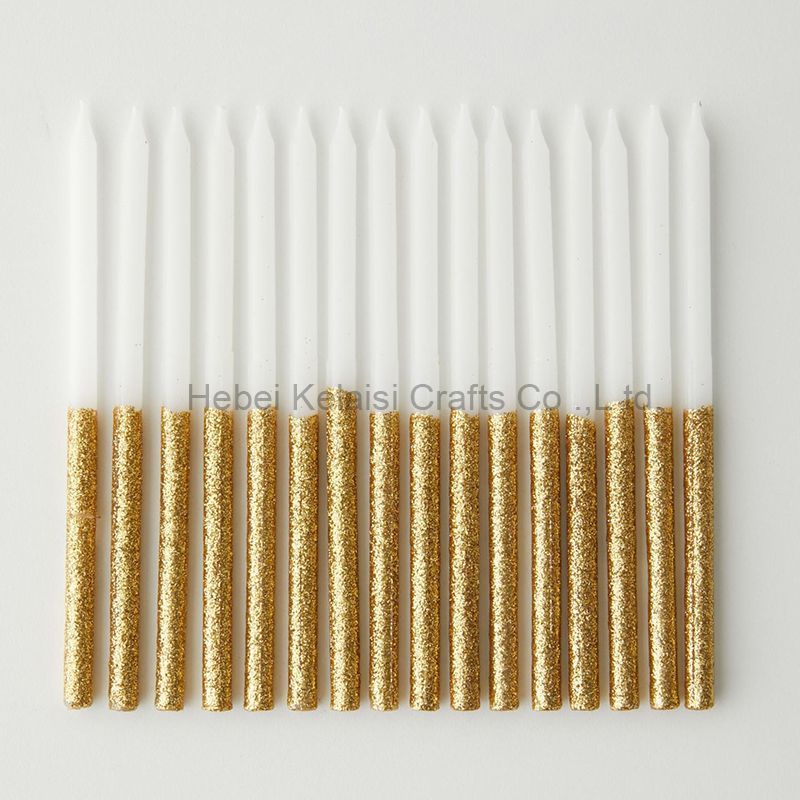 happy birthday long thin glitter cake candles
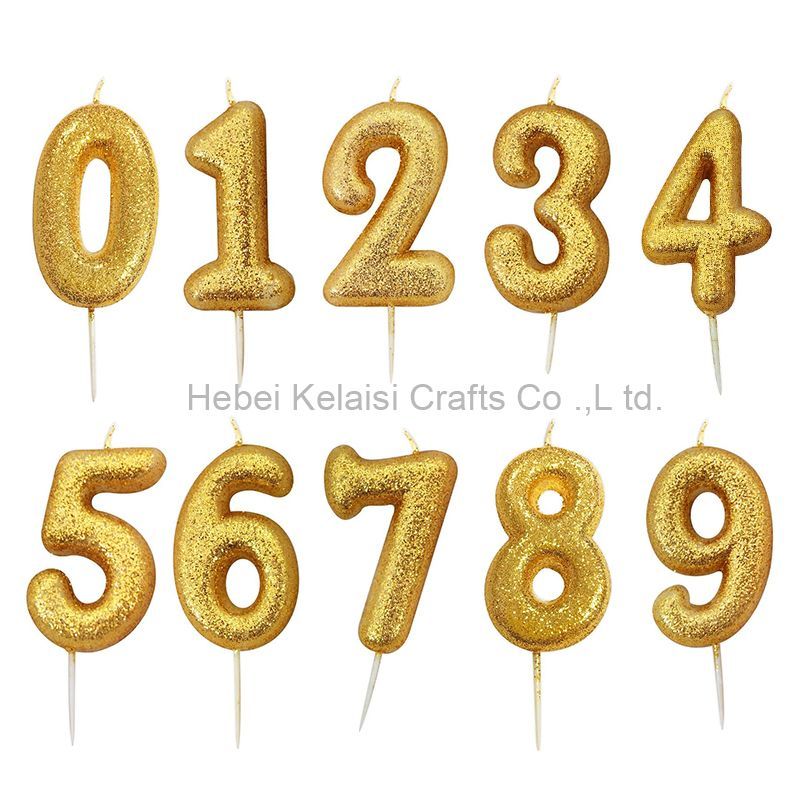 Luxury Golden Birthday Number Candle Sets
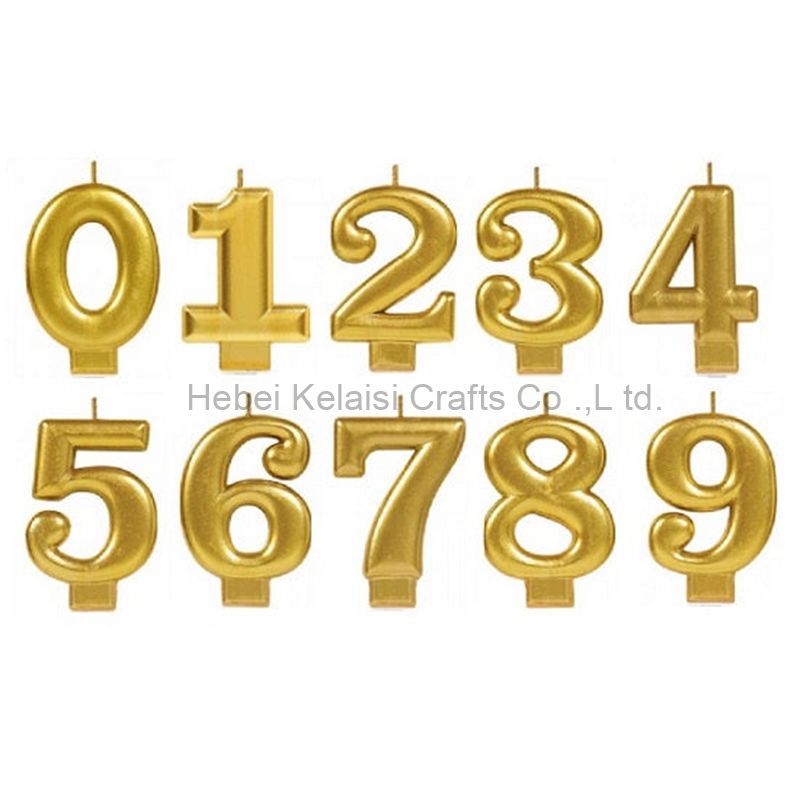 Fancy cake decoration number annual birthday candle
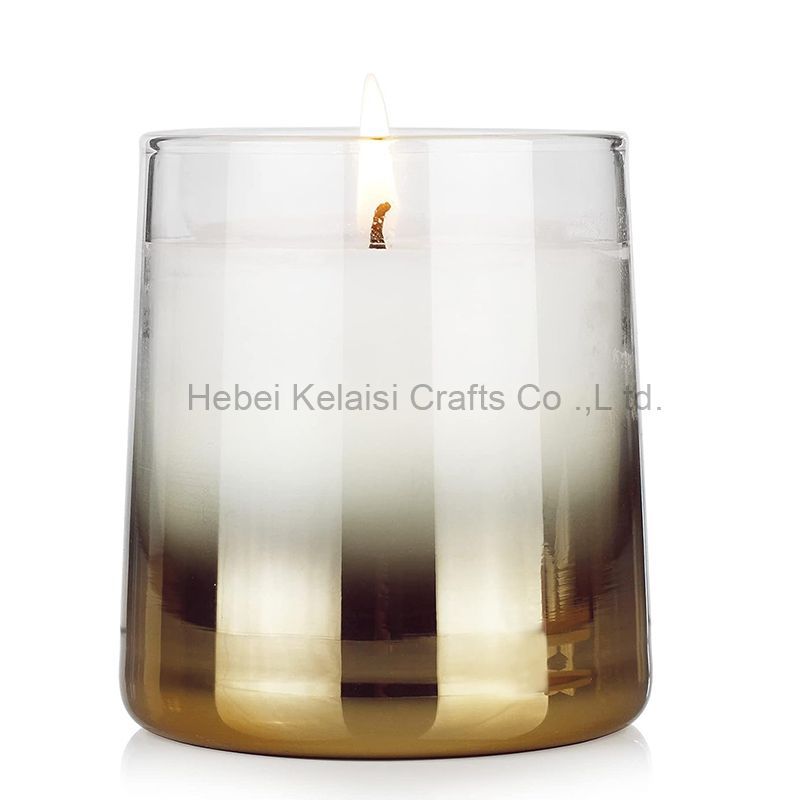 Gradient color Soy Wax Glass Jar Scented Candle
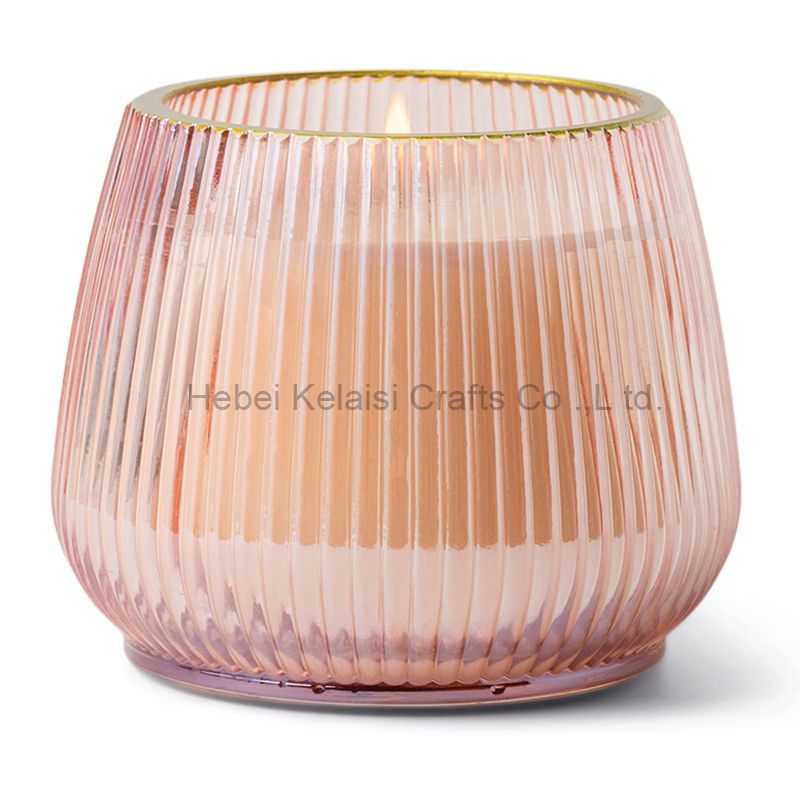 Origami Style Vertical Pattern Wine Glasses Jar Candles
 Custom Mini Glass Jar Scented Candle
 3D Letter Happy Birthday Candles
 Decorative Birthday Candles
 St. Patrick's Day Decorations Set
 Christmas Party Balloons Supplies