Evolving Global Retail Standards Reshape Development Benchmarks
In recent years, global retail players have raised requirements for festive decorations, and birthday candles are no exception. International safety rules have seen regular small revisions, which have shifted the way overseas buyers place orders. Price simply isn’t the main concern now.
Many suppliers still rely on old, rough production methods. Retailers care about consistency across batches and shipments. They also pay close attention to all required documents. Outdated working methods can hardly keep up with strict in-store rules. When products fail to stay stable on shelves or during transit, long-term cooperation will run into problems.
Key Differences Between Retail and Wholesale Products
You can easily tell retail-grade and wholesale-grade birthday candles apart, and appearance is never the main difference. Wholesale goods are made for fast turnover, and producers seldom consider how items hold up after months in storage or long ocean shipping. Retail products go through rigorous tests from the factory all the way to store shelves.
Many design teams focus too heavily on stylish looks while overlooking practical performance. For retail use, resistance to damage, steady color and reliable burning are what really count. Even the most attractive celebration candles struggle to gain lasting trust from global retailers if they cannot adapt to real shipping and storage conditions.

Material Choices and Fixed Formulas for Steady Retail Quality
Raw materials and formulas set the overall quality level for birthday candles. Retail markets have clear rules for supplies, especially for items that come into direct contact with food. Switching materials or adjusting formulas randomly will lead to uneven quality across goods. Color shifting, warping and erratic burning are among the most frequent complaints from retail partners.
In industry practice, dozens of formulas go through testing during cross-border shipments before a final version is confirmed. Retail-grade cake candles use food-safe wax and lead-free wicks, following mainstream international safety rules. The fixed melting point works well for shipping in summer, when containers can get extremely hot. This simple adjustment keeps candles from bending inside closed cargo spaces, an issue that troubles many distributors.
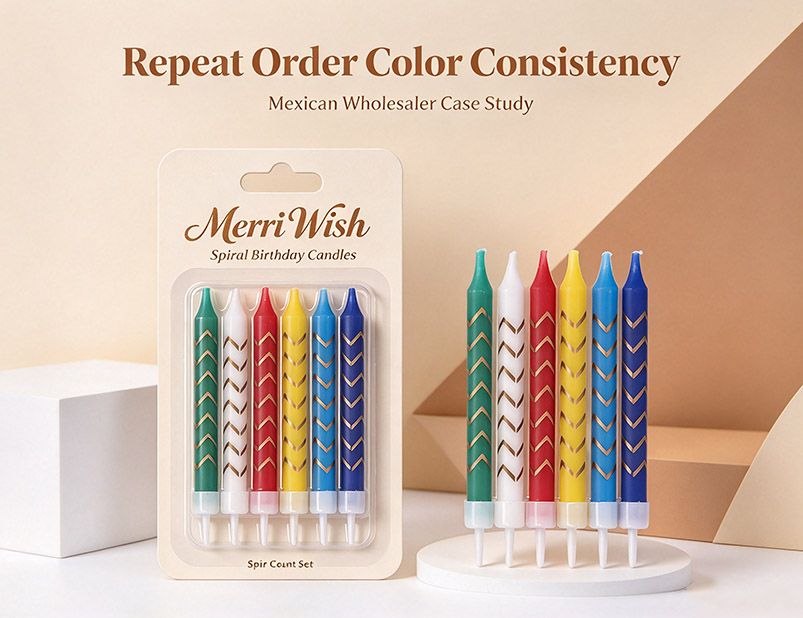
Bright in-store lighting will fade ordinary products within just a few months. Adding professional stabilizers helps maintain vivid color through the entire sales cycle. Uniform products always deliver a cleaner look on retail shelves.
Consistent Production to Fix Batch Inconsistency
Batch inconsistency remains a common issue for suppliers looking to enter high-end retail markets with birthday candles. Most small operations do not lock down core production settings. Changes to melting temperature, stirring speed and cooling processes create small but noticeable differences between one batch and the next.
Minor flaws like these do not cause big problems for bulk wholesale orders. Retail shelves, however, require products to look and perform exactly the same. Most professional producers use automated lines with fixed parameters to keep production consistent. Steady heat mixes raw materials evenly, and gradual low-temperature cooling prevents shrinkage and cracks that often appear with natural cooling.
Making one good candle is not difficult. It takes far more work to keep every batch of retail candle products uniform all year round. This gap separates regular workshops from more experienced manufacturers.
Quality Checks for Retail Markets
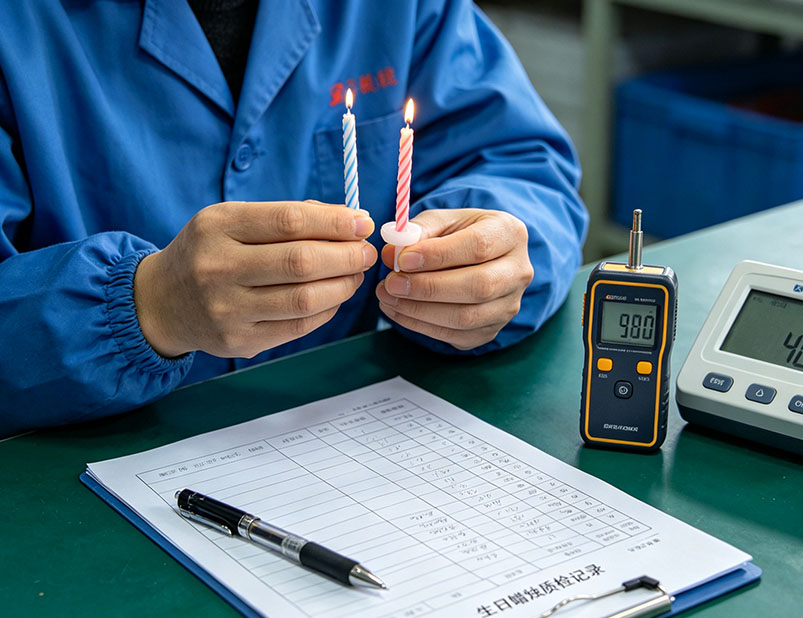
A thorough inspection process sets retail-qualified birthday candles apart from regular wholesale goods. Basic visual checks work well for bulk orders, but retail sales demand much more. Inspectors test burning performance, heat resistance and long-term stability, following widely accepted international safety standards.
Every production batch undergoes burning tests and simulated shelf storage checks. All test results are recorded, and routine spot checks take place on a regular basis. Overseas regulators and retail platforms can run compliance checks at any time, and complete records help businesses avoid unnecessary trouble.
Small hidden flaws may not show up right after production, but they gradually appear during storage or shipping. Comprehensive inspections catch these issues ahead of time. For example, a slightly tilted candle inside a package looks trivial at first, yet it ruins overall visual consistency once placed on public shelves.

Practical Packaging for Cross-Border Shipping
Some manufacturers focus too much on packaging appearance, and this is not a smart choice for cross-border retail. Packages without solid protective structures easily get crushed during long transport and stacked storage. On top of that, incomplete labeling will stop products from entering formal retail channels.
Packaging styles have been adjusted repeatedly based on real cross-border shipping experience. Extra buffer layers reduce product damage during transit, and all packages display standard safety marks and product information as required. Refined package sizes also help improve container loading rates. These small adjustments help retail buyers cut down on overall logistics costs.
Ongoing Updates to Match Market Changes
The global retail market for birthday candles keeps evolving. Regional areas have updated inspection standards little by little over recent years, and consumers now expect higher levels of safety and product consistency. Sticking to old designs will make products fall behind market trends eventually.
Retail feedback from end sellers is collected regularly, and brands adjust color schemes, details and formulas accordingly. Different regions have different preferences, so a single style will never work for every market. Regular updates to products and compliance details help celebration candles keep pace with market shifts and maintain steady competitiveness.

Key Takeaways
Higher quality and compliance standards have split birthday candles into two clear categories: retail-grade and wholesale-grade. Reliable formulas, consistent production, strict checks and practical packaging all support stable retail partnerships.
A lot of it comes down to how well products match real market needs. Businesses can build long-term ties with global retail brands by combining solid production capability with clear market awareness.
Conclusion
Today’s competition in the birthday candles industry is no longer about output or low prices. Quality, compliance and stable performance have become the main focus for suppliers.
Design solutions built around real retail needs and reliable full-run production help brands access premium global retail channels. As retail rules grow more detailed over time, the ability to deliver steady, compliant products will stay as a key advantage for businesses expanding into overseas markets.